What Ueno Park is
In the Edo period this hill was the grounds of Kan'ei-ji, a great temple founded in 1625 to guard the shogun's castle from the north-east. In 1873 the new Meiji government named it one of Japan's first public parks, together with Shiba, Asakusa, Fukagawa and Asukayama, and in 1924 the Imperial Household gave it to the city of Tokyo, which is why its official name is Ueno Onshi Koen, the park granted by the emperor.
The park has two halves: the plateau known as Ueno no Yama, with the museums, shrines and zoo, and Shinobazu Pond below it to the south-west. There are around 1,200 cherry trees, and the park is open from 5am to 11pm, with no entry overnight.
What to see: museums, shrines and the pond
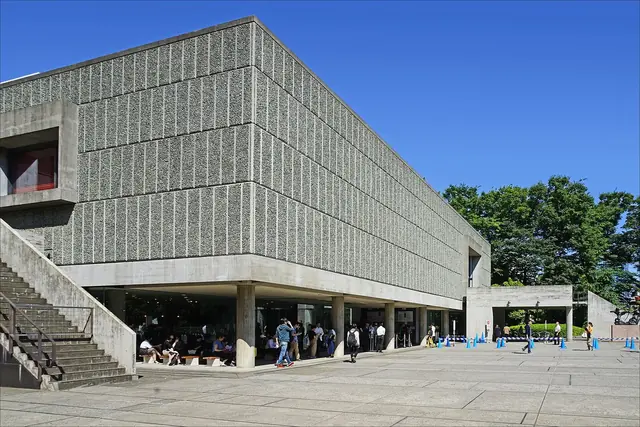
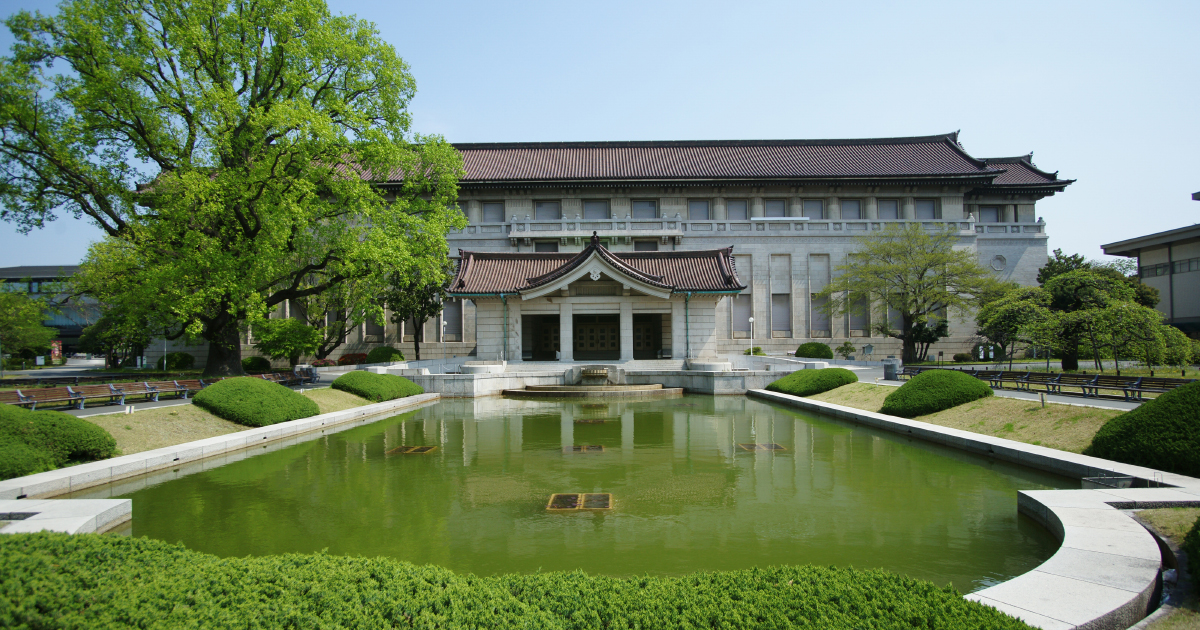
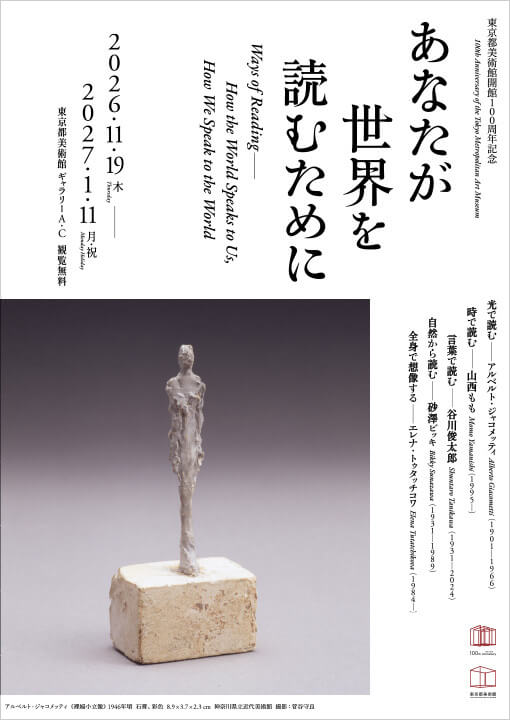
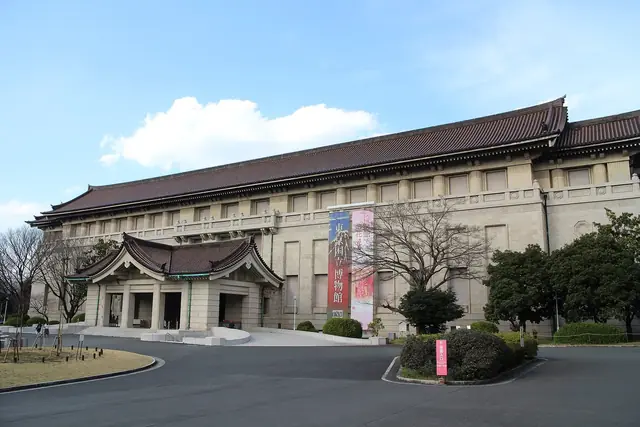
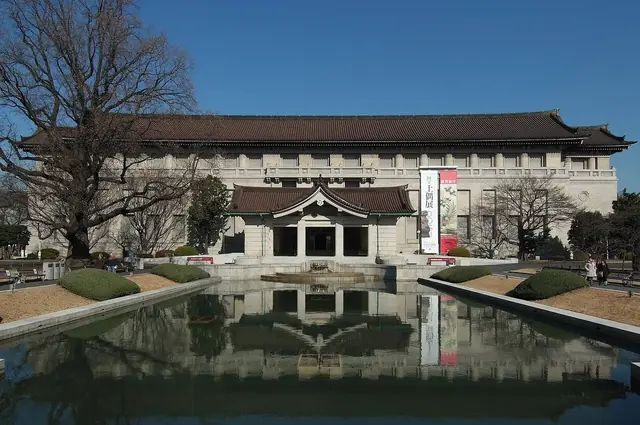
Walk out of the Park exit of JR Ueno Station and the museums start at once. On the right is the National Museum of Western Art, in a Le Corbusier building that is part of a World Heritage listing; on the left, Tokyo Bunka Kaikan, the concert hall, closed in 2026 for a major renovation expected to take about three years. Straight ahead, past the Takenodai fountain plaza, is the Tokyo National Museum, the oldest museum in Japan, standing where Kan'ei-ji's main hall once was. The National Museum of Nature and Science, the Tokyo Metropolitan Art Museum and the Ueno Royal Museum complete the cluster.
Ueno Zoo opened in 1882 as Japan's first zoo and spreads over an east and a west garden, with Kan'ei-ji's old five-storey pagoda standing inside it. There are currently no giant pandas at the zoo: the last two, the twins Xiao Xiao and Lei Lei, returned to China in January 2026. Next to the zoo, Ueno Toshogu, founded in 1627 for Tokugawa Ieyasu, has a gold-leafed hall that survived wars and earthquakes and is an Important Cultural Property.
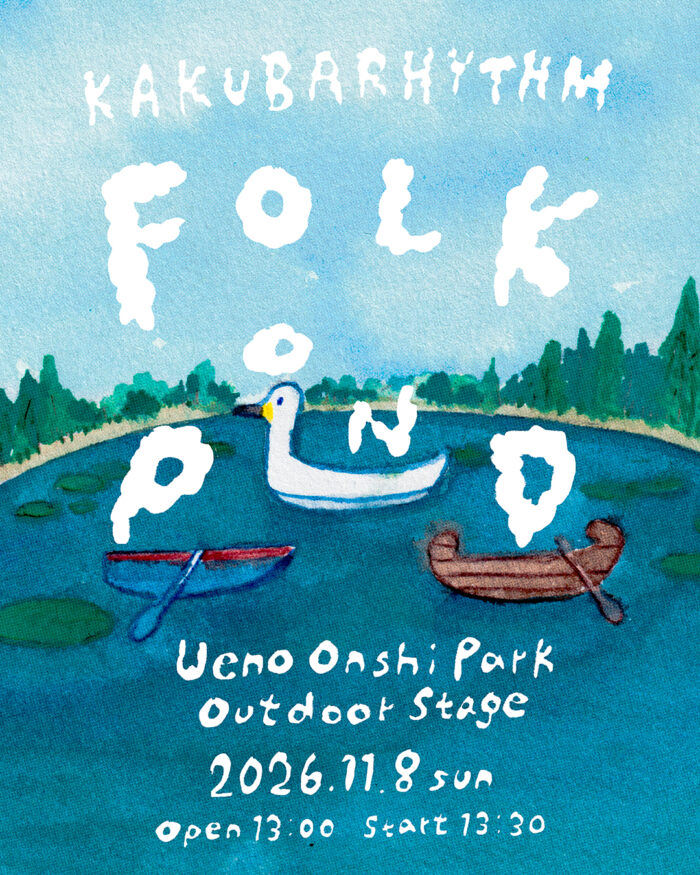
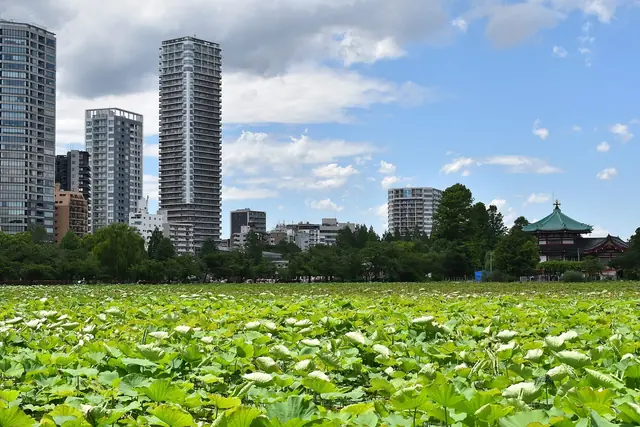
Head down towards the pond and you pass Kiyomizu Kannon-do, a hall built in 1631 in imitation of Kiyomizu-dera in Kyoto, and the bronze statue of Saigo Takamori with his dog near the south entrance. Shinobazu Pond is split into a lotus pond, a boat pond and a cormorant pond, with Bentendo, a small hall dedicated to the goddess Benzaiten, on its island and an open-air stage at the water's edge.
- Toshogu's grounds are free to walk; seeing the shrine buildings up close inside the fence costs a small fee.
- You can rent rowing boats and swan pedal boats on the boat pond, an easy half hour with kids.
The year at Ueno Park
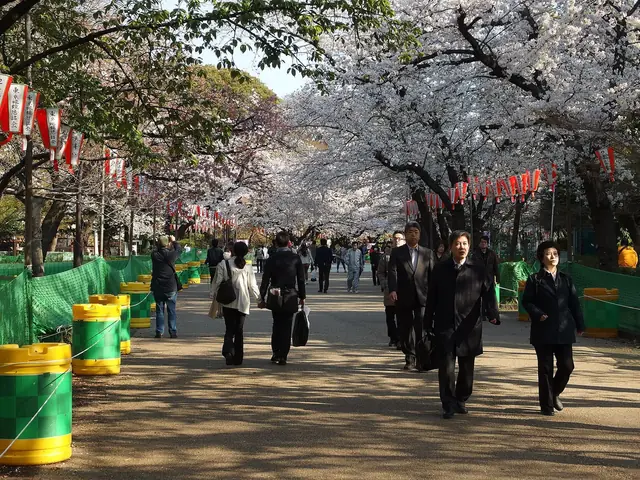
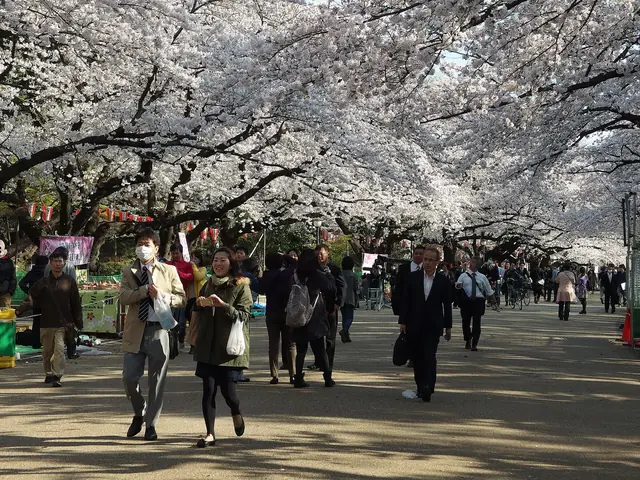
Ueno's cherry season runs for about two months, from early-flowering kanzakura to the Somei-yoshino that peak in late March or early April. The Ueno Sakura Matsuri, held for more than 70 years, hangs lanterns along the main avenue and lights them in the evenings, with a food fair on the fountain plaza. Toshogu's peony garden opens three times a year: winter peonies from New Year to mid-February, spring peonies from mid-April to mid-May, and dahlias in late September and early October.
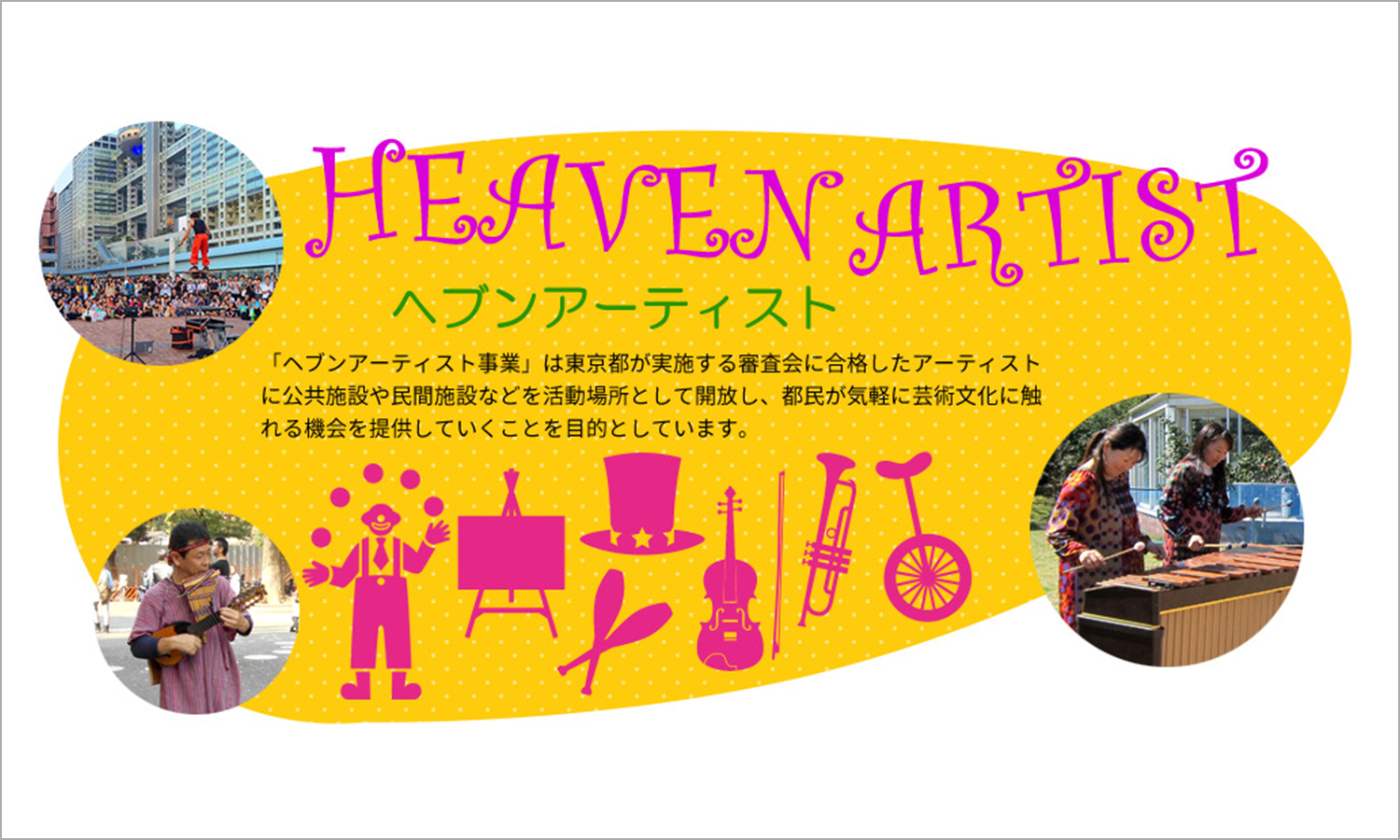
In summer the lotus covers Shinobazu Pond, usually at its best around late July, and the Ueno Summer Festival fills the pond side from mid-July to mid-August with wind chimes, paper parasols, evening stalls and shows on the open-air stage. In early September the Tokyo University of the Arts festival parades giant handmade mikoshi through the park. Autumn brings weekend festivals on the fountain plaza, a gathering of Heaven Artist street performers, and, in recent years, free entry to museum collections on Culture Day (November 3). At the end of the year Ameyoko nearby fills with New Year shoppers.
- Lotus flowers open in the morning and close by midday. Go before 9am in summer.
Timing, tickets and crowds
Most museums here close on Mondays, and on the Tuesday instead when Monday is a public holiday. Big exhibitions at the Tokyo National Museum and the Metropolitan Art Museum often sell timed tickets (日時指定) online, and weekend slots go first, so book ahead and aim for a weekday morning. The Tokyo National Museum stays open until 8pm on some evenings; check its calendar.
Ueno Zoo is usually open from 9:30am to 5pm and is closed on Mondays (on the next day when Monday is a holiday). Entry is free for everyone on March 20, the zoo's anniversary, on May 4 and on October 1, Tokyo Citizens' Day, which also makes those its busiest days. On full-bloom weekends the cherry avenue is packed from noon until the park closes at 11pm, toilet queues are long, and leaving a sheet to hold a spot is not allowed. At Toshogu, bow at the gate and keep voices low near the hall.
- Coin lockers inside JR Ueno Station fill up on cherry blossom weekends. Travel light.
- If you only have half a day, pick one museum, the pond and Toshogu rather than rushing four museums.
- Since August 2026 the Tokyo National Museum bans suitcases and checks bags at the gate. Leave luggage at your hotel or a station locker.
Getting there and nearby
JR Ueno Station (Yamanote, Keihin-Tohoku and lines to the north) is about two minutes from the park by the Park exit, and the Ginza and Hibiya subway lines stop at Ueno about four minutes away. Keisei Ueno, for the Skyliner to Narita Airport, opens right onto the park's south end, and Ueno-okachimachi on the Toei Oedo Line is about five minutes from Shinobazu Pond.
Ameyoko, the market street along the tracks towards Okachimachi, starts across the road from the south entrance. Walk north past the art university and you reach Yanaka in about 15 to 20 minutes, with Nezu Shrine just beyond. Yushima Tenjin, known for its plum blossoms, is a short walk from the pond, Akihabara is two stops away on the Yamanote Line, and Asakusa a few stops away on the Ginza Line.