A shrine the shoguns built
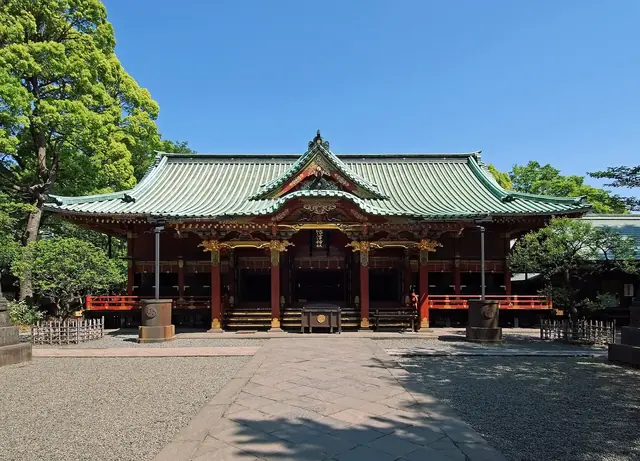
Tradition says Nezu Shrine was founded about 1,900 years ago by the legendary prince Yamato Takeru in nearby Sendagi. Its present site was once the residence of a Tokugawa lord, and the future sixth shogun, Ienobu, was born here. In 1706 the fifth shogun, Tsunayoshi, gave the land to the shrine and built the halls you see today.
The main hall, the offering hall and the worship hall are joined in the gongen style, the same layout as Nikko Toshogu. With three gates and the long lattice fence, they are Important Cultural Properties of Japan, all surviving from 1706 (war damage was repaired by 1962). Nezu is also one of the Tokyo Ten Shrines (Tokyo Jissha), which some locals visit as a set.
What to see, gate by gate
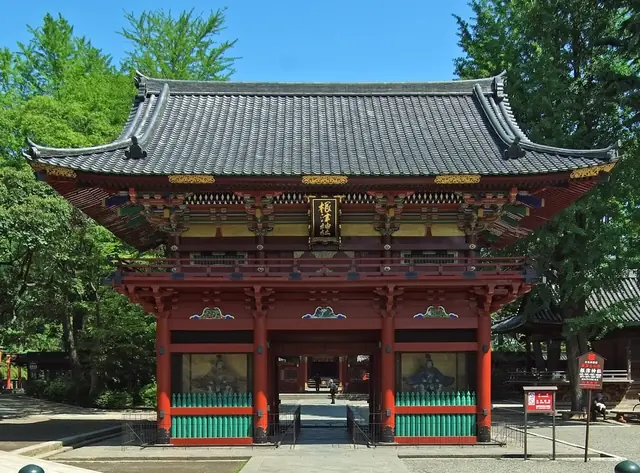
From the main approach you cross a small stone bridge to the Romon, a two-storey vermilion tower gate. It is said to be the only gate of its kind from the Edo period still standing in Tokyo, and the guardian figure on the right is said to be modelled on Tokugawa Mitsukuni, the lord known from the Mito Komon TV dramas. Past it, the Karamon gate and the see-through lattice fence frame the worship hall in black, gold and red lacquer.
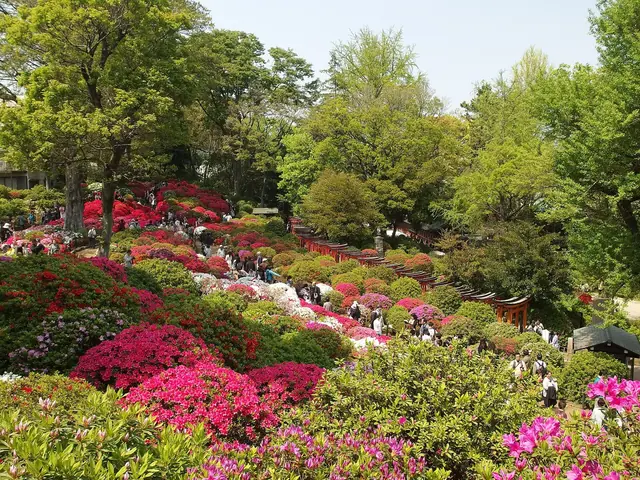
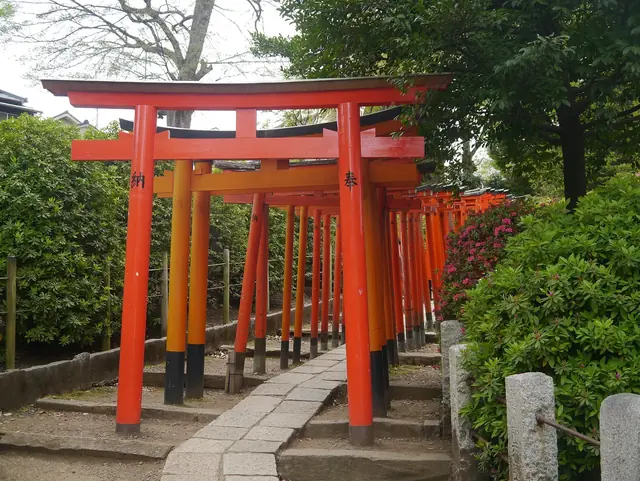
To the left of the halls a path of closely packed red torii, the senbon torii, leads up the slope to Otome Inari, a small shrine built on a platform above the pond. A second Inari shrine on the grounds, Komagome Inari, still carries the Tokugawa crest on its roof. Near the Romon is a flat stone known as the writers' stone: Natsume Soseki and Mori Ogai both lived nearby and were parishioners here, and the story goes that they sat on it.
Since 2025 the grounds also hold Maihime no Ie, the house where Mori Ogai lived with his first wife and wrote his story Maihime. It stood in Ikenohata by Shinobazu Pond until 2020 and was taken apart and rebuilt here. It opens on weekends and public holidays for a small fee, and you cannot go in barefoot, so wear socks.
- The torii path is narrow and people line up for photos. Take your shot and keep walking.
- Shooting inside the shrine buildings is not allowed, and the shrine asks visitors to pray before taking pictures.
The year at Nezu Shrine
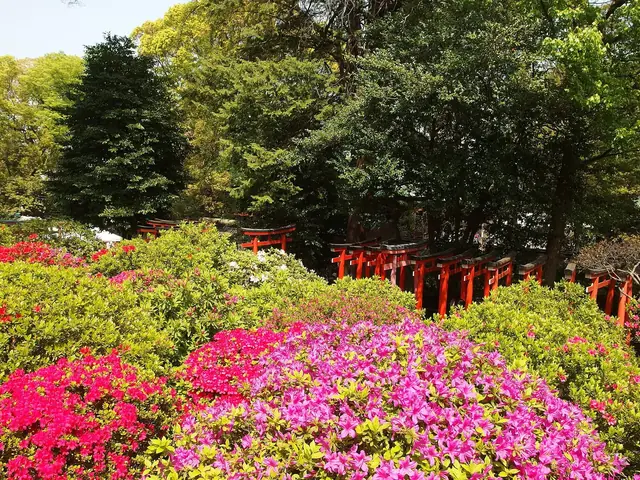
April belongs to the Bunkyo Azalea Festival (Bunkyo Tsutsuji Matsuri), held here since 1970. About 3,000 azaleas of around 100 varieties cover the hill beside the halls; early varieties open first, and the slope is usually at its fullest in mid to late April. The azalea garden on the hill opens only during the festival, with an entry donation, and stalls line the approach for the whole month.
Early January brings hatsumode crowds, and the Setsubun festival falls on Setsubun day, around February 3. On June 30 the shrine holds the great purification with a grass ring to walk through, and through July and August the grounds fill with pinwheels for the summer kazaguruma festival, with a bon odori dance in mid-August. The annual festival is on September 21, with stalls and performances on a weekend later in the month, and once every four years the shrine's mikoshi is carried through the neighbourhood. In mid-October the Nezu Sendagi Shitamachi Matsuri brings more stalls, and in November families come for shichi-go-san.
Local groups also run a morning market and a handmade crafts market here on Saturdays in most months; check the shrine's calendar for dates.
- In April bring cash for the azalea garden donation and the stalls.
- Seasonal goshuin stamps are made in limited numbers. If you want one, come early in the season.
Timing, crowds and etiquette
The grounds open early in the morning and close in the late afternoon, around 5pm for much of the year, with the times shifting by season; there is no entry fee. Weekday mornings are the calmest, and before 9am the torii path is often close to empty. In azalea season weekends get very busy from late morning, so go early or on a weekday.
Bow at the gate, rinse your hands at the basin and pray at the worship hall before you take photos. The shrine does not allow paid or commercial photo sessions without permission, large equipment such as reflectors and props, or cosplay as priests and shrine maidens, and it asks for quiet near the main hall. Charms and goshuin are handled at the shrine office (juyosho), which keeps shorter hours than the grounds.
Getting there and Yanesen around it
The shrine is about a five-minute walk from Nezu Station or Sendagi Station on the Tokyo Metro Chiyoda Line, and from Todaimae Station on the Namboku Line. Hakusan Station on the Toei Mita Line is about ten minutes away on foot.
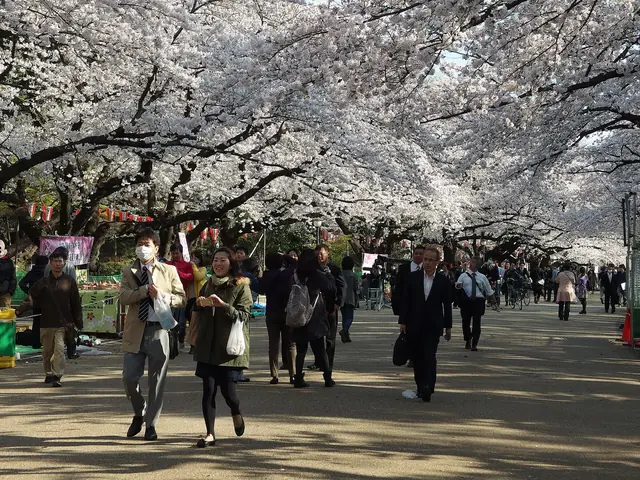
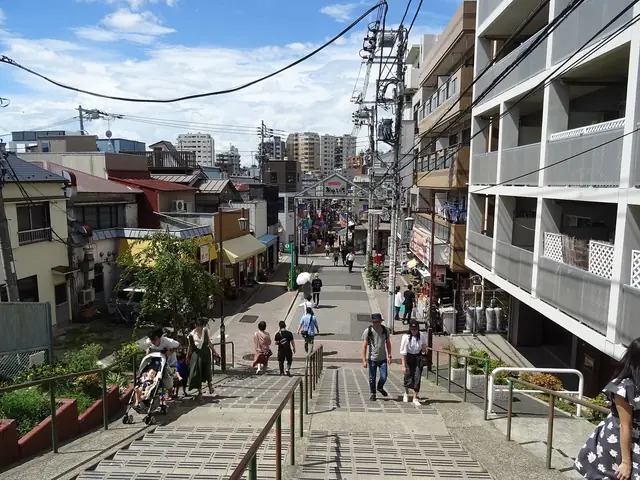
Nezu is one of the three old neighbourhoods that make up Yanesen, together with Yanaka and Sendagi. Walk north through Sendagi to Yanaka Ginza, a short shopping street of snack stands, and on to Yanaka Cemetery and its temples. The Bunkyo Mori Ogai Memorial Museum stands at the top of Dangozaka in Sendagi, the University of Tokyo's Hongo campus is just west, and Ueno Park and Shinobazu Pond are a walk to the south.