When the blossoms come
Most of Tokyo's trees are Somei-yoshino, the classic pale variety. The Japan Meteorological Agency declares the official start of blooming (kaika) when its sample tree at Yasukuni Shrine has at least five or six open flowers, and full bloom (mankai) when about 80 percent of the buds are open. In most years kaika comes in mid to late March and full bloom follows about a week later, so the best days usually fall in late March or early April.
Private weather companies such as Weathernews publish forecasts from early in the year and update them as spring warms up. Full bloom lasts only about a week before the petals start to fall, and rain or strong wind can shorten it. The season is a little longer than that, though: weeping cherries tend to open a few days before the Somei-yoshino, and heavier double-flowered yaezakura carry on into mid-April.
Where to go
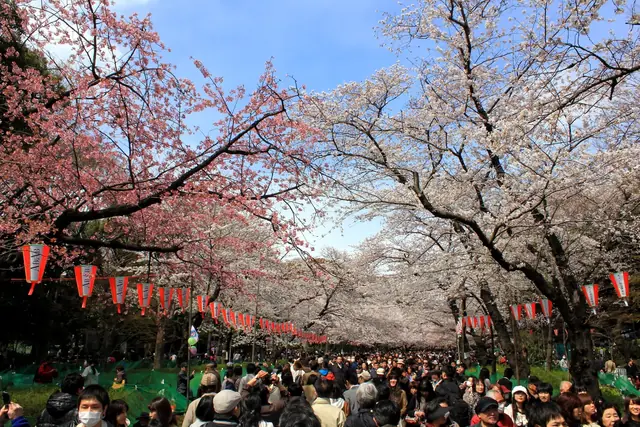
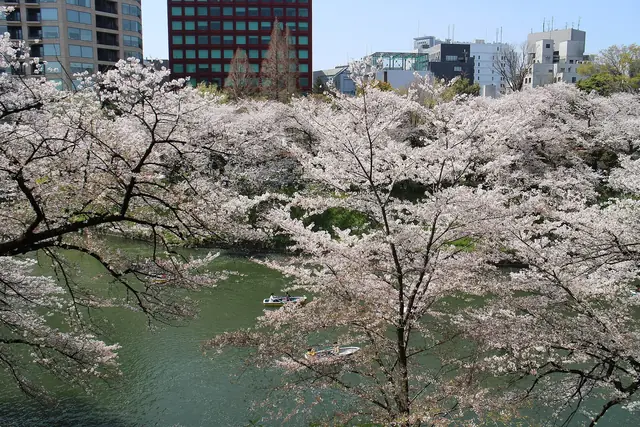
Ueno Park (nearest exit: the Park exit of JR Ueno Station) is the classic party spot, a long avenue of trees lined with lanterns and packed with picnic groups; the park is closed to visitors overnight. Chidorigafuchi (near Kudanshita Station) is a moat by the Imperial Palace where trees lean over the water: the walkway is lit up in the evening during the Chiyoda sakura festival and you can rent rowing boats, though queues are long. Yasukuni Shrine, home of the sample tree, is a short walk away.
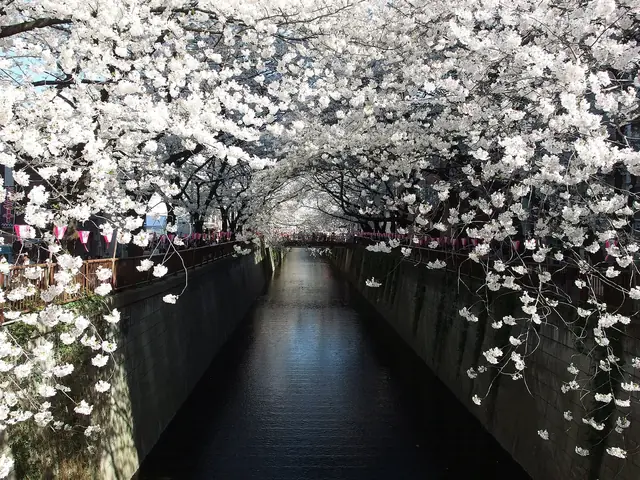
The Meguro River around Nakameguro is lined with trees for several kilometres and hung with lanterns; it is for walking, not sitting. Shinjuku Gyoen is a paid national garden with many varieties, which stretches its season. Sumida Park runs along both banks of the Sumida River near Asakusa, with Skytree rising behind the trees, and has been a cherry spot since the Edo period. Yoyogi Park has big lawns and a younger picnic crowd, while Inokashira Park in Kichijoji has a pond under the trees with rowing boats. Aoyama Cemetery forms a quiet tunnel of blossoms for a respectful walk, and Rikugien near Komagome is famous for one huge weeping cherry that blooms slightly earlier than most.
Festivals, stalls and night blossoms
Many areas hold a sakura matsuri organised by the ward or local associations: paper lanterns along the paths, food stalls selling yakisoba and grilled skewers, sometimes a small stage. Ueno, Sumida Park and the Meguro River are the best known. Stalls usually take cash only, so bring coins and small notes.
Yozakura, cherry blossoms at night, is half the fun. Chidorigafuchi, Sumida Park and the Meguro River are lit up most evenings in season, and Rikugien and Shinjuku Gyoen have held special night openings in some years, usually with separate tickets. Festival notices often say 雨天中止 (cancelled in rain) or 荒天中止 (cancelled in stormy weather), so check the official page if the sky looks bad.
Beating the crowds and park rules
Weekdays and early mornings are the calmest times everywhere. On full-bloom weekends the popular spots fill by late morning, and at Meguro River or Chidorigafuchi staff may guide walkers in one direction; keep moving on bridges and take photos once you are across. Shinjuku Gyoen has required advance reservations on some peak weekends in recent years, so check its site before you go.
Rules differ by park, so read the signs at the entrance. In Tokyo's metropolitan parks, leaving a sheet unattended to hold a spot is not allowed, and tents and large shade tarps are banned at places such as Yoyogi. Shinjuku Gyoen bans alcohol and musical instruments entirely, and Aoyama Cemetery does not allow picnic sheets at all. Never shake branches or climb the trees.
- Take your rubbish home unless you see a clearly marked collection point. Bins overflow fast in hanami season.
- Toilet queues at Ueno and Yoyogi can take a long time at peak. Use the station toilets before you arrive.
- Coin lockers at Ueno and Nakameguro stations fill up early on weekends.
What to bring and the weather
Spring in Tokyo is unpredictable. A warm afternoon can turn chilly by evening, and the Japanese even have a word, hanabie, for the cold snap that often comes right in the middle of the bloom. If you plan to sit outside after dark, bring a warm jacket and something to sit on that keeps the cold from the ground.
Most parks and riversides are free. Shinjuku Gyoen and Rikugien charge a small admission fee, and boat rentals cost extra. Convenience stores near the big spots sell picnic sheets, drinks and snacks, but they get picked over on busy days.
- A picnic sheet, wet wipes and a bag for rubbish cover most of what you need.
- Rain the day after full bloom can strip a lot of petals. If the forecast looks wet, go the day before.