How the flower year works
Each flower has a week or two at its best (migoro), and that window moves with the weather. A warm winter brings the plums forward, a cool spring holds back the wisteria, and the rainy season decides when hydrangeas peak. Festival dates are set months ahead, so the flowers are not always at their best on the first or last day. Parks, gardens and shrines post bloom updates on their websites and social accounts, usually with words like 咲き始め (starting to bloom), 見頃 (at their best) and 散り始め (starting to fall).
Cherry blossoms and autumn leaves have their own guides; this one covers everything else, roughly in calendar order. Bunkyo ward alone runs five flower festivals a year: plums and chrysanthemums at Yushima Tenjin, cherry trees on Harimazaka, azaleas at Nezu Shrine and hydrangeas at Hakusan Shrine.
- Weekday mornings are the calmest time at almost every flower spot. By noon on a weekend, garden paths can be shoulder to shoulder.
- Shrine grounds are usually free, while old gardens and big parks charge a small entry fee. Carry cash for gates and stalls.
- Tripods are often restricted on narrow garden paths. Check the signs at the entrance.
Plum blossoms: February into March
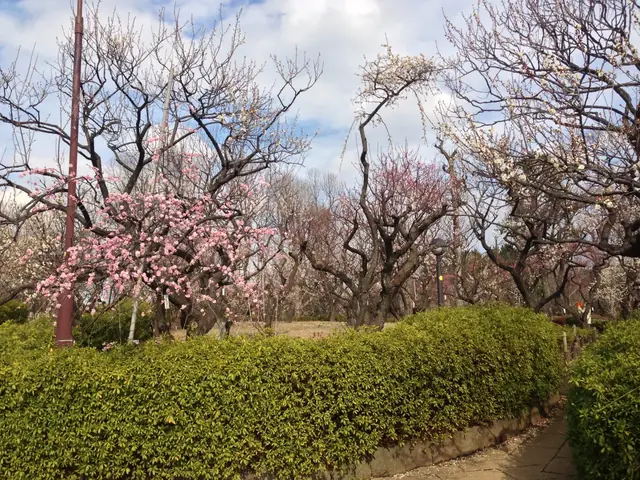
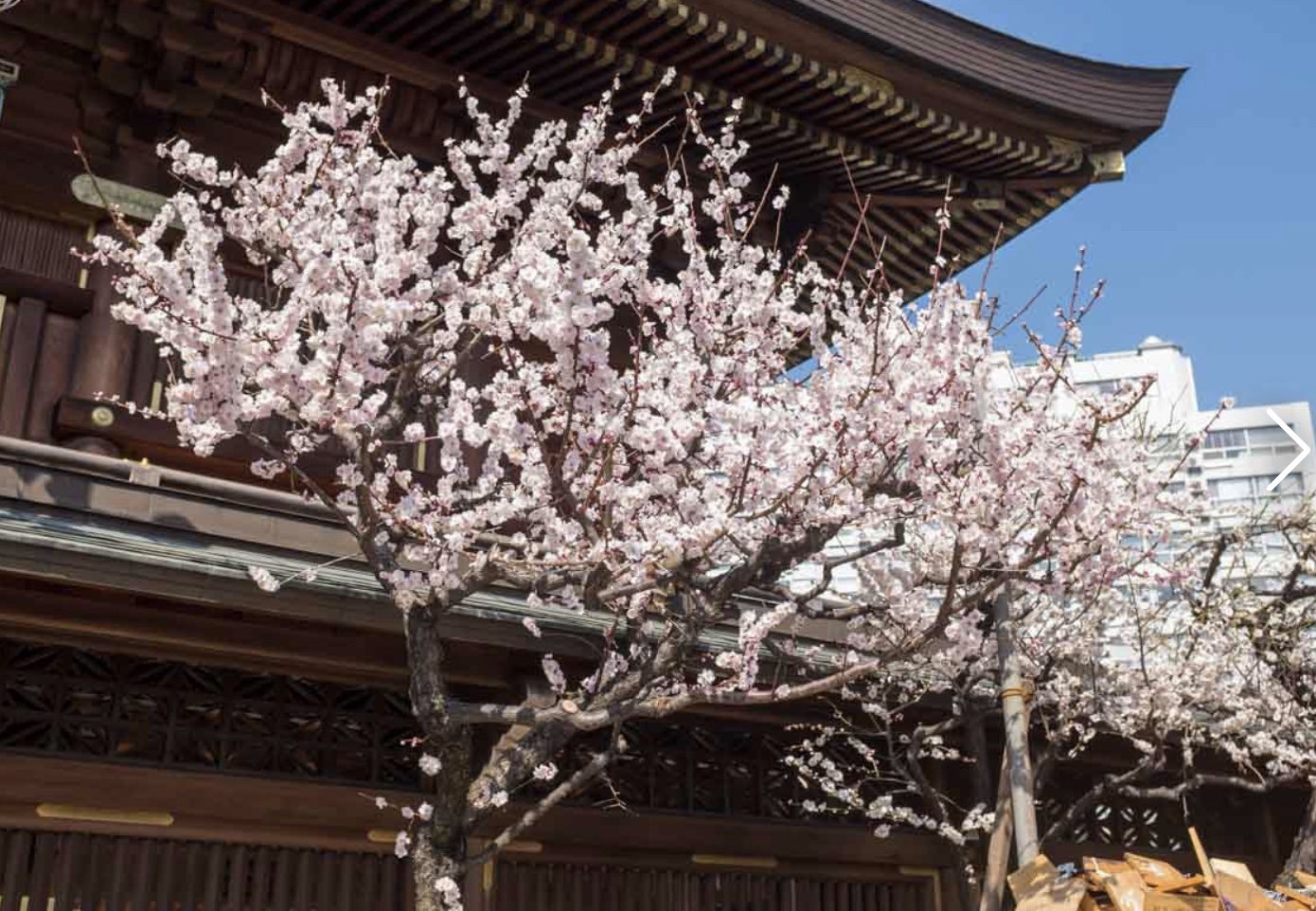
Ume bloom in the cold, usually from February into early March, a few weeks ahead of the cherry trees. The scent is the point: on a still day you smell a white plum tree before you see it. Yushima Tenjin, a shrine to the scholar Sugawara no Michizane near Yushima Station, holds the Bunkyo Plum Festival among around 300 trees, most of them white. It is also the shrine students visit before entrance exams, so in plum season its racks of wooden ema prayer plaques are packed. On weekends there are usually stalls with amazake and regional food, and performances on a small stage.
Hanegi Park in Setagaya, a short walk from Umegaoka Station, has around 650 red and white plum trees on a gentle hill and hosts the Setagaya Plum Festival, with stalls and an outdoor tea ceremony on some days. The park is free. Koishikawa Korakuen near Iidabashi is an Edo-period garden built for a feudal lord, with a smaller plum grove set among ponds and stone bridges. It charges a small fee and is much calmer.
- Plum season is still winter. Dress warmly, especially if you plan to sit outdoors for tea.
Azaleas, wisteria and spring fields
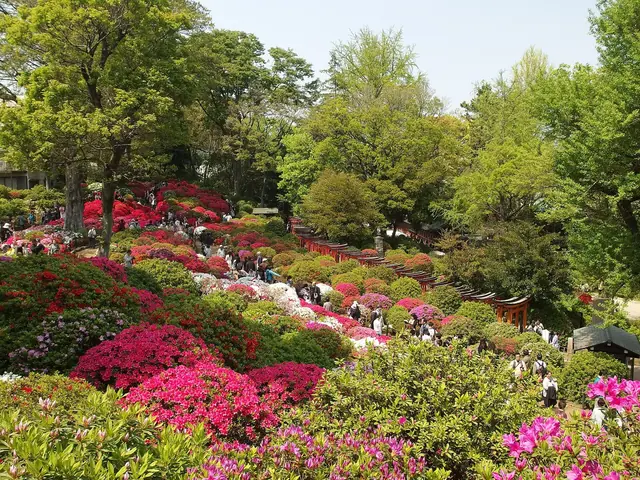
In April, Nezu Shrine near Nezu Station turns its hillside into a slope of pink, red and white azaleas for the Bunkyo Azalea Festival. The shrine grounds are free, but the azalea garden has a small entry fee during the festival. The shrine's tunnel of red torii gates sits right next to the slope. On weekends the approach fills with food stalls.
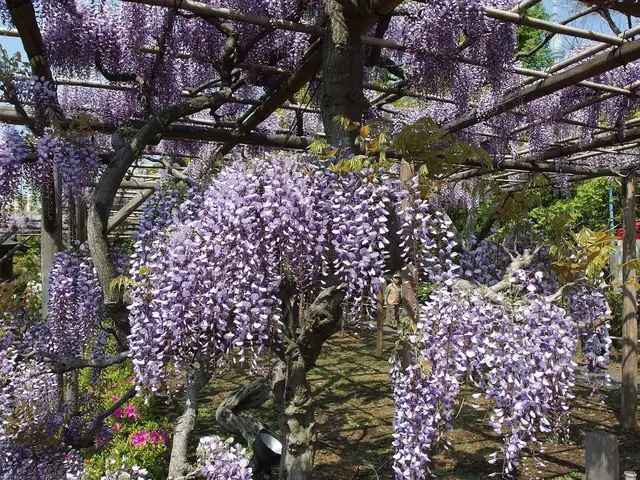
From late April into early May, Kameido Tenjin in Koto ward is the classic wisteria spot. Long purple trellises hang over a pond crossed by arched drum bridges, the scene Hiroshige printed, now with Tokyo Skytree behind it. During the wisteria festival there are stalls and the trellises are lit up after dark. It is about 15 minutes on foot from Kameido Station.
For open fields, Showa Kinen Park in Tachikawa, a large government-run park in west Tokyo, plants hundreds of thousands of tulips and a field of blue nemophila that peaks from mid-April into May. The famous nemophila hill at Hitachi Seaside Park is in Ibaraki, not Tokyo: a long day trip of about two hours each way, and very busy at peak.
- Golden Week often falls at wisteria peak. Go early on a weekday if you can.
Irises and hydrangeas in the rainy season
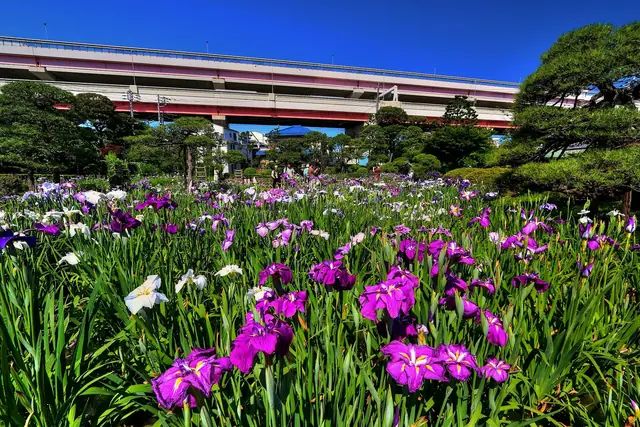
June is tsuyu, the rainy season, and this is when many gardens look their best. Horikiri Shobuen in Katsushika, about 10 minutes on foot from Horikirishobuen Station on the Keisei Line, is a compact Edo-era garden with thousands of irises (hanashobu) in purple, white and blue, many of them old Edo varieties. Entry is free. The Katsushika Iris Festival, usually held in June, is shared with the much larger Mizumoto Park in the north of the ward.
Hakusan Shrine in Bunkyo, near Hakusan Station on the Toei Mita Line, holds the Bunkyo Hydrangea Festival (ajisai matsuri) with around 3,000 plants, and its small Fuji mound covered in hydrangeas is usually open only during the festival. Takahata Fudo, a large temple in Hino next to Takahatafudo Station on the Keio Line, has thousands of hydrangeas along a trail on the hill behind its halls, and the grounds are free. Meigetsuin in Kamakura, known as the hydrangea temple, is a popular day trip, but in June expect an entry fee and long queues, especially at weekends.
- Irises and hydrangeas look their best on a grey, drizzly day, and light rain keeps the crowds smaller.
- Wear shoes that can get wet. Garden paths and temple hillsides get muddy and slippery.
Lotus, sunflowers, cosmos and chrysanthemums
In midsummer, lotus covers part of Shinobazu Pond in Ueno Park around the Bentendo hall, usually at its fullest from mid-July to mid-August. Lotus flowers open early in the morning and close by around midday, so go early. Kiyose, a city in north-west Tokyo, plants around 100,000 sunflowers on farmland for its summer sunflower festival. Entry is free and a shuttle bus has run from Kiyose Station in recent years, but on the busiest days advance booking has sometimes been required, so check the city's page first.
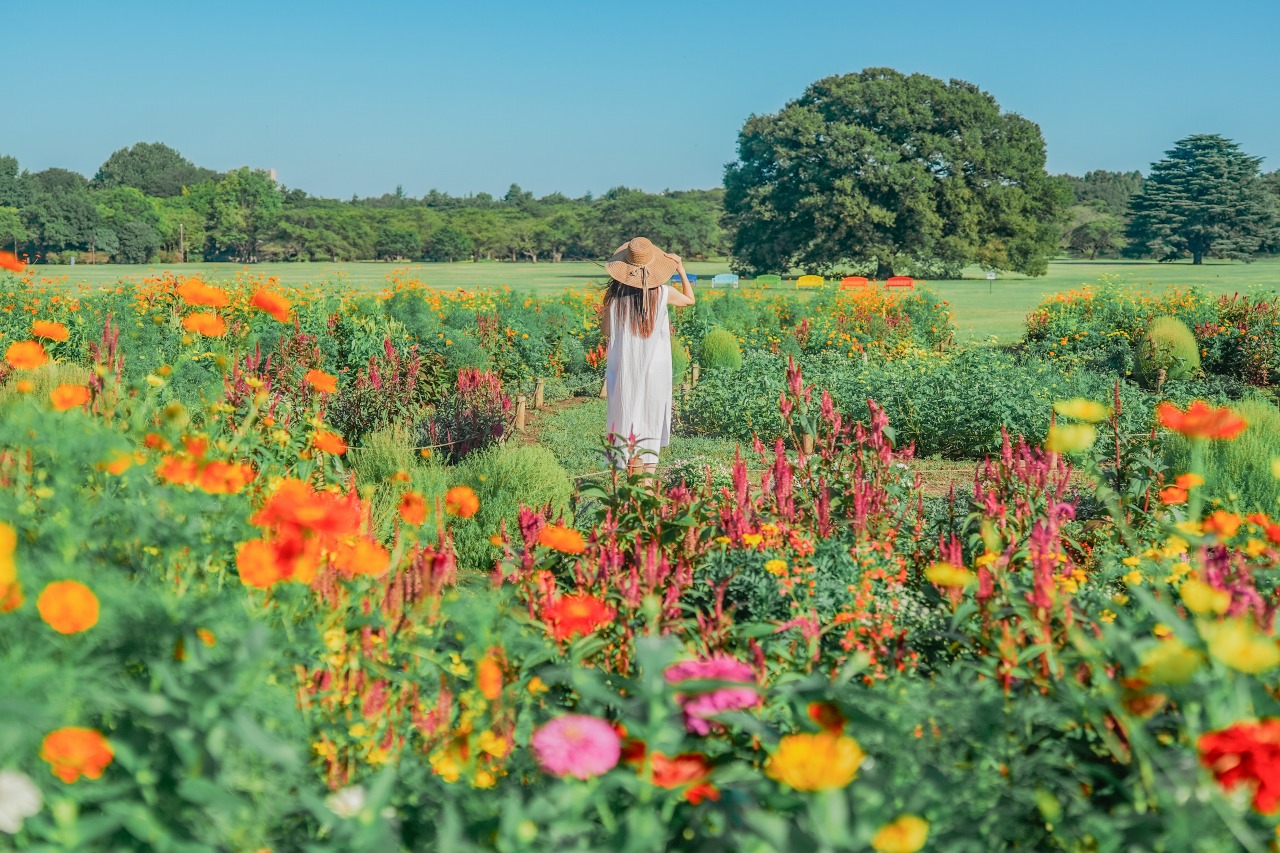
In autumn the Flower Hill at Showa Kinen Park turns pink and white with cosmos, usually from mid-September through October. November belongs to chrysanthemums. Shinjuku Gyoen holds a formal exhibition in its Japanese garden in the first half of the month, with plants trained into traditional shapes under wooden pavilions; the usual garden fee applies. Yushima Tenjin hosts the Bunkyo Chrysanthemum Festival with around 2,000 pots and chrysanthemum dolls themed on the year's NHK historical drama.
- Summer in Ueno and Kiyose is hot and humid. Bring water and a hat, as the sunflower fields have little shade.
- Flower events often mark stalls or stage shows 雨天中止 (cancelled in rain), while the garden itself stays open.