Sensoji, Nakamise and the temple year
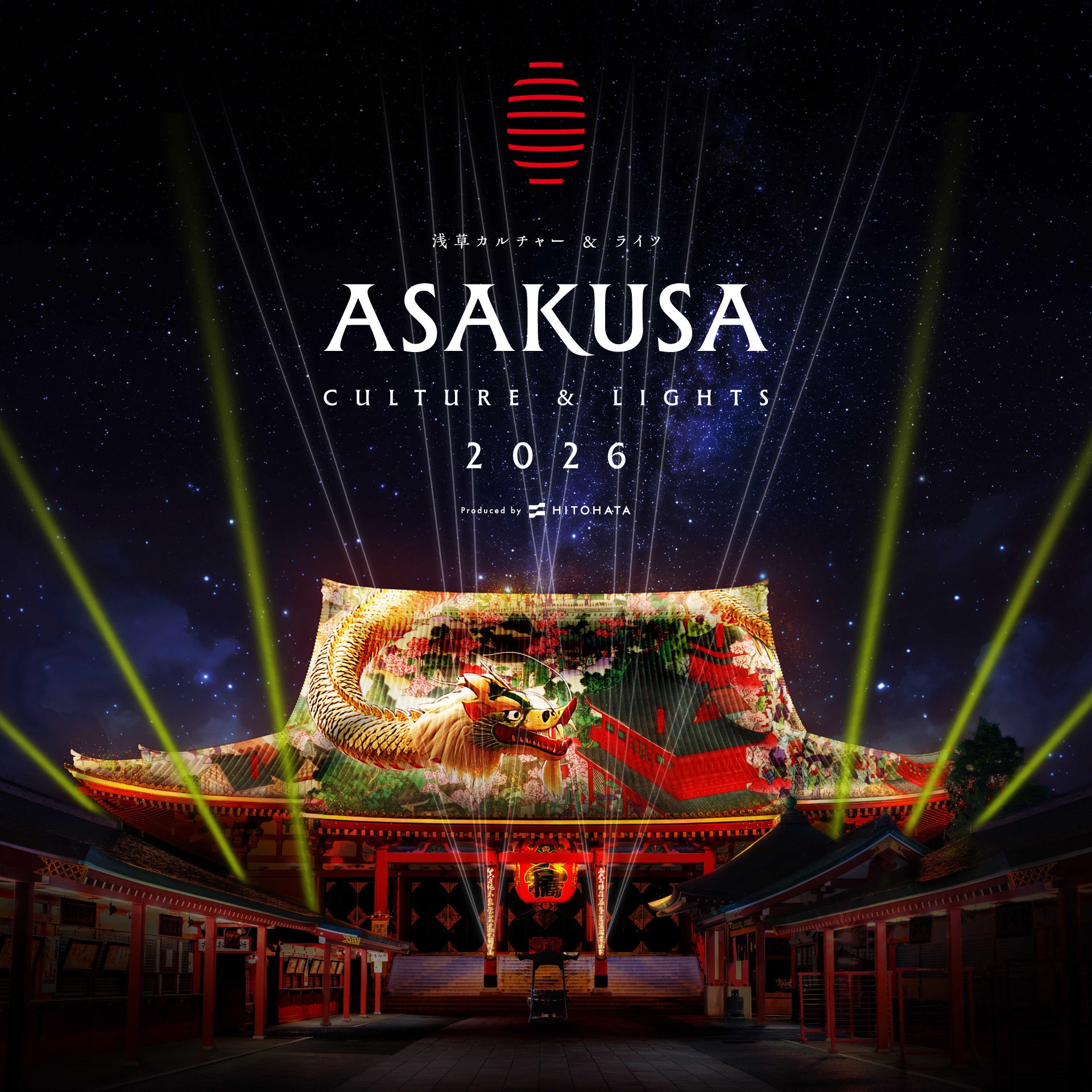
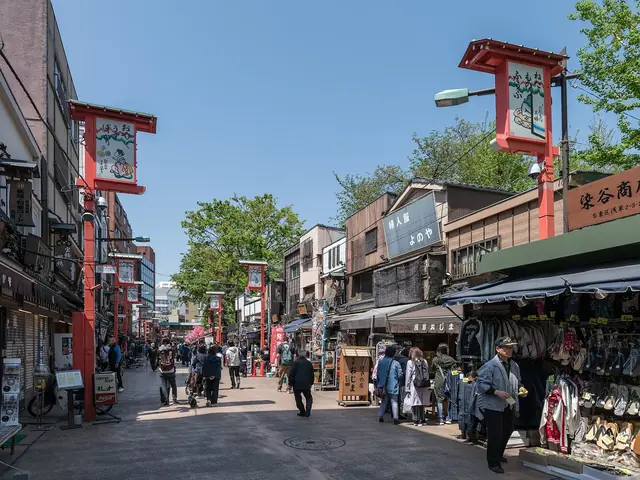
You enter through Kaminarimon, the gate with the giant red lantern, and walk up Nakamise, a street of small snack and souvenir shops, to the main hall. The main hall opens early in the morning and closes in the late afternoon, but the grounds stay open and the buildings are lit up after dark. Asakusa Shrine, home of the Sanja Matsuri, stands just to the right of the main hall.
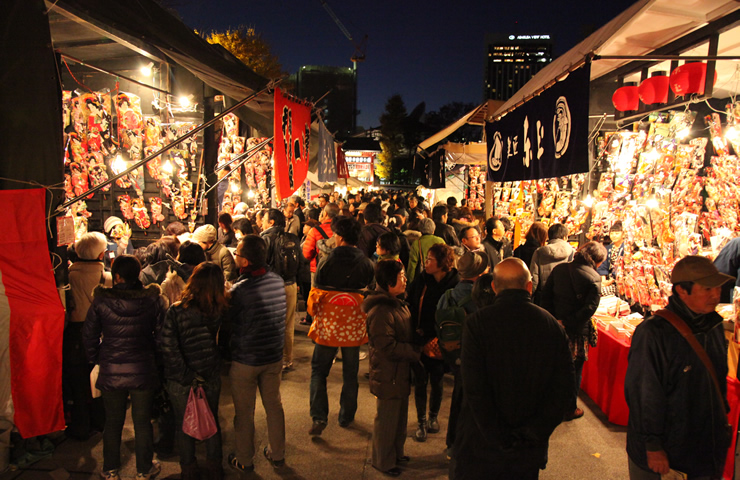
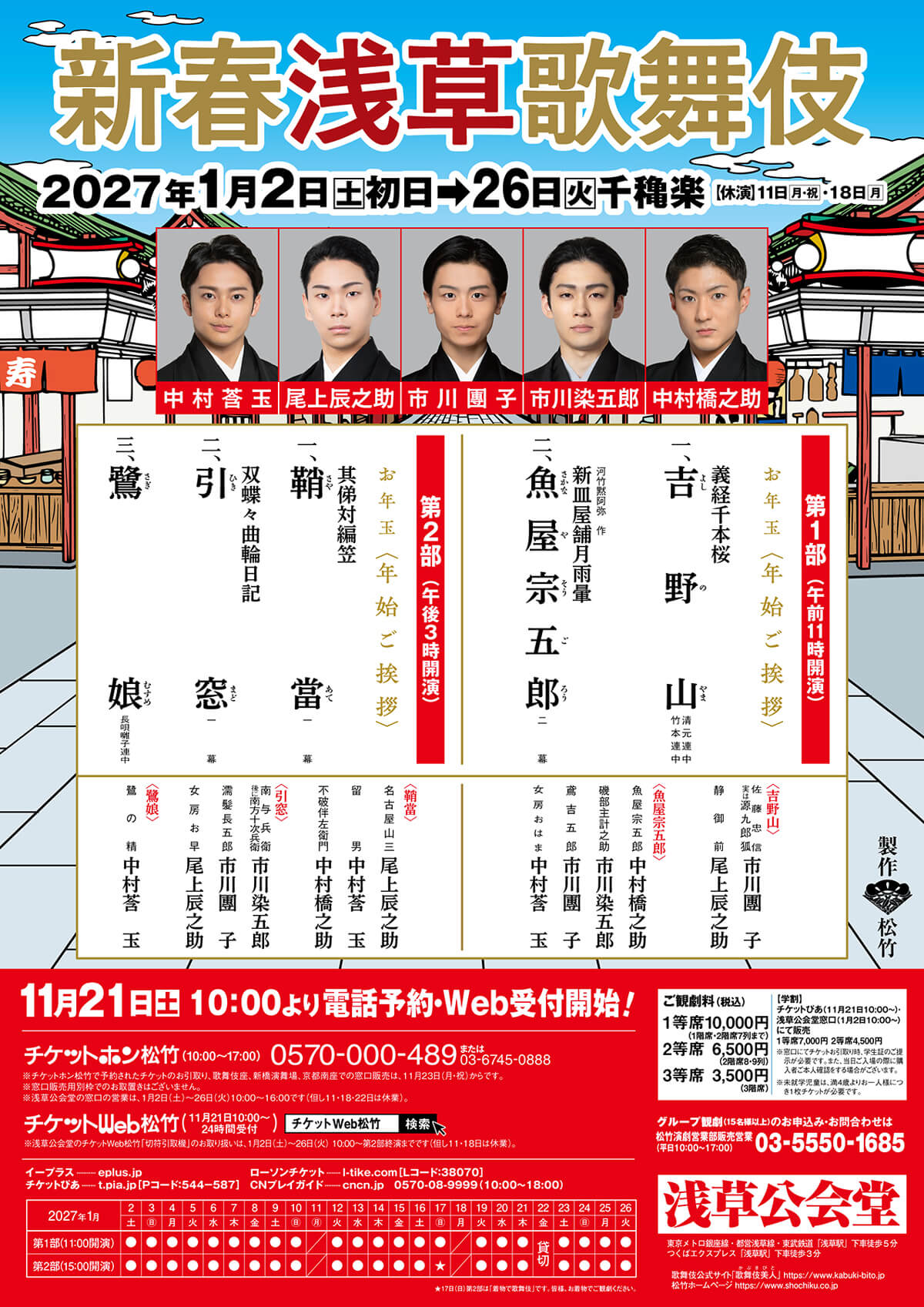
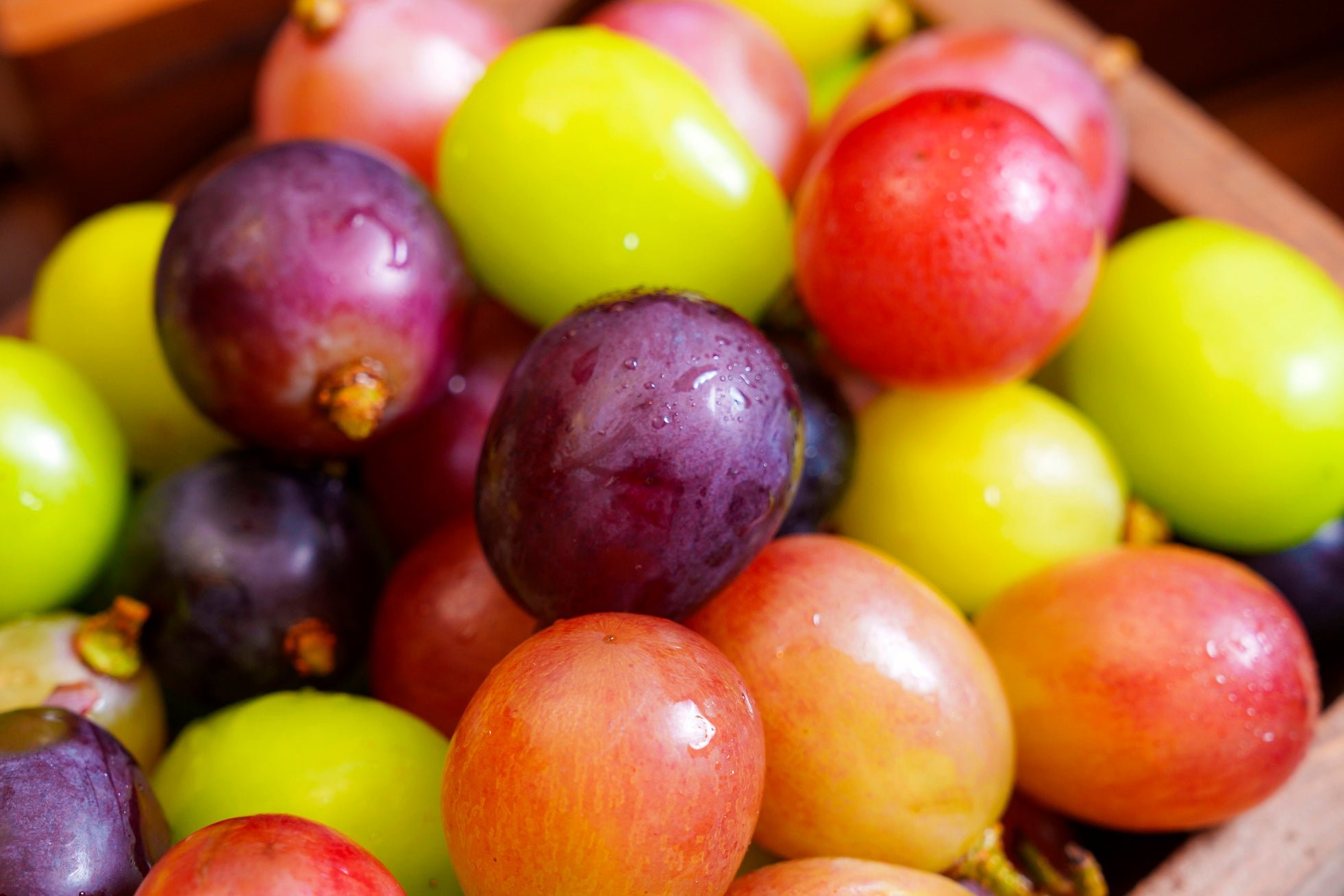
Sensoji keeps fairs on fixed dates every year. On July 9 and 10 the ground cherry market (hozuki-ichi) fills the grounds with stalls of orange lantern plants, and a visit on July 10 is said to count as 46,000 days of prayer. On December 17, 18 and 19 the battledore fair (hagoita-ichi) brings stalls of richly decorated hagoita paddles, many with kabuki actors on them. The golden dragon dance comes on March 18, Setsubun bean throwing in early February, and at New Year the hatsumode queue can stretch back to Kaminarimon.
- Omikuji fortunes at Sensoji are known for giving bad luck fairly often. If you get one, tie it to the rack and leave it behind.
- Nakamise shops open mid-morning and close in the early evening. Before 9am you get the street almost to yourself.
Sanja Matsuri, the samba parade and fireworks
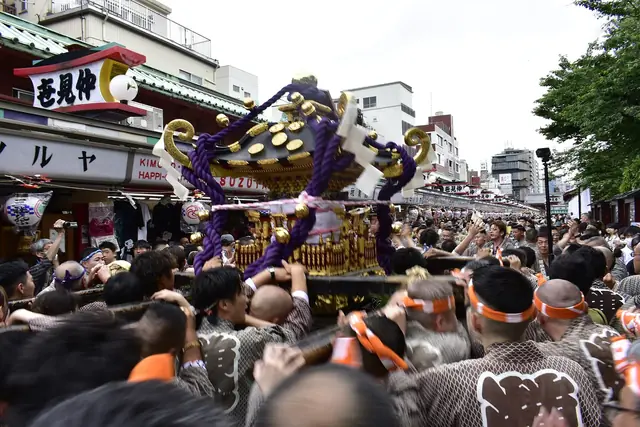
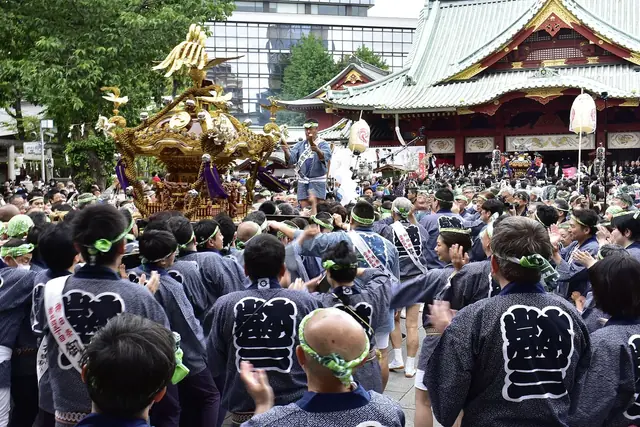
Sanja Matsuri, on the third weekend of May, is the biggest weekend of the Asakusa year. On Saturday around a hundred neighbourhood mikoshi are carried through the streets, and on Sunday the shrine's three main mikoshi leave early in the morning and come back after dark. Expect packed streets and closed roads; stand at the side of the route and let the bearers pass.
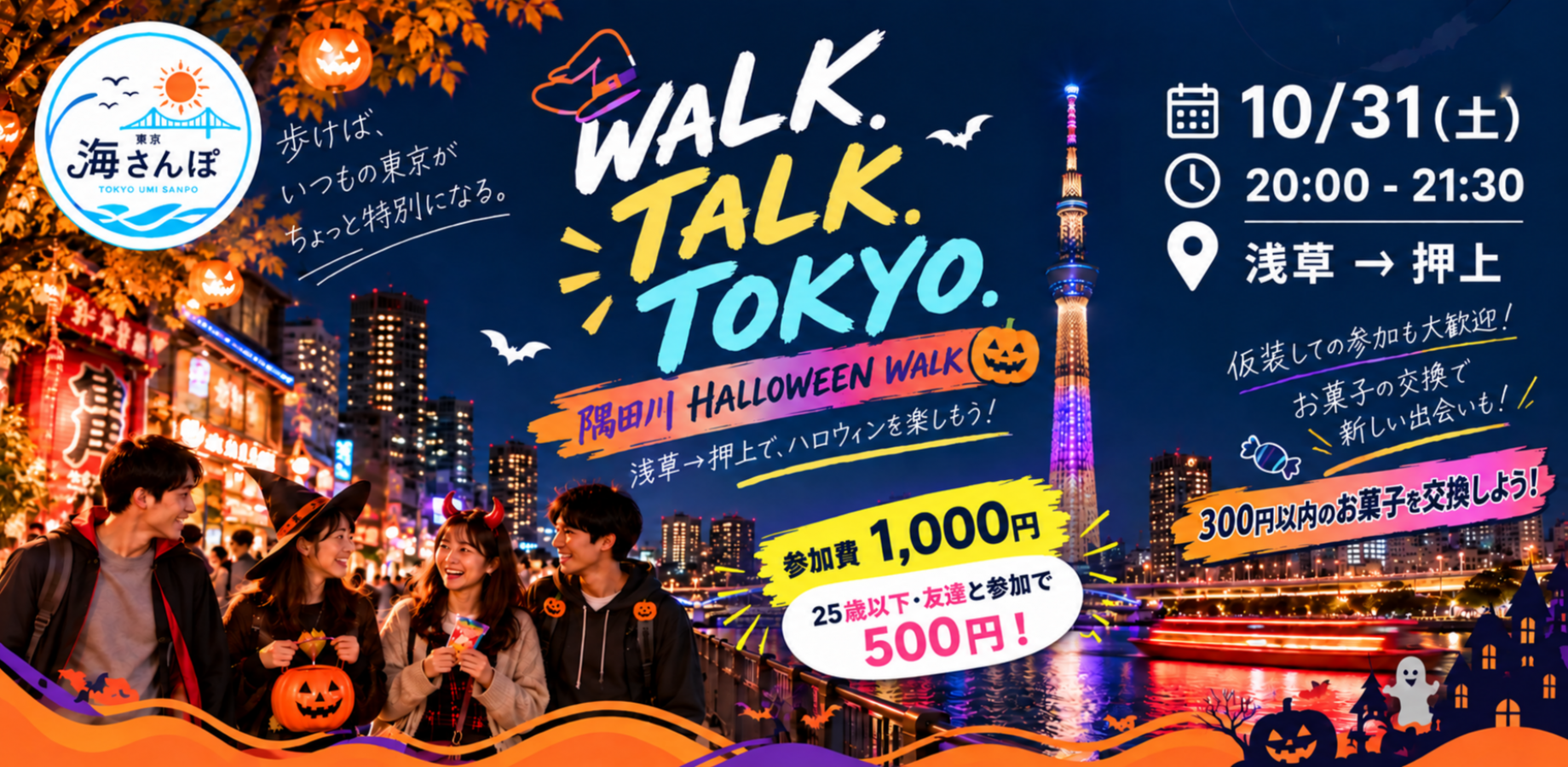
In late August the Asakusa Samba Carnival sends samba teams in costume down Umamichi-dori and Kaminarimon-dori in a competition parade, a local tradition since the early 1980s. On the last Saturday of July the Sumida River Fireworks go up from two sites on the river, one upstream and one just downstream of Asakusa, and in November the Tori-no-ichi rake fair is held at Otori Shrine, a walk north of Sensoji. On Culture Day (November 3) the Tokyo Jidai Matsuri costume parade circles the temple.
- On fireworks night the streets near the river close to traffic early and Asakusa Station is very crowded. Plan to walk home part of the way.
- For the samba parade, the area near Kaminarimon fills first. The upper part of Umamichi-dori is usually easier.
Rakugo, Hanayashiki and an evening in Rokku
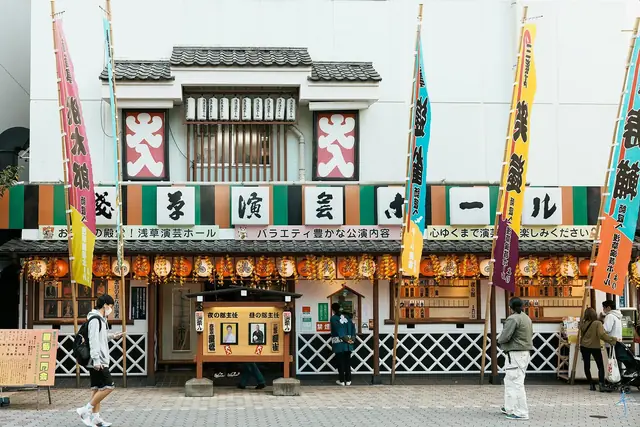
West of Sensoji is Rokku, the old entertainment street. Asakusa Engei Hall here is one of Tokyo's four yose halls that run comic storytelling almost every day of the year. There is no booking: pay at the door and stay as long as you like, since the afternoon and evening shows usually run on without clearing the hall. The rakugo is in Japanese, but the variety acts in between, like paper cutting and juggling, need no language at all.
Hanayashiki, a few minutes from Sensoji, opened in 1853 as a flower garden and was rebuilt as an amusement park after the war. Its roller coaster has run since 1953, the oldest operating one in Japan. For dinner, the street of yakitori and stew bars around Rokku is the classic Asakusa evening.
Kappabashi, between Asakusa and Ueno, is a kitchenware street of knives, lacquer bowls and plastic food samples. Many shops close on Sundays, and around October 9 (Tool Day) it holds a yearly tool fair.
Getting there, Skytree and the river
Asakusa Station is served by the Ginza Line, the Toei Asakusa Line and the Tobu Skytree Line, and the Tsukuba Express has its own Asakusa Station a few minutes west, closer to Rokku and Engei Hall. Ueno is a short ride away on the Ginza Line.
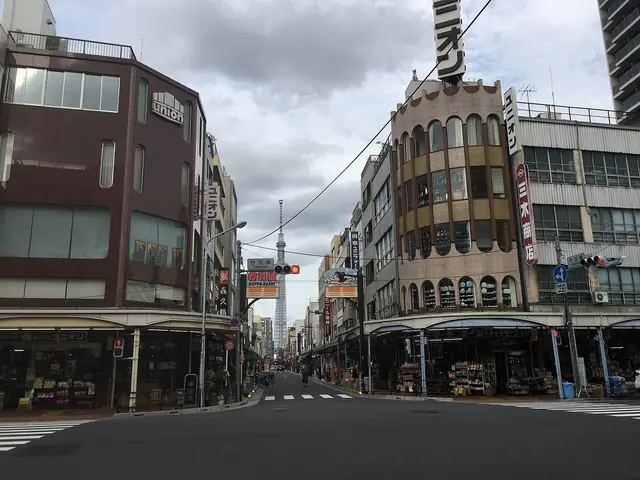
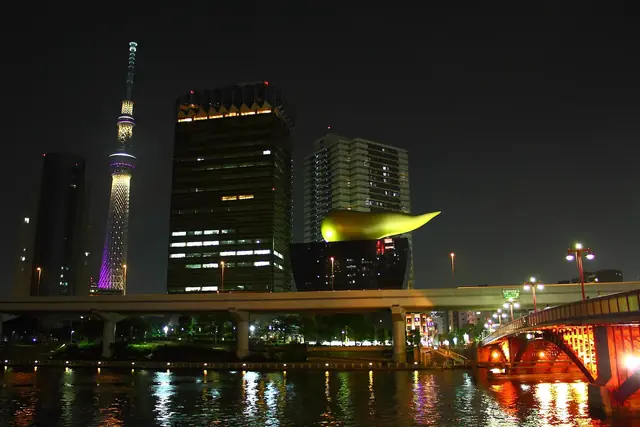
Tokyo Skytree stands across the river in Sumida. You can walk there in about 20 minutes over Azumabashi bridge or take the Tobu line one stop. From the pier next to Azumabashi, water buses run down the Sumida River to Hinode Pier, Hama-rikyu and Odaiba. Two companies run boats from separate piers, so check which pier your ticket is for. Rickshaw pullers wait around Kaminarimon and offer short tours of the backstreets, often in English, priced by the length of the ride.
- Coin lockers at Asakusa Station fill up early on festival days. Leave big bags at your hotel.
Beating the crowds
Asakusa is busiest from late morning to late afternoon, especially on weekends. Early morning is the best time, when locals come to pray before work. Evening is good too, once the shops close and the temple is lit up.
On the big days (New Year, Sanja Matsuri, fireworks night, the samba parade) walk in from Tawaramachi or Kuramae instead of fighting through Asakusa Station. Carry your trash with you, since bins are rare, and use a station or cafe toilet before you head into the crowd.
- Weekday mornings are the calmest time for photos at Kaminarimon.
- Festival stalls and temple fairs are mostly cash only. Bring coins and 1,000-yen notes.