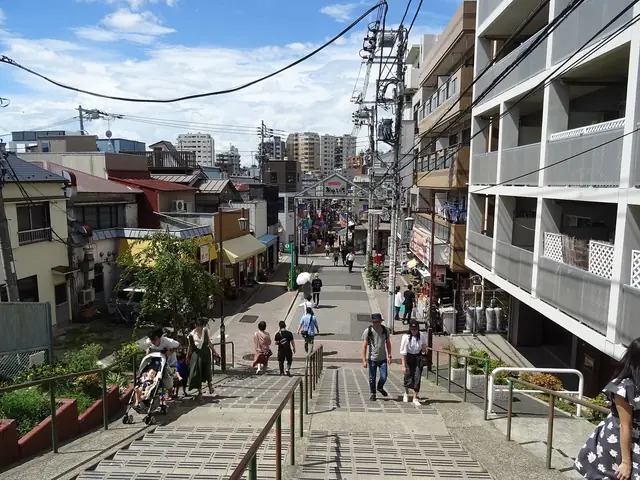
What Yanaka is
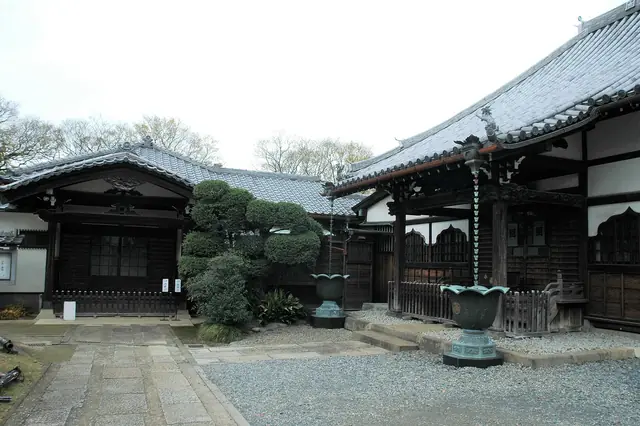
Yanaka grew as a temple town in the Edo period on the ridge north of Ueno, and temples still line its lanes. The area escaped much of the damage from the 1923 earthquake and the great fires of later decades, which is why so many prewar houses, shopfronts and alleys remain. Yanaka itself is in Taito ward, while Sendagi and Nezu lie across the border in Bunkyo and Nippori Station in Arakawa.
Yanaka Cemetery opened in 1874 on land that had belonged to Tennoji temple and covers about 10 hectares. Tokugawa Yoshinobu, the last shogun, and the industrialist Shibusawa Eiichi are buried here, along with many painters and writers of the Meiji era and after.
What to see
From the west side of Nippori Station the road leads to Yuyake Dandan, a short flight of 36 steps known for its sunsets, and down into Yanaka Ginza, a shopping street of about 170 m with some 60 small shops: croquettes and minced-meat cutlets, rice crackers, Japanese sweets and cat goods. One bakery sells doughnuts shaped like cats' tails.
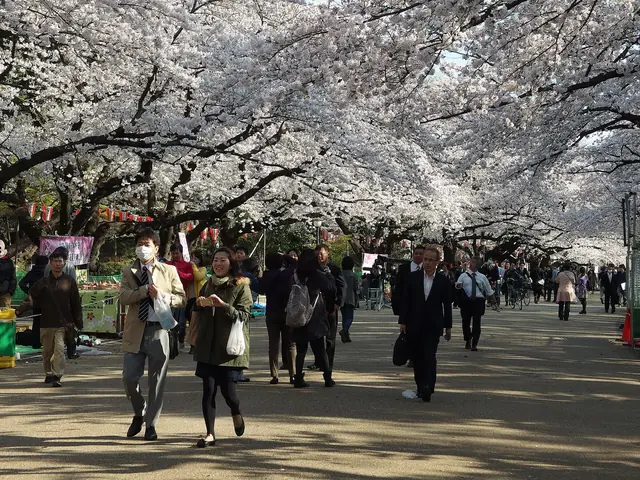
Yanaka Cemetery spreads out on the other side of the station. Its central road, Sakura-dori, used to be the approach to Tennoji and is lined with cherry trees, and near it lie the foundation stones of Tennoji's five-storey pagoda, which burned in 1957.
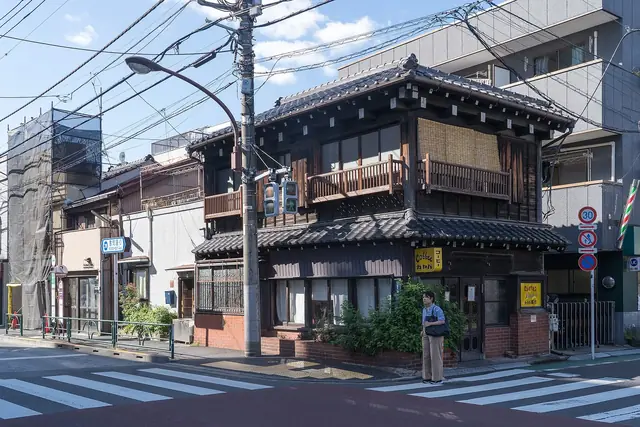
In the lanes between, look for SCAI The Bathhouse, a contemporary art gallery in an old public bath with its tiled roof still in place; Kayaba Coffee, a coffee house on a corner since 1938; and Ueno Sakuragi Atari, three wooden houses from 1938 turned into a beer hall, a bakery and small shops. The Asakura Museum of Sculpture, the former house and studio of the sculptor Asakura Fumio, has a water garden, a roof terrace and plenty of cat sculptures: he kept many cats.
- Cats are part of the street life here. Let them be: no feeding and no picking them up.
- Some Yanaka Ginza shops sell food only to eat on the spot, so check before you order to go.
- The Asakura Museum has been closed on Mondays and Thursdays in recent years. Check before you go.
The year in Yanaka
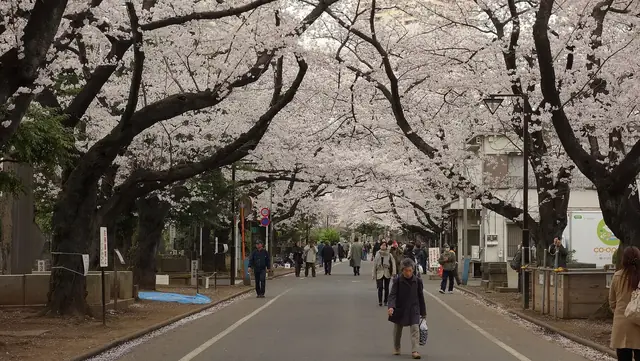
From January 1 to 10 the Yanaka Shichifukujin pilgrimage, said to be the oldest of Tokyo's Seven Lucky Gods walks, links seven temples from Shinobazu Pond in Ueno to Tabata, about 5 km on foot. The temples open their images and give stamps only on those days. In late March and early April the cemetery's cherry avenue turns pink; it is a cemetery, so people walk under the trees rather than hold picnic parties.
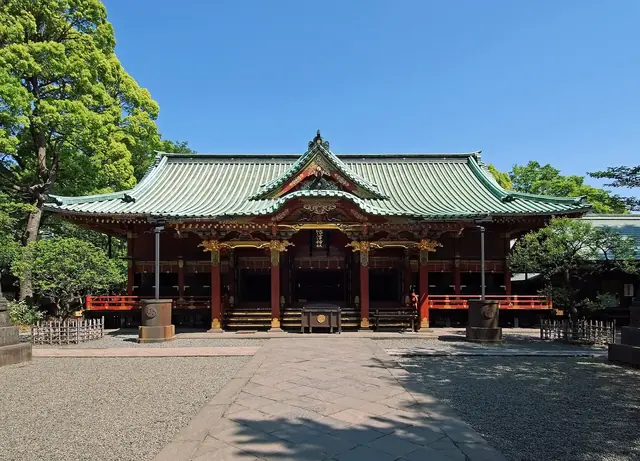
In April the azalea festival at Nezu Shrine, a short walk south, covers its slope with some 3,000 bushes. In October the neighbourhood holds Yanaka Matsuri, a local festival of stalls and games run by the town associations, around the same weekend as the Nezu Sendagi Shitamachi Matsuri.
The Yanaka antique market sets up in the car park of Enmeiin, an Edo-period temple with a huge old chinquapin tree, about once a month on a weekend or holiday. Dealers bring ceramics, tools, old kimono and small things; entry is free and it is cancelled in rain.
Timing and manners
Yanaka is a residential area, and it is at its best on a weekday or early on a weekend morning, before the shopping street fills. Sunset is the busy hour on Yuyake Dandan. Most cafes and galleries open late in the morning, many small shops close one day a week, and the shopping street goes quiet by early evening.
Keep your voice low in the temple lanes and the cemetery, and don't walk onto graves or through closed temple gates for a photo. People still live in many of the old houses, so take pictures from the street and don't block doorways. Small shops and the antique market are often cash only, and bins are few, so keep a bag for wrappers.
- Come in the morning for empty lanes and soft light. Weekend afternoons are livelier and more crowded.
- Bring coins and 1,000-yen notes for snacks and the antique market.
Getting there and nearby
Nippori Station, on the JR Yamanote, Keihin-Tohoku and Joban lines, the Keisei line and the Nippori-Toneri Liner, is the usual start: Yanaka Ginza is about 5 minutes from the west exit. Sendagi Station on the Chiyoda Line is about 5 minutes from the other end of the shopping street, and Nezu Station, one stop south, is close to Nezu Shrine.
Walk south through Ueno Sakuragi and you reach Ueno Park, with Tokyo University of the Arts and the Tokyo National Museum on the way. A good half day: Nippori, the cemetery and temples, Yanaka Ginza, then along Yomise-dori to Sendagi and down to Nezu Shrine.