Shrine or temple: how to tell
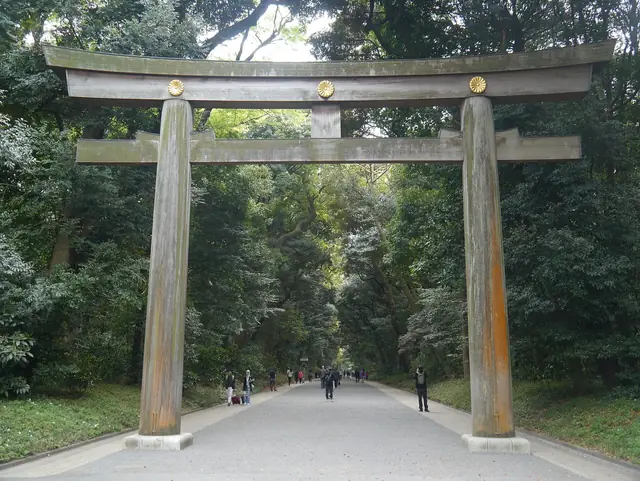
A shrine (jinja, or -gu and -taisha in some names) belongs to Shinto and is marked by a torii gate, often vermilion or plain wood, with a pair of guardian lion-dogs (komainu) by the approach and a rope or paper streamers at the hall. A temple (otera, names ending in -ji or -in) is Buddhist: you enter through a roofed gate, often with fierce guardian statues, and there is usually a large incense burner in front of the main hall, sometimes a pagoda.
Many Tokyo places sit side by side. Asakusa is the classic example: Sensoji temple and Asakusa Shrine share the same grounds, and you pray differently at each. The good news is that the basic attitude is the same everywhere: walk calmly, keep your voice down near the halls, and follow the signs.
At a shrine: torii, purifying, two claps
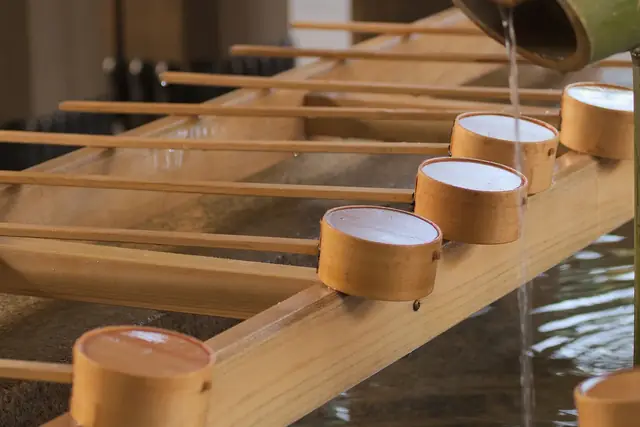
Many people give a small bow at the torii before stepping through, and again when they leave. On the approach, keep to one side: the centre is traditionally thought of as the path of the deity. Before praying, stop at the water basin (temizuya). The classic way is to hold the ladle in your right hand and rinse your left hand, switch and rinse your right, pour a little into your cupped left hand to rinse your mouth (never drink from the ladle), rinse your left hand again and tip the ladle up so the water runs down the handle. Since 2020 many shrines have removed ladles and use running water, so just rinse your hands under it.
At the hall, drop a coin gently into the offering box rather than throwing it, and ring the bell if there is one. Then bow twice, clap twice, put your palms together for a short silent prayer, and bow once more. This two bows, two claps, one bow pattern is the standard, though a few shrines have their own custom and post it at the hall. There is no set amount for the offering; the 5-yen coin is popular because go-en sounds like the word for a good connection.
- Keep a few coins in your pocket so you are not digging in your wallet at the front of a queue.
- Step to the side after you pray. At busy times the people behind you are waiting.
At a temple: incense and no clapping
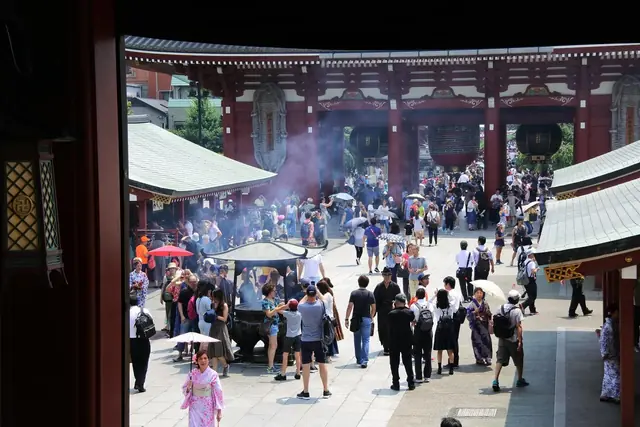
At a temple you do not clap. Put your offering in the box, press your palms together, bow your head and pray quietly, then bow once before you step away. Many temples have a large incense burner (jokoro) in front of the main hall; you can buy a bundle of incense sticks for a small fee, light them from the flame provided, place them in the ash, and waft a little smoke toward yourself. People often fan it toward the head or toward a part of the body they want to heal.
If you go inside a hall, take off your shoes where you see others do it, usually at a step or where slippers are lined up, and keep hats off. Halls are places of worship first, so walk around people who are praying and keep a little distance from any ongoing service.
Omikuji, omamori, ema and goshuin
Omikuji are paper fortunes, drawn for a small offering from a box or a shaken canister. They range from great blessing (daikichi) to bad luck (kyo). If you get a bad one, the custom is to fold it and tie it on the rack or rope provided, leaving the bad luck behind; good ones you can keep in your wallet. Sensoji is known for a relatively high share of bad fortunes because it keeps the traditional ratio, so do not take it personally.
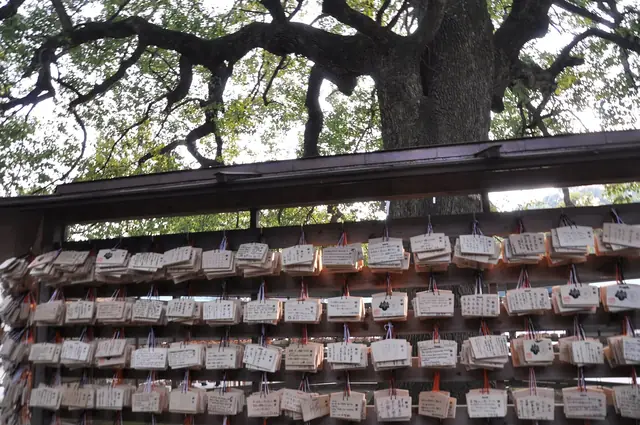
Omamori are small charm pouches for things like health, study, safe travel or a safe birth. Do not open them. They are usually kept for about a year and then returned to a shrine or temple, typically at New Year, where old charms are collected and burned. Ema are small wooden plaques: you write a wish and hang it on the board. It is fine to look, but do not take close-up photos of other people's wishes.
Goshuin are seals and brush calligraphy written into a special folding book (goshuincho) as a record that you came to pray. Pray first, then go to the office, hand over the book open at a fresh page and pay the set offering, usually a few hundred yen. Priests and monks will not write in an ordinary notebook. They are not stamp rally souvenirs, and at very busy times many places give a pre-written sheet instead.
- Some people keep separate goshuin books for shrines and for temples. If you are unsure, ask at the office.
- Charms bought for a friend make a good gift. Just say what they are for.
Festivals, New Year crowds, photos and dress
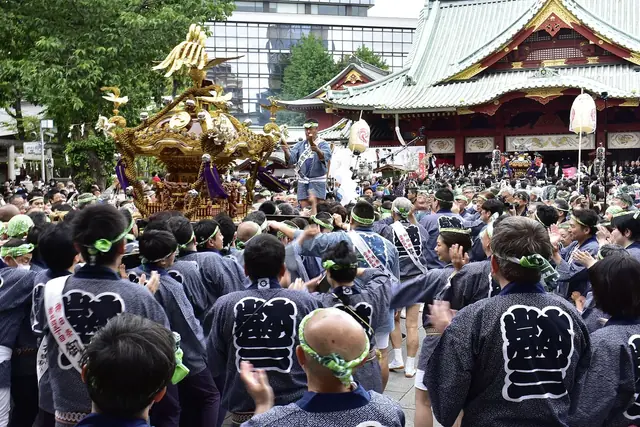
During a matsuri the shrine sends its deity around the neighbourhood in a mikoshi, a portable shrine carried by local groups in matching happi coats. Watch from the side, never touch or block it, do not cut across the path in front of it, and follow the stewards. Carrying a mikoshi is usually for members of the local groups, though some festivals do invite visitors through organised programmes.
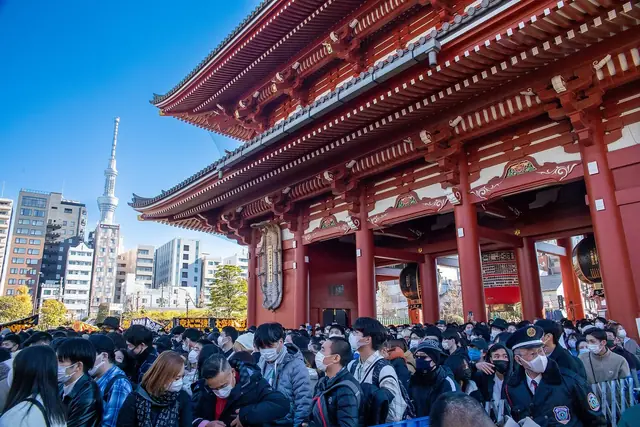
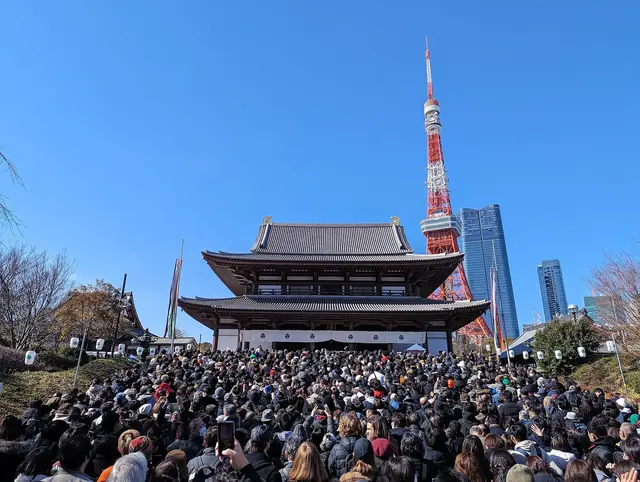
At New Year the big shrines and temples, such as Meiji Jingu and Sensoji, get huge crowds in the first days, and police and staff run one-way queues to the main hall. Go early in the morning or a few days later if you want room to breathe, keep children close, and be patient: the queue moves in waves. Setsubun in early February brings bean-throwing at many temples and shrines, and Shichi-Go-San in autumn fills them with families in kimono.
Photos of the grounds, gates and festivals are generally fine. Inside halls, during prayers and ceremonies, and where you see 撮影禁止 (no photography), put the camera away, and ask before photographing priests, families or children up close. There is no dress code for an ordinary visit; neat everyday clothes are fine, and you should take off your hat when you pray. For a formal prayer inside the hall, dress a little smarter.
- Do not eat or drink in front of the main hall or on the shrine steps.
- Drones and selfie sticks are not welcome in crowded grounds. Many places ban them outright.