The great wisteria and the spring festival
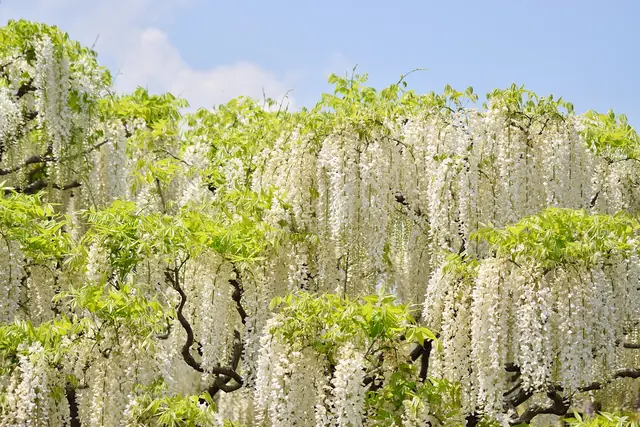
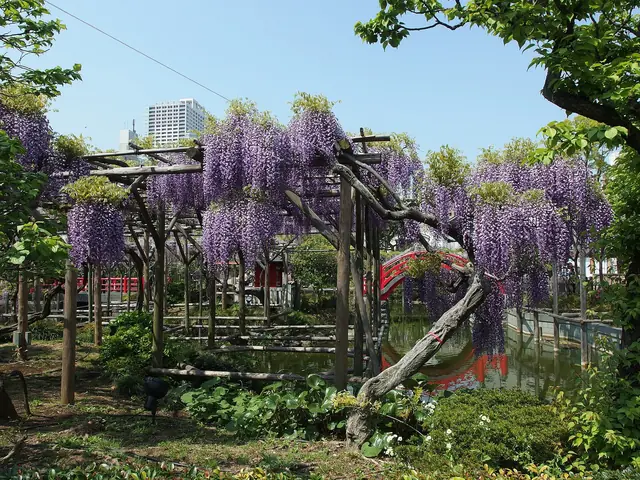
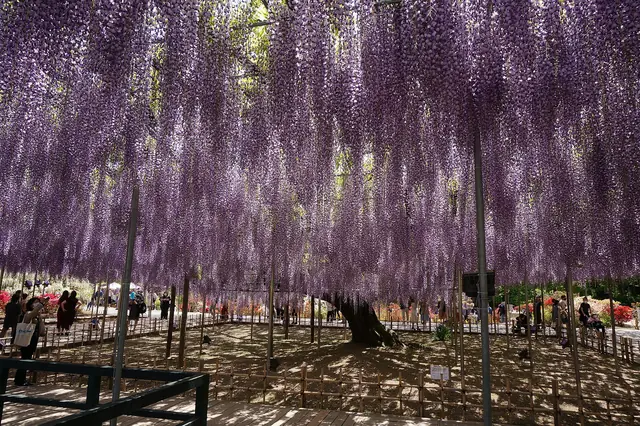
The park began in 1968 as Hayakawa Farm in another part of Ashikaga, whose great wisteria was famous for a trellis of 250 tatami mats. In 1997 it moved to its present site in Hasama, and the old vines were transplanted by Konami Tsukamoto, Japan's first woman tree doctor, the first successful move of a wisteria that size in Japan. Since the move, its trellis has grown from 72 to about 1,000 square metres. The four great wisteria (three long-cluster Noda vines and a rare double-flowered one) and an 80 m tunnel of white wisteria are natural monuments of Tochigi Prefecture.
The spring festival, Fuji no Hana Monogatari, runs for about a month from mid-April to mid-May (April 11 to May 20 in 2026). The colours come in order: pale pink first, then purple, white and last yellow, which is laburnum, a related tree that is hard to grow in Japan. The great wisteria usually peaks from late April to early May, with azaleas from mid-April and rhododendrons in May. In 2026 the bloom ran about a week ahead of the previous year, so the second half of April can be a better bet than Golden Week.
- The park posts photos of the current bloom on its flowering status page. Check it before you buy train tickets.
- You may not bring in food or drink. There are food stands and a restaurant inside, with wisteria soft serve in spring.
Wisteria by night, and a fee that changes every day
During the wisteria festival the park stays open into the evening and lights up the vines, and the trellises reflected in the pond are the classic night photo. In 2026 the light-up began on April 15, earlier than planned because of the early bloom, and ran to the end of the festival on May 20, with the park open from 7am to 9pm at the peak and until 8:30pm from May 7. In spring one ticket covers both daylight and the light-up, so you can arrive in the afternoon and stay on.
Admission follows the flowers. The park sets the price each day by how well things are blooming and posts it on its fee page. As of 2026, a day ticket in the wisteria season cost 1,200 to 2,300 yen for adults and 600 to 1,200 yen for children (age 4 to the end of primary school), with the top price at full bloom; in quiet months it drops to 400 to 900 yen. Groups of 20 or more get 10 percent off, ticket sales stop 30 minutes before closing, and re-entry is not allowed.
Peak weekends are crowded at the ticket windows, on the roads and at the station; weekdays are far calmer. Normal hours are 10am to 5pm, and the park opens earlier in the wisteria season, so check the hours for your day.
- Tripods are allowed if kept off the paths, but lights, reflectors, stepladders and live streaming are not.
- Pets cannot enter and there is nowhere to leave them. Assistance dogs are welcome.
Flower Fantasy: the winter illumination
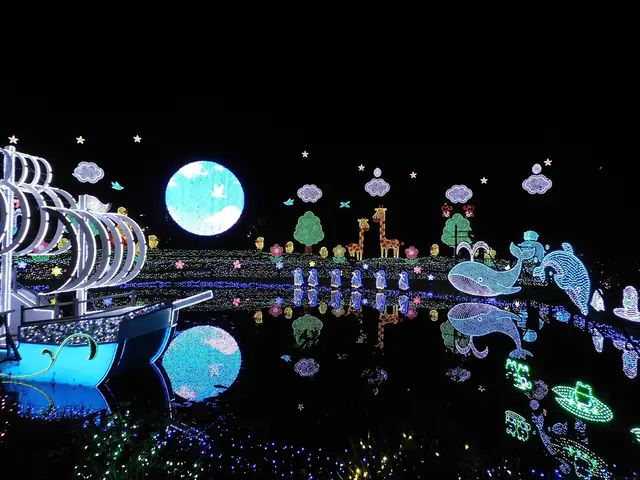
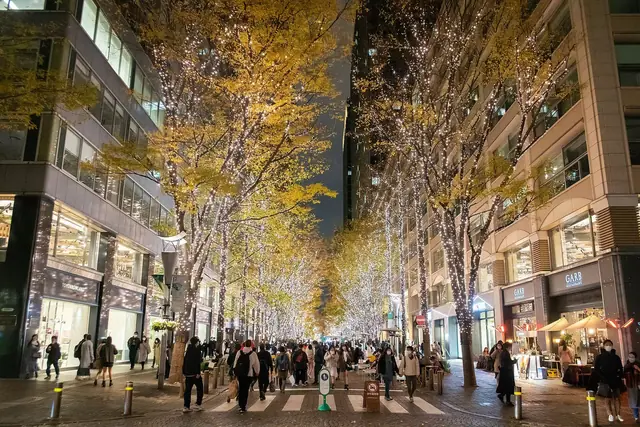
From mid-October to mid-February the park becomes Flower Fantasy, Hikari no Hana no Niwa in Japanese: more than five million lights, nearly all LED, across the park's 10 hectares. The 2026/27 season, the 25th, runs from October 17 to February 14. The centrepiece is the great wisteria in light, with purple strands that seem to open and fall like the real flowers, and there are white and yellow wisteria in light too, a lit mural on the hillside and scenes doubled in the pond.
The theme changes three times: an autumn garden with amethyst sage until mid-November, Christmas from late November to late December, and a New Year scene with winter peonies from January 1. The Night View Convention and Visitors Bureau has named it one of Japan's three great illuminations three times, and in November 2025 it won the top prize at the International Illumination Awards.
In this season day and night are separate sessions. The day session runs 10am to 3pm and then everyone leaves; the night session opens at 3:30pm and runs to 8:30pm, or 9pm on weekends and holidays, with 30 minutes more from November 7 to January 3 in 2026/27. The lights come on around 5pm, or 4:30pm in those weeks. As of 2026/27 the night ticket is 1,500 yen for adults and 800 yen for children; advance tickets from Seven Ticket or Lawson Ticket are 50 yen cheaper and skip the ticket queue. The park is closed on December 31.
- Arrive before 4:30pm to see the lights come on in the dusk. Weekend and holiday evenings are the busiest.
- The park sits on former wetland and winter nights here are cold. Dress for two hours outdoors.
The other seasons: eight gardens a year
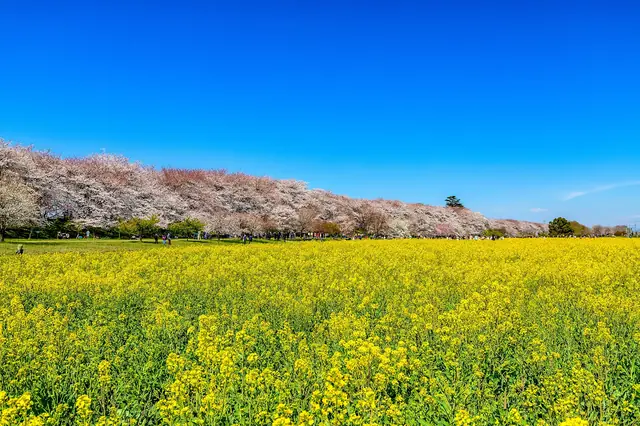
The park plans its year as eight flower seasons. January and February bring winter peonies, early red plum and wintersweet; from March to mid-April there are about 30,000 tulips, rapeseed, snow willow and cherry. After the wisteria, the Rainbow Garden has about 2,500 roses from mid-May into June, with 1,500 rhododendrons and clematis on domed trellises, and June turns blue and white with hydrangeas and irises.
From late June about 1,500 tropical water lilies, some opening by day and some by night, float on the pond into autumn, and in October a purple garden of amethyst sage blooms with the autumn roses just before the lights return. These months are quieter and cheaper, a good choice if you want the gardens without the wisteria crowds.
Getting there from Tokyo
JR is the simplest way: the Utsunomiya Line from Ueno or Tokyo to Oyama, a little over an hour, or the Tohoku Shinkansen in about 45 minutes, then the Ryomo Line towards Takasaki to Ashikaga Flower Park Station, about 30 minutes. The station opened in 2018, three minutes on foot from the entrance. Ryomo trains are not frequent, so check the return times. The Japan Rail Pass covers the route.
On the way back the station is very crowded, above all after the light-up, and the park asks visitors to load enough money on their IC card in advance. By car there are 300 free spaces, and about 6,000 with the temporary lots in peak seasons; Sano-Fujioka IC on the Tohoku Expressway and Ashikaga IC on the Kita-Kanto Expressway are each about 20 minutes away in normal traffic.
From Asakusa, the Tobu Ryomo limited express reaches Ashikagashi in roughly 80 minutes, but there is no shuttle bus from there to the park. The park suggests Tobu riders change at Tatebayashi to the Tobu Sano Line and at Sano to the JR Ryomo Line. From Ashikagashi you can also take a taxi, or walk 15 to 20 minutes across the Watarase River to JR Ashikaga and ride one stop east.
- Coin lockers stand beside the shopping house at the main gate (500 yen large, 300 yen small, as of 2026).
Ashikaga town: the old school, Bannaji and a winery
Ashikaga is the home of the Ashikaga clan, who founded the Muromachi shogunate, and its old centre is about ten minutes on foot from JR Ashikaga Station, one stop west of the park. Ashikaga Gakko is often called Japan's oldest school; in the 16th century Francis Xavier wrote of it as the greatest academy of eastern Japan. Its rebuilt thatched halls, Confucian shrine and gardens take under an hour, for a small fee.
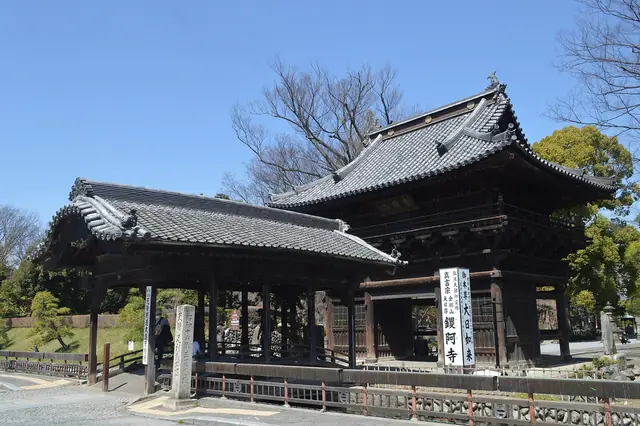
A few minutes away, Bannaji stands on the site of the Ashikaga family residence, still ringed by its moat and earth walls. Its main hall was named a national treasure in 2013, and its great ginkgo turns yellow in late November, in the middle of the illumination season, so an afternoon in town and the lights in the evening fit well together. On the hill above town, Orihime Shrine looks out over the plain, and Coco Farm and Winery, whose wine the park shop sells, holds a harvest festival every November.
- Ashikaga Gakko closes on the third Wednesday of most months and over New Year.