What Golden Week is and when
Four national holidays make up the core: Showa Day on April 29, Constitution Memorial Day on May 3, Greenery Day on May 4 and Children's Day on May 5. When one of them falls on a Sunday, the next free weekday becomes a substitute holiday, often May 6. Many companies also close on the working days in between, so depending on how the weekends fall, people get anything from a few scattered days to a run of a week or more.
For Tokyo this means two things. Office districts such as Marunouchi and Otemachi go quiet, and many residents leave the city for their hometowns or a trip. At the same time, people from all over Japan come to Tokyo, so sightseeing areas, theme parks and shopping streets are at their busiest of the spring.
Flowers, carp streamers and a night festival
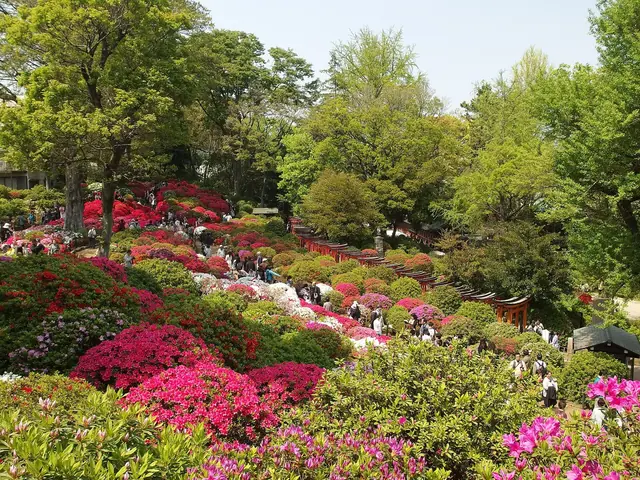
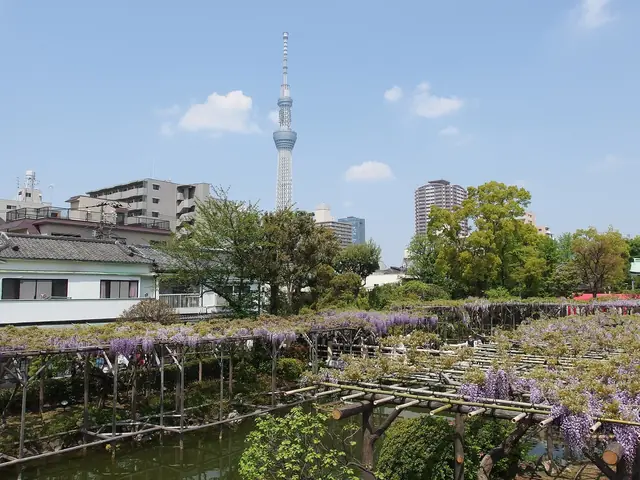
Golden Week sits between cherry blossom and the rainy season, which makes it a good time for flowers. Nezu Shrine in Bunkyo ward holds its azalea festival through April, with thousands of bushes on a slope beside the shrine, and the last days often overlap with the start of the holiday. Kameido Tenjin in Koto ward is famous for wisteria hanging from trellises over a pond with Tokyo Skytree in the background, usually best from late April into early May, though bloom varies a lot from year to year.
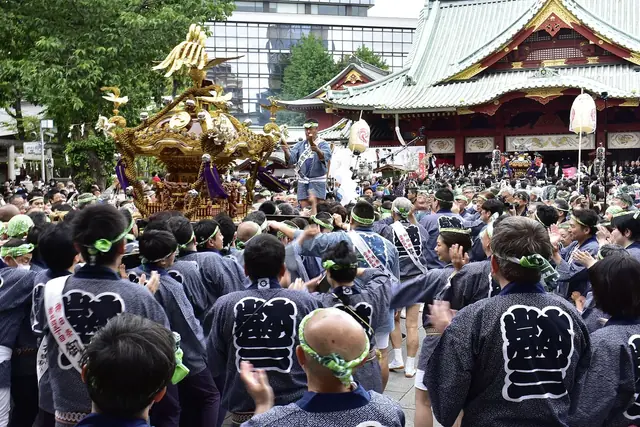
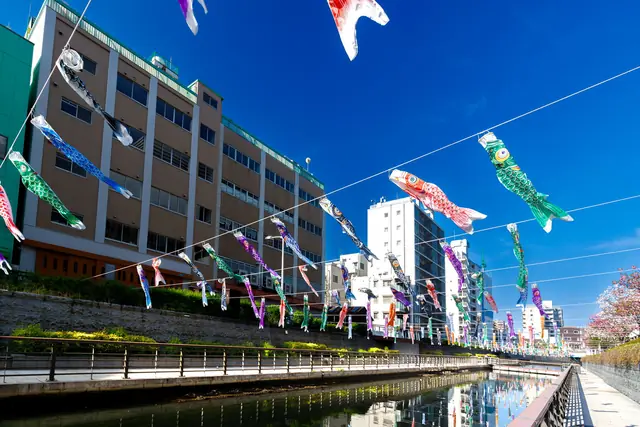
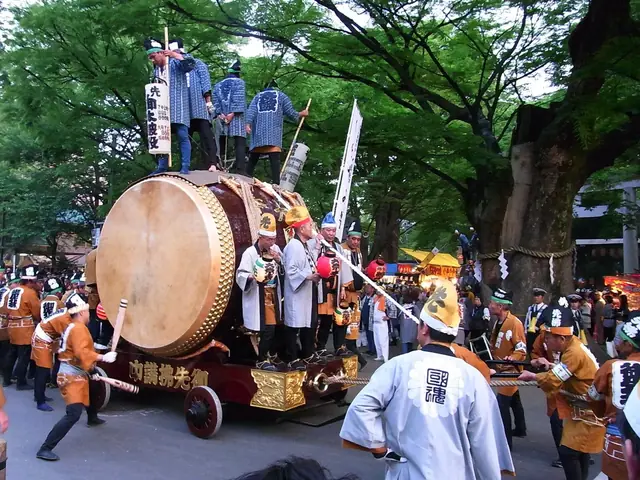
For Children's Day, carp streamers (koinobori) go up all over the city. At the foot of Tokyo Tower, 333 of them, one for each metre of its height, have been hung every spring since 2009. Further west, Okunitama Shrine in Fuchu holds the Kurayami Matsuri from April 30 to May 6 each year, a festival more than a thousand years old with eight portable shrines carried at night on May 5 behind huge drums. It draws hundreds of thousands of people and is one of the most impressive traditional festivals in the Tokyo area.
Two big festivals people often expect here are actually later: the Kanda Matsuri is held in mid-May, and the Sanja Matsuri in Asakusa on the third weekend of May. If you are staying past the holiday, they are worth planning around.
- Wisteria and azalea bloom shifts with the spring weather. Both shrines post updates, so check before you go.
- Kameido Tenjin has illuminated its wisteria in the evening in recent years, which is calmer than the afternoon.
Food, music and big events
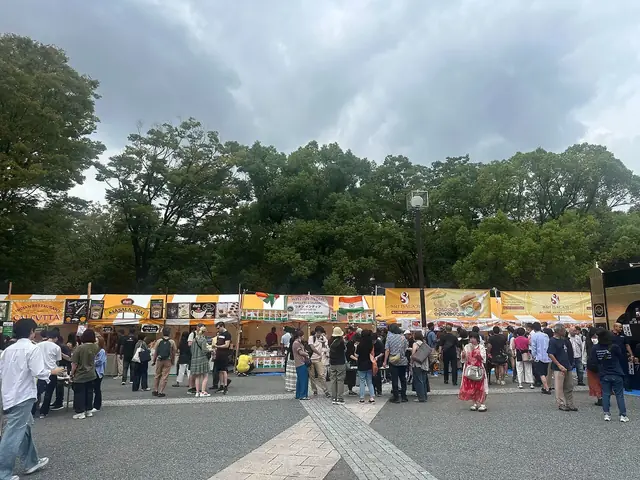
Big outdoor food festivals like to take the holiday. In recent years Niku Fes, a meat festival with stalls from well-known restaurants, has run in Odaiba through Golden Week, and the Taiwan festival at Tokyo Skytree Town has run through the spring including the holiday. Smaller food and craft events fill parks and plazas across the city most weekends of the season, usually with free entry and pay-per-dish stalls.
For music, La Folle Journée Tokyo is a classical music festival held around Tokyo International Forum near Tokyo Station during the holiday, with short, inexpensive concerts and free events in the surrounding area, an easy way into classical music with kids. Rock fans head to JAPAN JAM, a large spring festival at Soga Sports Park in Chiba, about 40 minutes from central Tokyo. Theatres, arenas and museums also schedule popular programmes for the holiday, so book early for anything ticketed.
- Food festivals are busiest at lunch. Go at opening time or late afternoon, and bring cash for stalls that don't take cards.
- Outdoor events usually go ahead in light rain. Look for 雨天中止 (cancelled in rain) on the event page if the forecast is bad.
Crowds, trains and bookings
Most of Tokyo stays open. Department stores, shops, restaurants, attractions and most museums run as usual, and museums that normally close on Mondays tend to open on holiday Mondays and close another day instead. Banks, post office counters and ward offices are closed on the holidays themselves. Popular restaurants book out, so reserve if there is somewhere you really want to eat.
Long-distance travel peaks at the start and end of the holiday. In recent years JR Central has made all Nozomi trains on the Tokaido Shinkansen reserved-seat only during Golden Week, and reserved tickets go on sale one month ahead at 10am, so book as soon as you can if you plan a day trip to Kyoto or elsewhere. Hotel prices in Tokyo rise too. Inside the city, the trick is timing: sightseeing spots such as Asakusa, Skytree and Odaiba are calm in the early morning and packed by midday, while the weekdays in the middle of the holiday are often noticeably quieter than the holidays themselves.
- Book Shinkansen seats and hotels as early as possible. Last-minute options are thin.
- Try neighbourhoods off the tourist map, such as Yanaka, Kichijoji or Kiyosumi-Shirakawa, for a calmer holiday day.
- Theme parks like Tokyo Disney Resort are at their most crowded. If you go, buy tickets in advance.
Children's Day, weather and what to bring
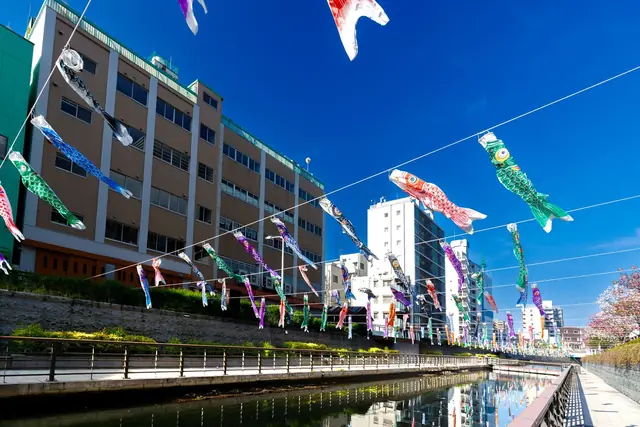
May 5 is Children's Day. Families hang carp streamers for their children's health and success, display samurai helmets at home, and eat kashiwa-mochi, rice cakes wrapped in oak leaves, sold at every Japanese sweets shop. Some public bathhouses put iris leaves in the bath (shobuyu) on that day. Many parks, museums and zoos plan family events over the holiday, so it is a good stretch to travel with kids.
The weather is usually one of the best of the year: mild days, cool evenings and plenty of sun, with the occasional rainy day. The sun is stronger than it feels, so bring a hat and sunscreen for long outdoor events, and a light jacket for the evening.