When they bloom
The rainy season in the Kanto region usually starts around June 7 and ends around July 19, although both dates can move by a week or more. Irises come first: the iris gardens usually open in late May, peak in the first half of June and fade by late June. Hydrangeas start in late May with the small mountain hydrangeas (yama-ajisai) and are at their fullest from about mid-June. In the hills the season runs later, into mid-July along the Hakone Tozan Railway.
Hydrangea colour depends partly on the soil. Acidic soil tends to give blue flowers and less acidic soil pink, which is why one temple can be almost all blue while the next is mixed. Gardens and temples post bloom reports on their websites and social accounts using words like sakihajime (starting to open) and migoro (at their best). Festival dates are fixed in spring, so in an early year the flowers may already be past their best on the last weekend.
- Irises are freshest in the morning and can look tired by a hot afternoon, so go early.
- A drizzly weekday is the calmest time at almost every spot on this page.
Hydrangeas in Tokyo: Hakusan Shrine, Takahata Fudo, Asukayama
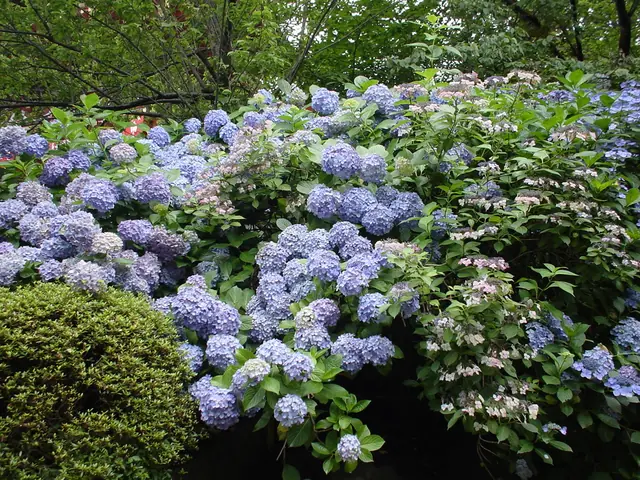
Hakusan Shrine in Bunkyo holds the Bunkyo Hydrangea Festival, usually over the first half of June, with about 3,000 plants spreading from the shrine grounds into the neighbouring Hakusan Park. The highlight is the small Fuji mound (Fujizuka) on the grounds, a man-made hill that stood in for a pilgrimage to Mt Fuji. It is covered in hydrangeas and opens to visitors only during the festival. There are concerts and food stalls at weekends. The shrine is about 3 minutes on foot from Hakusan Station on the Toei Mita Line or 5 minutes from Hon-Komagome on the Namboku Line, and there is no parking.
Takahata Fudo in Hino, a large temple 5 minutes from Takahatafudo Station on the Keio Line and Tama Monorail, has the biggest collection in Tokyo: more than 7,000 plants of over 200 varieties, many of them along a trail through the woods on the hill behind the temple halls. Its hydrangea festival runs through June and the grounds are free. The mountain hydrangeas on the hill open from late May and the big garden types around mid-June. The trail is steep in places and slippery after rain, so wear proper shoes.
Asukayama Park in Kita, next to JR Oji Station, is better known for cherry blossoms, but about 1,300 hydrangeas grow on a 350 m strip of slope along the railway. It is free, takes a quarter of an hour, and you can watch the trains slide past the flowers. It is usually best from late May to mid-June, a little earlier than most.
- The queue to climb the Fuji mound at Hakusan can be long on festival weekends. A weekday morning is much calmer.
Kamakura and Hakone: temples and the hydrangea railway
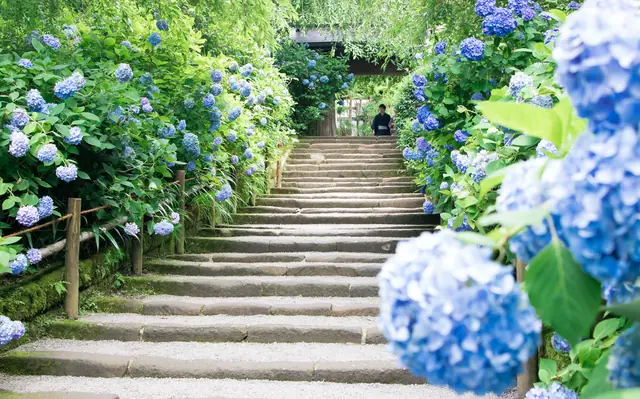
Kamakura, about an hour from Tokyo Station on the JR Yokosuka Line, is the hydrangea town of the Tokyo area. Meigetsuin, 10 minutes on foot from Kita-Kamakura Station, is known as the hydrangea temple: about 2,500 plants line the stone steps of the approach, almost all in one soft shade people call Meigetsuin blue. In June it opens from 8:30am to 5pm and admission is 500 yen for adults (as of 2026). The garden behind the main hall opens only in iris season and in autumn, for an extra fee. On June weekends the queue can reach back toward the station by mid-morning.
Hasedera, near the Great Buddha, has a hillside hydrangea path with over 40 varieties and about 2,500 plants, with Sagami Bay below. Expect steep stone steps. During peak bloom the path needs its own ticket on top of temple admission. In 2026 the hydrangea tickets were booked online for a time slot, and late in the season only same-day tickets were sold at the entrance. The system can change from year to year, so check the temple's site from late May.
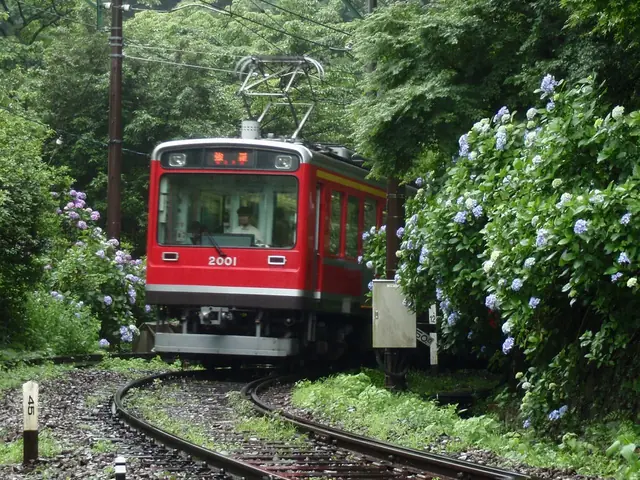
In Hakone, the Hakone Tozan Railway climbs from Hakone-Yumoto to Gora past hydrangeas planted along the track, which is why it is nicknamed the hydrangea train. The line rises about 445 m, so the bloom moves uphill from mid-June to mid-July. Ohiradai Station, where the train reverses on a switchback, has some of the densest clusters. In the evening the flowers along the line are lit up, and a reserved-seat night train, the Yoru no Ajisai-go, runs from Yumoto to Gora with photo stops. Seats are sold online only, opened in mid-May in 2026, and go quickly. Hakone Navi has the current dates.
- Kamakura is busiest on Saturdays in June. On a weekday, be at Meigetsuin at opening and take the Enoden to Hasedera afterwards.
- Daytime trains on the Hakone line are packed in June. Ride early in the morning or come back for the evening light-up.
Irises: Horikiri, Mizumoto, Meiji Jingu and Koishikawa Korakuen
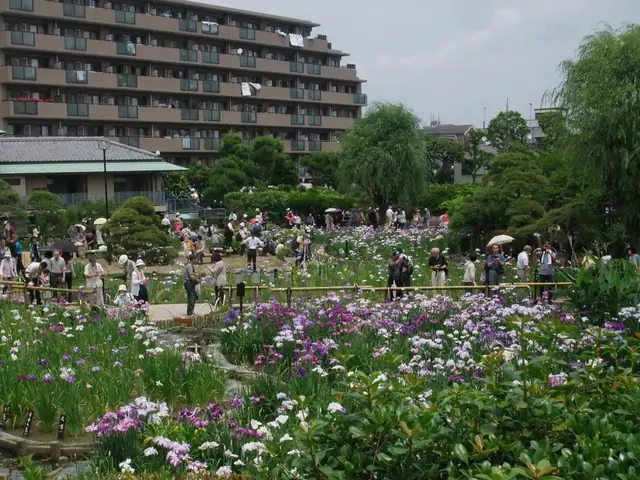
Japanese irises (hanashobu) were bred into hundreds of varieties in the Edo period, and Horikiri was the place to see them: Hiroshige put its iris garden in his One Hundred Famous Views of Edo. Today Horikiri Shobuen, a compact garden about 10 minutes on foot from Horikirishobuen Station on the Keisei Line, has about 6,000 plants of some 200 varieties, many of them old Edo types. Entry is free, and during the Katsushika Iris Festival, from late May to mid-June, it has opened from 8am to 6pm in recent years. It is small and busy at weekends, but the paths run right along the beds.
The festival's second venue, Mizumoto Park in the north of the ward, is a large waterside park with about 14,000 plants of around 100 varieties in fourteen iris fields. It is free and open at all hours. On weekends and holidays a loop bus from the south exit of Kanamachi Station stops a minute from the iris garden; on other days, regular buses stop a few minutes' walk away.
In the city centre, the iris field in the Meiji Jingu Inner Garden is said to have been planted at Emperor Meiji's wish for Empress Shoken. It holds over 150 varieties and about 1,500 plants, best in early to mid-June, when the garden keeps longer hours. Entry is a small maintenance fee. Koishikawa Korakuen next to Tokyo Dome has about 660 irises in a field set among its Edo landscape, with hydrangeas nearby, for its usual small entrance fee.
- Ayame and kakitsubata are related irises that bloom earlier, in May. If a sign says hanashobu, it is the June iris of wet fields.
Going in the rain: tips and rules
Light rain suits both flowers: hydrangeas look deeper in colour when wet, and the crowds are smaller. Heavy rain is different. Temple steps in Kamakura and the trail at Takahata Fudo get slippery, and festivals may cancel stage events on wet days. Wear shoes you do not mind getting wet and carry a small towel. June is also humid and often above 25°C, so a heavy raincoat can feel hotter than an umbrella.
In narrow spots such as the steps at Meigetsuin and the path at Hasedera, hold your umbrella low, close it when the rain stops and do not stop on the stairs for long photo sessions. Picking flowers or stepping into the beds is not allowed anywhere. Flying drones is banned in metropolitan parks like Mizumoto and needs permission at temples and shrines, and rules on dogs differ from place to place, so check before you bring one.
If the rain turns heavy, Shibamata, with its old temple street and sweet shops, is a short train ride from Horikiri, and the rainy-day guide has indoor ideas across the city.
- Folding umbrellas and plastic sleeves for wet umbrellas are sold at every convenience store.
- Heavy rain and wind flatten iris petals faster than hydrangeas. If a storm is forecast for the iris peak, go the day before.