Yokohama: harbour fireworks, Chinatown and the Red Brick Warehouse
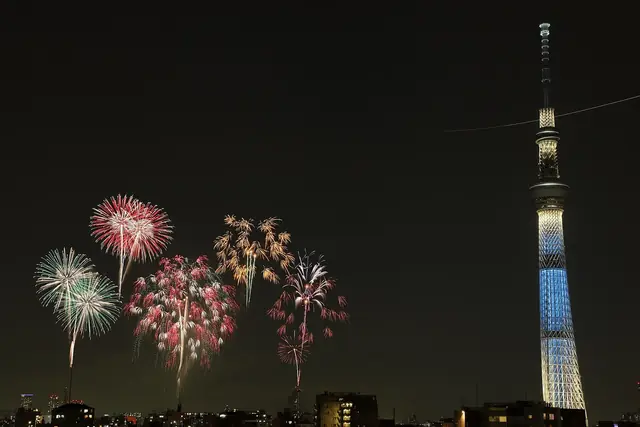
Yokohama is the easiest trip on this list. The Tokyu Toyoko Line from Shibuya runs straight through to Minatomirai and Motomachi-Chukagai stations, and JR lines from Tokyo and Shinagawa reach Sakuragicho and Kannai. The harbour front at Minato Mirai hosts a summer fireworks show, usually in August, with close to 20,000 shells set to music in well under an hour.
Yokohama Chinatown, one of the largest in Japan, has celebrated Chinese New Year (Shunsetsu) since 1986, with lion dances that call at shops along the streets, lanterns and stage shows in Yamashita-cho Park. A short walk away, the Red Brick Warehouse, a pair of restored customs warehouses on the waterfront, fills its plaza with events through the year, including an Oktoberfest in autumn and a German-style Christmas market in December.
- On fireworks night, free spots by the water fill by late afternoon. Paid seats are sold in advance and are worth it with kids.
- Chinatown restaurants have long queues on weekend afternoons. Eat early or late, or snack on steamed buns from the street windows.
Kamakura: yabusame, hydrangeas and Tsurugaoka Hachimangu
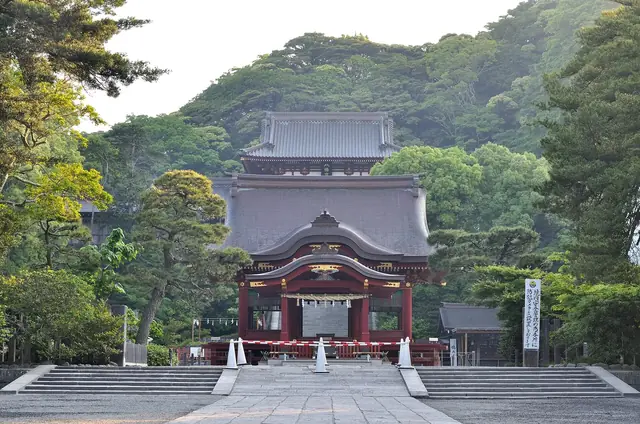
Kamakura, the seat of Japan's first shogunate, is about an hour from Tokyo Station on the JR Yokosuka Line, and the Shonan-Shinjuku Line is an option from Shinjuku and Shibuya. Its main shrine, Tsurugaoka Hachimangu, at the top of the long Wakamiya-oji avenue, holds its annual grand festival from September 14 to 16. On the 15th a mikoshi procession goes down Wakamiya-oji, and on the afternoon of the 16th archers of the Ogasawara school in Kamakura-period hunting dress gallop along the shrine's riding track and shoot at wooden targets. This is yabusame, horseback archery, a rite traditionally said to date back to the 12th century.
In June Kamakura turns into the hydrangea town of the Tokyo area. Meigetsuin, nicknamed the hydrangea temple, and Hasedera, with its hillside path of flowers above the sea, are the best known. At New Year Tsurugaoka Hachimangu is one of the busiest shrines in the Kanto region.
- For yabusame, the best spots along the riding track go hours before the start. Arrive by late morning and bring water.
- Visit the hydrangea temples on a weekday morning. On June weekends the queues can be long.
Kawagoe: the October float festival in Little Edo
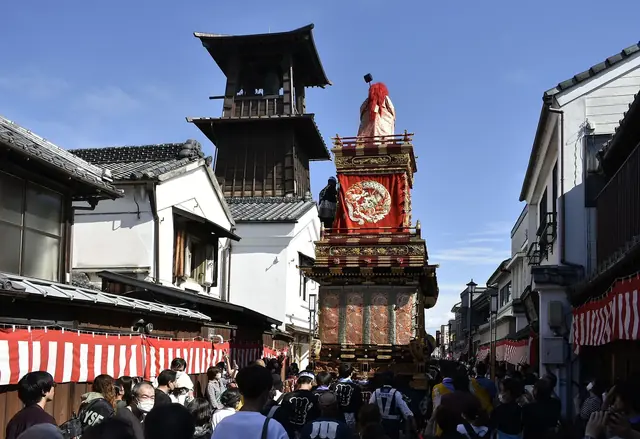
Kawagoe, in Saitama, is called Little Edo for its street of clay-walled kurazukuri merchant houses and the wooden Toki no Kane bell tower. It is about half an hour from Ikebukuro on the Tobu Tojo Line, and the Seibu Shinjuku Line from Seibu-Shinjuku runs to Hon-Kawagoe.
The Kawagoe Festival, on the third Saturday and Sunday of October, grew out of the annual festival of Hikawa Shrine and has about 370 years of history. Floats around eight metres tall, topped with life-sized dolls and carrying hayashi musicians, are pulled through the old town. The best part comes in the evening, when floats meet at crossroads and face each other in a musical contest called hikkawase while the crowd cheers and raises paper lanterns. The festival is on UNESCO's Intangible Cultural Heritage list as one of Japan's Yama, Hoko, Yatai float festivals.
- Stay after dark for the hikkawase. Trains back to Tokyo are packed afterwards, so eat first or leave a little before the end.
Chichibu: floats and winter fireworks on December 2 and 3
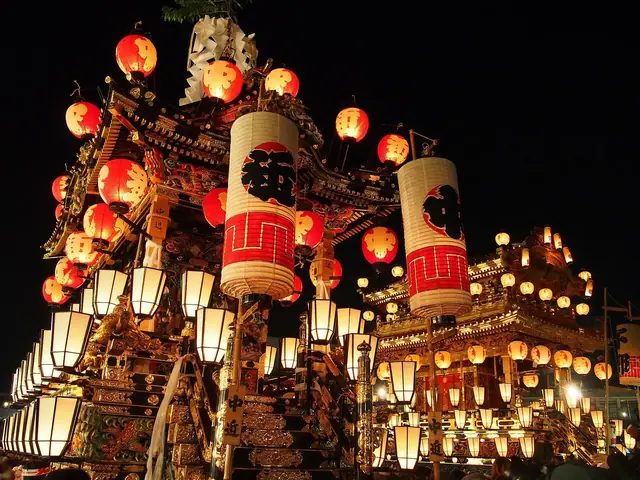
Chichibu is a mountain town in western Saitama, roughly 80 minutes from Ikebukuro on the Seibu Limited Express Laview, which has reserved seats only. Local trains with a change at Hanno take longer.
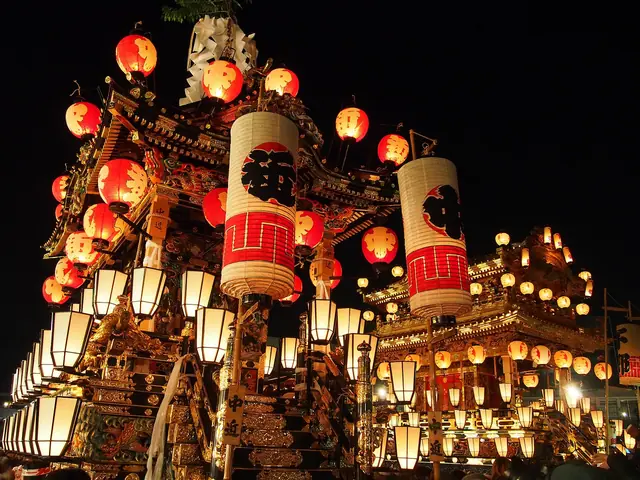
The Chichibu Night Festival, held every year on December 2 and 3, is counted with Kyoto's Gion Matsuri and the Takayama festival as one of Japan's three great float festivals, and it is also on the UNESCO float festival list. Huge floats hung with lanterns are hauled through town, and on the night of the 3rd they are dragged up a slope to the Otabisho while fireworks burst over the town from Hitsujiyama Park. Fireworks in winter are rare in Japan, and seeing them above glowing floats in the cold mountain air is the reason people come.
- Book the Laview as soon as you can. Extra trains run on festival days but still sell out, and local trains are the fallback.
- December nights in the mountains are much colder than Tokyo. Wear a heavy coat, hat, gloves and warm shoes.
- Drones are banned at the festival.
Narita: the temple town by the airport
Narita is more than an airport. The town around Naritasan Shinshoji, a large Shingon temple, is about an hour from Ueno on the Keisei line, and JR trains stop at Narita Station too. The Omotesando street from the stations to the temple is lined with old shops and eel restaurants grilling unagi by the window.
Naritasan is one of the busiest temples in Japan at New Year and holds the best-known Setsubun in the Kanto region, with top sumo wrestlers and actors throwing beans. In early July, the Narita Gion Festival, with around 300 years of history, sends ten carved floats and a mikoshi through the streets for three days, and the big moment is the floats charging up the steep slope toward the temple.
- Narita fits well on your first or last day in Japan. The stations have coin lockers, and the airport is a short train ride away.
Makuhari: conventions and big concerts
Makuhari, in Chiba, is where the Tokyo area holds many of its largest conventions and concerts. Makuhari Messe is home to Tokyo Game Show in September, Jump Festa and Tokyo Comic Con in December and the COUNTDOWN JAPAN rock festival at the end of the year, and the Summer Sonic festival has long used Messe and the nearby ZOZO Marine Stadium. Kaihin-Makuhari Station on the JR Keiyo Line is about half an hour from Tokyo Station.
This is an event trip rather than a sightseeing one, but the area is pleasant: a seaside park next to the stadium, an outlet mall by the station and plenty of restaurants, which fill fast after a show.
- The Keiyo Line platform at Tokyo Station is a long underground walk from the other lines. Allow at least ten minutes.
- After a big concert the station controls entry. Waiting half an hour in a café can be faster than joining the crowd.
Hakone and Odawara: the Ekiden and a daimyo procession
Hakone, the hot spring area in the mountains of Kanagawa, is around an hour and a half from Shinjuku on the Odakyu Romancecar to Hakone-Yumoto. You can also take JR or the shinkansen to Odawara and change to the Hakone Tozan Railway. It is the natural place to pair an event with a night at an onsen.
On January 2 and 3 the Hakone Ekiden, the university relay that much of Japan watches on TV over New Year, runs about 217 km from Otemachi in Tokyo to Lake Ashi and back. The fifth leg climbs from Odawara into the mountains and is the stage everyone talks about, and the roadsides in Odawara and Hakone fill with fans waving flags. On November 3 the Hakone Daimyo Gyoretsu, first held in 1935, recreates a feudal lord's retinue in Edo-period costume along a stretch of the old Tokaido road in Hakone-Yumoto.
- On Ekiden days, roads on the course close as the runners approach and buses run late. Use trains and stay off the road.
- Hakone hotels fill early for New Year and the November holiday weekend. Book well ahead if you want to stay.
Nikko: the thousand-warrior procession and autumn colour
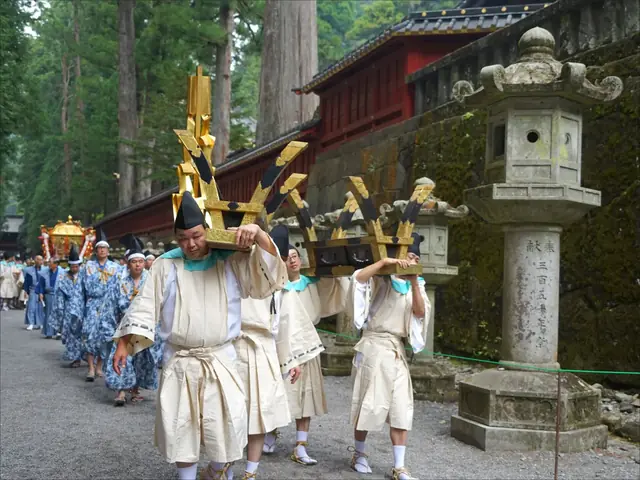
Nikko, in Tochigi, is about two hours from Asakusa on Tobu limited express trains. Nikko Toshogu, the richly carved shrine of Tokugawa Ieyasu, holds two grand festivals a year. In spring, on May 17 and 18, there is yabusame on the first day and on the second the Procession of a Thousand Warriors, more than a thousand people in samurai armour and Edo-period dress escorting the shrine's mikoshi along the approach. The autumn festival in mid-October has a procession too.
Autumn is Nikko's other big season. The leaves turn first high up around Lake Chuzenji and the hairpin bends of the Irohazaka road, usually in October, and the colour moves down toward the shrines over the following weeks.
- On autumn weekends the Irohazaka road can jam for hours. Go up early in the morning or on a weekday.
- Nikko is much colder than Tokyo, especially by Lake Chuzenji. Bring a warm layer even in May.