Ume and how they differ from sakura
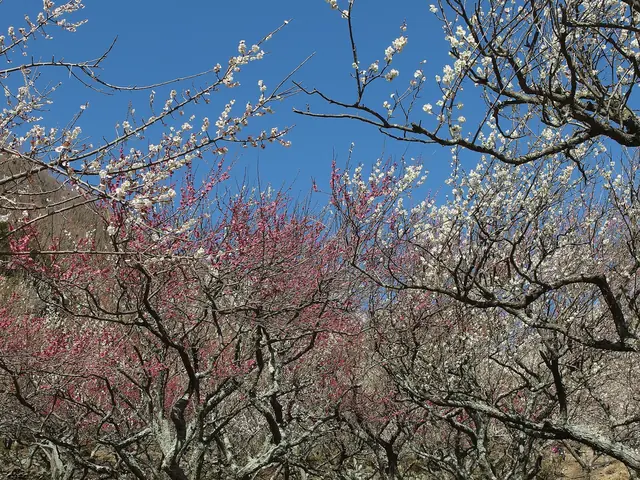
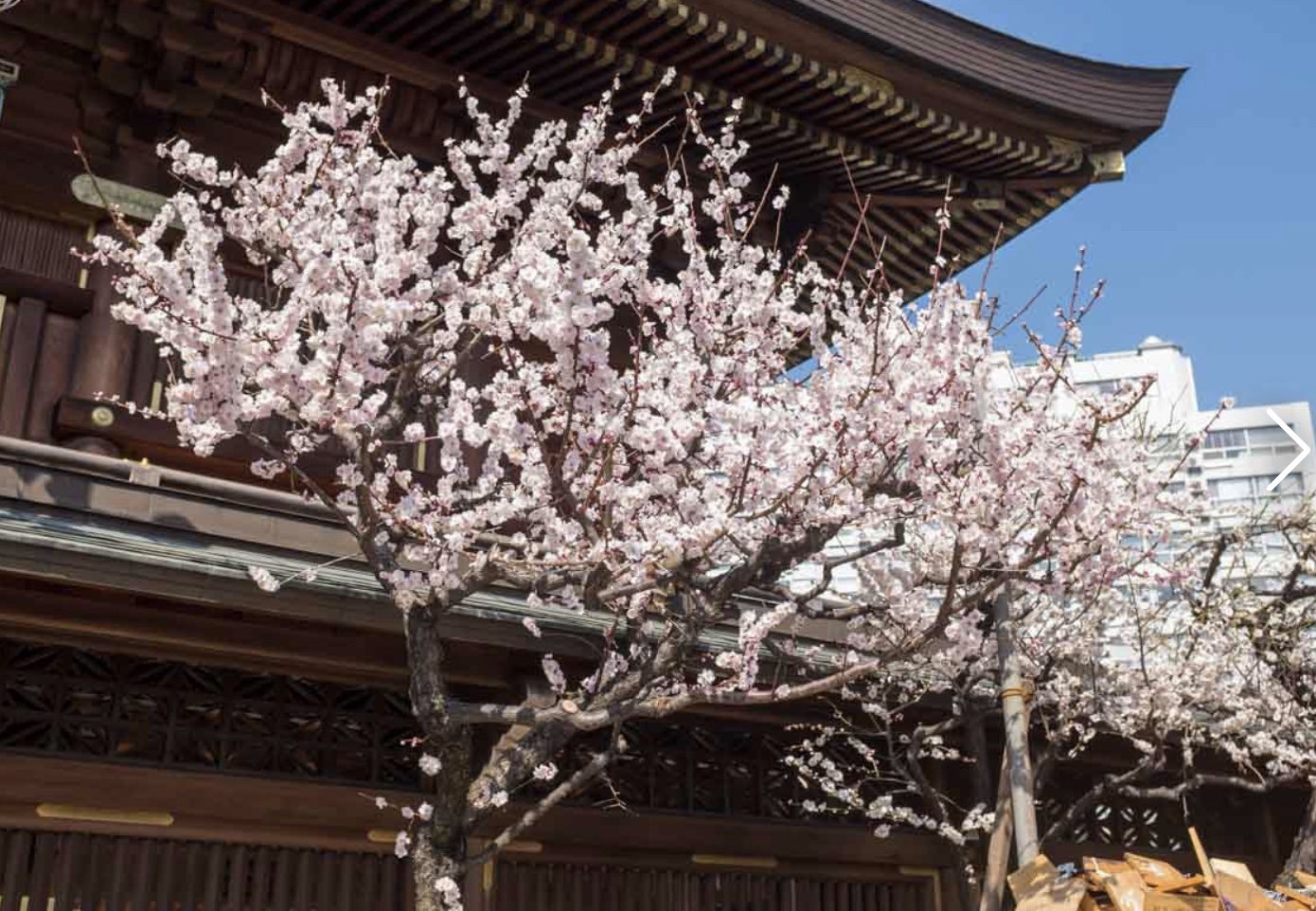
Ume is a close relative of the apricot, grown in Japan both for its flowers and for its sour fruit, which becomes umeboshi pickles and umeshu liqueur. The flowers are easy to tell from cherry blossoms: plum petals are round with no notch at the tip, and each flower sits right on the branch with almost no stalk, so the twigs look studded rather than hung with clusters. Colours run from white (hakubai) through pale pink to deep red (kobai), and weeping trees (shidare-ume) fall like fountains.
Plum viewing, kanbai, is older than cherry viewing. In the Nara period, when flower viewing arrived from China, hanami meant plums, and the eighth-century anthology Man'yoshu has far more plum poems than cherry ones; the current era name, Reiwa, comes from the preface to its plum poems. Plums were also loved by Sugawara no Michizane, the scholar worshipped as Tenjin, god of learning, so Tenjin shrines have plum gardens that fill with students praying before exams.
Tenjin shrines and gardens in the city
Yushima Tenjin, two minutes from Exit 3 of Yushima Station on the Chiyoda Line, is the classic city plum spot: about 300 trees, mostly white, in small shrine grounds. The Bunkyo Plum Festival runs from early February to early March, with stage performances, outdoor tea and stalls from regional towns at weekends. Many trees are old and flower less than they used to, so the shrine has been replanting in recent years. Entry is free.
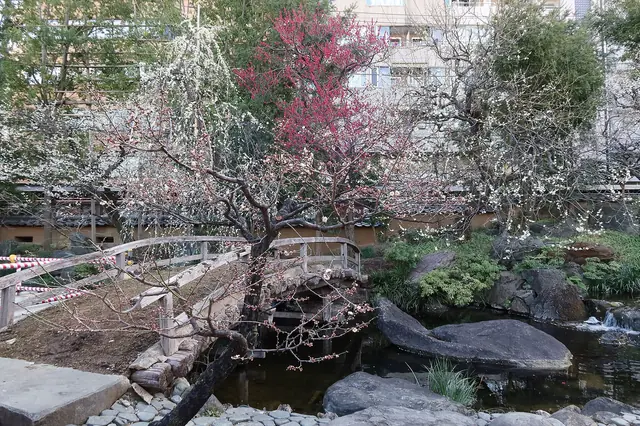
Kameido Tenjin in Koto ward, about 15 minutes on foot from Kameido Station, has more than 300 red and white trees around its pond and arched drum bridges, with Tokyo Skytree behind, and a free plum festival in February. Kameido was the plum district of Edo: a garden nearby, Umeyashiki, had a famous sprawling tree, the Reclining Dragon, which Hiroshige printed and Van Gogh later copied. The garden was lost in the great flood of 1910.
Koishikawa Korakuen, the Edo garden of the Mito Tokugawa family beside Tokyo Dome, has a calmer grove of about 150 trees in some 45 varieties. In plum season it usually runs a small programme of paper-cutting shows, tea and guided walks. Admission is 300 yen for adults as of 2026.
Plum parks and gardens across Tokyo
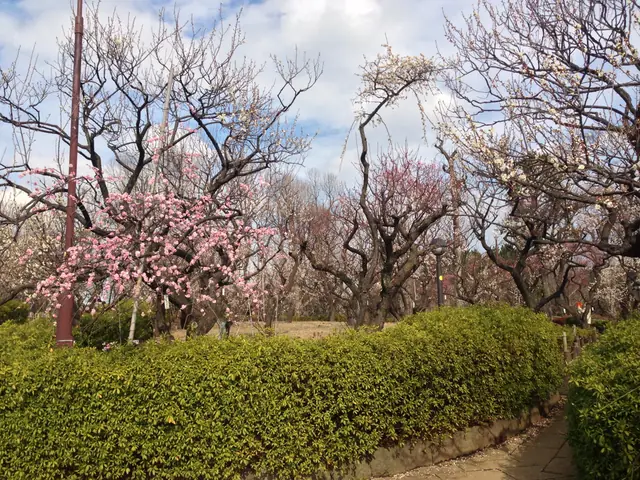
Hanegi Park in Setagaya, about 5 minutes from Umegaoka Station on the Odakyu Line, has around 650 red and white trees in about 60 varieties on a gentle hill. The Setagaya Plum Festival, from early February to around the start of March, brings stalls, mochi pounding and matcha at weekends. The park is free and busy at weekend lunchtimes.
Ikegami Baien in Ota ward is a hillside garden on the site of the former home of the painter Ito Shinsui, with more than 30 varieties, mostly red, around ponds and small tea houses. It is about 10 minutes on foot from Nishi-magome Station on the Asakusa Line, opens every day in February and March and has held evening light-ups in recent seasons. The fee is small, and Ikegami Honmonji, a large temple on the next hill, is an easy add-on.
Further west, the Fuchu City Kyodo no Mori Museum has one of Tokyo's biggest groves, about 1,100 trees, with a festival from late January to early March (300 yen as of 2026, buses from Bubaigawara Station). Keio Mogusaen in Hino has about 500 trees on a hillside, a steep 10-minute climb from Mogusaen Station on the Keio Line, and Jindai Botanical Garden has a plum garden close to the soba shops of Jindaiji.
Ome: the plum valley starting again
The Yoshino Baigo area of Ome, in the hills of west Tokyo, was long one of the best known plum valleys in Kanto, with tens of thousands of trees. In 2009 plum pox, a virus never before found in Japan, turned up there, and most trees in the area were cut down to stop it; in 2014 every tree in Ume no Koen, the city's plum park, went too.
Replanting began in 2016, and about 1,200 young trees, spaced more widely than before, now cover the slope; 2026 was their tenth year. The view is not yet what it was, but the hillside is red and white again and the Yoshino Baigo Plum Festival is back, with sake and umeshu tastings, weekend food markets and an early-March street festival with a samurai armour parade near the station.
Ome is colder than central Tokyo, so the trees usually peak in early to mid-March. Ume no Koen is about 15 minutes on foot from Hinatawada Station on the JR Ome Line, around an hour and a half from Shinjuku with a change at Ome or Tachikawa, and entry has been free in recent seasons.
Day trips: Mito, Odawara, Yugawara and Atami
Kairakuen in Mito, Ibaraki, counted among Japan's three great gardens, was opened in 1842 by Tokugawa Nariaki of the same Mito family that built Koishikawa Korakuen. Its 3,000 or so trees in around 100 varieties flower from winter to late March, and the Mito Plum Festival runs from mid-February to late March. During the festival admission is 500 yen for adults as of 2026, with no free early-morning entry. Limited express trains from Ueno take about 75 minutes; on weekends and peak days of the festival a temporary Kairakuen Station serves daytime trains from the Tokyo direction, otherwise take a bus from Mito Station. Dogs are not allowed in the main garden.
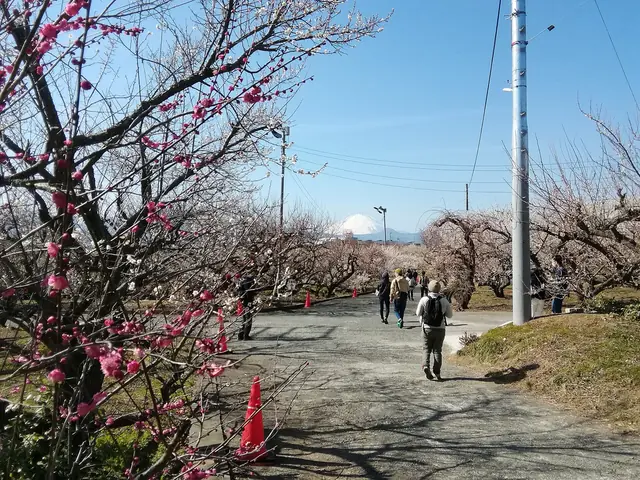
Soga Bairin near Odawara is a farming district of about 35,000 trees, most of them grown for umeboshi, around Shimo-Soga Station on the JR Gotemba Line (change at Kozu). On clear days Mt Fuji rises behind the white orchards. The groves are private farmland, so keep to the lanes. The Odawara Plum Festival is held here and at Odawara Castle from early February to early March.
Above the onsen town of Yugawara, Makuyama Park has about 4,000 trees on a mountain slope and holds its Ume no Utage festival through February into early March, with extra buses from Yugawara Station; admission rose to 300 yen in 2026. Atami Baien, about 10 minutes on foot from Kinomiya Station, has one of the earliest blooms in Japan, with first flowers in late November or December and a festival from early January. Both go well with a hot spring soak.
Timing, weather and festival food
In central Tokyo early trees open in January, the main peak falls between mid-February and early March, and late varieties linger into mid-March, so most gardens have something in flower for about a month. Ome and Mito peak later, Atami and Yugawara earlier. Shrines and parks post bloom updates, so check before a long trip.
It is still winter: February can bring snow, and the opening walk of the 2026 Bunkyo festival was cancelled for it. Crowds are lighter than in cherry season, but Yushima Tenjin, Hanegi Park and Kairakuen fill up on sunny weekend afternoons. Weekday mornings are calm, and the scent is strongest on still, mild days.
Festival stalls almost always sell amazake, a warm, sweet fermented rice drink with no alcohol when it is made from rice koji, plus umeboshi, umeshu and plum sweets. Shrine stalls often take cash only.
- Tripods are restricted on narrow paths in most gardens. Check the signs at the gate.
- Plum groves are often bare earth that turns to mud as the frost melts. Wear shoes you do not mind getting dirty.