Two seasons, and when to go
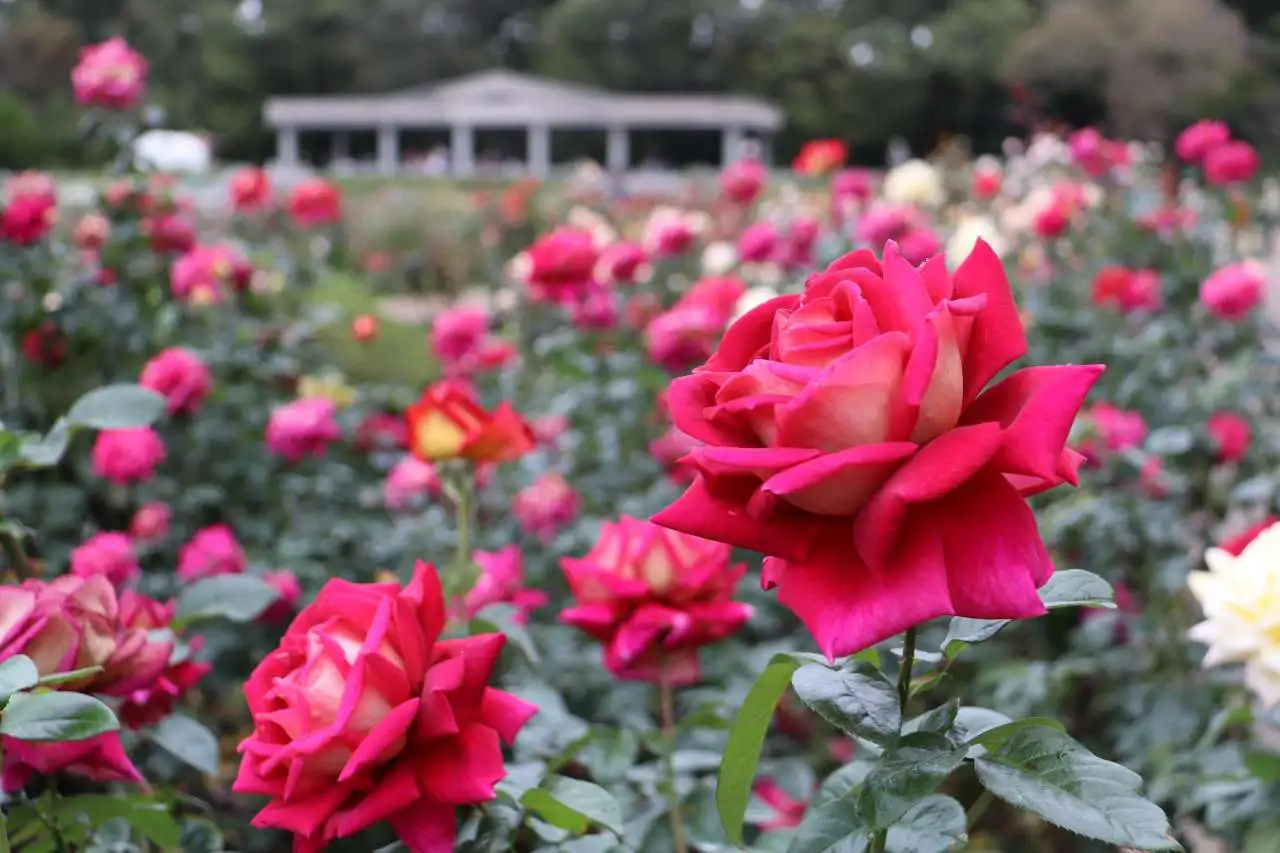
Spring roses start in late April, peak around mid-May and carry on into June, when many repeat-flowering varieties put out a second flush. At Kyu-Furukawa Gardens in 2026, for example, 23 varieties were open on April 28 and about 100 by May 11. Autumn roses open in October and are at their best from mid or late October into early November. Gardeners prune in late summer so the bushes flower again: autumn blooms are fewer and smaller, but the colours are deeper, the flowers last longer in the cool air, and the scent is often stronger.
Fragrance is strongest on a sunny morning, before the heat burns it off, which is why several gardens open early, at 8am, on peak weekends. Mornings are also the calmest time; by midday on a May weekend the narrow paths of the popular gardens are full. Late afternoon light is kind for photos. In autumn, look for rose hips in the beds of wild and old roses after the flowers have gone.
- Most gardens post a bloom report every few days in season, often with a count of varieties in flower. It is the best guide to timing.
Kyu-Furukawa Gardens
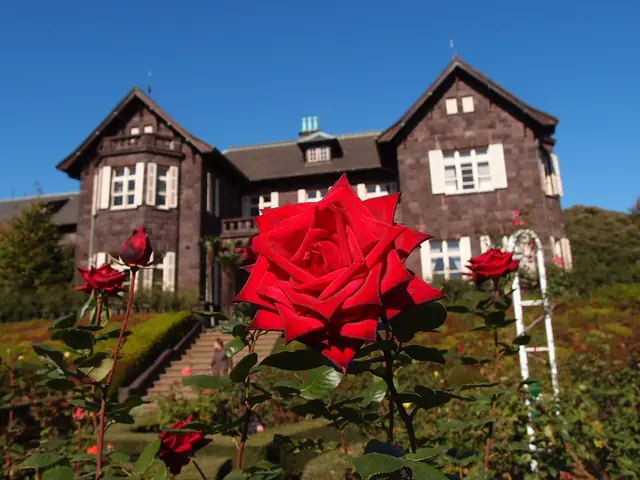
Kyu-Furukawa Gardens in Kita ward is the most photographed rose garden in Tokyo because of its setting. At the top of the slope stands a stone Western house finished in 1917, the last major work of the British architect Josiah Conder. Below it, terraced beds in French and Italian style hold about 200 bushes of around 100 varieties, and lower still is a Japanese garden with a pond and waterfall by the Kyoto gardener Ogawa Jihei. The estate is a national Place of Scenic Beauty. It is about 7 minutes on foot from Kami-Nakazato Station on the JR Keihin-Tohoku Line or Nishigahara Station on the Namboku Line, and 12 minutes from JR Komagome.
The spring rose festival runs from late April to the end of June, with small concerts and a rose market selling rose goods and gelato. The autumn festival runs from October into early November, followed by an event pairing roses with autumn leaves into early December. Each spring visitors vote for their favourite variety; the pale pink Cinderella won in both 2025 and 2026. On some peak May weekends the garden opens at 8am. Admission is 150 yen as of 2026, and since August 2026 you can also buy a date-specific ticket online, though the gate still sells tickets. The house is run separately by the Otani Museum, with its own entry and tours.
- Picnic sheets, alcohol and pets are not allowed, and cosplay or prop photography is refused all year.
- In 2026 tripods, monopods and selfie sticks were banned from mid-April to early July and from September to early December.
- A combined ticket with Rikugien, about 15 minutes away near Komagome, costs 400 yen as of 2026.
Jindai Botanical Garden
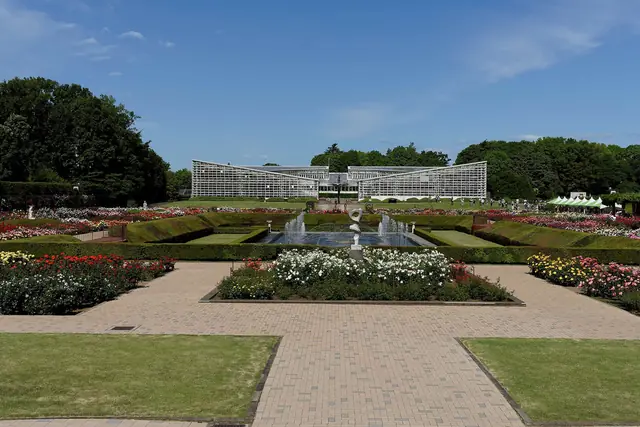
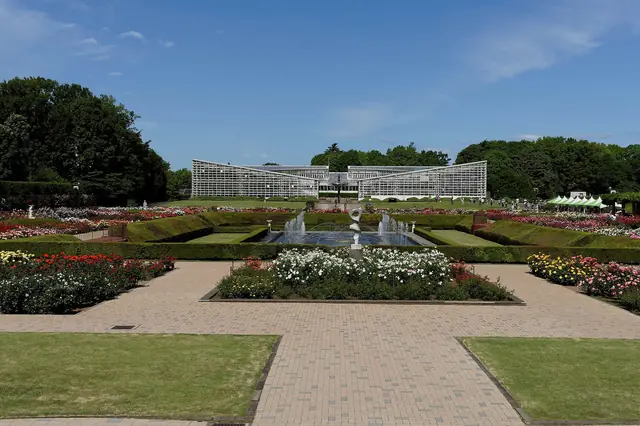
Jindai Botanical Garden in Chofu has Tokyo's largest rose collection, about 5,200 bushes of some 400 varieties. The main garden is a symmetrical sunken garden in front of the big greenhouse, with a fountain in the middle, and it has received the World Federation of Rose Societies' Award of Garden Excellence. Look for Queen of Jindai, the variety named after the garden, the roses sent from Los Angeles as a friendship gift, and a separate area of wild species and old roses grown from the collection of the breeder Seizo Suzuki. Spring peaks around mid-May, autumn from mid-October.
During the spring and autumn Rose Festa the garden opens at 8am on some weekends and runs concerts, free guided walks, a terrace café with rose soft serve and, on some days, a stall selling cut roses. Admission is 500 yen as of 2026, the garden normally closes on Mondays, and pets are not allowed. There is no station nearby: take a bus from Chofu, Tsutsujigaoka, Mitaka or Kichijoji. The soba shops around Jindaiji temple, just outside the garden's Jindaiji Gate, make it an easy half day.
Shinjuku Gyoen, Hibiya and a closure
The French formal garden in Shinjuku Gyoen has symmetrical rose beds set between avenues of plane trees, about 100 varieties and 500 bushes according to the garden's own leaflet, at their best in mid to late May and again in late October. They are about 5 minutes from Okido Gate. The usual garden fee applies and alcohol is banned. Hibiya Park lists roses among its spring and autumn flowers, and its beds are free, an easy stop between Ginza and the Imperial Palace.
If you are working from an older guide, note one change. The Ikuta Ryokuchi Rose Garden in Kawasaki, which opened only in spring and autumn and was cared for by volunteers, held its last opening in autumn 2025 and is closed for the time being while the city plans a rebuild of the garden. It did not open in spring 2026, and no reopening date has been announced.
Yokohama, the rose city
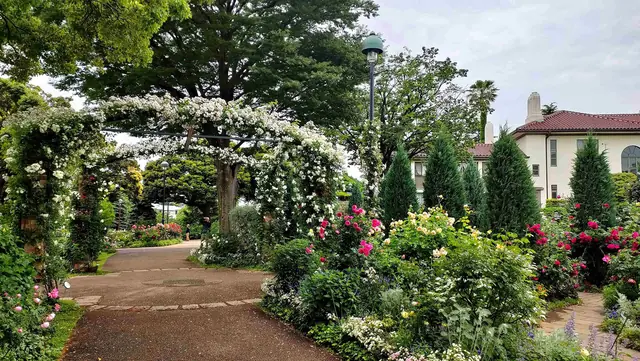
The rose is Yokohama's city flower, and the harbour district is planted for it. Minato no Mieru Oka Park on the Bluff has three themed rose gardens, including a garden of fragrance and an English rose garden in front of the former British consul's residence, with views over the port; it is a short uphill walk from Motomachi-Chukagai Station. On the waterfront, Yamashita Park has the Garden of Future Roses, about 1,900 bushes of 160 varieties. Both parks are free. In spring the city runs Yokohama Rose Week, in 2026 from early May to early June, with rose walks linking these parks, the Western houses of the Bluff and other gardens, and a smaller Yamate Rose Week follows in autumn.
Yokohama English Garden, a private garden near Yokohama Station, grows about 2,200 rose varieties among perennials and was open as normal through 2026, with a spring rose festival and an autumn garden. The fee changes with the season and the bloom, from 700 to 1,800 yen for adults as of 2026. It is 10 minutes from Hiranumabashi Station on the Sotetsu Line, or take the free shuttle from the west exit of Yokohama Station (not on Wednesdays). Eating is not allowed inside, the garden itself has no toilets, tripods are allowed only at special early openings, and pets may enter only after 2pm in a carrier or cart. Looking ahead, the international horticultural expo GREEN×EXPO 2027 runs in Yokohama from March to late September 2027.
Chiba: Keisei Rose Garden and Yatsu
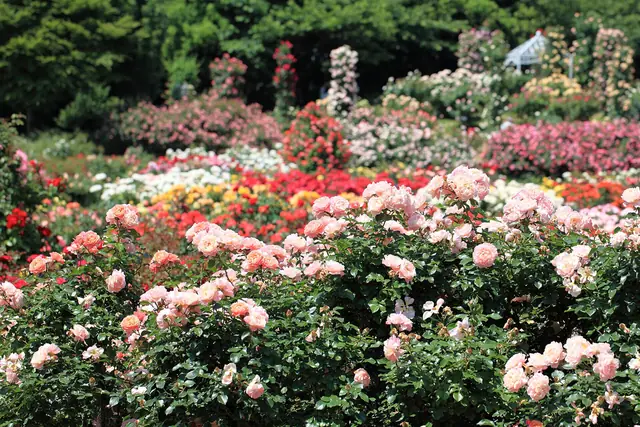
Keisei Rose Garden in Yachiyo is run by a rose breeder and nursery: about 10,000 bushes of some 1,600 varieties, including the company's own new roses, in a large landscape garden. On peak weekends it opens at 8am for morning visits. The fee varies by season. Outside food (drinks are fine) and picnic sheets are not allowed, dogs may come only on special dog days, and tripods are restricted at the spring peak. The garden centre next door is one of the best places around Tokyo to buy rose plants, and it wraps them for free if you came by train. Take the Toyo Rapid Railway, which runs through from the Tokyo Metro Tozai Line, to Yachiyo-Midorigaoka Station and walk 15 minutes or take a 5 minute bus.
Yatsu Rose Garden in Narashino is a city garden with about 7,500 bushes of 800 varieties, a fragrance garden sorted by scent type and a 60 metre pergola, 7 minutes on foot from Keisei Yatsu Station. It stays open on Mondays in May, June, October and November, and adult admission in those months is 800 yen as of 2026. The Yatsu tidal flat next door is a protected wetland where migrating shorebirds stop in spring and autumn.