Planning a flower day trip
The year in one line each: January, narcissus on the Boso coast. February, the plum groves of Soga in Odawara. Late February to early March, Kairakuen in Mito. Late March to early April, cherries and rapeseed at Gongendo. Mid to late April, moss phlox at Hitsujiyama and nemophila at Hitachi Seaside Park. Late April to early May, wisteria at Ashikaga. June, hydrangeas in Kamakura and Hakone. July, lavender at Lake Kawaguchi. Late July to mid-August, sunflowers at Akeno or Zama. Mid to late September, red spider lilies at Kinchakuda. October, red kochia at Hitachi and the first leaves at Nikko. November, cosmos at Kurihama and autumn colour in Hakone and Takao.
Bloom dates move with the weather by a week or two, and recent hot years have pushed some autumn flowers later. Festival dates are set months ahead, so look at the place's own bloom report a few days before you go, not the festival poster. On peak weekends, take the first trains of the morning. Many festivals add an entry fee only while the flowers are out, and some change the price with the bloom.
For visitors with a non-Japanese passport, the JR Tokyo Wide Pass gives three days of JR East trains around Kanto plus some other lines, such as the Fujikyu line to Lake Kawaguchi; Mito, Katsuta and Ashikaga Flower Park are on JR lines inside the pass area; for anything further out, such as Nirasaki, check the area map before you rely on it. The SEIBU 1Day Pass, also for non-Japanese passport holders, covers Seibu lines to Koma for Kinchakuda and to Seibu-Chichibu for Hitsujiyama, with the Laview limited express ticket bought separately. Check each pass's area map before you plan around it.
- Search the place name with the Japanese word for bloom report, kaika joho, to find the official update page.
- Station coin lockers at Katsuta, Mito and Kamakura fill up early on peak weekends.
January to March: narcissus, rapeseed and plum blossoms
Winter is when the southern Boso Peninsula in Chiba earns its trip. Wild narcissus cover the hills of Kyonan from December to late January, around the Egetsu narcissus road, best reached by taxi from Hota Station on the JR Uchibo Line. From early January to mid-March the flower fields of Shiramazu in Chikura let you pick stocks, rapeseed and other spring flowers, and rapeseed lines the coastal Boso Flower Line between Tateyama and Wada. Tateyama is about two hours from Tokyo by JR or by highway bus from Tokyo Station; a car makes the coast much easier.
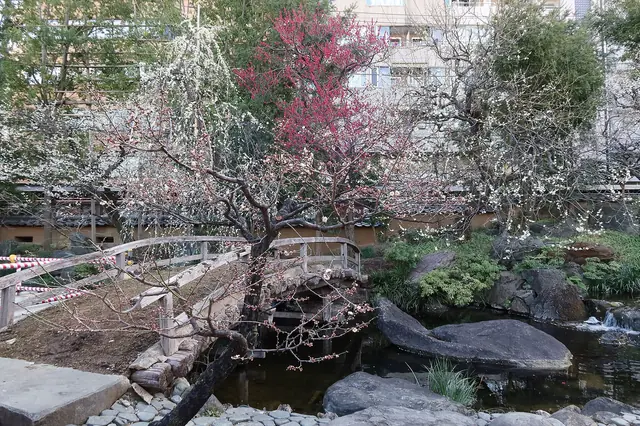
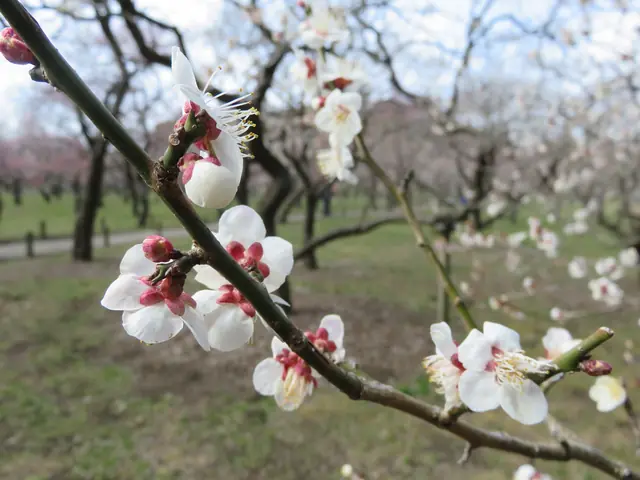
Kairakuen in Mito is one of the classic plum gardens of Japan, laid out in 1842 by a lord of the Mito Tokugawa family, with about 3,000 trees of around 100 varieties. The Mito Plum Festival runs from mid-February to mid or late March, and the Kodokan, the domain's old school, has its own plum trees nearby. Limited express trains from Ueno, Tokyo or Shinagawa reach Mito in about 70 to 80 minutes, and on festival weekends, holidays and some peak weekdays a temporary Kairakuen Station on the Joban Line opens in the daytime, a few minutes from the East Gate. During the festival everyone pays an entry fee, 500 yen for adults as of 2026.
Closer to Tokyo, the Soga plum groves in Odawara are working orchards of about 35,000 trees grown for pickled plums, with Mt Fuji behind them on clear days. The Odawara Plum Festival usually runs from early February to early March. Take the JR Tokaido Line to Kozu and change to the Gotemba Line for one stop to Shimo-Soga Station, then walk about 15 to 20 minutes; the trip takes around an hour and a half.
- The temporary Kairakuen Station only serves trains going away from Tokyo. For the return, walk or take a bus to Mito Station.
- At Soga the orchards are farms: stay on the paths and do not pick fruit or branches.
Late March to May: cherries and rapeseed, moss phlox, nemophila, wisteria
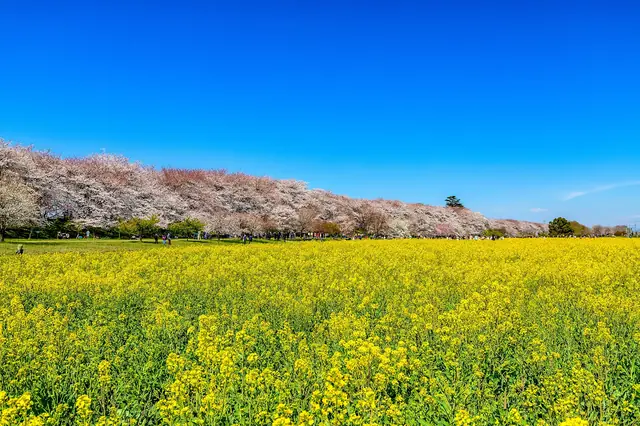
At Gongendo Park in Satte, Saitama, about 1,000 Somei Yoshino cherry trees form a tunnel along a riverbank for about 1 km, with a field of yellow rapeseed right beside them. The two usually peak together in late March or early April, during the Satte cherry festival. It is about an hour from Asakusa on the Tobu line to Satte Station, then a walk of about 30 minutes or a short bus ride.
Mid to late April brings two of the best-known fields around Tokyo. At Hitsujiyama Park in Chichibu, more than 400,000 moss phlox are laid out in pink, white and purple stripes below Mt Buko, about 80 minutes from Ikebukuro on the Seibu Laview and an uphill walk of 15 to 20 minutes. At Hitachi Seaside Park in Ibaraki, about 5.3 million nemophila turn Miharashi Hill sky blue. They usually peak from mid to late April into early May; in 2026 the peak came in mid-April, earlier than usual. The park adds a seasonal surcharge during the bloom, and it is about 15 minutes by bus from Katsuta Station on the Joban Line.
From mid-April to mid-May, Ashikaga Flower Park in Tochigi holds its wisteria festival, with great wisteria vines trained over huge trellises, long white wisteria tunnels and evening illuminations. The entry fee changes with the state of the bloom and one ticket covers both the day and the evening light-up. Ashikaga Flower Park Station on the JR Ryomo Line is a few minutes away; from Tokyo it is about two hours via Oyama, and in season JR runs reserved direct trains from several Tokyo-area stations.
- Golden Week is the hardest time for all three. Hitachi Seaside Park has opened early on some Golden Week mornings, which is the calmest time to see the hill.
- At Ashikaga, the evening light-up is often less crowded than the middle of the day.
June to August: hydrangeas, lavender and sunflowers
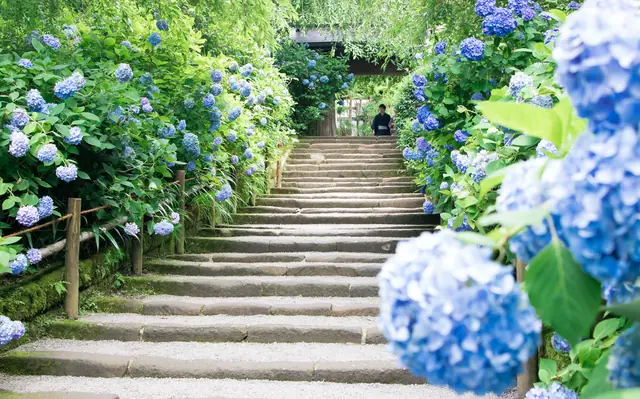
June belongs to hydrangeas. Kamakura has Meigetsuin and the hillside path at Hasedera, which has needed timed tickets at the peak, and in Hakone the Tozan Railway runs between banks of hydrangeas, lit up in the evening, from mid-June into July. Our hydrangea and iris guide has the details.
In July, the Fuji Kawaguchiko Herb Festival is held at Oishi Park on the north shore of Lake Kawaguchi, with rows of lavender on the lakeside and Mt Fuji across the water. The lavender is usually at its best in early to mid-July, and the park is free. The Fuji Excursion limited express from Shinjuku reaches Kawaguchiko in about two hours, and highway buses run from Shinjuku too; from the station, local sightseeing buses go round the lake. Summer haze often hides Fuji by midday, so go early.
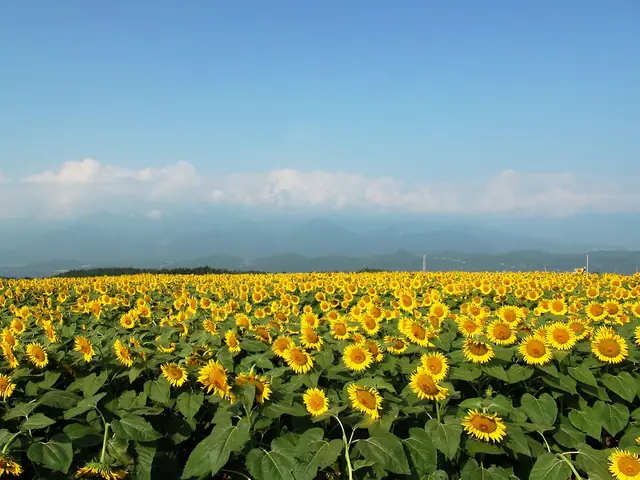
For sunflowers, the Akeno Sunflower Festival in Hokuto, Yamanashi, plants several hundred thousand sunflowers on a plateau facing the Southern Alps and Mt Fuji, usually from mid or late July to mid-August. Entry is free. Take the JR Chuo Line limited express from Shinjuku to Nirasaki, about two hours, then a bus of about 25 minutes. Much closer, the city of Zama in Kanagawa grows about 550,000 sunflowers on farmland by the Sagami River; in 2026 the fields opened for three days in mid-August, with a shuttle bus from Sobudai-mae Station on the Odakyu Line, about 45 minutes from Shinjuku.
- Sunflower fields have almost no shade. Bring a hat, water and sunscreen, and go in the morning before the worst of the heat.
September and October: red spider lilies, cosmos and kochia
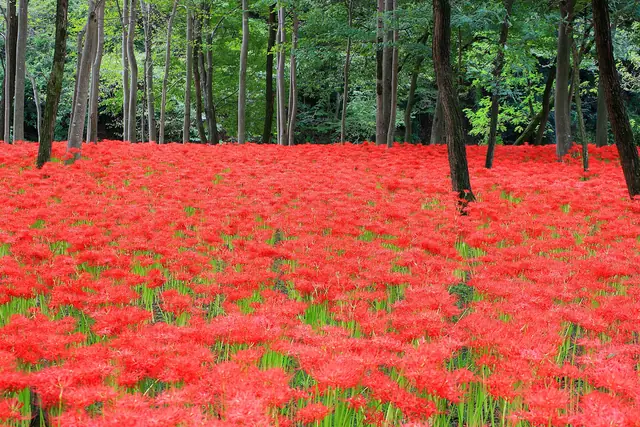
In late September, Kinchakuda in Hidaka, Saitama, a flat 22 ha meadow inside a bend of the Koma River, fills with about five million red spider lilies under the trees by the water. The flowers usually open around the autumn equinox and last into early October. The Kinchakuda Manjushage Festival charges an entry fee of 500 yen (as of 2026), with junior high school students and younger free. It is about 15 minutes on foot from Koma Station on the Seibu Ikebukuro Line, about an hour from Ikebukuro, and in season Seibu adds trains and some Laview limited expresses stop at Koma. In October the same meadow has a field of cosmos.
October is kochia month at Hitachi Seaside Park. The round bushes on Miharashi Hill, bright green in summer, turn red around mid-October and stay red for about a week to ten days, with cosmos fields around them; the park again adds a seasonal surcharge during the kochia season. For a large cosmos field closer to Tokyo, Kurihama Flower World in Yokosuka plants about a million, 15 minutes on foot from Keikyu Kurihama Station. Its cosmos bloomed late in 2025, so check the bloom report first.
- Red spider lilies fade within a few days of peaking. If the bloom report says migoro, go that week.
Late October to December: autumn leaves and winter lights
Autumn colour starts in the mountains. In Nikko the leaves turn first around Lake Chuzenji and the hairpin bends of the Irohazaka road, usually at their best in mid to late October, and reach the shrines in town in the first half of November. Tobu limited expresses from Asakusa take about two hours. On autumn weekends the Irohazaka road can jam for hours.
In November the colour moves to Hakone and to Mt Takao, which is under an hour from Shinjuku on the Keio Line, and then into Tokyo's own gardens in late November and early December. By then the flower parks switch to lights: Ashikaga Flower Park runs a winter illumination from mid-October to mid-February, and the narcissus on the Boso coast start the year again in December.
- For Nikko, take the earliest train you can manage and do the high country first, then come down to the shrines in the afternoon.