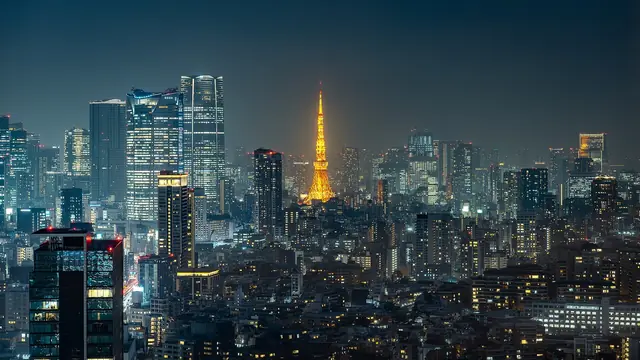
Free observatories
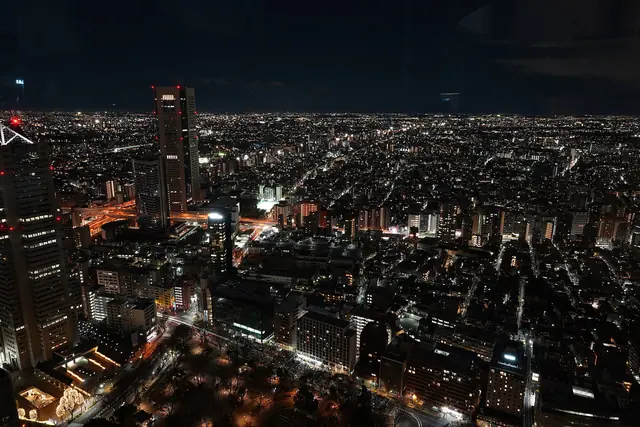
The Tokyo Metropolitan Government Building in Shinjuku has two observation rooms on the 45th floor, 202 metres up, and both are free with no booking. Only the South room stays open into the night, usually until 10pm (the North room closes in the late afternoon), and the two close on different days of the month, so check which one is open before an evening visit. Bags are checked at the entrance. To the east you see the towers of Shinjuku and, on clear evenings, Skytree and Tokyo Tower; to the west, Mount Fuji shows on clear winter days before dusk. After dark, a free projection mapping show, Tokyo Night & Light, plays on the building's east wall several times an evening, and you watch it from the plaza in front.
Caretta Shiodome has a free viewing area called Sky View on the 46th floor, about 200 metres up, reached by a lift from the basement. It looks down on Hama-rikyu garden, the bay and Rainbow Bridge, one of the best free bay views in the city. In Ebisu, the 38th floor of Ebisu Garden Place Tower has a free Sky Lounge facing Tokyo Tower and Roppongi, with restaurant floors around it.
Bunkyo Civic Center's 25th-floor lounge near Korakuen, long a favourite for views of Skytree, has been closed for renovation since March 2025, with reopening planned for December 2026. Check the ward's page before you go.
- Free decks have no time slots, so they suit a spontaneous plan after dinner.
- The Metropolitan Government Building is right by Tochomae Station on the Toei Oedo Line, exit A4.
Paid decks: Shibuya Sky, Roppongi, Skytree, Tokyo Tower
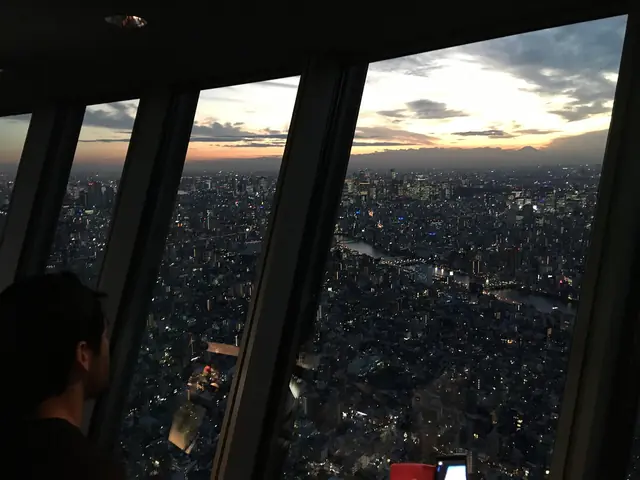
Shibuya Sky sits on the roof of Shibuya Scramble Square, about 230 metres above the scramble crossing, and its open-air rooftop leaves nothing between you and the sky. Timed tickets go on sale online a few weeks ahead, and the slots around sunset sell out first, often soon after sales open. A slot that starts about an hour before sunset lets you see the city in daylight, at dusk and after dark. Before the rooftop you leave bags, hats and anything loose in lockers; the rooftop closes in strong wind or rain, while the indoor floor stays open.
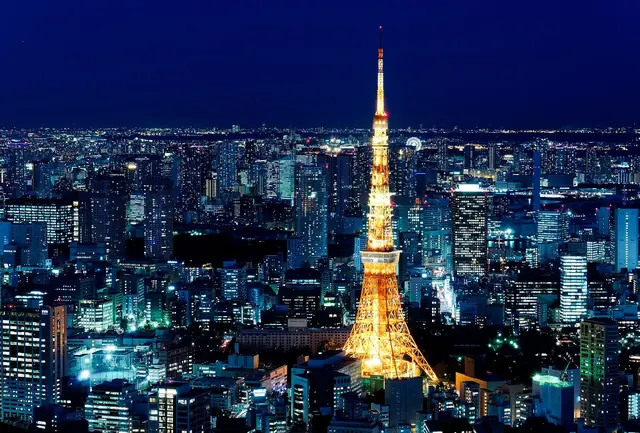
Tokyo City View on the 52nd floor of Roppongi Hills Mori Tower is an indoor deck with Tokyo Tower standing right in front of the windows, the classic view of the tower lit at night. The open-air Sky Deck on the roof has been closed since spring 2024, so plan for the indoor deck. Tickets can be combined with the Mori Art Museum upstairs, which keeps late hours, so art and the night view fit into one evening.
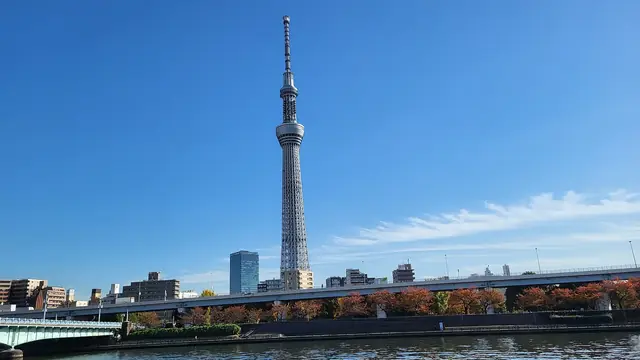
Tokyo Skytree has the highest decks, at 350 and 450 metres, and at night the lights of the east side spread flat to the horizon. Tokyo Tower's Main Deck at 150 metres is lower but central, so streets, temples and the bay look close. Sunshine 60 in Ikebukuro has a 60th-floor deck, Tenbou Park, which also holds moon-viewing and astronomy evenings.
- Wear dark clothes at indoor decks. Light colours reflect in the glass at night.
- Time slots are usually for entry, not a limit on your stay, so you can linger from sunset into the dark.
Rainbow Bridge, Odaiba and night cruises
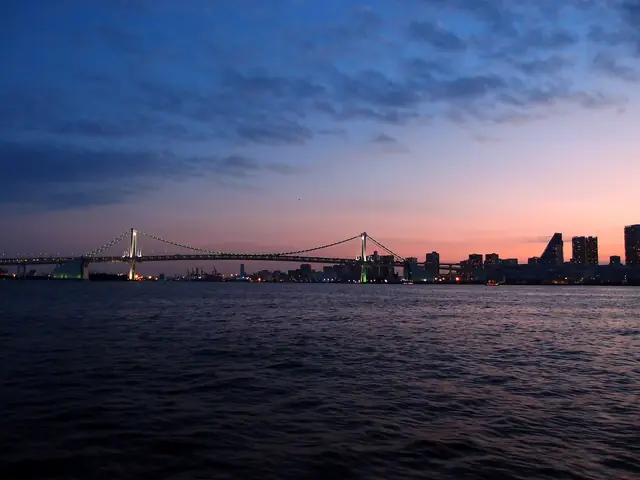
The bay is where a night view becomes an evening out. The beach at Odaiba Seaside Park faces Rainbow Bridge and the skyline across the water, and the bridge is lit every night. The driverless Yurikamome loops over the bridge from Shimbashi, and its front seats give a moving night view for the price of a train ticket. The bridge also has a free walkway, the Rainbow Promenade, open until early evening in winter and later in summer, closed on the third Monday of each month and in strong wind.
Night cruises come in a few kinds. Restaurant ships such as the Symphony leave Hinode Pier near Hamamatsucho for two to two and a half hours around the bay with a set dinner. Yakatabune, low wooden boats with tatami rooms and red lanterns, serve tempura and drinks while they sail the Sumida River and out towards Odaiba; many are booked by groups, but some operators run shared departures for couples and small groups.
- Book dinner cruises ahead, especially for December evenings and fireworks nights.
- It is colder and windier on the water than in town. Bring a layer even in spring and autumn.
Timing: sunset, blue hour and clear air
The best half hour is the one right after sunset, the blue hour, when the sky is still deep blue and the city lights are already on. Tokyo sunsets range from about 4:30pm in early December to about 7pm in late June, so check the time on the day and arrive 30 to 40 minutes before.
Clear air matters more than height. Winter, from December to February, has the driest and clearest air, and that is when Mount Fuji most often shows on the horizon at sunset. Summer haze softens the view, and low cloud can hide the top of Skytree completely. The day after rain or strong wind is often the clearest of the week. If the forecast is cloudy, a free deck or a lower one such as Tokyo Tower is a safer bet than paying for the highest.
- On clear winter days, the west windows of the Metropolitan Government Building show Mount Fuji in silhouette at sunset.
Photos, etiquette and getting home
Tripods and selfie sticks are not allowed on most decks, and flash only lights up the glass. Hold the phone close to the window, or cup your hand around the lens, to cut reflections, and use the phone's night mode. On crowded evenings, take your shot and give the window spot back; people queue politely for the front row at sunset.
Most decks close around 10pm, so a night view fits easily before the last trains, which leave central Tokyo around midnight. For later views, the bars on the top floors of hotels in Shinjuku, Roppongi and Marunouchi stay open past the decks, usually with a table charge.
- Weekday evenings are calmer at every deck. Weekend sunsets in December are the busiest of the year.