What Nikko is
Nikko is a town in Tochigi, north of Tokyo, on the edge of Nikko National Park. Tradition says the monk Shodo Shonin brought Buddhism to these mountains in the 8th century and founded what became Rinnoji temple and Futarasan Shrine. In 1617 Tokugawa Ieyasu, the first Tokugawa shogun, was enshrined here, and in the 1630s his grandson Iemitsu rebuilt the shrine into the lavish complex you see today. The Shrines and Temples of Nikko were added to the UNESCO World Heritage list in 1999.
Think of Nikko as two levels. The shrine area sits just above the town and the stations, among tall cedars. Higher up, Okunikko is a mountain plateau with Lake Chuzenji at 1,269 m, so cool in summer that foreign embassies once built villas on its shore. Both are noticeably colder than Tokyo, especially in the morning.
Toshogu and the shrine area
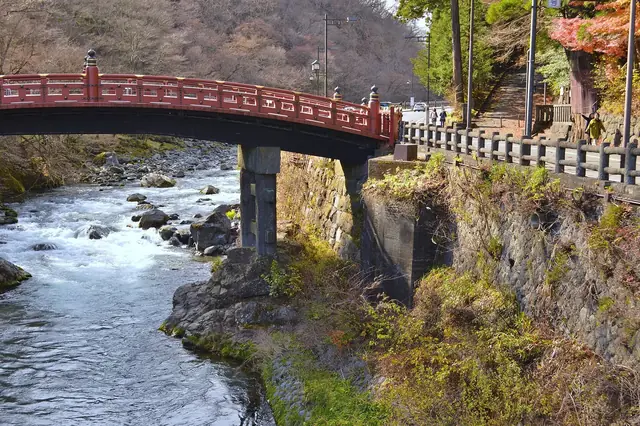
Coming up from the stations, you first reach Shinkyo, the vermilion bridge over the Daiya River. It belongs to Futarasan Shrine, its present form dates from 1636, and for a small fee you can walk across and back. Across the road, Rinnoji's Sanbutsudo hall holds three huge gold-lacquered statues of Amida and two forms of Kannon, and the small Shoyoen garden behind its treasure house is one of the best autumn spots in town.
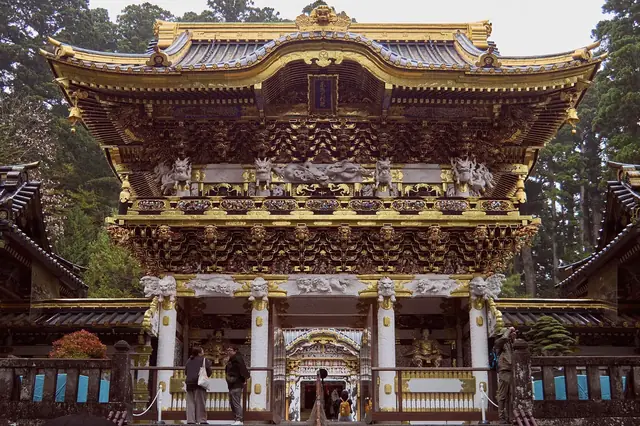
Toshogu begins with a five-storey pagoda and the main gate. Inside, look for the three 'see no evil, hear no evil, speak no evil' monkeys carved on the sacred stable, and the imagined elephants carved by an artist who had never seen one. Then comes Yomeimon, one of the most intricately decorated gates in Japan. In the Honjido hall a priest claps two blocks of wood under the painted ceiling dragon so you can hear it 'cry'. Over a side gate is the small carving of the sleeping cat, and beyond it a long stone staircase climbs through the forest to Ieyasu's tomb, about five minutes up. Photos are not allowed inside the main hall.
Futarasan Shrine, a short walk west, is much older and plainer, dedicated to the gods of Nikko's three sacred mountains, and its grounds are mostly free. Further on, Taiyuin, the mausoleum of Iemitsu, repeats Toshogu's style on a smaller, quieter scale.
- Arrive at Toshogu soon after opening. By late morning tour groups fill the narrow passages around Yomeimon.
- The stone steps to Ieyasu's tomb are steep and uneven. Wear proper shoes, not sandals.
- Toshogu closes earlier in winter (around 4pm from November to March) and last entry is 30 minutes before closing.
Up the mountain: Irohazaka, Kegon Falls and Lake Chuzenji
From the town, buses climb to Lake Chuzenji in about 50 minutes on the Irohazaka, a pair of one-way roads with 48 hairpin bends between them, named after the 48 syllables of the old Japanese alphabet. The newer road carries uphill traffic, and near the top the Akechidaira stop has a lookout over the bends and the valley.
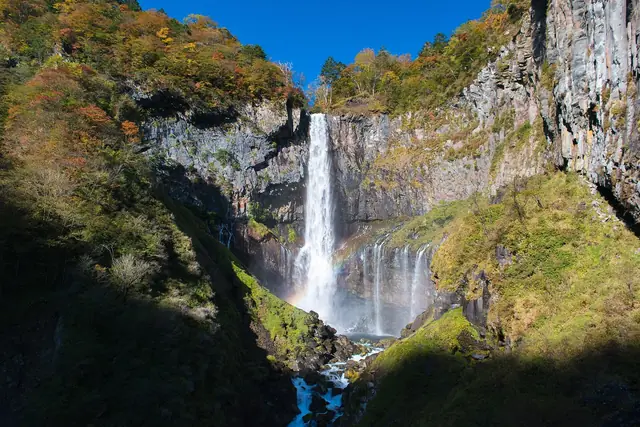
Kegon Falls, almost 100 m high, is the only outlet of Lake Chuzenji and is counted among Japan's three finest waterfalls. A free viewpoint is a short walk from the Chuzenji Onsen bus terminal, and a paid elevator drops about 100 m to a platform at the base. In a cold winter the falls freeze almost solid.
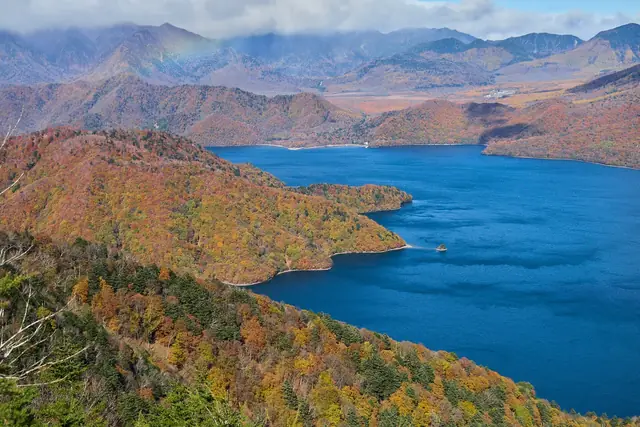
The lake itself was formed about 20,000 years ago when an eruption of Mount Nantai blocked the valley. Sightseeing boats leave from Chuzenji Onsen, a lakeside branch of Futarasan Shrine stands on the north shore, and if you have more time the bus continues past Ryuzu Falls and the Senjogahara marsh to the hot spring village of Yumoto.
- Akechidaira is only reachable on the uphill road. Buses going down to the town do not stop there.
- Bring a warm layer even in summer. At almost 1,300 m the lake is much cooler than central Tokyo.
The year in Nikko: festivals and autumn leaves
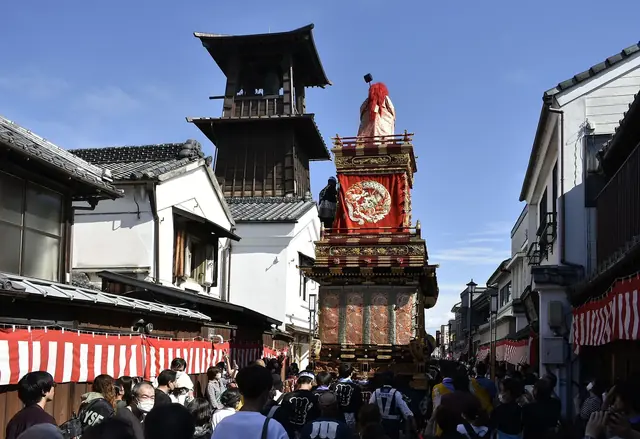
Toshogu holds its spring grand festival every year on May 17 and 18. On the 17th there is yabusame, horseback archery, on the riding ground along the approach. On the 18th, from late morning, the Procession of a Thousand Warriors (Hyakumono-zoroi Sennin Musha Gyoretsu) escorts the shrine's portable shrines down to the Otabisho and back, with more than a thousand people in samurai armour and Edo-period dress. The autumn festival in mid-October repeats both, with yabusame on October 16 and the procession on October 17.
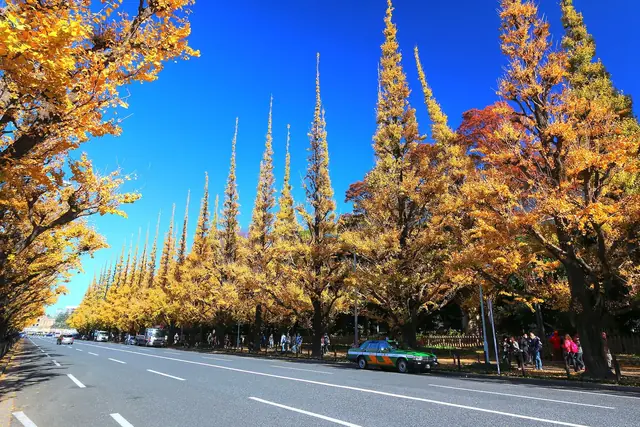
Autumn colour moves downhill. It starts at Yumoto in early October, peaks around Lake Chuzenji, Kegon Falls and the Irohazaka in mid to late October, and reaches the shrines and the Shoyoen garden in the first half of November. Winter brings snow, a frozen Kegon and very few visitors. Summer is green and cool up at the lake, and Toshogu holds a kendo tournament every August.
Getting there, and one day or two
The simplest way is the Tobu Railway from Asakusa. Limited express trains reach Tobu-Nikko in about two hours, one or two an hour, with reserved seats on a separate ticket. Slower express and local trains cost less but take at least half an hour longer and need one or more changes. By JR, take the Tohoku Shinkansen from Tokyo or Ueno to Utsunomiya and change to the JR Nikko Line, about 100 minutes in all and covered by the Japan Rail Pass. There is also a JR and Tobu through limited express called Nikko from Shinjuku, via Ikebukuro and Omiya, once or twice a day, all seats reserved.
JR Nikko and Tobu-Nikko stations stand next to each other. From there the shrines are a 30 to 40 minute walk uphill or about ten minutes by bus, and Tobu sells Nikko area passes that include the local buses. For local food, Nikko is known for yuba, the delicate skin that forms on heated soy milk, served in soba, rice bowls and set meals.
In one day you can see the shrine area well and, with an early start, add Kegon Falls. To do the lake, the marsh and an onsen without rushing, stay a night at Chuzenji, Yumoto or Kinugawa Onsen. In the autumn peak, Tobu itself warns that traffic between the town and the lake can make buses more than two hours late, so on October weekends either go up at dawn, go on a weekday, or keep the mountain for a second day.
- Book limited express seats ahead, both ways, for autumn weekends and the May festival days.
- Get to Lake Chuzenji first in the morning and visit the shrines in the afternoon, against the flow of the crowds.
- Most shrine and temple buildings close by 4 or 5pm. Plan the day around that, not around sunset.