When they bloom
Wisteria (fuji) in Tokyo usually starts to open in mid-April and is at its best in the second half of the month. In recent warm springs the city's trellises have peaked before Golden Week rather than during it: in 2026 Kameido Tenjin's flowers were already near their peak by mid-April. Further north and inland the season runs later, and Ashikaga Flower Park in Tochigi keeps going into mid-May because its varieties open one after another, pale pink first, then purple, then white, with yellow laburnum (kibana fuji) last.
Azaleas (tsutsuji) overlap almost exactly. Early varieties open in early April, most Tokyo gardens peak from mid to late April, and big hillside plantings such as Shiofune Kannon-ji in Ome hold on into early May. Both flowers react quickly to heat and rain, so treat any festival date as a window rather than a promise. Gardens and shrines post bloom reports on their sites and social accounts.
- Wisteria smells sweet and draws big black carpenter bees. They look alarming but very rarely sting, so just leave them alone.
Wisteria in Tokyo
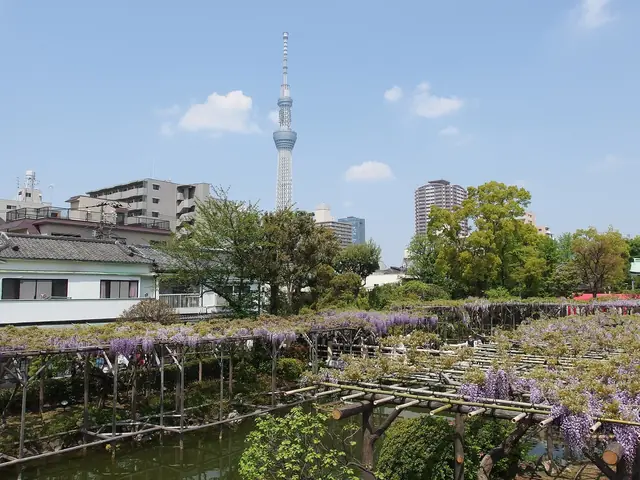
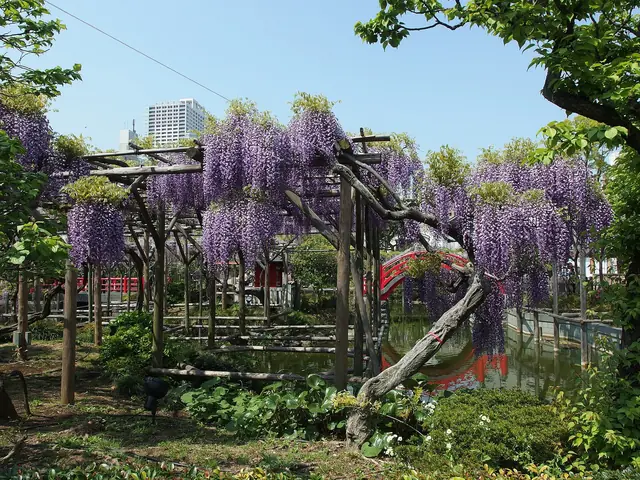
Kameido Tenjin in Koto ward has been the city's best-known wisteria spot since the Edo period, when Hiroshige put it in his One Hundred Famous Views of Edo. More than 50 wisteria plants grow on low trellises around Shinji Pond, which is crossed by two steep red drum bridges, and from the top of the bridges you see Tokyo Skytree above the flowers. During the wisteria festival, which takes up most of April, food stalls line the approach and the trellises are lit from sunset until about 9pm (as of 2026), with the clusters reflected in the dark water. Entry is free. The shrine is about 15 minutes on foot from the north exit of JR Kameido Station or from Kinshicho, and Toei buses stop at Kameido Tenjin-mae right outside.
Smaller trellises are scattered through the old gardens. Kyu-Shiba-rikyu Gardens, a minute from the north exit of JR Hamamatsucho, has wisteria by its central pond with benches underneath, usually best in mid to late April. Koishikawa Korakuen near Iidabashi has a pale purple trellis at about the same time; the two gardens charge 150 and 300 yen as of 2026. In the west, Jindai Botanical Garden in Chofu has wisteria from late April into early May next to one of the city's largest azalea plantings.
Wisteria day trips: Ashikaga and Ushijima
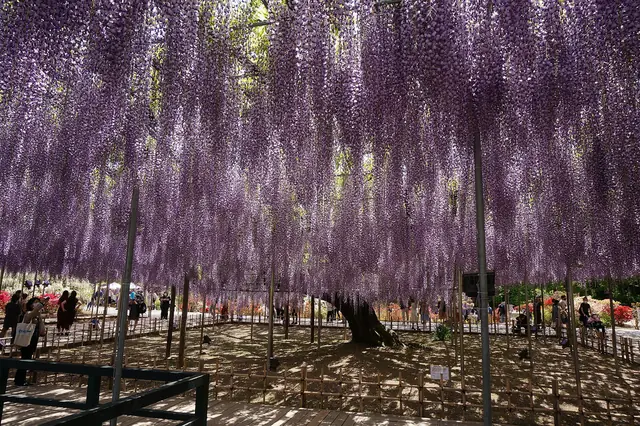
Ashikaga Flower Park in Tochigi is the place most people picture when they think of Japanese wisteria. Its great wisteria is about 160 years old and has spread from a small trellis to one of around 1,000 square metres. The wisteria period runs from mid-April to mid-May, with the trellises lit in the evening and reflected in the pond. The entrance fee changes with the state of the bloom and is highest at peak, so check the park's fee page for the day you go. From Ueno, take the JR Utsunomiya Line to Oyama and change to the Ryomo Line for Ashikaga Flower Park Station, about two hours in all; the entrance is about three minutes from the station.
Ushijima no Fuji in Kasukabe, Saitama, is the opposite experience: one ancient tree in a quiet Japanese garden. Local tradition says the monk Kobo Daishi planted it about 1,200 years ago, and it has been a national special natural monument since 1955. The trellis covers about 700 square metres, and in a good year the longest clusters reach close to two metres. The garden opens only for about three weeks in the wisteria season (in 2026 from mid-April to early May), from 8am to 5pm, and adult entry is 1,200 yen as of 2026. You may bring a packed lunch. Pets are not allowed even in carriers, umbrellas may not be opened under the trellis in rain, and cosplay photography is refused. It is a 10 minute walk from Fujinoushijima Station on the Tobu Urban Park Line.
Azaleas in the city
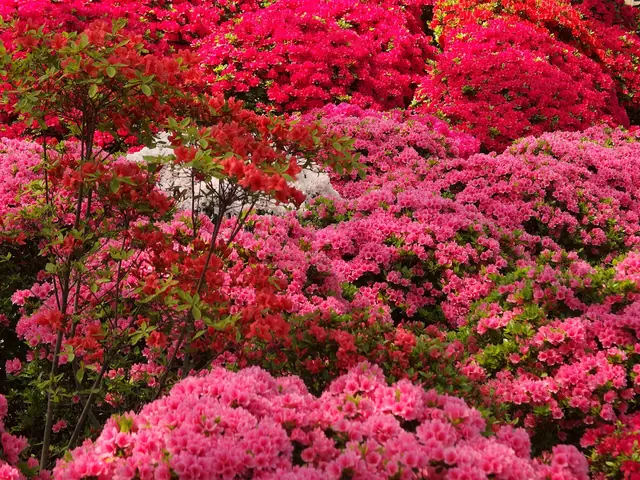
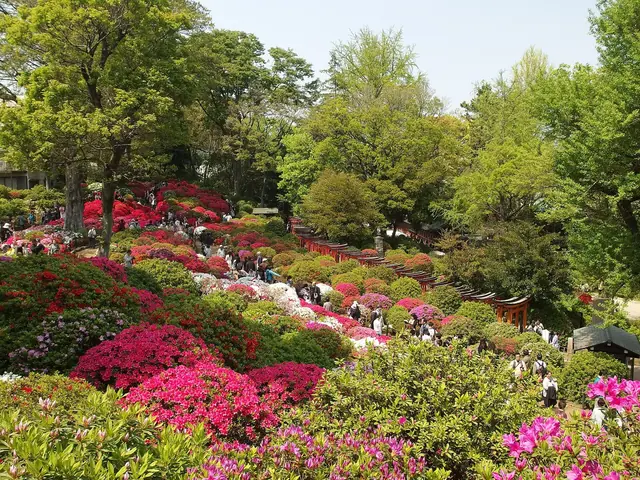
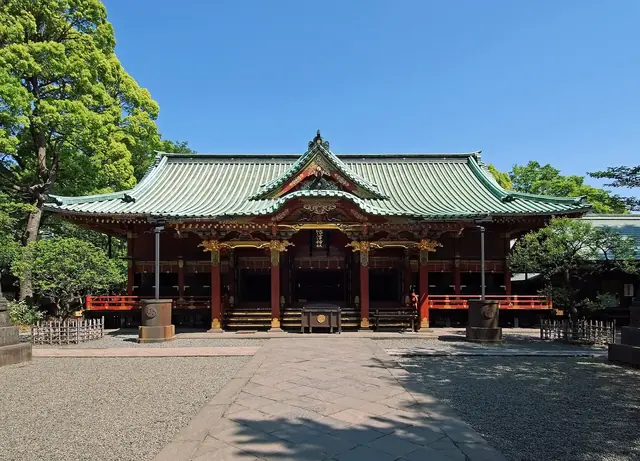
Nezu Shrine holds the Bunkyo Azalea Festival through April. About 3,000 azaleas of around 100 varieties cover the slope beside the shrine's tunnel of small red torii gates. The shrine grounds are free, but the azalea garden, open from 9am to 5:30pm during the festival, asks for a donation of 500 to 1,000 yen that changes with the date and the bloom (as of 2026). The shrine is about 5 minutes on foot from Nezu Station or Sendagi on the Chiyoda Line and from Todaimae on the Namboku Line, and the old lanes of Yanaka are a short walk away. The garden paths are narrow, so on festival weekends arrive early.
Rikugien near Komagome holds an azalea event from mid-April to early May, with name plates and a free map of old Edo varieties such as yaegirishima and omurasaki. Admission is 300 yen as of 2026. Shinjuku Gyoen has azaleas and wisteria around its Japanese garden in the second half of April, after the late cherry trees. One closure to know about: Heisei Tsutsuji Park next to Nerima Station, normally one of Tokyo's biggest azalea collections, is shut for a full rebuild from April 2026 to around August 2027, so there will be no azalea season there in 2027 either.
Azalea hills out of town
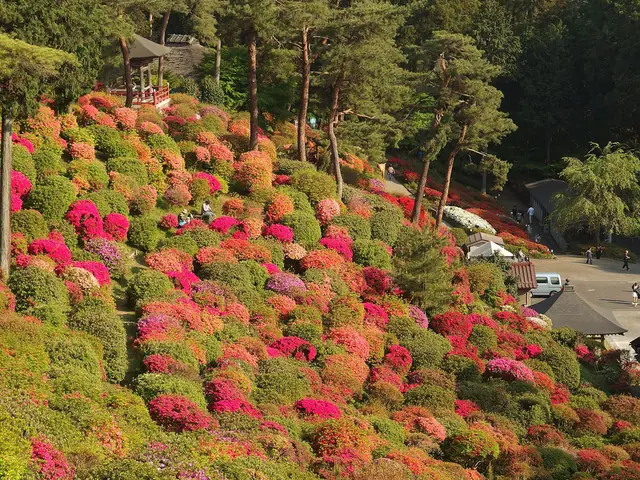
Shiofune Kannon-ji in Ome, at the western edge of Tokyo, is where you see azaleas on a grand scale. Behind the main hall a bowl-shaped valley is planted with well over 15,000 bushes of about 20 varieties, so from the path along the rim you look down on solid bands of colour. The azalea festival runs from mid-April into early May. The temple grounds are normally free, but a small fee applies during the festival (300 yen for adults as of 2026). On May 3 the temple holds a goma fire ritual with a fire walk, and in recent years visitors have been able to cross the embers after the priests. From Kabe Station on the JR Ome Line, take a bus for about 10 minutes to Shiofune Kannon Iriguchi and walk 10 minutes. The slope is steep and partly unpaved, so wear proper shoes.
Tsutsujigaoka Park in Tatebayashi, Gunma, is the classic longer trip: about 10,000 azaleas of more than 100 varieties on a hill beside a large pond. Its festival runs from early April to early May, with a fee that rises and falls with the bloom. Tobu limited expresses from Asakusa reach Tatebayashi in about an hour, then it is a 10 minute bus ride or about 25 minutes on foot. If you would rather see open fields, the same weeks bring the blue nemophila hill at Hitachi Seaside Park in Ibaraki, usually best in the second half of April, and the nemophila field at Showa Kinen Park in Tachikawa.
Golden Week crowds and practical tips
Golden Week runs from the end of April into the first days of May and is the busiest week of the year for day trips. Trains towards Ashikaga and Kasukabe fill up, roads out of Tokyo jam, and car parks at Ashikaga and Shiofune can be full by mid morning. The simple answer is to go early: be at the gate when it opens, or use the ordinary working days that often sit between the holidays. City spots such as Kameido Tenjin and Nezu are easiest on weekday mornings.
The paid Tokyo gardens in this guide, including Rikugien, Kyu-Shiba-rikyu, Koishikawa Korakuen and Jindai, do not admit pets. Rain is hard on wisteria: a wet, windy day can strip a trellis in an afternoon, so if a storm is forecast, go the day before. Small temples, stalls and festival fee booths often take cash only.
- Bloom reports move through fixed stages, from starting to bloom to full bloom to starting to fall. Each variety stays at its peak for about a week, so plan around the full bloom report.