What April feels like
April is mild but changeable. Going by the Japan Meteorological Agency's long-term averages, daytime highs sit around 17°C to 21°C, rising through the month, and nights drop to around 8°C to 12°C. A warm, almost summery afternoon can be followed by a raw, windy day, the spring cold snap people call hanabie, the flower chill. It also rains more than in winter, usually a grey day or two at a time rather than whole weeks.
Dress in layers. A light jacket or trench coat over a shirt or thin sweater covers most days, and you will want the extra layer after sunset, especially at an evening hanami. If you have hay fever, early April is usually the peak of the cypress (hinoki) pollen season, which follows the cedar pollen of March and fades from mid-month. Masks, eye drops and daily pollen forecasts are everywhere.
- Evenings under the cherry trees get cold fast. Bring a warm layer and a mat, since the ground is often damp.
- Pollen is worst on warm, dry, windy days and the day after rain. Check the forecast if you are sensitive.
The last cherry blossoms and a new school year
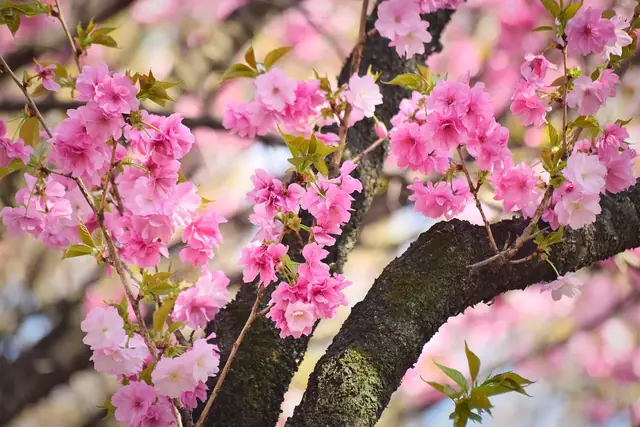
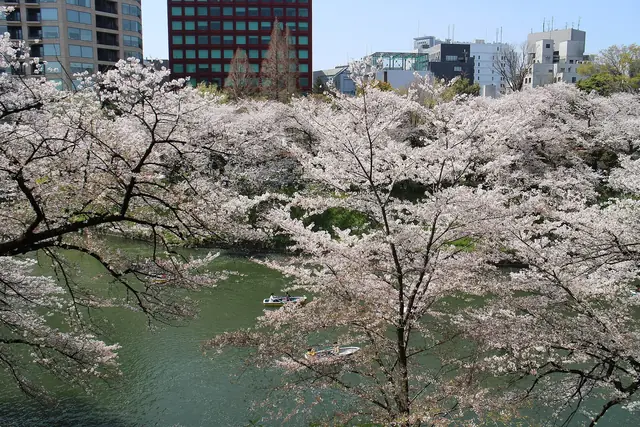
In most years the Somei-yoshino cherry trees, the pale pink variety planted in most parks, are at their peak around the turn of March and April and fall within a week or two. The falling is part of the show: petals blow through the streets like snow (hanafubuki) and drift on moats and rivers in pale rafts. Once they are gone, the later double-flowered cherries (yaezakura) take over. Shinjuku Gyoen has a large collection, and varieties such as Kanzan and Ichiyo are usually at their best there in mid-April, with far fewer people than at the peak.
April 1 is the start of the school and business year, and you notice it everywhere. Children in new uniforms with stiff new randoseru backpacks pose at school gates after entrance ceremonies, new employees in dark suits move around in groups, and izakaya and parks fill with welcome parties in the evening. On April 8, temples mark the Buddha's birthday with Hana Matsuri: a small shrine covered in flowers holds a statue of the infant Buddha, and visitors pour sweet tea (amacha) over it. Sensoji in Asakusa is one of the temples that holds it.
- When bloom updates say 散り始め (starting to fall), go. Petals in the air are often the prettiest moment of the season.
Azaleas, wisteria and fields of tulips
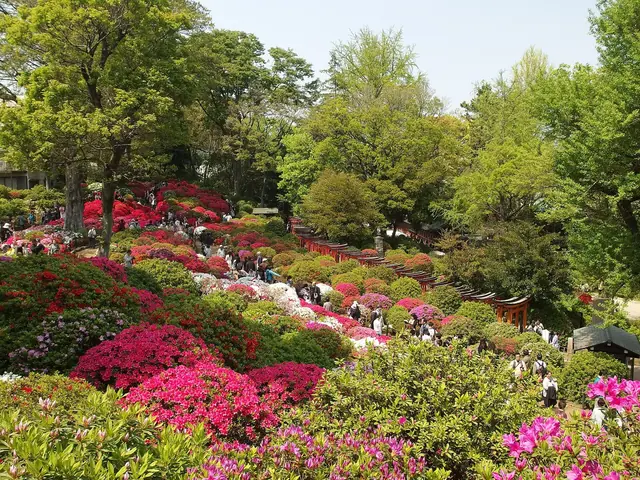
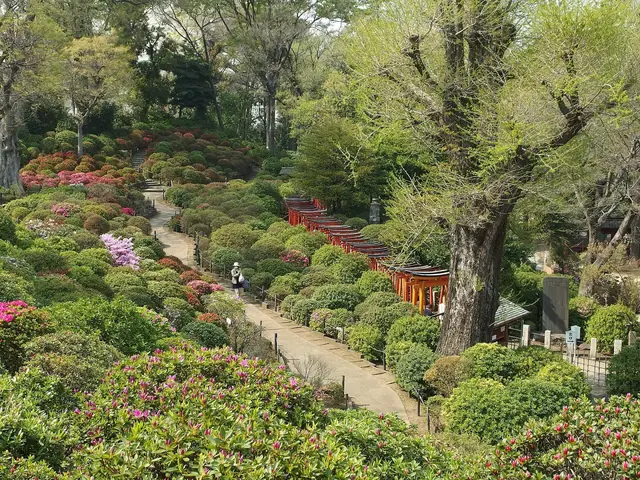
Right after the cherries come the azaleas. Nezu Shrine in Bunkyo ward holds the Bunkyo Azalea Festival through April, with around 3,000 bushes of about 100 varieties on the slope beside its tunnel of red torii gates. The shrine grounds are free, and the azalea garden asks for a small entry donation during the festival. Nezu and Sendagi stations on the Chiyoda Line are about five minutes away on foot, and the old streets of Yanaka nearby turn the visit into a good walk.
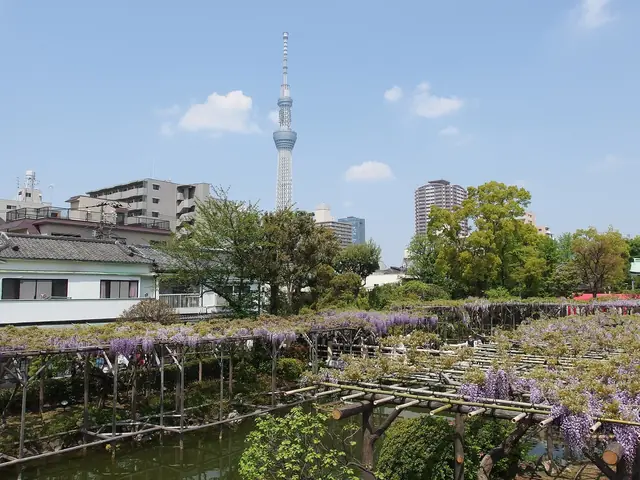
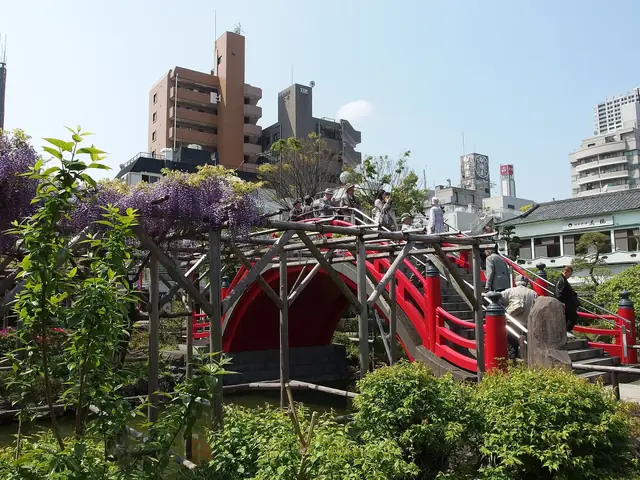
Wisteria starts in the second half of the month. Kameido Tenjin in Koto ward holds a wisteria festival with long purple trellises over a pond and arched drum bridges, the scene Hiroshige printed, now with Tokyo Skytree rising behind it. The flowers usually peak in late April, in some years running into early May, and the trellises are lit after dark during the festival.
Further west, Showa Kinen Park in Tachikawa plants big beds of tulips and a field of blue nemophila that are usually at their best from mid-April. The famous nemophila hill at Hitachi Seaside Park is in Ibaraki, a full day trip of about two hours each way.
- Nezu is calmest on weekday mornings. On weekend afternoons the narrow garden path gets crowded and the approach fills with food stalls.
- Wisteria timing varies a lot from year to year. Check Kameido Tenjin's site or social accounts before you go.
Weekends outdoors and the run-up to Golden Week
Once the weather settles, April weekends move outside. The event plaza of Yoyogi Park hosts one festival after another through spring, many of them free to enter with food stalls where you pay per dish, and parks and shopping streets hold flea and craft markets. Most stalls take cash only and public bins are rare, so carry coins and a bag for your trash.
Showa Day on April 29 is the only national holiday in April and the first day of Golden Week. From then until May 5, trains, hotels, theme parks and popular sights are at their busiest of the spring, hotel prices rise, and Shinkansen seats around the start of the holiday sell out early. On April 30 the Kurayami Matsuri begins at Okunitama Shrine in Fuchu, a night festival more than a thousand years old that runs into early May.
- The calmest part of April is the middle: after the cherry blossom weekends and before Golden Week.
- Travelling in late April? Book hotels and Shinkansen seats as early as you can.