What Setsubun is and when
Setsubun literally means "seasonal division". Today it refers to the day before risshun, the first day of spring in the old calendar. That puts it on February 3 in most years, though it moves to February 2 in some years (2025 was one of them). It is not a public holiday, so offices, shops and trains run as normal, and the ceremonies happen on a working day unless February 3 falls on a weekend.
At home, families open a window or the front door and throw beans out while shouting "Oni wa soto, fuku wa uchi" (demons out, luck in), often at a parent wearing a paper demon mask. Then everyone eats roasted beans, one for each year of their age, and some people add one more for the year ahead. Supermarkets sell packs of fukumame (lucky beans) with a cardboard oni mask inside. Some households also hang a holly sprig with a grilled sardine head by the door, because demons are said to hate the smell and the prickly leaves.
The big temple and shrine ceremonies
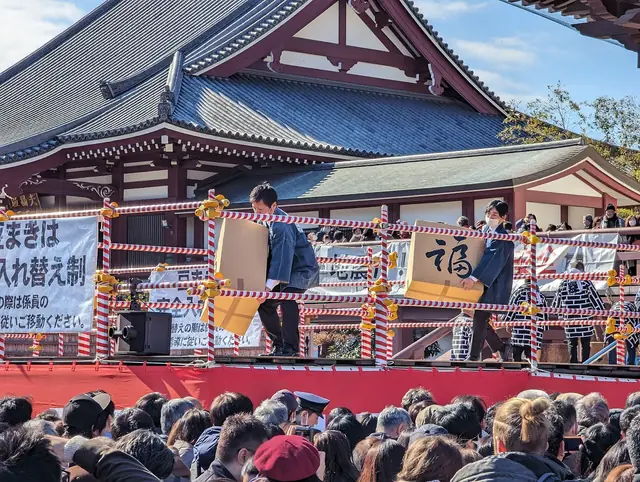
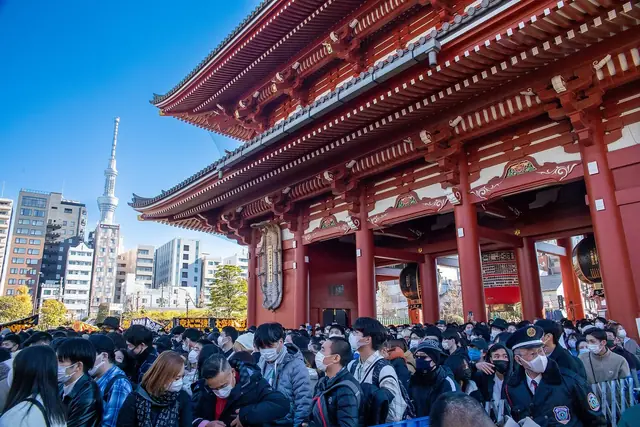
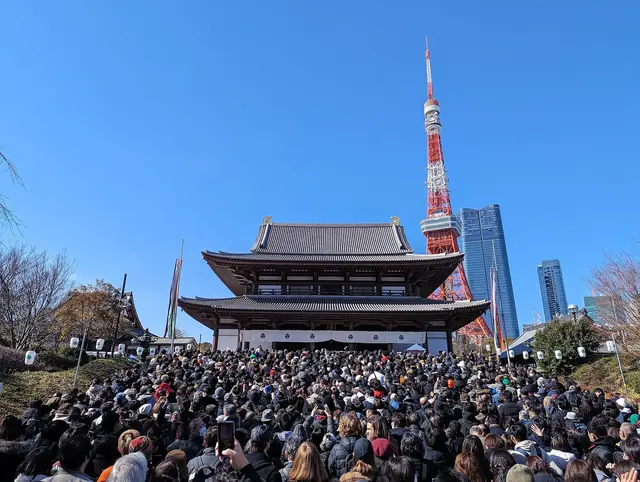
Sensoji in Asakusa holds one of the largest. Because demons are said not to exist in front of the Kannon enshrined there, people chant "Senshu banzai, fuku wa uchi" and never "oni wa soto". Bean throwing from a stage by the main hall is followed by the Fukuju dance of the Seven Lucky Gods, and in recent years there has also been a later session with well-known people linked to Asakusa. Zojoji in Shiba Park has toshi-otoko and toshi-onna (people born in that year's zodiac sign), often joined by celebrities and sumo wrestlers, throwing beans in front of the main hall. Next door, Tokyo Tower has held a small Setsubun ceremony with Zojoji priests on its observation deck since its early years, open to anyone with an observatory ticket.
Ikegami Honmonji in Ota ward is one of the biggest in the south of the city: a procession of lucky men and women is followed by a prayer service and bean throwing from a long stage, and wrestlers, athletes and TV personalities have taken part over the years. At Kanda Myojin near Akihabara, red and blue oni appear on the grounds, and sweets and small gifts are thrown along with the beans. If you can travel about an hour out, Naritasan Shinshoji in Narita, Chiba, is the most famous of all: tens of thousands of people come, top sumo wrestlers and actors from that year's NHK historical drama usually throw beans, and only "fuku wa uchi" is chanted.
- Most ceremonies are free and need no ticket. Times are posted in January on each temple's or shrine's website.
- Celebrity line-ups are announced late and change every year. If you want to see someone specific, check the official page the week before.
Smaller and unusual Setsubun
Neighbourhood shrines and temples all over Tokyo do their own mamemaki. They are smaller and friendlier, with local children in the front row and a much better chance of catching something. A few have their own twist. Hosenji in Nakano holds a parade of men dressed as warrior monks before its bean throwing. Yoyogi Hachimangu has in recent years pounded mochi in public a few days before Setsubun and thrown mochi along with the beans on the day. Takahata Fudo in Hino, one of the three great Fudo temples of the Kanto region, has well-known guests throwing beans, and its famous daruma market is held a few days earlier, on January 28.
Some shopping streets also run their own Setsubun festival around the date, with people in oni costumes walking around and a few stalls. These are easy to drop into and good for photos.
Catching beans, crowds and kids
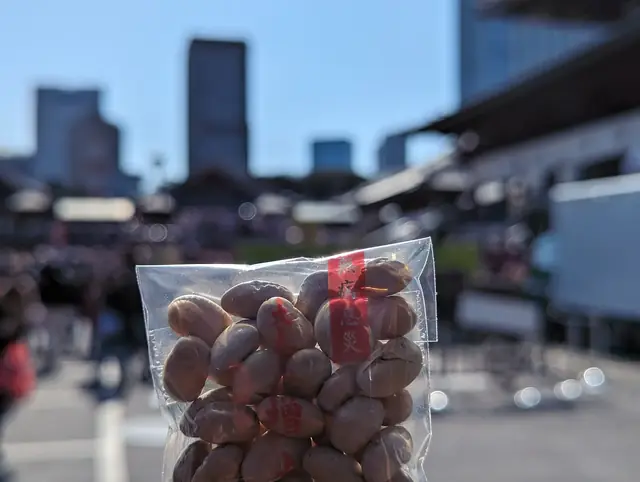
Beans are usually thrown in small packets, so they land without hurting, but the crowd surges forward when the throwing starts and hands go up everywhere. The best spot is a few rows back from the stage, roughly in the middle; at the very front people lean on the barrier and it gets tight. Hold a tote bag or hat open in front of you, which catches far more than bare hands. Packets that fall to the ground are fair game, but crouching in a moving crowd is risky, so pick up only what lands at your feet.
The biggest ceremonies at Sensoji, Ikegami Honmonji and Naritasan get very crowded around the celebrity sessions, and staff or police divide the crowd into blocks. Each throwing session is over quickly, so arrive at least 30 minutes early if you want a good place. With small children, a neighbourhood shrine or a morning session is easier: at Sensoji and Zojoji local kindergarten children take part, and some little ones cry at the sight of the oni, which is part of the tradition.
- Keep your phone in a zipped pocket while the beans are flying, not in your raised hand.
- Early February is the coldest part of the Tokyo year. You may stand outside for an hour, so wear a warm coat, hat and gloves.
- Bigger temples have food stalls on the approach. Bring cash, and take your rubbish home if there are no bins.
Ehomaki and Setsubun food
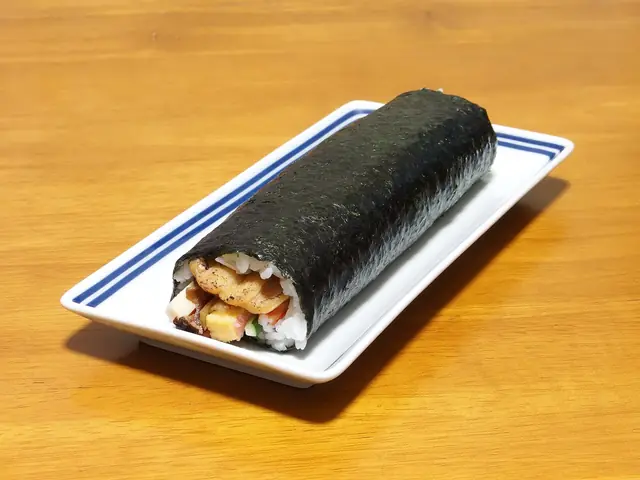
Ehomaki is a thick, uncut sushi roll eaten on the evening of Setsubun. The custom comes from the Osaka area and spread across Japan from the 1980s and 1990s, largely through convenience store campaigns, so in Tokyo it is a fairly new habit that is now everywhere. The rule is to face that year's eho, the lucky direction, which changes every year, and eat the whole roll without cutting it and without speaking, while making a wish. The direction is printed on the packaging and on posters in every shop, so you don't need to work it out.
Convenience stores, supermarkets and department store food halls take pre-orders from January, and on the day there are stacks of rolls, from the classic one with several fillings to seafood, beef and even dessert versions. Grilled sardines are a traditional Setsubun dish too, and small packets of roasted soybeans are sold everywhere.
- Department store rolls can sell out. Pre-order if you want a particular one.
- A full roll is a lot to finish in silence. Thinner or half-size rolls are sold for children and small appetites.