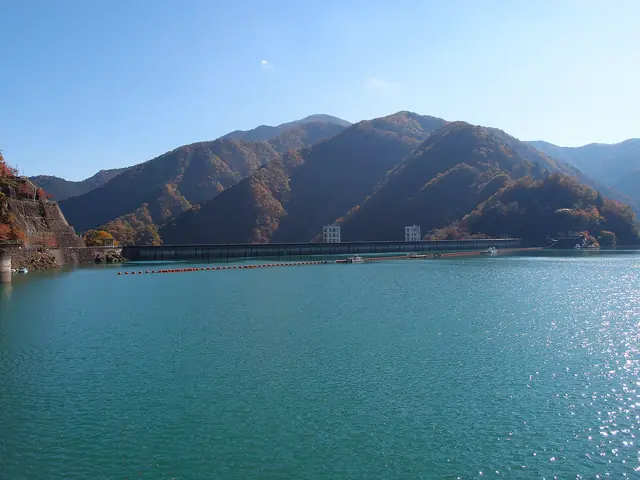
What Okutama is
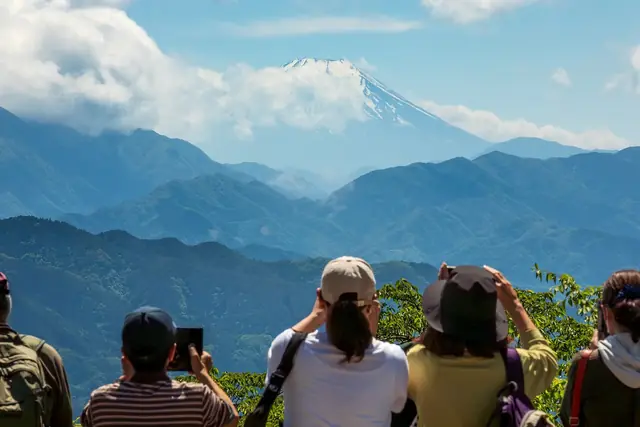
Okutama is the westernmost and largest town in Tokyo, almost all forest and part of Chichibu-Tama-Kai National Park. On its western edge stands Mt Kumotori, at 2,017 m the highest peak in Tokyo, and Okutama Station, at 343 m, is the highest ordinary railway station in the metropolis. The Tama River starts in these mountains and flows all the way to Tokyo Bay.
Above the town, Ogochi Dam, completed in 1957, holds back Lake Okutama, a reservoir that stores drinking water for the city. For a visitor, "Okutama" usually means the last stretch of the Ome Line, from the Mitake area through the gorges to Okutama Station, plus the bus valleys beyond it. Mitake and the Sawanoi brewery are technically in neighbouring Ome, but they belong to the same trip.
Getting there: the Ome Line and the change at Ome
From Shinjuku, take the JR Chuo Line to Tachikawa and the Ome Line on to Ome; many Chuo Line trains run through to Ome, so you may not need the first change. Beyond Ome the line runs as a separate local service to Okutama, so almost everyone changes there. On weekends and holidays the Holiday Rapid Okutama runs from Tokyo and Shinjuku to Ome with a connecting train for Okutama. Allow about two hours from Shinjuku.
Chuo Line trains carry double-deck Green Cars, a paid upgrade for a more comfortable seat, as far as Ome. Suica and PASMO cover the whole trip. Trains between Ome and Okutama run only one to three times an hour, so note the times for the way back. From Okutama Station, buses climb to Lake Okutama in about 15 minutes and to the Nippara valley in about half an hour, and they are not frequent either.
- On some winter weekdays JR halts Ome to Okutama trains in the daytime for track work, as in December 2026 and January 2027.
- The valleys have almost no shops. Bring water, snacks and some cash for buses and small shops.
Where to go: gorges, the lake, a cave and a mountain shrine
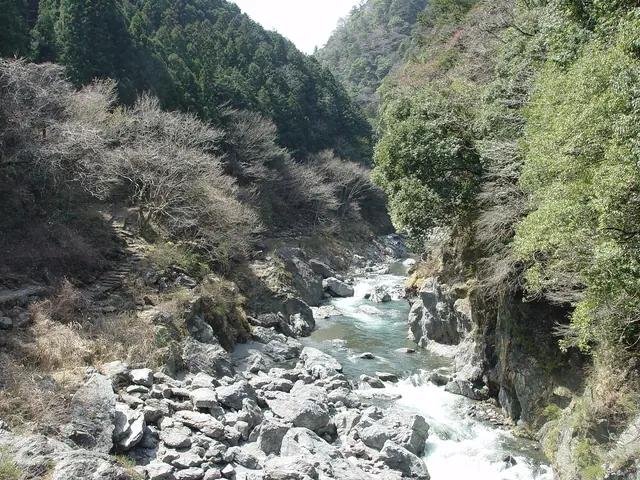
Hatonosu Gorge, about five minutes on foot from Hatonosu Station, is some 500 m of boulders and rock walls with the river running green below a small suspension bridge, one of the best autumn colour spots in Okutama. A riverside trail, part of the Otama Walking Trail, continues toward Okutama Station. The path over the Shiromaru Dam is closed for works until about late February 2027, but the trail itself stays open.
Lake Okutama is a short bus ride from Okutama Station. Get off at Okutama-ko, walk out on the dam, and see the free Okutama Water and Green Fureaikan museum about the dam and the villages it flooded. Further along the shore, floating footbridges cross the water, closed when the level is low. Boating and swimming are not allowed because it is a drinking water reservoir, and the shores are planted with cherry trees.
Up a narrow side valley, Nippara Limestone Cave winds about 1,270 m through the rock with a height difference of 134 m and is a Tokyo natural monument. On weekends and holidays the bus often stops at Higashi-Nippara, about a 20-minute walk from the cave, and the cave takes cash only. Back down the line, from Mitake Station a short bus ride reaches Takimoto, where the Mitake Tozan Railway cable car climbs from 407 m to 831 m in about six minutes. From the top, a walk through a village of pilgrim lodges leads to Musashi-Mitake Shrine, guarded by a wolf deity known as oinu-sama, which is why so many visitors bring their dogs; the cable car takes them without a cage. The Rock Garden, a mossy stream valley on the back of the mountain, is the classic walk from the shrine.
- Below Mitake Station, the Mitake Gorge path follows the Tama River past the Gyokudo Art Museum, an easy flat walk.
- From spring to autumn, several companies run guided rafting and canyoning trips on the Tama River around Mitake.
Sake, the seasons and the year in Okutama
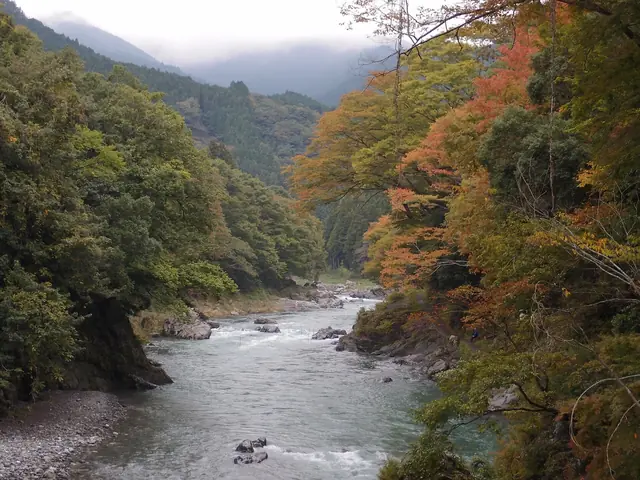
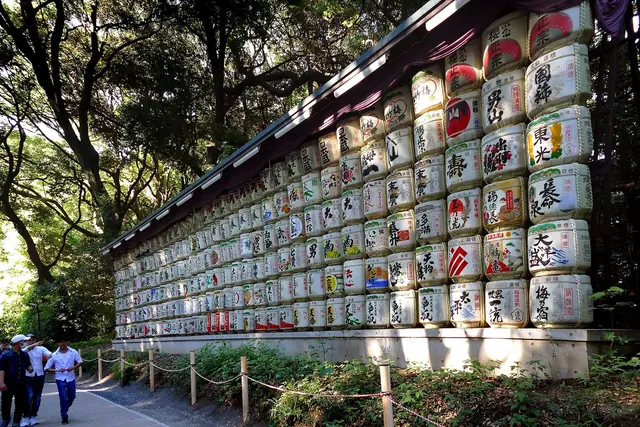
Three minutes from Sawai Station, Ozawa Shuzo has brewed Sawanoi sake since 1702 with water from the hills behind it. Its brewery tours take about 40 minutes and need a booking; they are in Japanese with an English leaflet, and the brewery closes on Mondays. Without a tour you can still sit in the riverside Sawanoi-en garden and try sake at the tasting counter. Each autumn the brewery holds an open day for the new sake.
In April the cherry trees around Lake Okutama bloom later than in central Tokyo. Musashi-Mitake Shrine holds its most solemn festival, the Hinode-sai, on April 29 with an eve the night before, and yabusame at dusk on September 29. In summer the valleys are a few degrees cooler than the city, and the Okutama fireworks go up from Atagoyama, right by Okutama Station, in early August. Autumn colour arrives at the lake and higher valleys first and reaches the gorges by the stations in November. On January 3 the shrine performs futomani, an old divination by deer bone for the year's crops, and posts the results.
Hiking safety and bears
Trails range from flat riverside paths to long mountain ridges, and some have stayed closed since typhoon damage in 2019. Check the trail status list of the Okutama Visitor Center, a short walk from the station, which also gives advice in person. Days are short in autumn and winter, and the valleys get dark early.
Asian black bears live here, and sightings are reported mostly from May to November. In May 2026 a solo hiker without a bell was attacked near Mt Mutsuishi on the Ishione ridge, and several ridge trails were closed for weeks before reopening in June and July. The town's advice is to avoid hiking alone, carry a bell or radio, never leave food or rubbish, and, if you meet a bear, not to run but to back away slowly while watching it. Tokyo publishes a sightings map.
- Start early and plan to be off the trail well before dark.
- Wear proper shoes. Even easy valley paths have roots, wet rocks and steps.
- Feeding monkeys, deer or any wild animal is banned and draws them, bears included, toward people.