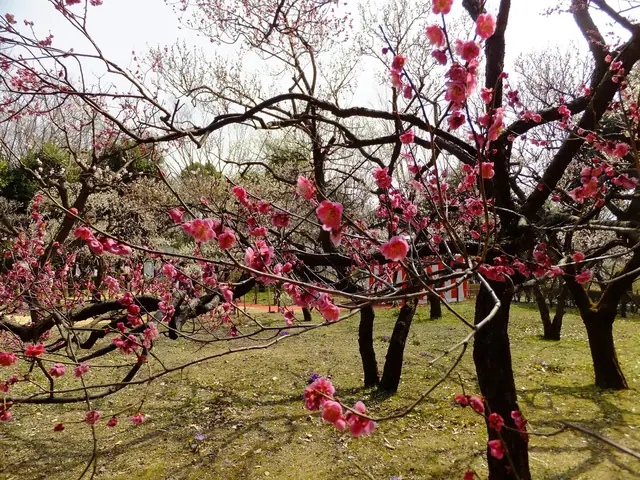
What February feels like
February is still winter. Japan Meteorological Agency normals give daytime highs of around 10 to 11°C and night lows of around 2°C, and it is about as dry as January, with plenty of sunshine. Snow is most likely in January and February, and every few years a heavier fall stops buses and slows trains for a day or two. Toward the end of the month the first mild days appear, but cold snaps keep coming back until March.
Pack the same as for January: a warm coat, scarf and gloves for time outdoors, with light layers underneath for heated trains and shops. Plum gardens and shrine grounds are mostly gravel and earth, so wear shoes that can cope with a muddy path after rain or melting snow.
- On days with a snow warning, set off early and allow extra time. Station stairs and pavements get slippery.
- Disposable heat packs (kairo) from convenience stores help a lot at open-air ceremonies and in gardens.
Setsubun: beans for the start of spring
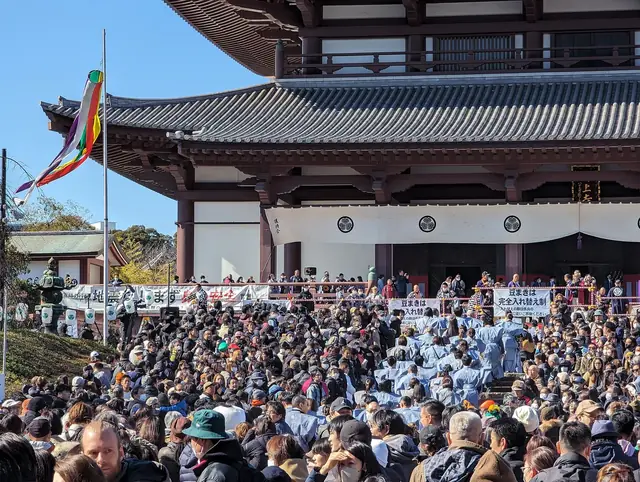
Setsubun is the day before the first day of spring in the old calendar: February 3 in most years, February 2 in some. It is not a public holiday. Families throw roasted beans out of the door to chase out demons and bring in luck, and many people eat one bean for each year of their age. In the evening people eat ehomaki, a thick uncut sushi roll eaten in silence while facing the year's lucky direction, and every convenience store and supermarket sells them.
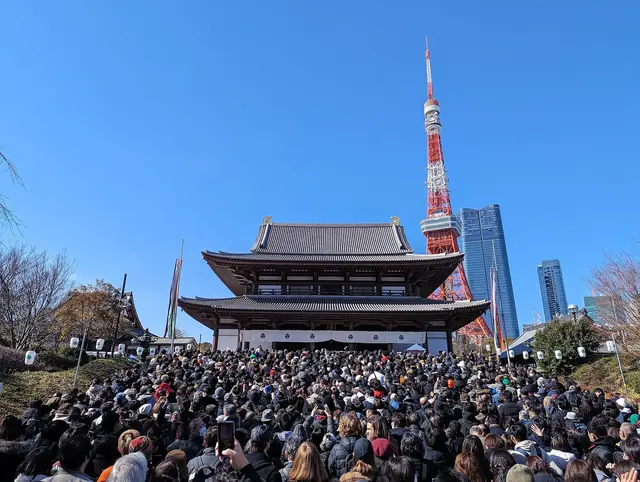
Big temples and shrines hold mamemaki ceremonies where guests throw beans and small lucky packets into the crowd from a stage. Sensoji in Asakusa, Zojoji in Shiba Park, Ikegami Honmonji in Ota ward and Kanda Myojin are among the best known, and sumo wrestlers or TV personalities often take part. Neighbourhood shrines hold smaller, friendlier versions, with local children in the front row and a better chance of catching something.
- Arrive about 30 minutes early for a big ceremony, and hold a tote bag open to catch the packets.
Plum blossoms: the first flowers of the year
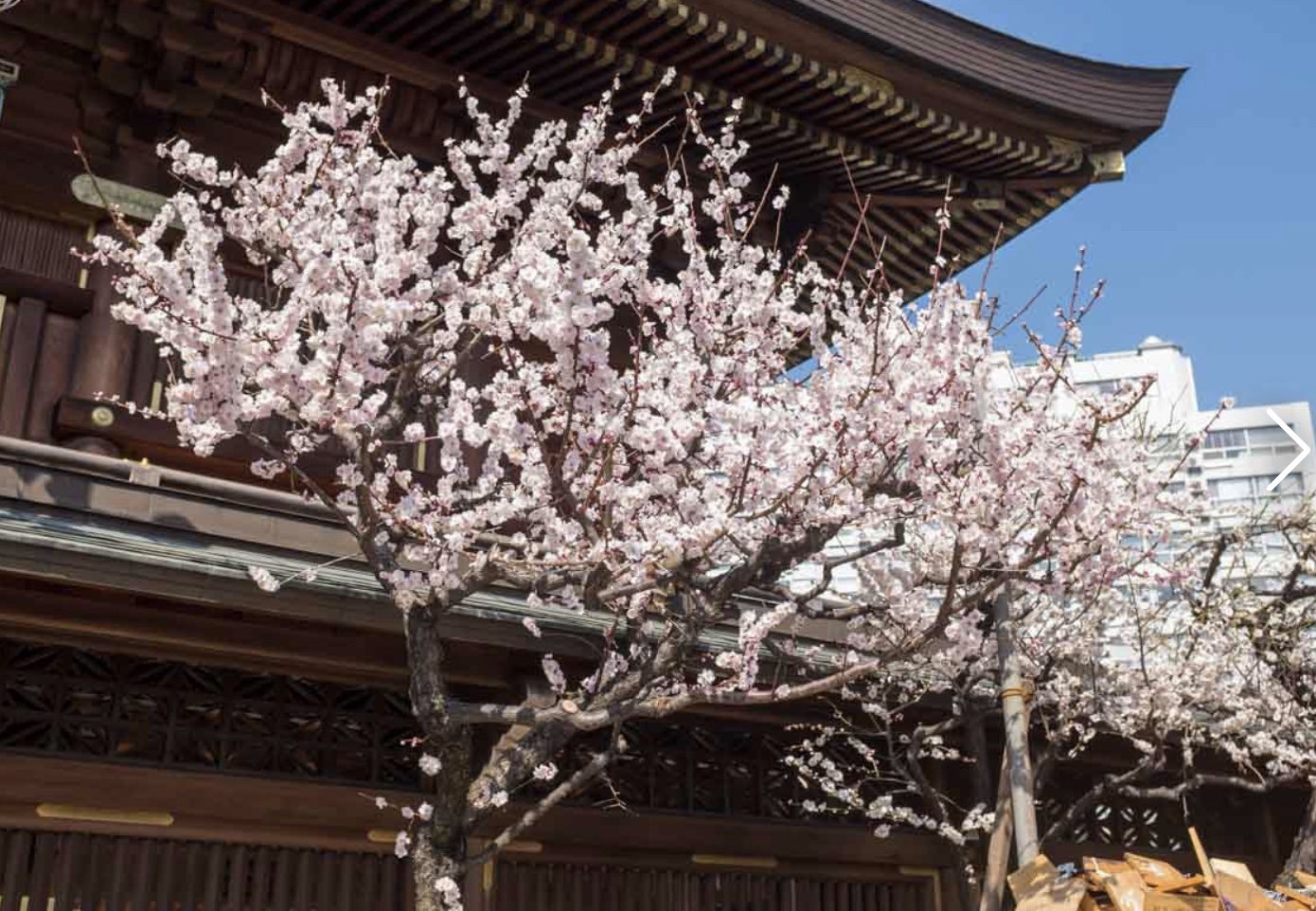
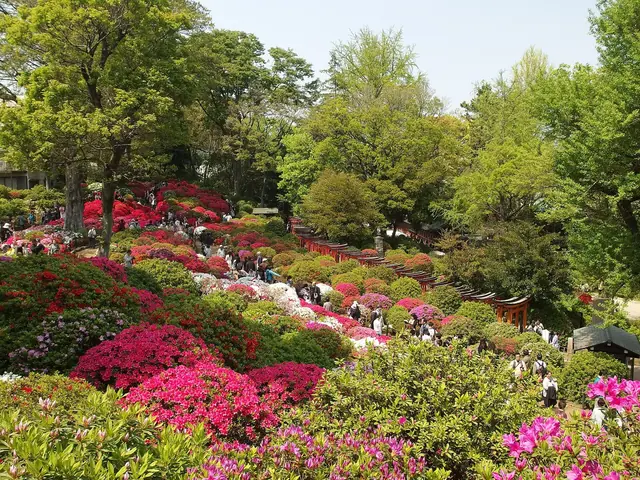
Plum blossoms (ume) open while it is still cold, from late January in warm years, and most gardens look their best from mid-February into early March. They are smaller and more fragrant than cherry blossoms, the crowds are lighter, and there is no rush for picnic spots, which makes plum viewing one of the calmest outings of the year.
Yushima Tenjin near Ueno, the shrine where students pray before exams, holds a plum festival from early February to early March with stalls and weekend performances. February is entrance exam season, so its racks are also hung with wooden ema plaques full of exam wishes. Hanegi Park in Setagaya has hundreds of trees on a hillside, Koishikawa Korakuen is an Edo-period garden with a plum grove, and Kameido Tenjin in Koto ward frames its trees with Tokyo Skytree in the background.
- Plum festivals often hold their stalls and stage shows on weekends only. A weekday visit is quieter, with less going on.
Chocolate, Lunar New Year and indoor shows
From mid-January, department stores turn whole floors into Valentine's chocolate fairs with chocolatiers from Japan and abroad, and the opening days draw long queues. In Japan, February 14 is traditionally the day women give chocolate, to partners and, in some workplaces, to colleagues as a polite gesture, while men return the favour on White Day, March 14. More and more people simply buy the good chocolate for themselves.
Yokohama Chinatown celebrates the Lunar New Year with around two weeks of lion dances, a parade in imperial costume and lion dancers visiting shops one by one. The date follows the lunar calendar, so it falls between late January and February. The nearest station is Motomachi-Chukagai on the Minatomirai Line, under an hour from central Tokyo. Indoors, Wonder Festival, the big figure and garage kit fair, usually holds its winter edition at Makuhari Messe in Chiba in February, and a number of winter illuminations stay on into the month.
Holidays, crowds and prices
February has two national holidays: National Foundation Day on February 11 and the Emperor's Birthday on February 23. On the Emperor's Birthday the palace holds a public greeting, when the Emperor appears on a balcony a few times in the morning. Entry is free and has not needed a ticket in recent years, but the queue starts early. When a holiday falls on a Sunday, the following Monday is a day off, and long weekends make day-trip spots busier.
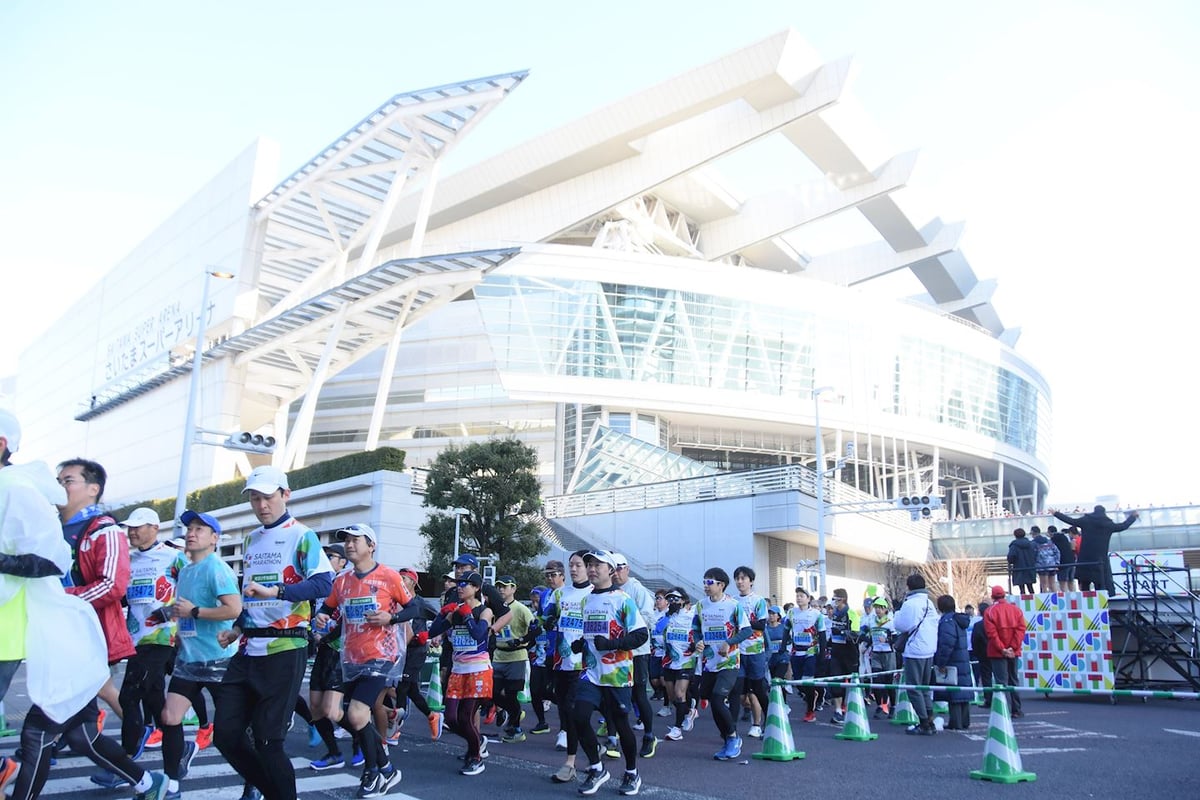
Otherwise February is one of the quietest months for visitors, and hotel prices are often lower than in spring or autumn. The exception is the Lunar New Year period, which brings many travellers from elsewhere in Asia. The Tokyo Marathon is often thought of as a February race, but in recent years it has been held on the first Sunday of March.
- If a holiday makes a long weekend, book day trips such as Hakone or Kamakura early.
- Check opening days for museums: many close on Mondays, but open on a Monday holiday and close the next day instead.