Getting there: the Laview and the passes
The Seibu Laview limited express runs from Ikebukuro to Seibu-Chichibu in about 80 minutes. All seats are reserved, and you need a limited express ticket on top of the fare, sold from one month ahead at stations or online through Seibu's Smooz service. Ordinary trains take longer and usually need a change at Hanno. From Seibu-Chichibu, Ohanabatake Station on the Chichibu Railway is a five-minute walk, and its trains run through Nagatoro and on to Mitsumineguchi.
Seibu sells the SEIBU 1Day Pass, for foreign passport holders only, covering all Seibu lines for a day, and a Nagatoro version that adds the Chichibu Railway between Nogami and Mitsumineguchi. The Chichibu Free Ticket, open to anyone and valid for two days, bundles a discounted Seibu round trip with free rides around Chichibu and on that same Chichibu Railway section. None of them includes the Laview seat. Japan Rail Pass holders can ride JR to Kumagaya and take the Chichibu Railway from there, paying for that part.
- Book the Laview back as well as out. On festival and peak flower days the return trains sell out too.
- Next to Seibu-Chichibu Station, the Matsuri no Yu hot spring complex has baths and a food court, handy before the train home.
The Chichibu Night Festival on December 2 and 3
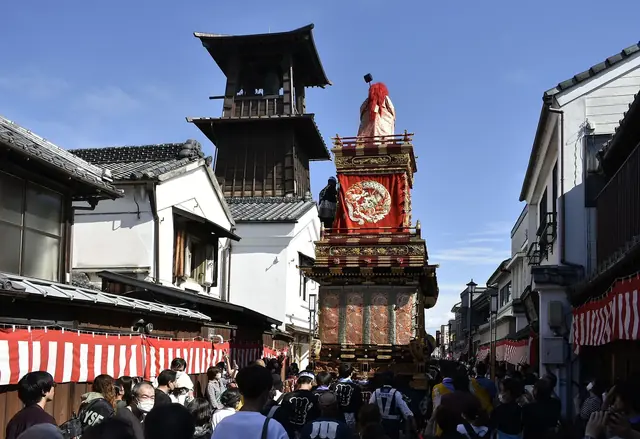
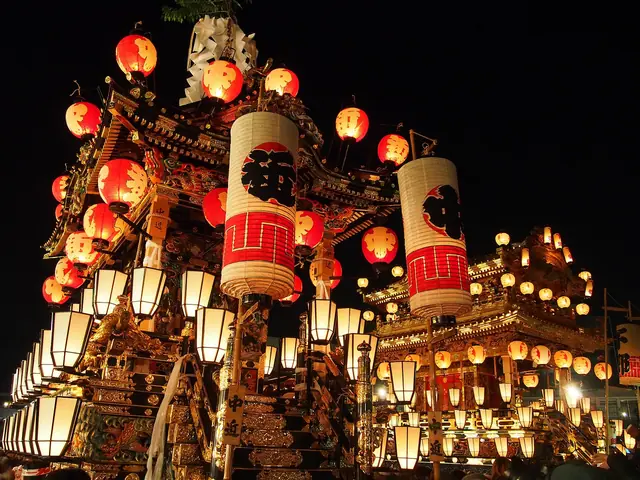
The Chichibu Night Festival is the grand festival of Chichibu Shrine, with records going back to the 1660s, and it is counted with Kyoto's Gion Matsuri and the Takayama festival as one of Japan's three great float festivals. Since 2016 it has been on the UNESCO Intangible Cultural Heritage list as one of Japan's Yama, Hoko, Yatai float festivals. Its six floats, two tall kasaboko and four yatai, are important cultural properties, hung with lanterns and carved panels, and kabuki is performed on stages built out from the sides of the yatai.
On December 2, the eve, four floats are pulled through town and fireworks go up in the early evening. December 3 is the main day: all six floats are out from the morning, and from just after 7pm the sacred procession and the floats leave the shrine for the Otabisho, the rest site of the gods, hauled up a steep final slope while fireworks burst overhead. The peak lasts until about 10pm.
The streets are free, but very crowded, and many are closed to traffic. A few hundred paid seats for the night of the 3rd are sold each autumn, in person in Chichibu and by postcard lottery, and they go quickly. Seibu adds extra Laview and local trains on festival days, yet limited expresses still sell out, so book a month ahead or stay the night. December nights in the basin are close to freezing; dress for standing still in the cold for hours.
- Flying drones is banned at the festival.
- Have dinner early or bring food. On festival nights restaurants near the route are very busy.
- Seibu's festival page lists the year's schedule, viewing spots and extra trains.
Spring to autumn: shibazakura, Nagatoro and the river
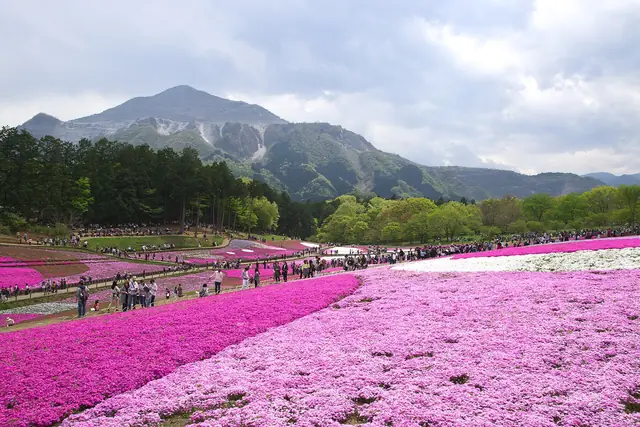
On a slope of Hitsujiyama Park, the Shibazakura no Oka hill is planted with more than 400,000 moss phlox in about ten varieties, laid out in pink, white and purple stripes with Mt Buko behind. The festival usually runs from early April to early May, with the best colour around the middle to late April, and there is an entry fee while the flowers are out. It is an uphill walk of about 15 to 20 minutes from Seibu-Chichibu or Yokoze Station, and Golden Week brings the biggest crowds.
Nagatoro is about 25 minutes from Ohanabatake on the Chichibu Railway. A short walk from Nagatoro Station, Iwadatami is a wide shelf of layered crystalline schist along the Arakawa River, facing a cliff known as the red wall of Chichibu, and the gorge is a national natural monument. Nagatoro river boats run down the rapids from March 10 to early December, with life jackets on, and in January and February they become kotatsu boats with heated tables. High or low water and bad weather stop them, so check on the day.
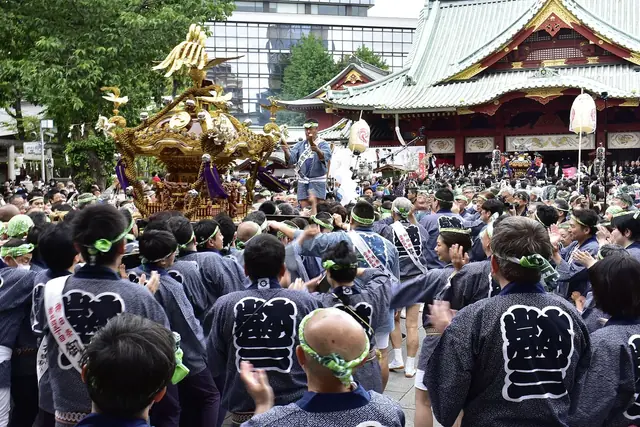
Up the hill, Hodosan Shrine is known for its richly carved hall and a ropeway to the summit of Mt Hodo. In autumn, Tsukinoishi Momiji Park near Kami-Nagatoro Station turns red from early November into early December. Back in Chichibu, the Kawase Festival on July 19 and 20 pulls floats through town and carries the shrine's mikoshi into the Arakawa, and in October the Ryusei festival in the Yoshida district fires homemade bamboo-and-gunpowder rockets into the sky.
Shrines and winter ice: Chichibu Shrine, Mitsumine, ice pillars
Chichibu Shrine, a short walk from the stations, is said to date back more than 2,000 years. Its present hall was built on the orders of Tokugawa Ieyasu and is covered in painted carvings, among them a tiger with her cub attributed to the sculptor Hidari Jingoro and a chained dragon. Visiting it before or after the Night Festival helps the whole thing make sense.
Deep in the mountains at about 1,100 m, Mitsumine Shrine is an old centre of mountain worship where statues of wolves, its divine messengers, stand in place of guardian dogs. It takes about an hour and a half on the express bus from Seibu-Chichibu, or the Chichibu Railway to Mitsumineguchi and a bus from there, so it fills most of a day. Pets are not allowed in the grounds, and the shrine bans commercial photography.
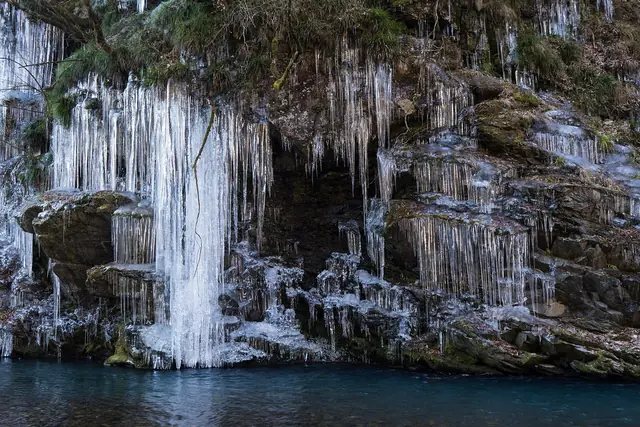
From early January to late February, three ice pillar sites draw winter visitors: Misotsuchi, a natural curtain of ice about 8 m high and 30 m wide where spring water seeps from a cliff above the upper Arakawa; Ashigakubo, a hillside of ice about ten minutes on foot from Ashigakubo Station on the Seibu line; and Onouchi in a ravine in Ogano. All three were open in the 2026 season, with evening light-ups on some days. They depend on the cold, so check before you go.
- The ice pillar sites are very cold and often icy underfoot. Wear shoes with grip and warm layers.
- Bear sightings are reported around Mitsumine some years. Stay on paths and follow the shrine's notices.
Planning the day, food and staying over
A good one-day plan is the Laview in the morning, Chichibu Shrine and the town, then the Chichibu Railway to Nagatoro for Iwadatami and a boat, and back to Seibu-Chichibu for the evening train. Mitsumine is a separate day, and for the Night Festival, a night in Chichibu takes away the stress of the last trains. On set days the SL Paleo Express steam train runs on the Chichibu Railway from Kumagaya to Mitsumineguchi, about 2 hours 40 minutes end to end, with seats sold in advance; see the running days.
Chichibu food is filling mountain food: waraji katsudon, thin pork cutlets as big as straw sandals laid over rice, miso-glazed potatoes from street stalls, and soba made with local buckwheat. Kawagoe, on the way back toward Ikebukuro on other lines, pairs well for a two-day trip through Saitama.