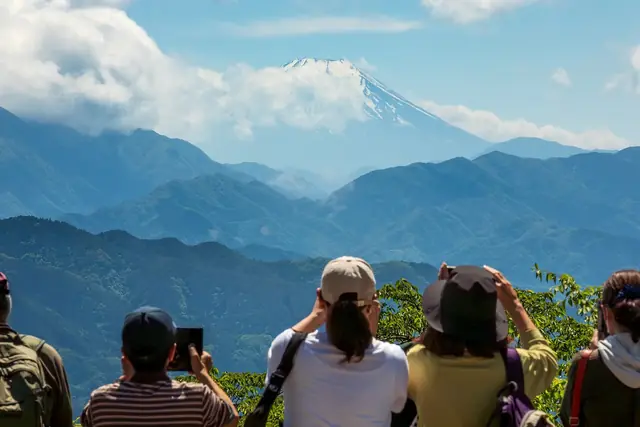
What Takao-san is
Takao lies inside Meiji no Mori Takao Quasi-National Park and is known for its forest of cedar, oak and beech, birds and wild plants. In 2007 the Michelin Green Guide Japan gave it three stars, and it is often called the most climbed mountain in the world.
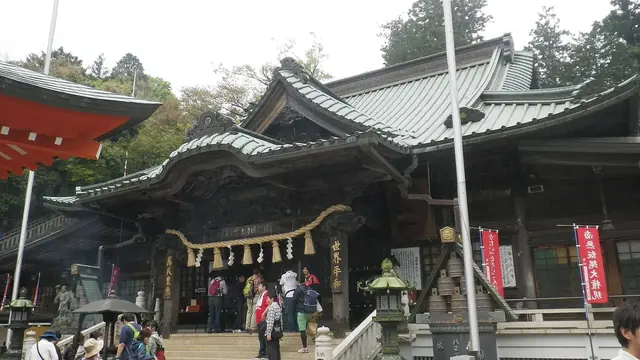
Yakuoin is one of the head temples of the Chisan branch of Shingon Buddhism. Tradition says the monk Gyoki founded it in 744 on the order of Emperor Shomu, and since the late 14th century its main object of worship has been Iizuna Daigongen, a mountain deity whose attendants are tengu. Their statues stand all over the grounds.
Trails, the cable car and what you pass
Most hikes start at Kiyotaki, a few minutes' walk from Takaosanguchi Station. Trail 1, the old temple approach, is about 3.8 km and paved almost all the way, with shops and toilets, and takes about an hour and a half on foot to the top. Trail 6 follows a stream past Biwa Falls, a training site for ascetics, over roots and wet stepping stones; on its narrow parts people going up have priority. The Inariyama course climbs a ridge with a lookout over Hachioji and ends with a long flight of steps below the summit. Neither Trail 6 nor Inariyama has shops or vending machines.
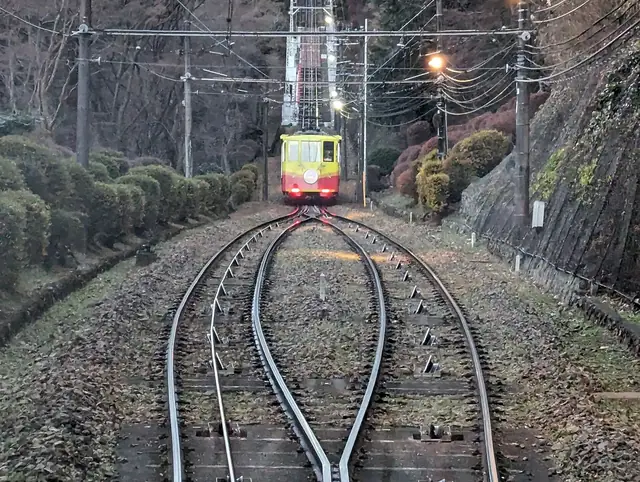
The cable car climbs from Kiyotaki to Takaosan Station in about six minutes on what is described as the steepest cable car track in Japan; it opened in the 1920s. Beside it, a two-seat chairlift takes about 12 minutes. Both leave you roughly halfway up, where Trail 1 continues past the Kasumidai lookout, a monkey park and wild plant garden, and Takosugi, an old cedar whose roots look like octopus legs.
After Joshinmon gate the path splits into Otokozaka, a staircase of 108 steps, and the gentler Onnazaka, and the two meet again before Yakuoin's halls. From the temple a short, steeper climb leads to the summit, where on clear days Mount Fuji stands to the west.
- Trail 1 is fine in sneakers. For Trail 6 and Inariyama wear shoes with grip: stones and roots get slippery after rain.
- With small children or little time, ride up and walk down Trail 1.
- Cable car and chairlift tickets are sold at Kiyotaki from separate machines.
The year on Mount Takao
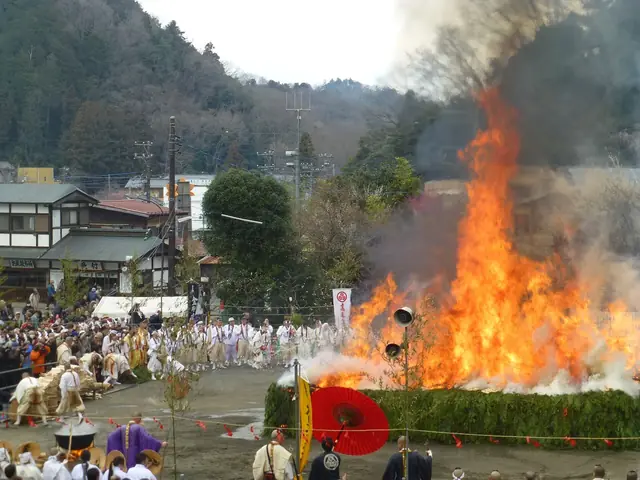
The temple year opens at midnight on January 1 with a fire ritual, and at dawn Yakuoin holds a ceremony to greet the first sunrise. On New Year's Eve the cable car runs through the night, and the summit can be closed or limited at sunrise because of the crowds. On Setsubun in early February the bean throwing at the main hall brings sumo wrestlers and entertainers. On the second Sunday of March comes the fire-walking festival (hiwatari-sai) at the prayer hall by the foot of the mountain: yamabushi ascetics cross the embers of a sacred fire, and once the flames are down visitors may follow them barefoot.
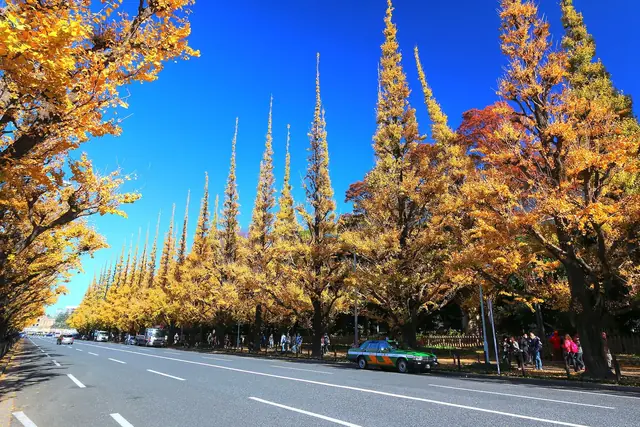
Cherry trees flower on the slopes in spring, a little later than in central Tokyo. From early summer into autumn Takaosan Beer Mount, a buffet-style beer garden by the upper cable car station, looks out over the lights of the Kanto plain. Yakuoin holds grand festivals in spring and autumn, the autumn one with a procession up the approach. The leaves usually turn from mid-November into early December, when the Takao Momiji Matsuri brings music and stalls to the square by Kiyotaki Station.
Crowds, safety and temple manners
Weekends in November are the hardest days on Takao: long queues for the cable car, a slow line on Trail 1 and packed trains home. Go on a weekday, or start before 8am so you reach the top before the crowds and are down by lunch.
The cable car and chairlift stop in the early evening most of the year, the chairlift well before the cable car, and wind can halt them. The forest gets dark fast in autumn and winter, so check the last departure when you ride up and carry a headlamp if you might walk down late. In winter the shaded upper paths can be icy.
Yakuoin is a working temple. Bow at the gates, rinse your hands at the water basin, and keep your voice down near the halls during prayers. Bins are scarce on the mountain, so take your trash home.
- Bring water and a snack. Shops are only on Trail 1, and they close in the afternoon.
- Dress in layers. The summit is usually a few degrees cooler and windier than central Tokyo.
- Use the toilets at Kiyotaki before the quieter trails.
Getting there and after the hike
Takaosanguchi is the end of the Keio Takao Line. From Shinjuku the Keio limited express takes about 50 minutes. Another route is the JR Chuo Line to Takao, then one stop on the Keio line. Kiyotaki, the cable car station and trailhead, is a few minutes' walk from the exit.
Right by the station, Keio Takaosan Onsen Gokurakuyu is a hot spring bath where many hikers soak before the train home, and the Takao 599 Museum, a few minutes away, is a free museum of the mountain's plants and animals. The street up to Kiyotaki has soba shops, and tororo soba with grated yam is the local dish.
Experienced hikers can continue from the summit along the ridge to Shiroyama for a longer day. Kichijoji is an easy stop on the JR Chuo Line home.