When you can see Mt Fuji, including from Tokyo
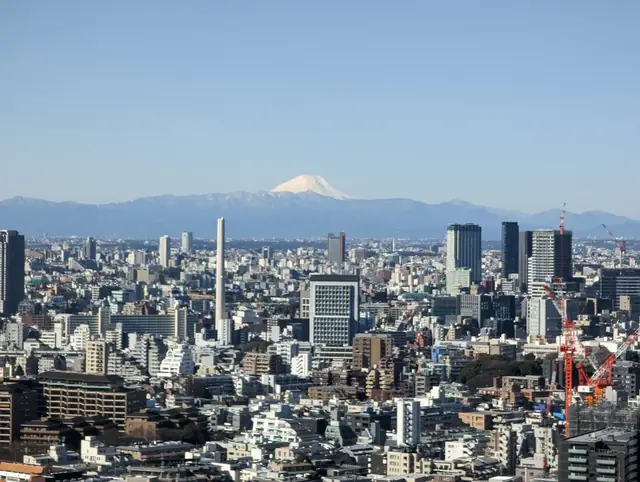
At 3,776 m, Fuji is Japan's highest mountain, an active volcano that last erupted in 1707, standing on the border of Yamanashi and Shizuoka. It was added to the World Heritage list in 2013 as a cultural site, for its role as a sacred mountain and its place in art. The snow cap usually appears in autumn and stays through spring.
The catch is visibility. Fuji shows itself most in the cold, dry months, roughly November to February, and in the early morning and late afternoon. In summer, haze and cloud can hide it for days, even when you are standing at its foot, and around midday clouds often build on fine days too.
From Tokyo you need height and a clear winter morning. The free observation decks of the Tokyo Metropolitan Government Building in Shinjuku, Tokyo Skytree and the summit of Mt Takao all look west toward it. On the Tokaido Shinkansen toward Osaka, sit on the right: the best view comes around Shin-Fuji Station, about 40 to 45 minutes after leaving Tokyo.
- Check the live cameras or the forecast for the Fuji Five Lakes the evening before. A clear sky in Tokyo does not always mean a clear Fuji.
Kawaguchiko, the Fuji Five Lakes and Chureito Pagoda
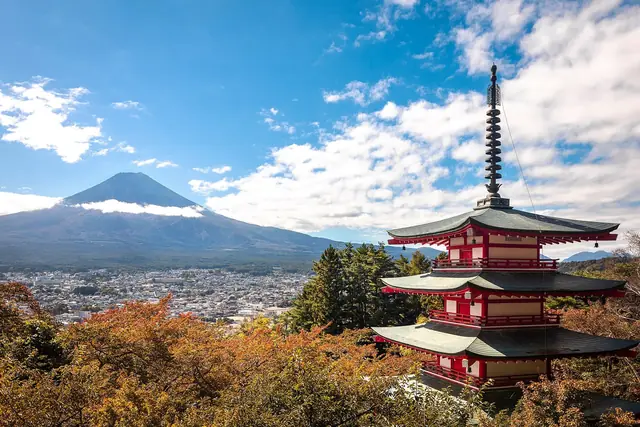
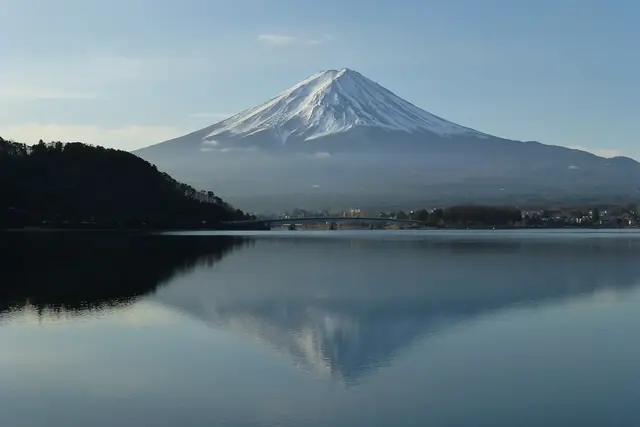
The Fuji Five Lakes lie along the northern foot of the mountain in Yamanashi. Kawaguchiko is the easiest to reach and the base for most visitors, with a hot spring town at its eastern end and the best views from the northern shore, including the maple-lined road known as the Momiji Tunnel. The Mt Fuji Panoramic Ropeway climbs a small mountain above the lake for a wider view. Saiko, Shojiko, Motosuko and Yamanakako are quieter, and the spring-fed ponds of Oshino Hakkai between Kawaguchiko and Yamanakako are a popular stop.
Chureito Pagoda, the five-storey pagoda with Fuji behind it, stands in Arakurayama Sengen Park in Fujiyoshida, about 400 steps above Arakura Sengen Shrine. It was completed in 1962, and the shrine is about ten minutes on foot from Shimoyoshida Station on the Fujikyu line. The grounds are always open and free.
Seasons around the lakes: cherry blossoms around mid-April (Chureito and the Kawaguchiko shore are the classic spots), pink moss phlox near Lake Motosuko in spring, a cool escape in summer, and autumn colour in the first half of November. In late August the Yoshida Fire Festival in Fujiyoshida, with huge torches along the main street, marks the end of the climbing season. Winter gives the clearest views and the coldest mornings.
Crowds and viewing etiquette
Some Fuji photo spots now see more visitors than the towns around them can handle. Fujiyoshida and Fujikawaguchiko have dealt with people standing in the road, crossing private land and leaving rubbish, especially at Chureito in the blossom and autumn seasons. In 2026 Fujiyoshida decided not to hold the park's cherry blossom festival at all because of the impact on residents, although the park itself stayed open. In May 2024 Fujikawaguchiko put up a large black screen on the pavement near a convenience store that had become famous on social media for its view of Fuji, after complaints from residents and nearby businesses.
None of this means you should stay away. It means taking the photo from places made for it, keeping to the pavement, not climbing on walls or entering yards, and not blocking shop entrances or traffic for a shot.
- Go to Chureito at sunrise or on a weekday. In mid-April and early November, weekend queues for the photo terraces can be long.
- Take your rubbish with you. Bins are rare around the viewpoints.
Getting there from Tokyo, and day trip or overnight
Direct highway buses are the simplest option. About two buses an hour run from the Shinjuku Expressway Bus Terminal (Busta Shinjuku) to Kawaguchiko Station in just under two hours, most stopping at Fuji-Q Highland and Fujisan Station on the way, and there are also buses from Tokyo Station and Shibuya. Book a seat online in high season, as weekend buses fill.
By train, take the JR Chuo Line from Shinjuku to Otsuki and change to the Fujikyu line to Kawaguchiko, which also stops at Shimoyoshida for Chureito. A few Fuji Excursion limited express trains a day run straight from Shinjuku to Kawaguchiko in about two hours, with reserved seats. The Japan Rail Pass covers only the JR section to Otsuki; the Fujikyu part is paid separately.
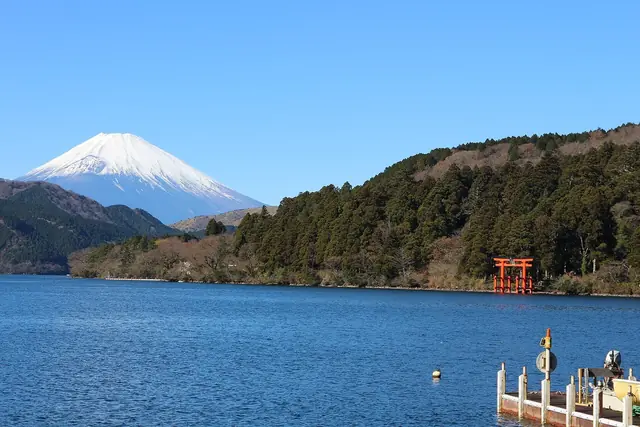
Around the lakes, sightseeing buses from Kawaguchiko Station loop the eastern and northern shores and run on to Saiko and the other lakes. A day trip works for Kawaguchiko and Chureito if you leave Tokyo early. For more than that, or to have the best chance of a clear morning, stay a night at a lakeside onsen inn. Hakone, on the other side of the mountain, is the other classic place to see Fuji, from Lake Ashi.
- Take an early bus or train out. You arrive while the mountain is still most likely to be clear.
- On busy weekends, buy bus seats and limited express tickets in advance. Both can sell out, the return trip first.
Climbing Mt Fuji: season, rules, what to bring
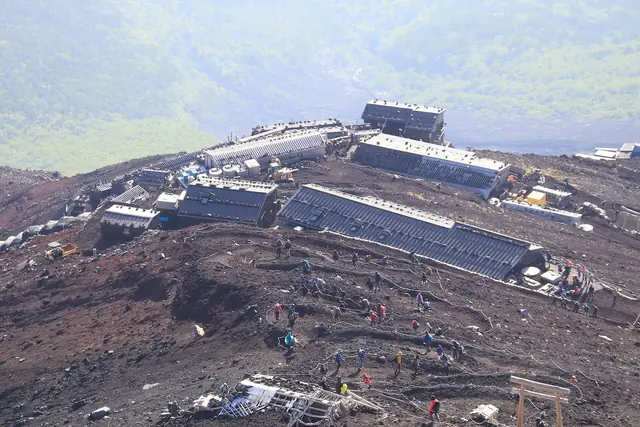
Fuji is climbed in summer only. In 2026 the Yoshida and Subashiri trails opened on July 1 and the Fujinomiya and Gotemba trails on July 10, and all four closed on September 10. Most people start from the Fuji Subaru Line 5th Station on the Yamanashi side, the Yoshida Trail, and buses run there from Kawaguchiko. Private cars are banned on most of the 5th Station roads for much of the season, so plan on the bus.
The rules have tightened in recent years. On every trail, climbers going up from the 5th Station pay a fee of ¥4,000 per person (as of 2026). On the Yoshida Trail a gate at the 5th Station closes from 2pm to 3am to anyone without a mountain hut booking and shuts once 4,000 climbers have passed in a day; you can book passage and pay online in advance. On the Shizuoka trails you register through the prefecture's FUJI NAVI app, which includes a short e-learning course on rules and safety, and entry between 2pm and 3am also requires a hut stay. Rules are reviewed every year, so read the official Mt Fuji climbing site before the next season.
The aim is to stop 'bullet climbing', going straight up overnight without rest, which causes most altitude sickness and exhaustion. Book a hut, climb slowly and watch the sunrise from near the top. Bring cold-weather clothing (the summit can be near freezing even in August), separate rain gear, proper hiking boots, a headlamp, water, snacks and coins for paid toilets and hut supplies. Outside the season, trails above the 5th Station are closed: huts and first-aid stations are shut, phones often lose signal and the weather turns severe fast, so do not climb.
- Rangers can turn back climbers without warm clothes, rain gear or proper shoes. Pack them even if Tokyo is 35 degrees.
- Outside the climbing season, the 5th Station is still a fine viewpoint when the road is open. Go that far and no further.