What Kamakura is
In the late 12th century Minamoto no Yoritomo made Kamakura the seat of his military government, and for more than a century it was the political centre of Japan. That era left the town full of temples and shrines, which is why it is sometimes called the Kyoto of eastern Japan. It is a small city with hills on three sides and the sea on the fourth.
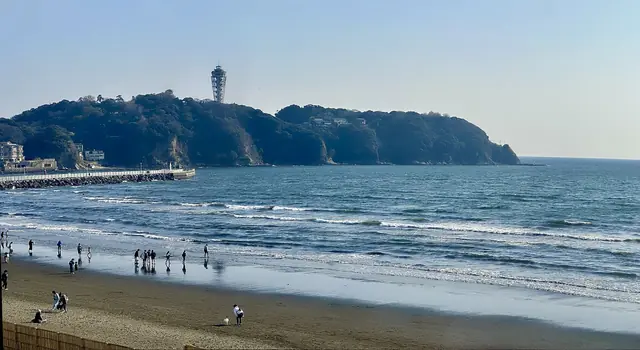
Enoshima, a small island along the coast in neighbouring Fujisawa, is joined to Kamakura by the Enoden, a little train that squeezes past houses and runs along the shore. Most visitors see Hase, the main shrine and the island in one long day.
What to see
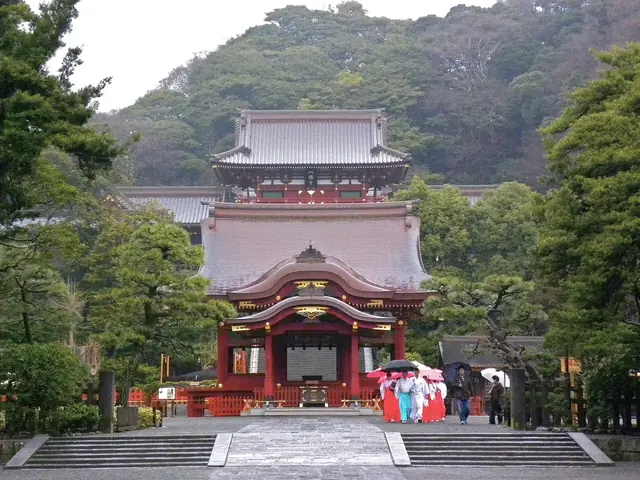
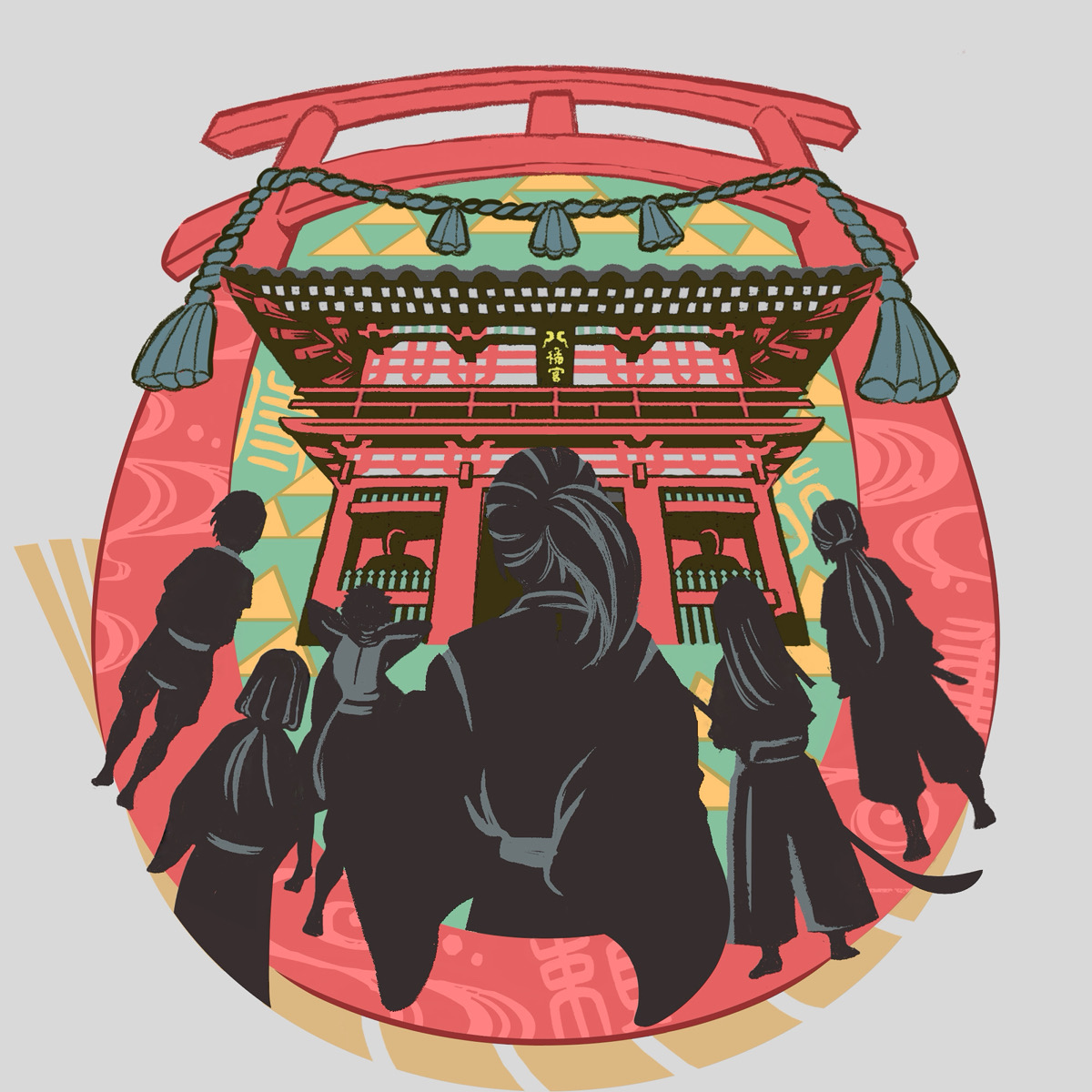
Tsurugaoka Hachimangu is Kamakura's most important shrine, founded in 1063 and moved to its present site by Yoritomo in 1180. Its main hall stands at the top of a wide stairway at the end of Wakamiya-oji avenue, whose raised central path, the Dankazura, is lined with cherry trees. Komachi-dori, the shopping street that runs parallel to it from the east exit of Kamakura Station, is packed with snack shops, sweets and souvenirs.
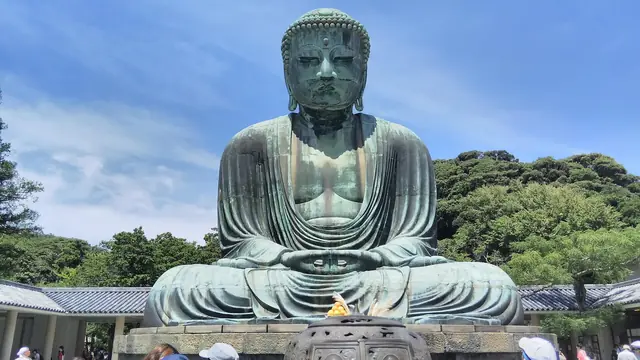
In Hase, three stops along the Enoden, the Great Buddha of Kotoku-in is a bronze Amida Buddha about 11 m tall, begun in 1252 and now a national treasure. The hall that once covered it was destroyed by storms and a tsunami, and it has sat in the open air since the late 15th century; for a small extra fee you can step inside the hollow statue. A few minutes away, Hasedera climbs a hillside, with a gilded wooden eleven-headed Kannon over 9 m tall, a cave carved with figures of the goddess Benten and a terrace looking over the bay.
Enoshima is reached on foot over a long bridge from Katase-Enoshima or Enoshima Station. Shops and restaurants line the way up to Enoshima Shrine, outdoor escalators help with the climb, and at the top the Sea Candle observation tower looks over Sagami Bay, with Fuji and the sunset behind it on clear evenings. On the far side of the island, the Iwaya caves, hollowed out by the waves, have been a place of worship for centuries.
- Kotoku-in bans food and drink in its grounds, apart from water, so eat before or after.
- Kamakura's manners ordinance asks you not to eat while walking in narrow or crowded streets such as Komachi-dori.
- Try shirasu, tiny whitebait from Sagami Bay, on a bowl of rice. It is the local dish around Kamakura and Enoshima.
The year in Kamakura
Hachimangu is one of the busiest shrines in the Kanto region at New Year, with more than two million visitors over the holidays. In spring the Dankazura turns pink, and the Kamakura Matsuri, from the second to the third Sunday of April, brings a costumed procession, the Shizuka dance on the shrine's stage and horseback archery (yabusame).
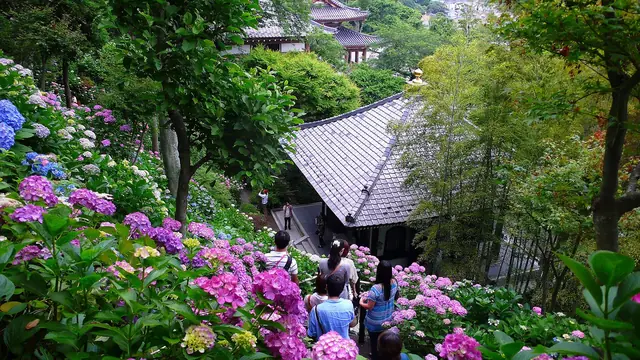
June is hydrangea season and the town's busiest month. Meigetsuin near Kita-Kamakura, the hydrangea temple, fills with mostly blue flowers, and Hasedera's hillside hydrangea path has needed a ticket booked online in recent years. July and August are beach season at Yuigahama and Zaimokuza. The Kamakura fireworks, usually in July, are known for underwater fireworks that open in fans on the sea; high waves can cancel them, and there is no backup day.
In early August the Bonbori Matsuri hangs about 400 paper lanterns painted by artists and writers along the shrine's paths, lit each evening. The shrine's grand festival in mid-September ends with yabusame on the 16th. Autumn leaves come late here, usually from late November into early December, when Hasedera opens in the evenings with its maples lit up.
Crowds, timing and manners
Weekends in June, Golden Week and late autumn are the hardest days: long queues for the Enoden at Kamakura Station and full restaurants at lunch. Come on a weekday if you can, and see the temples first: Kotoku-in opens at 8am, earlier than most shops. The city runs a live crowd map (konzatsu-kamakura.jp) that is worth a look on the day.
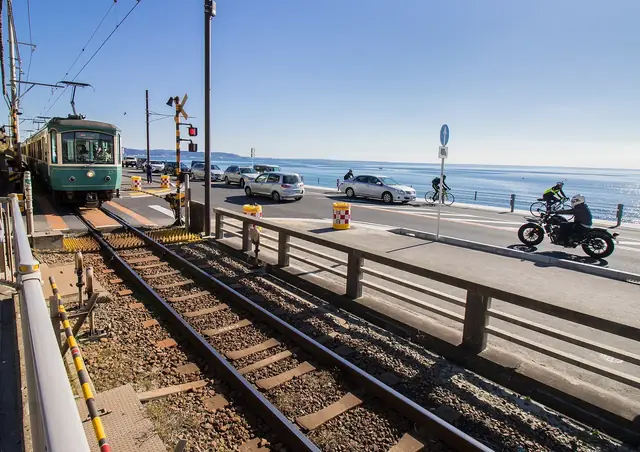
The level crossing by Kamakura-Kokomae Station, where the Enoden runs between the road and the sea, appears in the opening of the basketball anime Slam Dunk and draws crowds of fans taking photos. The city's manners ordinance asks people not to take photos standing in the road or near the tracks, so stay on the pavement, keep it clear for others and give the people who live there room.
Kamakura is a town where people live, not a theme park. Keep your voice down in temples and shrines, do not walk several abreast on narrow pavements, take your rubbish home and do not feed the squirrels. On the beaches and in parks, kites (the birds of prey circling overhead) swoop on food, so eat under cover.
- Hasedera, Enoshima and the hiking trails all mean steps and slopes. Wear comfortable shoes.
- A one-day Enoden pass saves time at the ticket machines if you hop on and off.
- Beach season is July and August, when huts with showers and changing rooms open.
Getting there and nearby
The JR Yokosuka Line runs from Tokyo Station and Shinagawa to Kamakura in about an hour, stopping at Kita-Kamakura on the way, and the Shonan-Shinjuku Line comes from Shinjuku and Shibuya. For Enoshima, the Odakyu Enoshima Line from Shinjuku ends at Katase-Enoshima, a short walk from the bridge. The Enoden links the two: from Kamakura it is about seven minutes to Hase, then on past Kamakura-Kokomae to Enoshima and Fujisawa.
A good one-day route starts with the Zen temples of Kita-Kamakura, walks on to Hachimangu and Komachi-dori, takes the Enoden to Hase for the Buddha and Hasedera, and ends on Enoshima for the sunset. Kotoku-in is about seven minutes on foot from Hase Station and Hasedera about five; Hachimangu is a 10 to 15 minute walk from Kamakura Station.
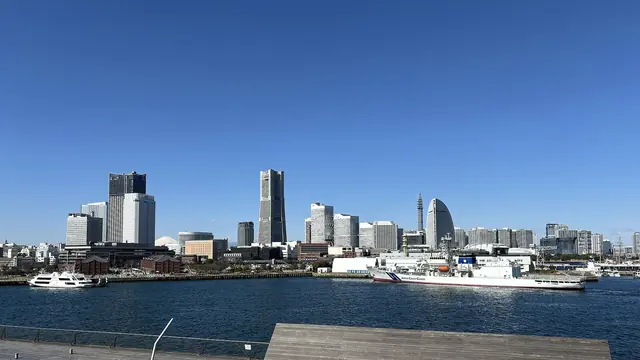
Yokohama lies on the way back on the same JR lines, and Kamakura pairs well with Hakone for a two-day trip out of Tokyo.