Suica, PASMO and paying for rides
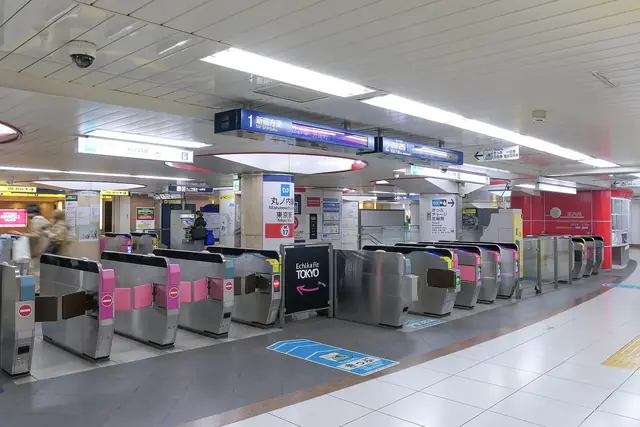
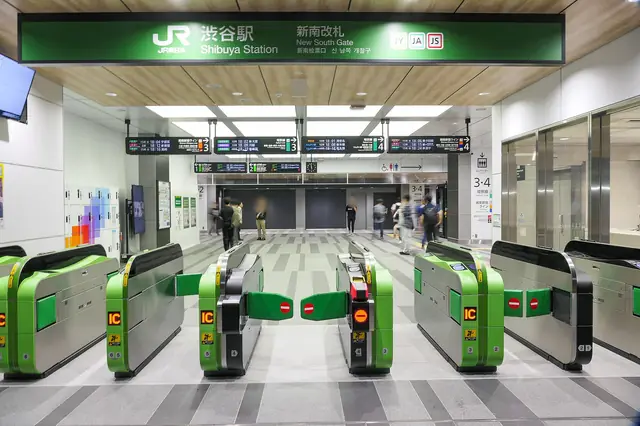
Most people in Tokyo pay with a rechargeable IC card. Suica (from JR East) and PASMO (from the private and subway companies) do exactly the same job: you tap in and out at the gate and the right fare comes off, on almost every train, subway and bus in the city. The same card pays at convenience stores, vending machines and coin lockers. You top up with cash at any station ticket machine.
After a chip shortage, regular Suica and PASMO cards went back on sale at station machines in March 2025. On an iPhone you can skip the plastic: Suica or PASMO can be added to Apple Wallet on iPhones bought anywhere, and JR East's Welcome Suica Mobile app, launched in March 2025 for visitors, gives you a Suica valid for 180 days. On Android, Suica generally works only on phones sold in Japan, so most visitors with Android phones use a physical card.
Since March 2026 you can also tap a contactless credit card at marked gates on Tokyo Metro, Toei, Keio, Odakyu, Tokyu, Keikyu and several other lines, and trips between those companies work on one card. JR, Keisei and the Tokyo Monorail do not take card taps, and you cannot start a trip on a credit card and finish it on an IC card. For a visitor, an IC card is still the simplest default.
- If a gate beeps and shuts, your balance is usually too low. Use the fare adjustment machine (精算機) next to the exit gates.
- Each person needs their own card. You cannot tap twice for a friend.
Who runs what: JR, Tokyo Metro, Toei and private lines
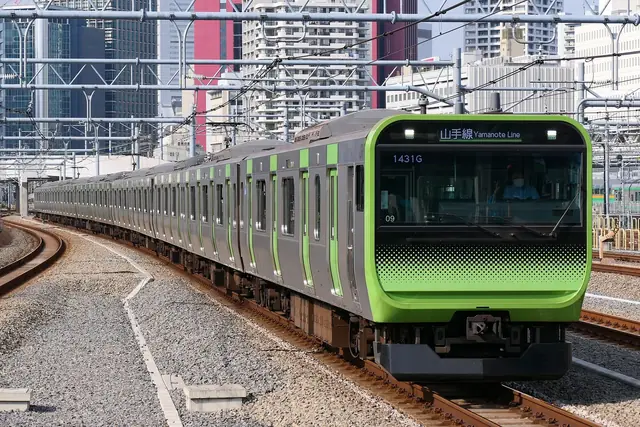
Tokyo's rail map is made of four kinds of operators. JR East runs the overground lines that connect the big hubs, including the Yamanote, Chuo, Sobu and Keihin-Tohoku lines. Tokyo Metro (nine lines) and Toei (four lines: Asakusa, Mita, Shinjuku and Oedo) together make up the subway. Private railways such as Odakyu, Keio, Tokyu, Seibu, Tobu, Keisei and Keikyu start at hubs like Shinjuku, Shibuya and Ikebukuro and run out to the suburbs, and many of their trains run straight through onto subway lines.
The Yamanote Line is the backbone for most visits. It is a loop of 30 stations that takes about an hour to go all the way round, and it links Shinjuku, Shibuya, Harajuku, Shinagawa, Tokyo, Akihabara, Ueno and Ikebukuro. Trains run in both directions, as the inner loop (内回り, anticlockwise) and the outer loop (外回り, clockwise), so take whichever way is shorter.
Why it matters: each company charges its own fare, so changing from JR to the subway starts a new fare, and passes only cover their own company's lines. An IC card handles this for you, but it is why a subway pass will not get you onto the Yamanote Line.
- Signs and announcements are in English, and each station has a code (for example G09) matching its line colour and number.
Day passes: the Tokyo Subway Ticket and when to skip passes
The Tokyo Subway Ticket gives unlimited rides on all Tokyo Metro and Toei subway lines for 24, 48 or 72 hours from your first ride. Since March 2026 it costs about ¥1,000, ¥1,500 and ¥2,000 for adults, with children at half price. It is sold to overseas visitors and to Japanese visitors who live outside Tokyo and the seven neighbouring prefectures. Tokyo Metro sells it online as a QR ticket, and the airport rail companies sell combined tickets with the Skyliner or Keikyu ride into town.
It pays off on days with four or more subway rides, since a single subway ride costs a few hundred yen. It does not cover JR, so if most of your day is on the Yamanote Line it is wasted money. The nationwide JR Pass is the opposite case: it covers the Yamanote Line but no subways, and it is rarely worth buying for Tokyo alone.
- Before buying, sketch one typical day in a route app and add up the fares it shows.
- The 24 hours start at your first gate, not at purchase, so an afternoon start covers the next morning too.
- For days spent mostly on JR lines, just pay as you go with Suica.
Route apps, big stations and rush hour
Google Maps handles Tokyo trains well, including platform changes and fares. Japan Transit Planner (by Jorudan) and NAVITIME are the local favourites and are good at showing last trains and alternative routes. Look up your route before you enter the station, since the best answer often depends on which line you start from.
The biggest stations, such as Shinjuku, Tokyo and Shibuya, are small towns with dozens of exits, and a transfer between lines can mean ten minutes of walking. Before you leave the platform, find your exit by its name or number (for example A2 or East Exit) on the yellow signs, since coming up on the wrong side can cost you another ten minutes outside. Changing between two companies sometimes means a transfer gate (乗換改札) inside the station rather than going out to the street.
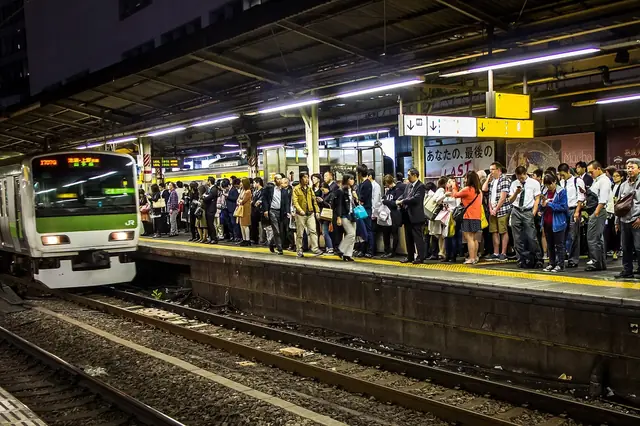
Weekday rush hour runs roughly from 7:30 to 9:30 in the morning and again in the early evening, and the main lines are packed. Avoid those times with big suitcases if you can. Many lines have women-only cars during the morning rush, marked on the platform and the train, where young children and passengers with disabilities may also ride. Priority seats are near the ends of each car, phones go on silent and people do not take calls on trains.
- Stand on the marked lines on the platform and let people off first. Queues form at each door.
- On escalators, people usually stand on the left in Tokyo, though stations now ask everyone to stand still on both sides.
Last trains, taxis, buses and luggage
Most lines run their last trains out of central Tokyo between about midnight and 00:30, and connections to the suburbs can leave earlier. First trains start around 5am. Check yours at dinner, not at the gate; our late-night page covers what to do if you miss it.
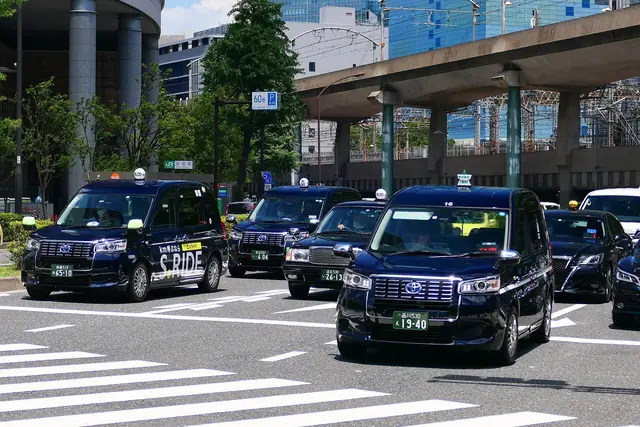
Taxis are everywhere, metered, clean and safe, and the rear door opens and closes by itself. From 10pm to 5am a 20 percent surcharge applies. GO is the most used taxi app and works in English, and Uber also books licensed taxis in Tokyo. City buses fill the gaps between stations: Toei buses inside the 23 wards charge a flat fare: you board at the front and tap your IC card as you get on.
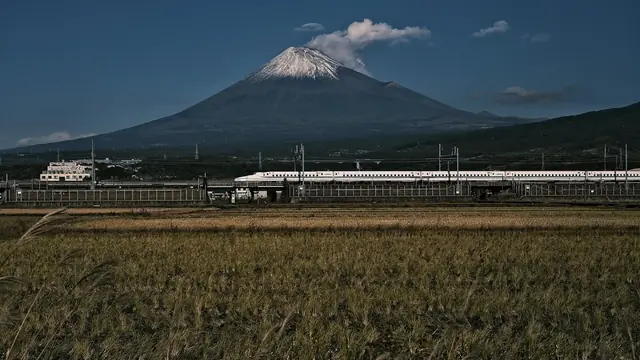
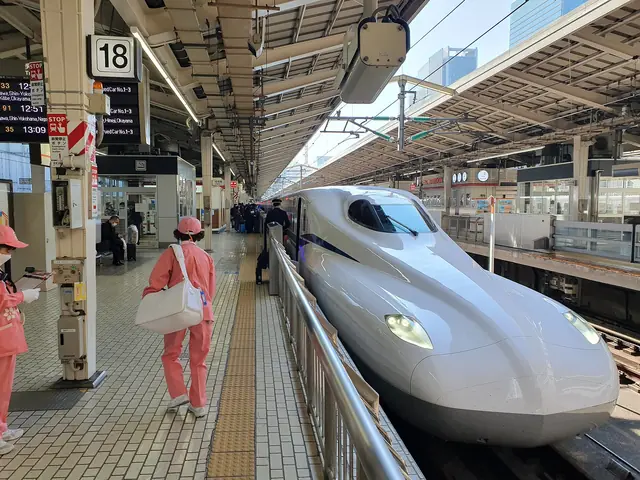
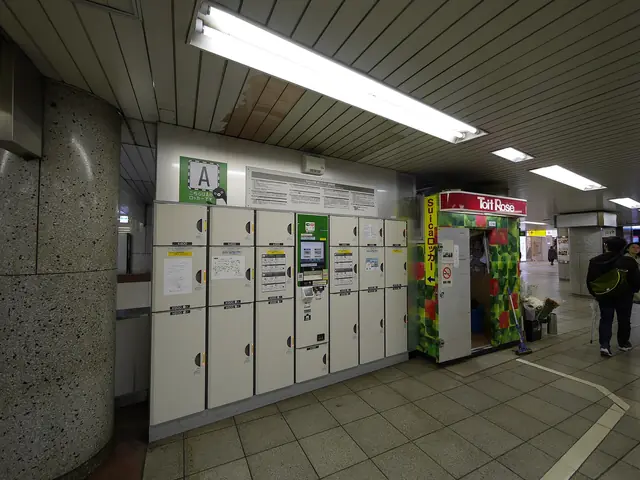
For luggage, most stations have coin lockers (many take IC cards) and the big hubs also have staffed storage counters. Hotels and airport counters can forward suitcases to your next hotel by delivery service (宅急便, takkyubin), usually arriving the next day, which makes moving between hotels on crowded trains much easier. On the Tokaido Shinkansen, bags with total dimensions of 160 to 250 cm need a seat with baggage space booked in advance.
- Search ロッカー or coin locker in a map app; lockers fill up by mid-morning at big stations on weekends.