Getting there: buses over the Aqua-Line, trains and a car
Highway buses are the simplest way down. The Boso Nanohana bus leaves from the Yaesu South Exit of Tokyo Station, crosses Tokyo Bay on the Aqua-Line and reaches Tateyama Station in about two hours; some runs continue to Awa-Shirahama. The Shinjuku Nanohana runs from Shinjuku to Tateyama, and the Akushi-go from Tokyo Station to Kamogawa. Seats are reserved, so book ahead for February weekends. Routes are listed by the operator Nitto Kotsu.
By train, the JR Uchibo Line follows the bay to Tateyama. The limited express Sazanami now runs only between Tokyo and Kimitsu on weekdays; on weekends and holidays the Shinjuku Sazanami runs from Shinjuku to Tateyama in a little over two hours. Kamogawa is on the Sotobo Line, but most Wakashio expresses stop at Katsuura, so the bus is easier.
Down south, the sights are spread along about 46 km of coast and local buses run about once an hour. A rental car from Tateyama, or your own car, makes the day much easier; without one, pick one area, such as Chikura and Shirahama.
- On weekends the Aqua-Line back toward Kawasaki often jams from mid-afternoon. Leave the coast before 3pm or after dinner.
- In September 2026 a typhoon cut the Uchibo Line between Anegasaki and Nagaura and closed some roads near Kimitsu. JR expected to reopen it from the first train on November 9, 2026, but check JR East's service news before you go.
The Flower Line and the picking fields of Chikura and Shirahama
The Boso Flower Line is the coast road from central Tateyama around the tip of the peninsula to Wada. From January to late February its verges are yellow with rapeseed, thickest from Ito to Aihama along the pine-backed beach of Heisaura, and on clear days Mt Fuji and Izu Oshima stand across the water. In summer the same verges are planted with marigolds. The Tateyama tourism association has a short guide to the road.
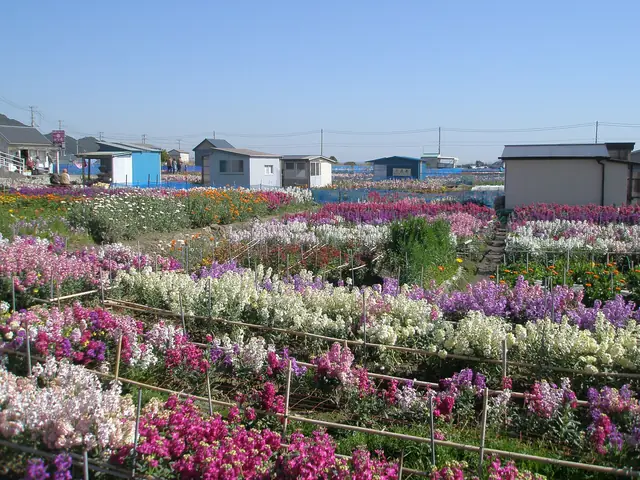
East of the cape, the farms of Chikura grow cut flowers in open fields, and from early January to mid-March many let you pick your own. The best known spot is the Shiramazu flower fields on Route 410: stock in pink, white and purple, calendula (pot marigold), snapdragons, poppies and rapeseed, with the Pacific behind. Entry is free and you pay for what you cut; each farm sets its own prices and hours, roughly 9:30am to 4pm, and lends scissors. February has the most flowers. Buses from Chikura Station toward Awa-Shirahama reach the Shiramazu Ohanabatake stop in about 15 minutes; Chiba's tourism site has details.
More flower farms sit around Shirahama, near Nojimazaki Lighthouse at the southern tip of the peninsula, one of the few lighthouses in Japan you can climb. On the bay side, Michi-no-Eki Tomiura Biwa Club, near the Tomiura exit of the expressway, plants a rapeseed field out front from early February to late March.
- Bring a bucket or a bag that stands up, plus some newspaper. Stock travels home well in a cool car.
- Strawberry picking runs from January into May around Tateyama and pairs well with flower picking. Check the farm before you go.
Mother Farm in Futtsu: rapeseed slopes and nemophila
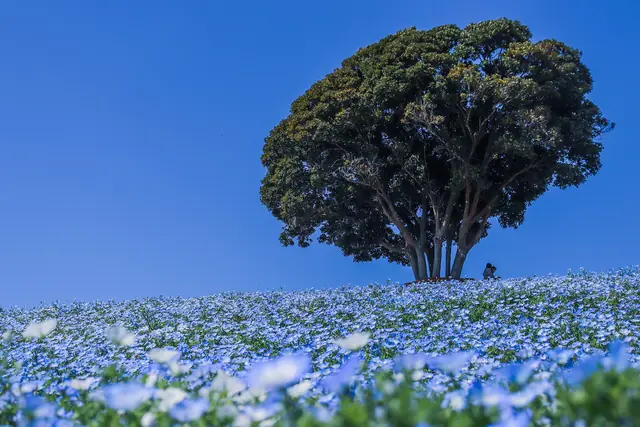
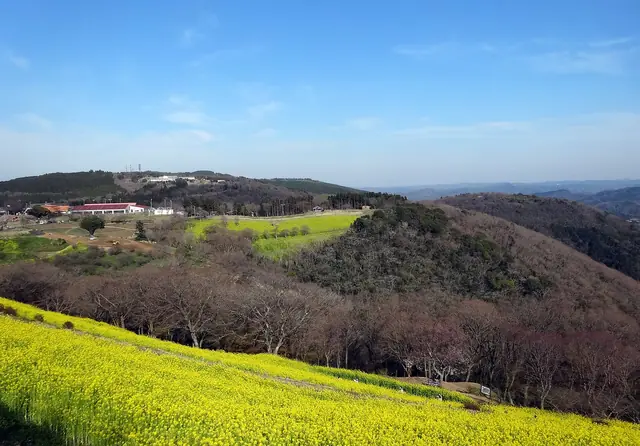
Mother Farm is a large hilltop farm park on Mt Kano, with animals, food and wide flower slopes facing Tokyo Bay. According to its flower page, daffodils and wintersweet come first, from mid-January to mid-February, then rapeseed from mid-February to mid-April on the Big Slope West and blue nemophila from mid-April to early May on the Big Slope East. Hydrangeas, sunflowers and red kochia fill the rest of the year.
The rapeseed slope is the reason to go in late winter. It is usually fully yellow around early March, and a path runs up the middle, so you stand in the flowers rather than behind a fence. Admission is 1,800 yen for adults as of 2026, with parking extra. Hours are shorter in December and January, with a few weekday closures, so check the calendar.
Without a car, take the Uchibo Line to Kimitsu Station and the direct bus from the south exit, about 35 minutes. Until the end of February 2027 it uses the Yama-no-ue Gate stop, some runs were cut after the typhoon, and the detour around a landslide can stretch the ride to about 50 minutes. On weekends from March to October, a bus also meets the Tokyo Bay Ferry from Kurihama at Kanaya Port.
- The hilltop is windy and colder than the coast. Bring a warm layer even in March.
- At nemophila peak in Golden Week, arrive at opening time. Car queues on the hill road build up by late morning.
Kamogawa and Kyonan: rapeseed fields and early cherries
On the Pacific side, Kamogawa sows about 33,000 square metres of paddies with rapeseed each winter. The Nanabatake Road event runs from January to early March, with free entry, picking for a small fee and a mini train on some Sundays. The fields are by Kamogawa City Hall, 15 to 20 minutes on foot from Awa-Kamogawa Station. The town also has Kamogawa Sea World, with orca shows, and the Oyama Senmaida rice terraces in the hills.
On the bay side, Kyonan has its own early cherry, the Yoritomo-zakura, a pink kawazu-type cherry named after Minamoto no Yoritomo, who landed here in 1180. About 600 trees line the Hota River, usually at their best from mid to late February, lit by bamboo lanterns on some evenings. Hota Station on the Uchibo Line is close by, and Mt Nokogiri, with its giant Buddha carved into the rock, is one stop north.
- Rapeseed in Kamogawa, cherries in Kyonan and stock in Chikura all peak in February. By car you can see all three in one long day.
Rapeseed by the rails, and what is on hold
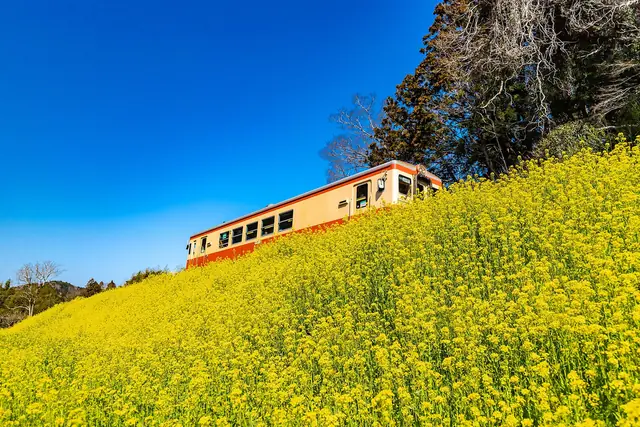
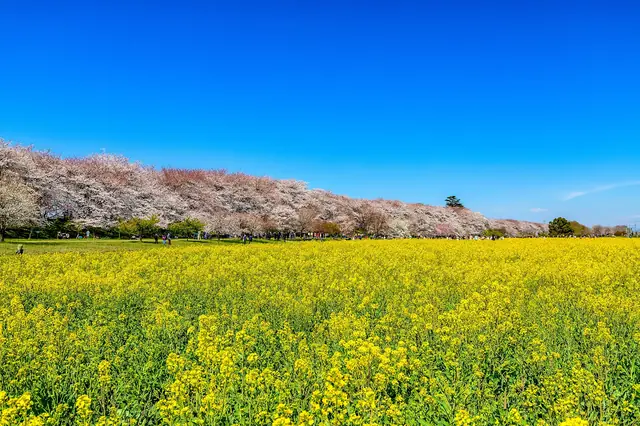
Chiba's classic spring picture is a small yellow train passing rapeseed and cherry trees in early April, and both lines known for it are affected. The Isumi Railway between Ohara and Kazusa-Nakano has had no trains since a derailment in October 2024, with replacement buses instead; the company aims to reopen Ohara to Otaki around autumn 2027. The Kominato Railway from Goi, lined with rapeseed from mid-March to mid-April, lost much of its line to the September 2026 typhoon and is reopening in stages. Check both before planning around them.
In north Chiba, the Sakura Tulip Festa at Sakura Furusato Hiroba, with its Dutch windmill, is paused while Sakura city rebuilds the park, with works planned to the end of fiscal 2028. For tulips in April, Showa Kinen Park in Tachikawa is the easier choice.
Planning the day, food and staying over
For one day by bus, take an early Boso Nanohana bus to Tateyama, a local bus to Chikura and Shiramazu, then follow the coast to Nojimazaki and take the highway bus back from Shirahama. By car, loop from Tomiura along the Flower Line to Chikura, then on to Kamogawa or north to Mother Farm. Two days let you add Kamogawa and Kyonan without rushing.
Try namerou, horse mackerel chopped with miso and ginger, and sanga-yaki, the same mixture grilled, plus Tateyama's seafood bowls and the fish market at Michi-no-Eki Chikura Shiokaze Okoku. Tomiura grows loquats (biwa), in season in late May and June, and sells loquat soft serve all year.
- In January and February the light fades by 5pm, and farms and buses wind down with it. Start early.
- Carry cash. Small farms, local buses and many seafood diners do not take cards.