The festival year at a glance
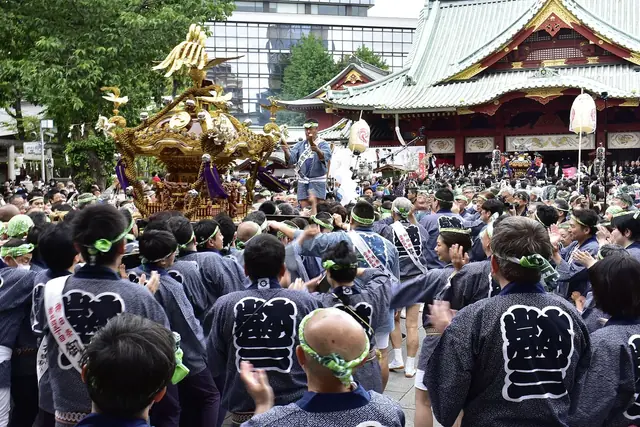
May is the big month for mikoshi. Sanja Matsuri takes over Asakusa on the third weekend, and in odd-numbered years Kanda Matsuri fills mid-May around Kanda Myojin. June belongs to Sanno Matsuri at Hie Shrine, which holds its full festival in even-numbered years. Kanda and Sanno take turns, so each year one of them is the big one and the other runs a smaller programme.
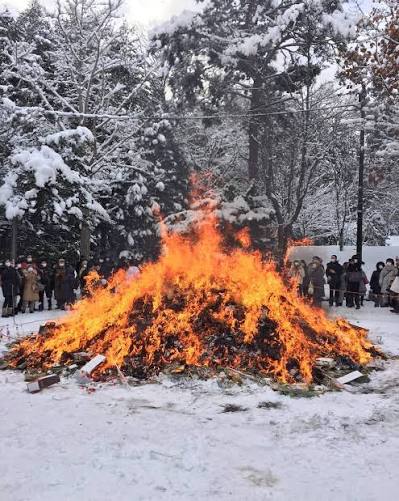
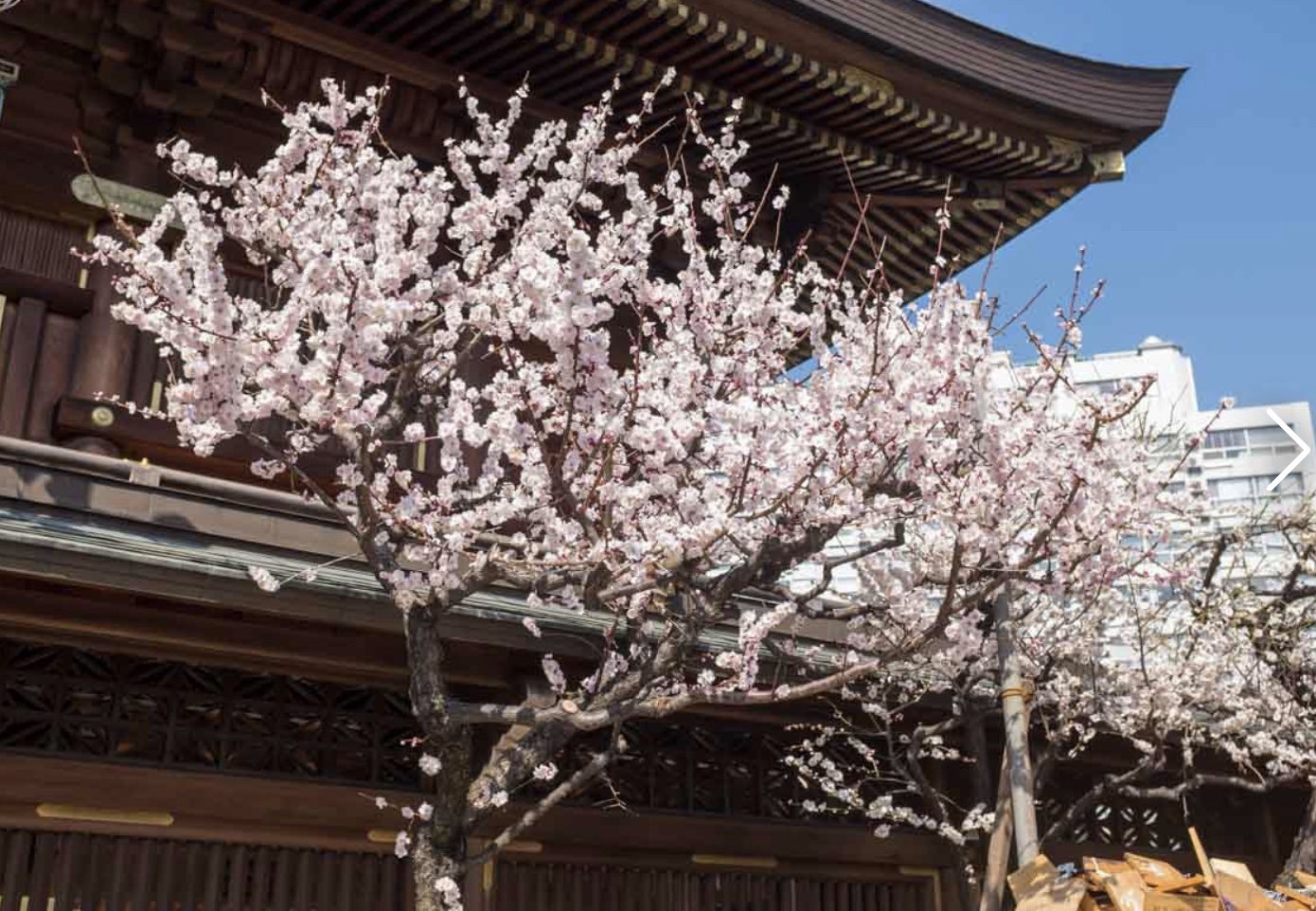
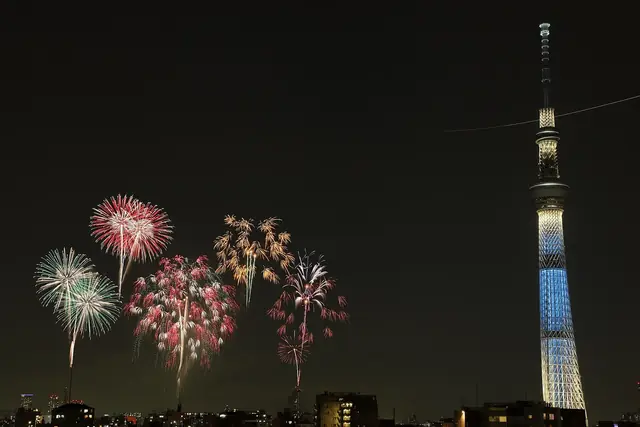
Summer is bon odori season, with circle dances around a raised stage in temple grounds, parks and shopping streets through July and August. August also brings Fukagawa Hachiman, Koenji Awa Odori and, most years, the Asakusa Samba Carnival. September is full of small neighbourhood shrine festivals (reitaisai). November has Tori-no-ichi, December and January the Setagaya Boroichi, and early February the Setsubun bean-throwing at temples and shrines. If the list looks thin in winter, those are the dates to look for.
The big festivals
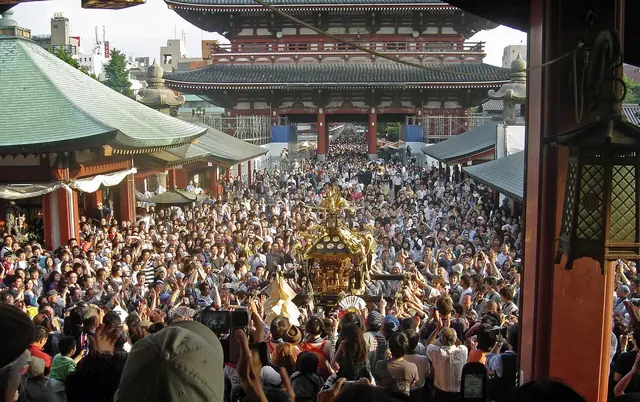
Sanja Matsuri belongs to Asakusa Shrine, right next to Sensoji, and runs for three days on the third weekend of May. On Saturday around a hundred neighbourhood mikoshi parade through Asakusa, and on Sunday the shrine's three main mikoshi leave early in the morning and return after dark. It is one of the most crowded weekends in Tokyo.
Kanda Matsuri, at Kanda Myojin near Akihabara, and Sanno Matsuri, at Hie Shrine in Akasaka, are counted with Fukagawa as the three great festivals of old Edo. In their main years both have a long procession in historical costume through central Tokyo, and at Kanda the neighbourhood mikoshi are carried into the shrine one after another over the weekend. Fukagawa Hachiman Matsuri at Tomioka Hachimangu holds its full version every three years, when more than 50 large mikoshi parade and spectators throw water over the bearers; other years are smaller.
Koenji Awa Odori, on the last weekend of August, fills the streets around JR Koenji Station with around 10,000 dancers and close to a million spectators over two days. It started in 1957 and is the largest awa odori after the original in Tokushima. The Asakusa Samba Carnival sends samba teams down the streets near Kaminarimon in late summer, a competition parade that draws hundreds of thousands of spectators.
Autumn and winter: lucky rakes and a flea market
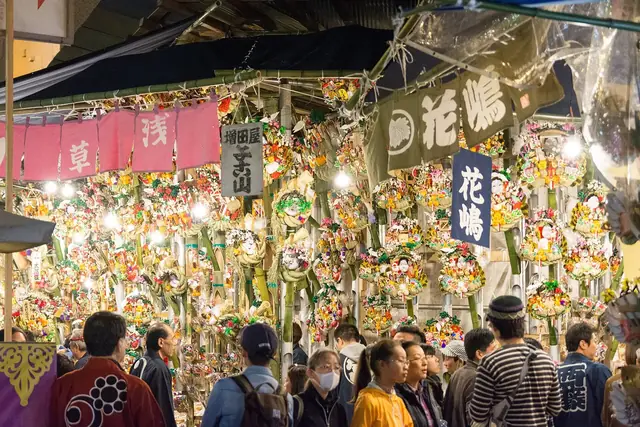
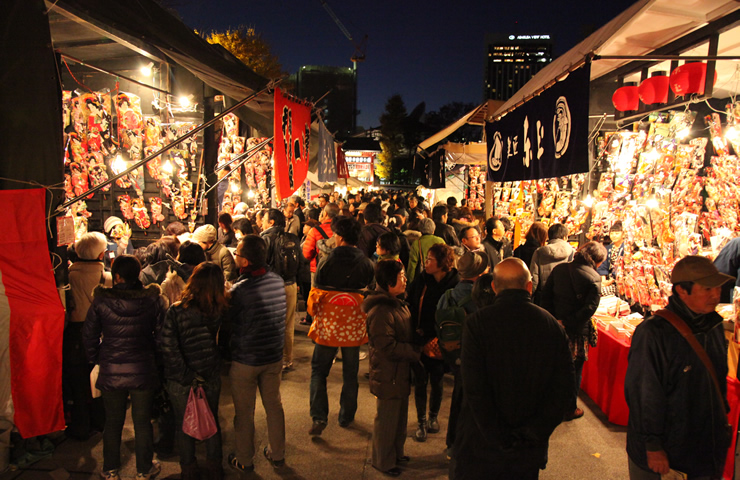
Tori-no-ichi is held at Otori shrines on the days of the rooster in November. These come round every 12 days, so there are two or three each year, called ichi-no-tori, ni-no-tori and san-no-tori. The biggest is at Otori Shrine in Asakusa, with around 150 stalls selling kumade, decorated bamboo rakes for good business; Hanazono Shrine in Shinjuku has another well-known one. When a rake is sold, sellers and buyer clap together in a rhythmic tejime, and tradition says you buy a slightly bigger one each year.
Setagaya Boroichi is a market with more than 400 years of history, always on the same dates: December 15 and 16 and January 15 and 16. Hundreds of stalls with antiques, old kimono, tools, plants and food line Boroichi-dori around the old Daikan Yashiki, and around 200,000 people come each day. The nearest stations are Kamimachi and Setagaya on the Tokyu Setagaya Line, a few minutes' walk.
Watching mikoshi without getting in the way
A mikoshi carries the shrine's deity through its neighbourhood, so treat it with respect: don't touch it, don't step in front of it and never climb on it. Riding on mikoshi has been a long-running problem at Sanja Matsuri and has led to arrests. Carrying is for the neighbourhood teams, and to join you need to belong to a group and wear its happi; some groups welcome visitors who ask well in advance.
The crowd around a moving mikoshi surges suddenly, and the bearers swing it hard. Stand at the side of the route, keep kids and bags close, and move back when staff or police ask. Photos and video from the side are fine; just don't stop in the middle of the street, skip the flash at close range and ask before a close portrait of one person. Drones over crowds need government approval in Japan, so leave them at home.
- Shrines and neighbourhood associations usually publish mikoshi schedules and routes a week or two ahead.
- Some big festivals, Sanja among them, have offered live mikoshi tracking online. Check the official site.
- At the shrine, bow at the torii gate, keep to the side of the main path and don't sit on stone lanterns or busy steps.
Food stalls, cash, trash and clothes
Yatai stalls are half the fun: yakisoba, takoyaki, grilled squid, chocolate bananas, shaved ice and cold beer. Most take cash only, so bring coins and 1,000-yen notes, though a few now accept IC cards or QR payments. Eat next to the stall rather than pushing through the crowd with a skewer, and use the stall's bin or take your trash home, because public bins are rare in Tokyo.
Summer festivals mean heat and long waits outdoors, so wear comfortable shoes and carry water. Yukata are normal at bon odori and summer festivals, and anyone can join a bon odori circle: watch for a minute, then copy the people in front. Most festivals go ahead in light rain (look for 小雨決行) and mikoshi are often carried in the rain anyway, but stormy weather can cancel parts of the programme. Toilets are scarce along festival streets, so use the station or a convenience store before you go in.
- On big festival days stations near the shrine are packed. Walking from one station farther away is often quicker.
- Check whether it's a main year (本祭り, honmatsuri) or a smaller in-between year (蔭祭, kagematsuri) before planning around a festival.