Earthquakes: what to do during and after
Small tremors happen often, and Tokyo's buildings and trains are designed for them. Before strong shaking, TV, radio and phones sound an Earthquake Early Warning (緊急地震速報), a loud alarm that gives you a few seconds. Use them to protect your head, get under a sturdy table or away from windows and tall shelves, and stay where you are. Do not rush outside, where glass and signs can fall. In a shop, hall or stadium, follow the staff; on a train, stay inside, because trains stop automatically and stepping onto the tracks is dangerous.
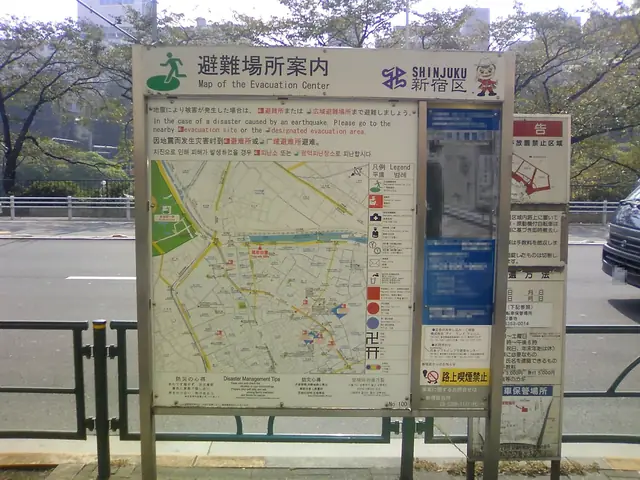
Once the shaking stops, take the stairs rather than the lift, listen to announcements and check what is happening before moving. If you are by the sea or on the bay around Odaiba and a tsunami warning is issued, go to high ground or the upper floors of a solid building at once, without waiting to judge the risk yourself. Signs around the city mark two kinds of place: 避難場所 is an open evacuation area, often a large park, and 避難所 is a shelter, usually a school or community hall.
After a big quake, trains can stop for hours for safety checks. The city asks people not to set off walking home all at once, and opens temporary stay facilities for people who cannot get back. Visitors can find them through the Tokyo government's KITAKON DX service, used on the web or through LINE, in English, Chinese and Korean.
- On arrival, look at the evacuation map on the back of your hotel room door.
- Keep your phone charged and carry a small power bank on long days out.
- Save your hotel's address in Japanese. It helps taxis and staff if you need to get back.
- Expect aftershocks after a strong quake, sometimes for days.
- The city's free TOKYO Disaster Action Guide & Map shows temporary stay facilities by tourist area.
Alerts and apps worth installing before you go
Three free apps cover almost everything. Safety tips, supervised by the Japan Tourism Agency, sends earthquake early warnings, tsunami warnings, weather warnings and heatstroke alerts in several languages, and includes useful phrases for emergencies. NHK World-Japan, from the public broadcaster, carries news and emergency information in many languages with push notifications. Disaster Preparedness Tokyo, the city's own app, shows evacuation information and alerts for Tokyo and works in English, Chinese and Korean.
For weather warnings on the web, the Japan Meteorological Agency has a multilingual site, and JNTO's Japan Safe Travel Information page posts notices about big disasters and transport disruption. Hotel staff are also a good source on the day: they see the same alerts and know which lines are running.
- Install the apps at home on Wi-Fi and set your location to Tokyo before you fly.
- Allow notifications. An alert that stays silent on your lock screen is no use.
- Earthquake alerts are loud on purpose. If every phone on the train goes off at once, protect your head and hold on.
Typhoon days, heat and other weather
Typhoons reach Tokyo most often between August and October, and they are forecast days ahead. Railways announce planned suspensions (計画運休) in advance, often the day before, and outdoor events are cancelled or postponed. On the day itself, the safest plan is to stay indoors with food and water bought the evening before, because shops may close early and umbrellas are useless in the wind. The morning after is usually clear.
Summer heat is the more common risk. In the hottest weeks, mostly July and August, the government issues heatstroke alerts (熱中症警戒アラート) on dangerous days. Drink water before you feel thirsty, add something salty, rest in air-conditioned shops and stations, and move outdoor plans to the evening. Snow is rare but a few centimetres can still delay trains.
- Check your train line's website the night before a typhoon. Planned suspensions list the lines and the start time.
- If you feel dizzy or stop sweating in the heat, get into the shade or air-conditioning and tell someone.
- Event posters saying 雨天中止 mean the event is cancelled in rain.
Emergency numbers, doctors and lost property
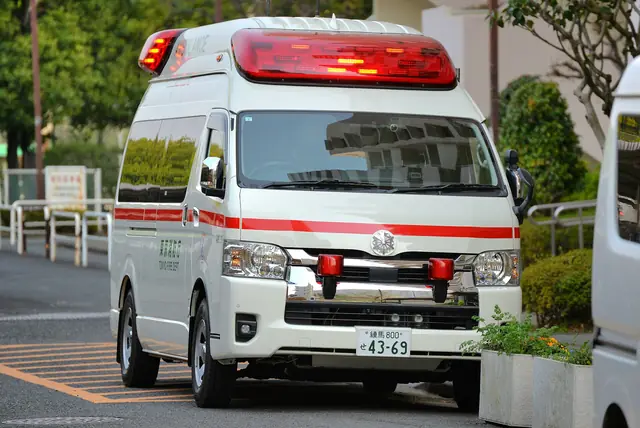
Call 110 for the police and 119 for fire or an ambulance. Both are free, and Tokyo's 119 centre brings in a live interpreter for English, Chinese, Korean, Portuguese and Spanish, so stay on the line until you are connected. For anything less urgent, the Japan Visitor Hotline run by JNTO (050-3816-2787) answers 24 hours a day in English, Chinese and Korean, for illness, accidents, disasters and ordinary travel questions. The Tokyo police also have an advisory line for non-emergencies in English, Chinese and Korean (03-3501-0110).
If you need a doctor, the Tokyo Metropolitan Government's medical information line (03-5285-8181) helps you find a clinic or hospital in English, Chinese, Korean, Thai and Spanish, every day from 9am to 8pm, and the national Navii site searches for clinics and pharmacies in several languages. Drugstores everywhere sell common medicines, and a pharmacy marked 薬局 fills prescriptions. Visitors pay the full cost of treatment, so travel insurance is worth having. Japanese law also requires foreign visitors to carry their passport, and police can ask to see it.
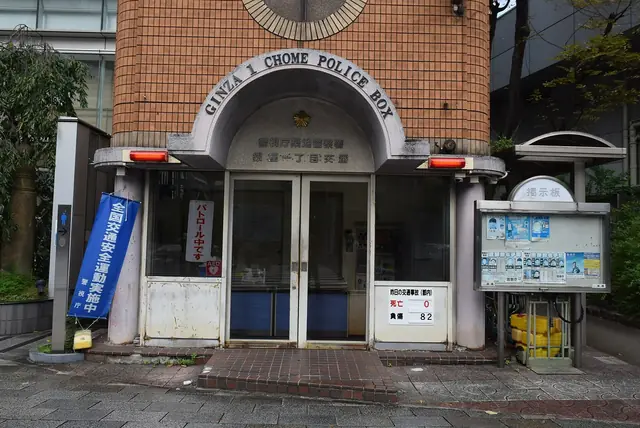
Lost something? Things are handed in surprisingly often. Report the loss at the nearest koban (police box) or police station, ask the railway's lost property office if you left it on a train, and the Metropolitan Police Lost and Found Center near Iidabashi holds items handed in across Tokyo.
- Save 110, 119 and 050-3816-2787 in your phone now.
- Bring prescription medicine in its original packaging with a copy of the prescription.
- Koban are small police boxes near most big stations. Officers there also give directions.
Nightlife, crowds and big festivals
Serious crime against visitors is rare. In nightlife districts such as Kabukicho and Roppongi, ignore street touts, check prices before you order and keep an eye on your drink, as you would anywhere. That is usually all it takes.
The crowds are the bigger thing to plan for. At the large fireworks displays, New Year at the big shrines and Halloween in Shibuya, police set up one-way routes, close streets and direct people with loudspeakers. Follow their instructions, do not stop on bridges, stairs or narrow streets to take photos, and keep children close. Mobile networks slow down when hundreds of thousands of people are in one place, so agree on a meeting point before you go in. Allow plenty of time to get back to the station, and for toilet queues.
- Arrive early or stay late. The hour right after fireworks end is the most crowded of the night.
- Bring water, a fan and some cash. Stalls and vending machines near big events run short.
- Pick a landmark as your meeting point, not a station exit, which may be closed for crowd control.