Atami in short
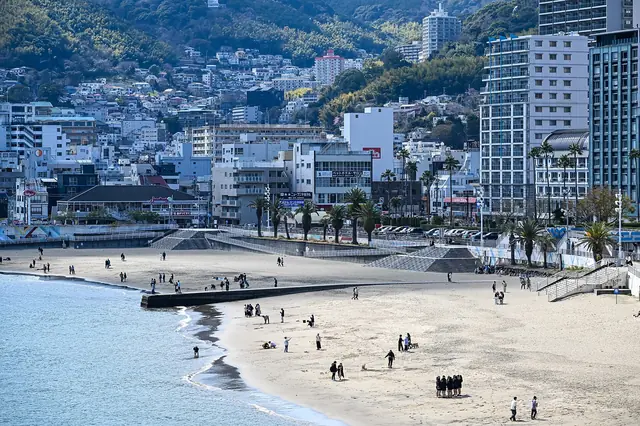
Atami sits where the Izu Peninsula meets the mainland, in Shizuoka Prefecture, yet under an hour from central Tokyo by Shinkansen. The town climbs steeply from the sea: the station and its covered shopping streets are near the top, the beach and the waterfront park at the bottom, and most sights are a short bus ride or a walk downhill. Hot springs have been used here for centuries, and the old sources of the Atami Seven Springs are still marked around the centre, such as the Oyu geyser.
After years as a fading resort for company trips, Atami filled up again in the 2010s with day-trippers, cafes and renovated inns, and weekends are busy all year. The Yu-Yu sightseeing loop bus has been suspended since October 2025, so use the regular buses from the station or a taxi for the uphill parts.
- Going down to the sea takes about 15 minutes on foot. Coming back up to the station feels like twice that.
The year in Atami
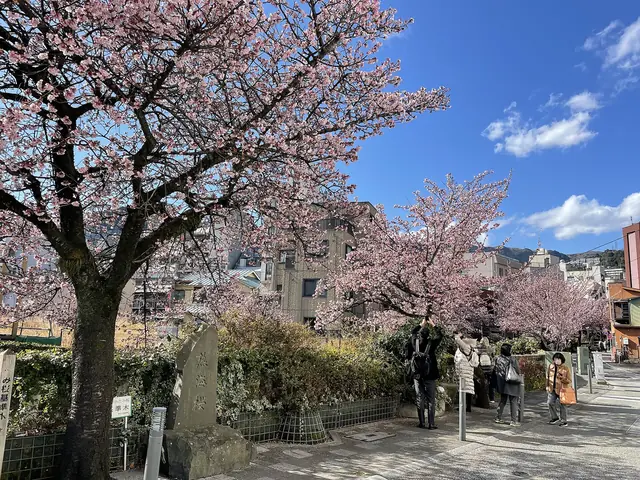
The season starts early. Atami Baien, a garden opened in 1886, is known for the earliest plum blossoms in Japan: the first flowers usually open in November, some years already in October, and the plum festival runs from early January to early March, with about 470 trees of some 60 varieties flowering in turn. During the festival there is a small entrance fee from 8:30 to 16:00 (300 yen for adults as of 2026), and the garden is free the rest of the year. In the same weeks the early Atami-zakura cherries bloom along the Itokawa promenade in the centre, with a festival and an evening light-up from early or mid-January to early February.
The Atami fireworks, held since 1952, run on more than ten nights a year from April to February: about 20 minutes over the bay from 20:20, and 20:15 in July and August, held even in rain. Mid-July brings the Kogashi festival of Kinomiya Shrine with a float contest on the seafront road, the beaches open from July to the end of August, and the small onsen districts of Izusan, Taga and Ajiro each hold their own summer fireworks night.
Autumn has a fireworks night every few weeks. From mid-November to early December, Atami Baien holds its momiji festival: about 380 maples colour late, peak around the end of November and the first days of December, and are lit up every evening until 21:00. The tourism association keeps a full event calendar.
Museums, shrines and baths in town
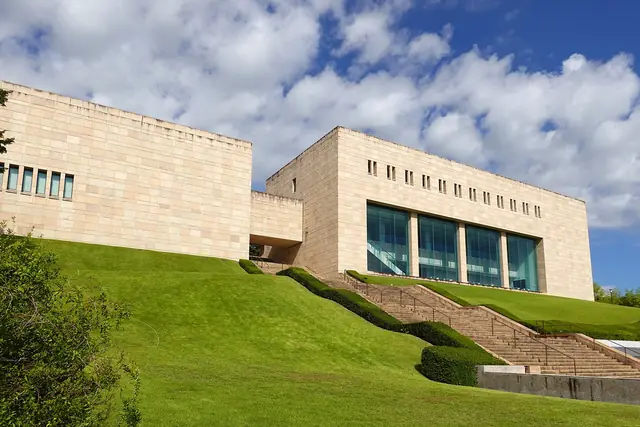
The MOA Museum of Art stands on the hill above the station, about 10 minutes by bus. Its collection of Japanese and East Asian art includes three national treasures, among them Ogata Korin's screen Red and White Plum Blossoms, usually shown for a few weeks around the plum season. The plaza in front looks out over Sagami Bay to Hatsushima and Oshima. It opens 9:30 to 16:30, closes on Thursdays (open on public holidays) and charges 2,000 yen for adults (as of 2026). Check the exhibition calendar before you go.
Kinomiya Shrine, a few minutes from Kinomiya Station, has a sacred camphor tree said to be more than 2,000 years old; walking once around it is said to add a year to your life. Kiunkaku, a 1919 villa that later became an inn for writers such as Tanizaki and Dazai, closes on Wednesdays. On Saturday and Sunday mornings, except from August to early September, Atami's geisha give a short dance show, Yumemachi Odori Hana no Mai, at the geisha hall.
For a bath without staying, the Fuua ocean spa on the harbour has open-air baths facing the bay. Ferries to the small island of Hatsushima leave from Atami port and take about 30 minutes.
- The ropeway up to Atami Castle starts by the Korakuen bus stop. The castle was built in 1959 as a tourist attraction, but its lookout has the widest view over the town and bay.
Getting there from Tokyo
The fastest way is the Tokaido Shinkansen: Kodama trains from Tokyo and Shinagawa reach Atami Station in about 45 to 50 minutes, and a few Hikari a day stop here and save a few minutes. Nozomi do not stop at Atami. The JR Pass covers Kodama and Hikari.
Without the Shinkansen, the Odoriko limited express runs from Tokyo to Atami in about 80 minutes with reserved seats and continues to Ito and the Izu coast. Ordinary Tokaido Line trains on the Ueno-Tokyo Line take about 1 hour 50 minutes from Tokyo, many running straight to Atami, and are the cheapest option. From Shinjuku or Ikebukuro, ride the Shonan-Shinjuku Line to Odawara and change there: from Odawara it is about 25 minutes on the Tokaido Line or under 10 minutes on the Shinkansen.
By car, take the Odawara-Atsugi Road and then Route 135 along the coast; on weekends and festival days the coast road and town car parks fill up, so the train is easier.
- For Atami Baien, get off at Kinomiya, one stop from Atami on the Ito Line, and walk about 10 minutes.
- On fireworks nights and festival weekends, buy your return ticket or top up your IC card as soon as you arrive.
Day trip or one night, and where to stay
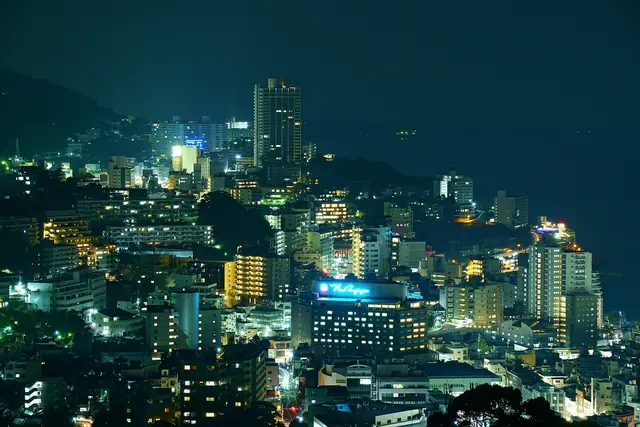
A day trip covers one or two sights, lunch by the sea and an onsen. Stay the night for the fireworks, the lit-up maples or simply a slower bath: most ryokan include dinner and breakfast, and evenings are quiet once the day crowds leave.
Near Sun Beach and the waterfront park you can walk to the fireworks and the old centre. Atami Korakuen Hotel stands on the harbour at the south end of the bay, next to the fireworks launch area, with the Fuua spa beside it. Hotel New Akao sits on the Nishikigaura cliffs south of town and looks back across the bay at the town lights. Hillside hotels such as RISONARE Atami have wide sea views; RISONARE runs a free shuttle bus from the station that you book ahead. For a quieter, older onsen area, try Izusan just north of the centre, home to the cave spring Hashiri-yu, or the fishing port of Ajiro to the south.
Atami has charged a lodging tax per guest per night since April 2025, on top of the bath tax; inns add it to the bill.
- If you want to watch the fireworks from your room, ask the inn to guarantee a sea-facing room that sees the show. Not every bay-side room does.
Going further into Izu
Atami is the gateway to the east coast of the Izu Peninsula. The JR Ito Line reaches Ito in about 25 minutes, a bigger, more everyday onsen town with public baths. From Ito the private Izukyu line follows the coast to Izu-Atagawa, about 70 minutes from Atami, a steep little onsen village where steam rises from hot spring towers.
In February the reason to go further is the Kawazu cherry. About 850 early, deep-pink trees line the Kawazu River, and the Kawazu cherry festival runs from early February to early March with an evening light-up. Kawazu is about 1.5 hours from Atami on local trains, or about 2.5 hours direct from Tokyo on the Odoriko. The JR Pass covers JR only as far as Ito, and storms can stop the Izukyu line for a few days, as a typhoon did in June 2026, so check the operator's notices before you go.
Hakone is close too: Odawara is under 10 minutes away by Shinkansen, so Atami and Hakone pair well on a two-day trip.