How the dates work
The tourism association sets the dates by fiscal year, April to March, and publishes the next year's full list in October. A typical year has around 15 to 18 nights: two to four in spring (April to early June), six in July and August, four or five in autumn (September to November), two in December and one or two in January or February. Outside summer they fall mostly on Sundays and public holidays, often on long weekends; in summer weekdays are included. August 5 is fixed every year: it is the original festival, first held in 1952 to lift the town after a typhoon in 1949 and two large fires in 1950.
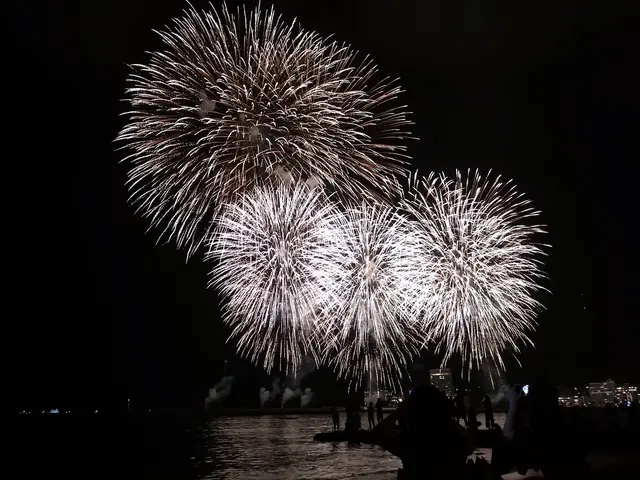
The show runs from 20:20 to 20:40, and in July and August from 20:15 to 20:40. It is short and dense, with no long pauses, and every night ends with the Daikuchu Niagara, a silver starmine fired from the whole launch area at once that lights the bay almost like day. The fireworks go up from Atami port, between the 7.5 m quay and the sea-fishing pier, right in front of the waterfront park. The official fireworks page lists the dates for this and the next fiscal year; they can still change.
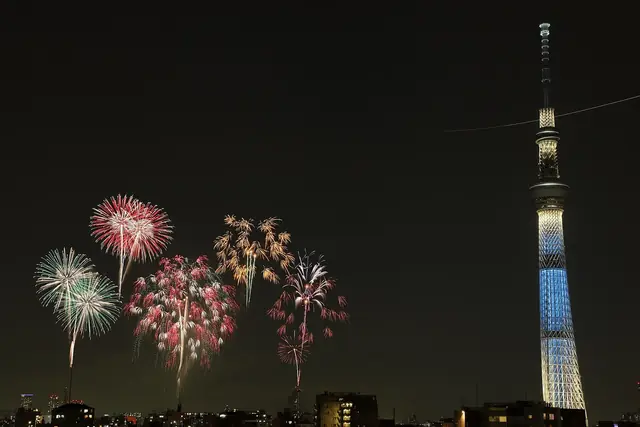
- Photographers prefer the winter nights: the air is clearer than on humid summer evenings and the crowds are far smaller.
- The local station FM Atami Yugawara (79.6 MHz) broadcasts the show's announcements.
Where to watch
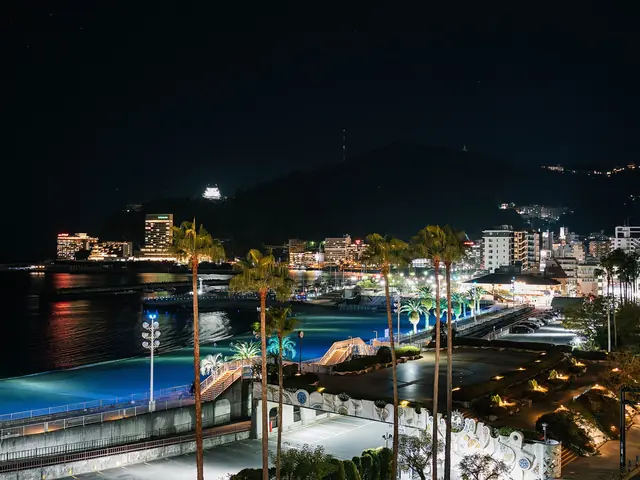
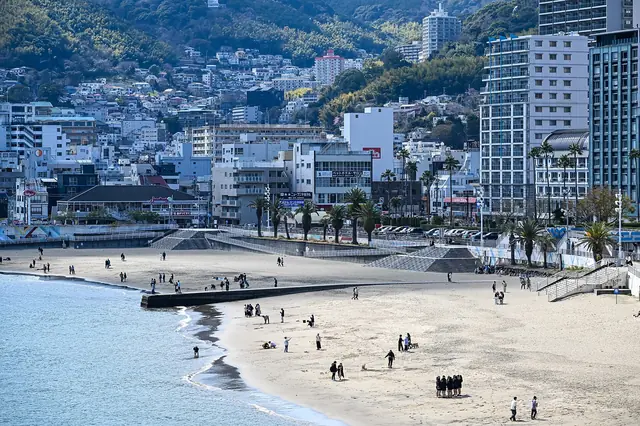
Atami Sun Beach, the 400 m beach in the centre, is the spot the tourism association recommends: you see the whole launch area, and it is about 15 minutes' walk downhill from the station. Bring a sheet if you want to sit on the sand; many people simply stand on the promenade above it. The beach lights, on every evening, are switched off for the show.
Shinsui Park, the waterfront park running south from the beach, puts you closest, with the loudest bangs; it is about 20 minutes from the station. It is split into three sections from the beach end. Section 1 is free and the most crowded, with about 15 food stalls on every fireworks night; saving places with sheets is not allowed, and the Moon Terrace pier is closed from 17:00 on show days. In July and August the sea side of section 2 and all of section 3 are reserved for guests of member inns of the Atami Onsen hotel and ryokan association; at other times the whole park is free. There are no paid seats in 2026. A viewing space for wheelchair users is set aside in section 1, at the Sun Beach end.
The regular sightseeing boat in the harbour sails only in the daytime. For photos with the town lights in the frame, look for higher ground: from the hillside hotels and the cliffs south of the bay the show rises against the lit-up town.
- Mobile networks jam on the seafront around show time. Agree on a meeting point before you split up.
- Vending machines near the beach sell out on summer nights, so bring something to drink.
Crowds and getting back to Tokyo
Summer nights, especially in August and at weekends, bring big crowds; spring, autumn and winter shows are far easier, with room on the beach shortly before the start. In July and August only, the seafront road along Sun Beach is closed to traffic from 20:10 to 20:55. Car parks fill early and cars wait a long time to get out after the finale, so come by train.
The hard part is the station. When the show ends, everyone walks uphill to Atami Station at once, and taxis and buses cannot get through for a while. Staff split the crowd at the station building into queues, with a separate line for Shinkansen passengers. From about 21:00 to 22:00 the gates are packed, and it can take more than an hour to get in. Buy your return ticket or top up your IC card when you arrive. If you are heading to Ito or Shimoda, walk to Kinomiya Station instead; Tokyo-bound passengers can also board an up train there and pass through Atami without the crush.
There is time to get home. In the 2026 timetable, Kodama trains leave Atami for Tokyo about every 30 minutes until the last one at around 22:40, arriving about 23:25, and the last Tokaido Line trains to Tokyo and Shinagawa leave a little after 22:00 and around 22:35, getting in around midnight. Check the timetable for your date, and on summer weekends reserve a Shinkansen seat for 21:30 or later rather than racing for the first train.
- With a seat booked on a late Kodama, there is no need to rush. Have a drink in the old Ginza area and walk up after 21:30.
Booking a room with a view
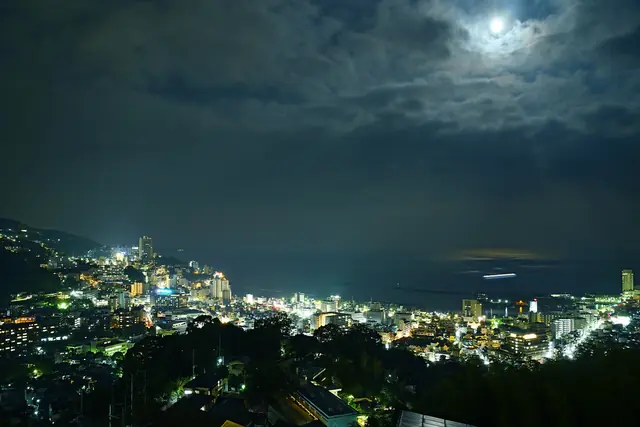
Watching from your room after dinner and a bath is the classic Atami way, and it skips the crowds entirely. Bay-facing rooms on the higher floors of the seafront hotels see the whole show. Ask when booking whether the room is guaranteed to face the fireworks: many hotels have only some sea-facing rooms, and on windy nights smoke can drift across some angles. For August weekends, book well ahead.
Atami Korakuen Hotel stands on the harbour at the south end of the bay, next to the launch area. Hotel New Akao, on the Nishikigaura cliffs further south, sees the fireworks against the lights of the town. Hillside hotels such as RISONARE Atami look over the bay from above; ask which rooms see the show.
If your room does not face the bay, staying at any member inn of the Atami Onsen hotel and ryokan association gets you a picnic sheet for the guest-only viewing area in Shinsui Park in July and August, open from 19:00. Inns of the Izusan, Yugawara and Ajiro associations run shuttles to the venue on show nights.
Rain, wind and cancellations
The show goes ahead in rain, which is unusual for a Japanese fireworks festival. It is called off only when launching becomes unsafe, for example in strong wind, high waves or a storm, and in rare cases after a disaster. Any change is posted on the official fireworks page and the tourism association's guide to the fireworks; if the weather looks doubtful, check in the afternoon.
From noon on show days the area around the launch site, including the sea-fishing pier, is closed. Bring a light rain jacket rather than an umbrella, which blocks the view of the people behind you. In winter the wind off the sea is cold after dark, so dress warmly.
- Keep your bags close. The tourism association warns about theft on the crowded seafront.
Make a day of it
Arrive in the afternoon, bathe, eat and walk down to the sea. On show days from April to December a food and beer area opens in the event square of Shinsui Park from 15:00, with live music on summer nights. In January and February the fireworks fall in the plum and early cherry season, so you can spend the day at Atami Baien first.
In late November and early December, the maples at Atami Baien are lit up from 16:30 during the momiji festival: see them at dusk, then take a taxi down for the show. In summer the small onsen districts nearby each hold their own fireworks night too: Izusan, Taga, Ajiro and Yugawara, usually between late July and mid-August.