From a daimyo estate to a national garden
The land was once part of the Edo residence of the Naito family, a lord's household under the Tokugawa shogunate, and Tamamo Pond in the Japanese garden is the oldest surviving piece of their garden. In the Meiji era the site became an agricultural experiment station, then an imperial garden, completed in 1906 to a landscape plan by the French garden designer Henri Martinet.
Most of the garden burned in the air raids of 1945. In 1949 it opened to the public as a national garden, run today by the Ministry of the Environment. That is why it feels unlike an ordinary park: gates, an entrance fee, fixed hours and clear rules, and in exchange wide lawns with very little noise in the middle of Shinjuku.
What to see
Coming in through Okido Gate, the first thing you see is the glass greenhouse. Rebuilt in 2012, it holds more than a thousand species of tropical and subtropical plants, including endangered plants from the Ogasawara and Amami islands, and is a good stop on a cold or wet day.
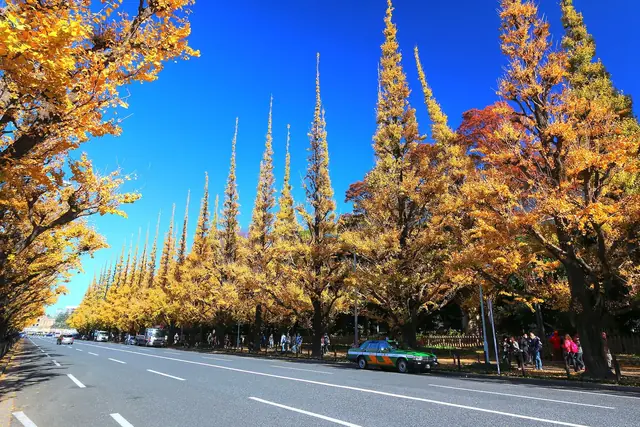
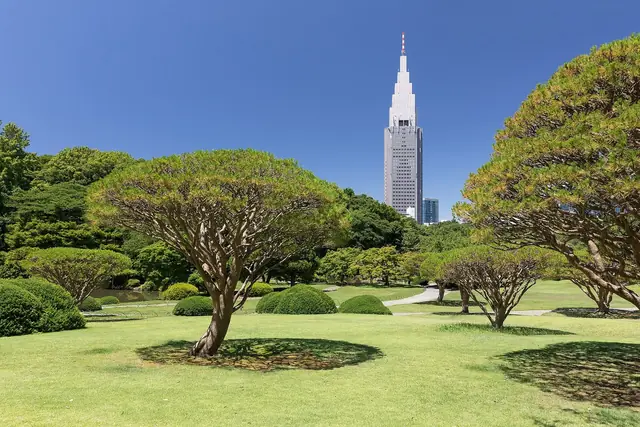
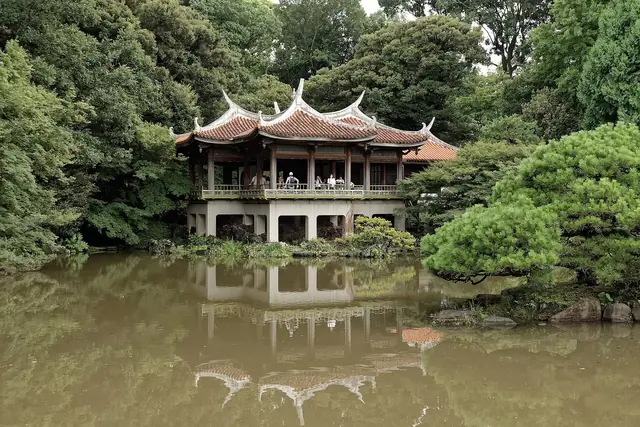
The English landscape garden is the big open lawn in the middle, with tall tulip trees and Himalayan cedars and cherry trees around its edges. Next to it, the French formal garden is laid out symmetrically, with rose beds and avenues of plane trees, eight rows in all, that turn golden in autumn. The Japanese garden is a strolling garden around a chain of ponds. Here you find the Kyu-goryotei, a Chinese-style pavilion built to mark the wedding of the future Emperor Showa, and Shotentei, an open tea house that looks over the Japanese garden and serves Japanese sweets made with matcha.
Also worth a look is the Kyu-yokan Goyasumisho, a Western-style rest house built for the imperial family in the Meiji era and now an Important Cultural Property, open to visitors. A Starbucks and a couple of cafes inside the grounds make it easy to stay longer.
- The greenhouse opens later and closes earlier than the garden. On a short winter afternoon, go there first.
- Coin lockers are at all three gates, handy if you arrive with shopping from Shinjuku.
The year at Shinjuku Gyoen
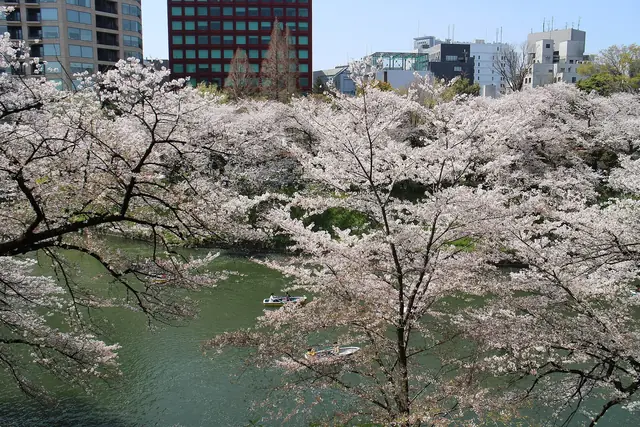
The cherry season here is unusually long, because the garden has about 900 trees of around 70 varieties. Early kanzakura types flower from January into early March, Somei Yoshino comes in late March and early April, and the double-flowered Ichiyo and Kanzan follow into mid and late April. Even when the main bloom in the city has passed, something here is usually still in flower. During the main cherry weeks the garden also opens on Mondays.
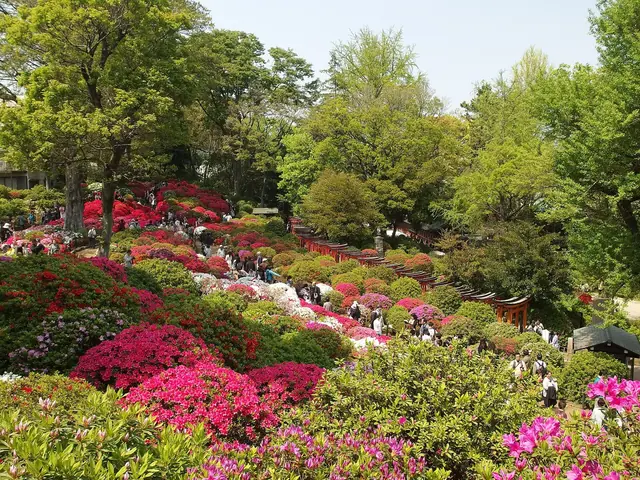
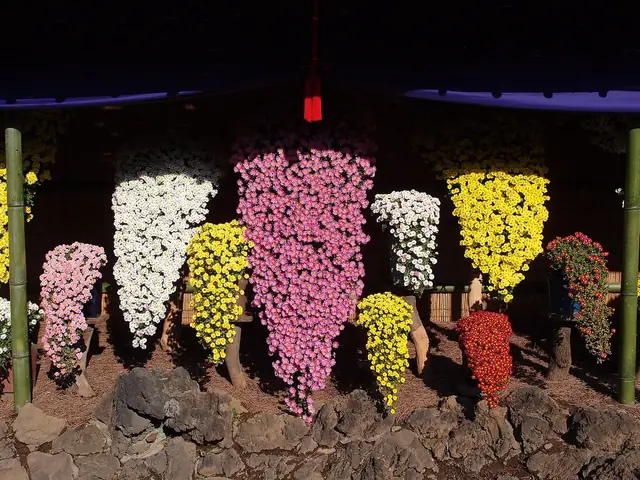
The rose beds of the formal garden flower in late spring and again in autumn, and in early summer the garden stays open later into the evening. From November 1 to 15 every year the chrysanthemum exhibition fills the Japanese garden, continuing an imperial chrysanthemum viewing that goes back to the 1870s. Look for the ozukuri, hundreds of blooms trained from a single plant, and the kengai style that cascades like flowers on a cliff.
Autumn colour runs from the plane tree avenue in November to the maples of the Japanese garden in late November and early December. On selected days there are also free guided walks and early morning openings, listed on the garden's calendar.
Rules, tickets and timing
Shinjuku Gyoen has stricter rules than most parks. You cannot bring alcohol in, and ball games, badminton, frisbees, drones, tents, cooking stoves and smoking (including e-cigarettes) are not allowed. Pets stay outside, except assistance dogs, and you are asked not to bring household rubbish in. Running is allowed only on the marked course, and not at all in the cherry season. Sitting on the lawns with a packed lunch is fine, and that is how most locals spend a spring afternoon here.
Adults pay an entrance fee, and junior high school students and younger enter free. Pay at the gate (transit IC cards work there) or buy an e-ticket online and scan its QR code. In recent years the busiest hours of the peak cherry weekends have needed a timed online reservation, while the first hour after opening did not. Check the official site from early March.
The garden opens at 9 in the morning and closes in the late afternoon or early evening depending on the season, earliest in winter. It is closed on most Mondays (the next weekday when Monday is a holiday) and over the New Year, but open every day during the cherry and chrysanthemum periods. Weekday mornings are the calmest time in any season.
- On a cherry weekend, aim to be at the gate at opening time. By late morning the queues are long.
Getting there and nearby
Shinjuku Gate is about 10 minutes on foot from the south exit of Shinjuku Station and about 5 minutes from Shinjuku-sanchome Station or from Exit 1 of Shinjuku-gyoemmae Station on the Marunouchi Line. Okido Gate is about 5 minutes from Exit 2 of Shinjuku-gyoemmae. Sendagaya Gate, on the south side, is about 5 minutes from JR Sendagaya Station (Sobu Line) and from Kokuritsu-Kyogijo Station on the Oedo Line.
Shinjuku Gate puts you a few minutes from the small restaurants and bars of Shinjuku-sanchome, good for dinner after a late visit. From Sendagaya Gate you can walk toward the National Stadium and Meiji Jingu Gaien, with Meiji Jingu and Harajuku a short train ride further.