What Rikugien is
Rikugien was created by Yanagisawa Yoshiyasu, a senior official of the fifth shogun Tokugawa Tsunayoshi, on land the shogun granted him in 1695. He designed it himself, and digging the pond and raising the hills took seven years. The name comes from the six forms of classical poetry, and the garden recreates 88 scenes from waka poems and from the coast of Wakanoura in today's Wakayama, so many stones, bridges and hills carry poetic names.
In the Meiji era the garden passed to Iwasaki Yataro, the founder of Mitsubishi, and in 1938 the family donated it to the city of Tokyo, which opened it to the public. It was designated a national Special Place of Scenic Beauty in 1953. Since the Edo period it has been ranked with Koishikawa Korakuen as one of the city's two great gardens.
What to see on the loop
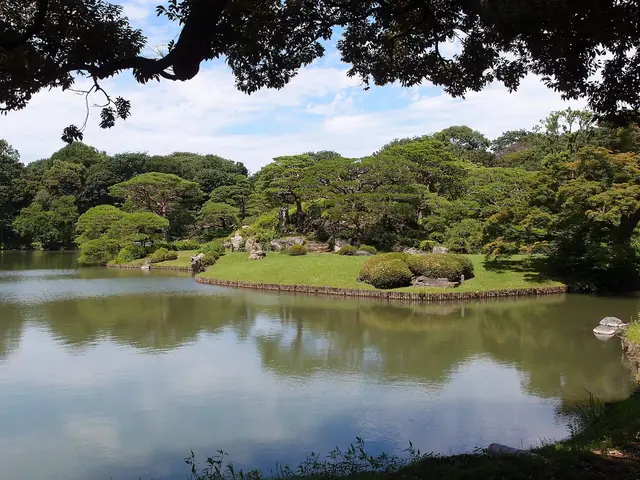
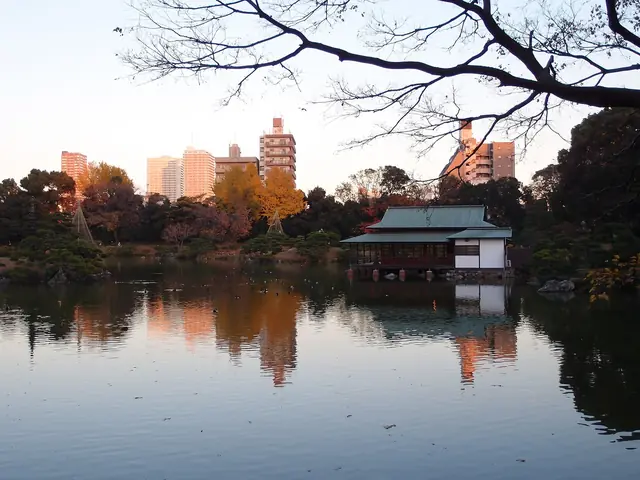
From the main gate you walk through an inner gate, and right behind it stands the weeping cherry, about 15 metres tall and 20 metres wide. Beyond it opens the big pond with its central island, where two small hills called Imoyama and Seyama stand for a woman and a man. Deshio no minato, a point on the shore, gives the classic wide view of the pond and its islands.
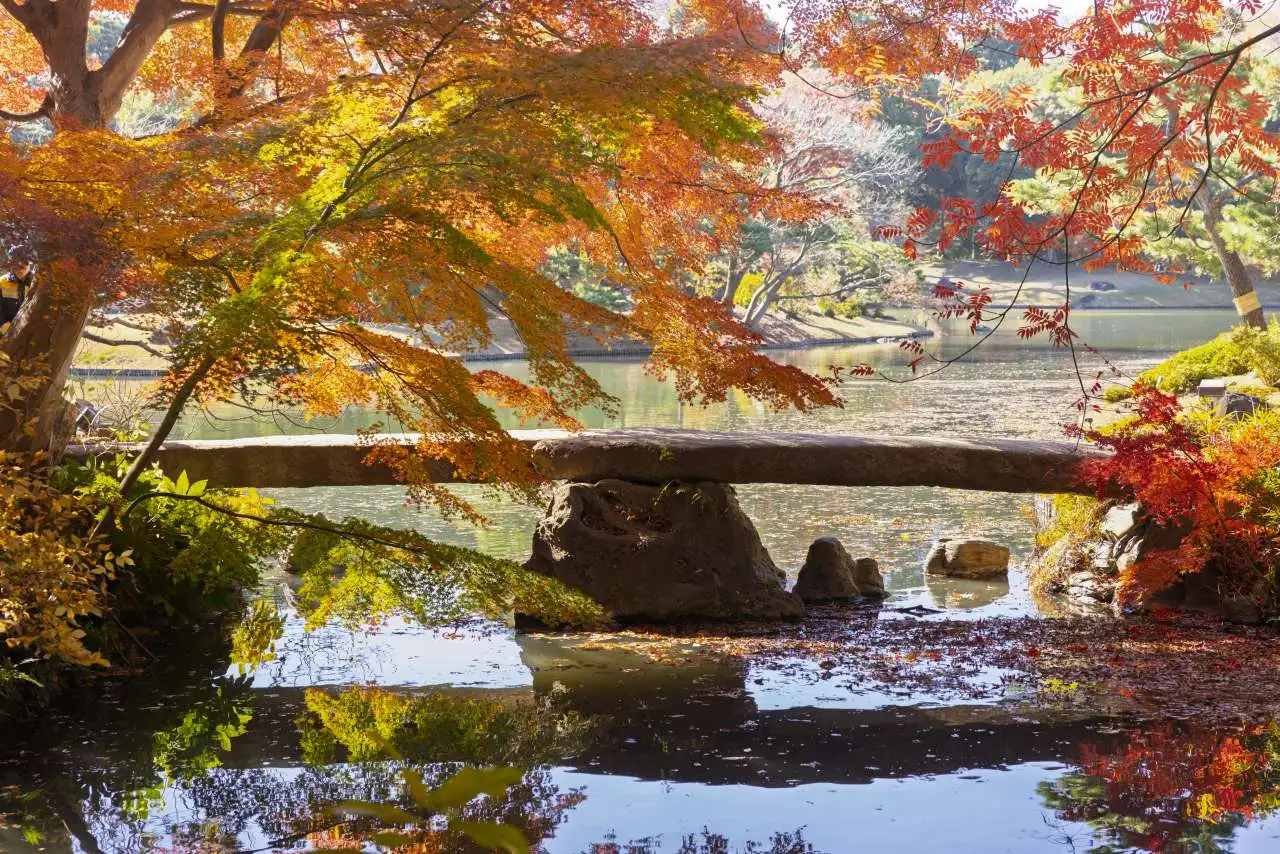
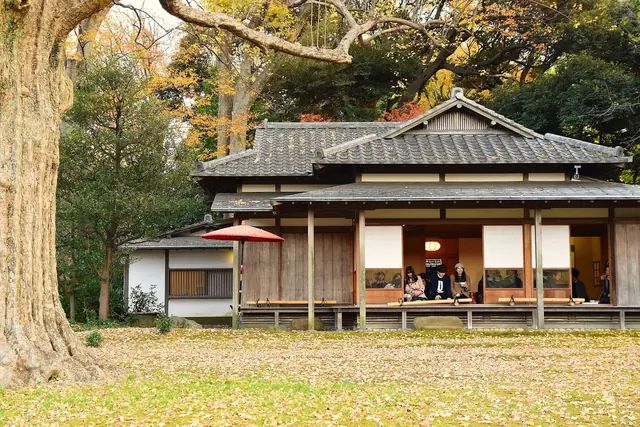
The path then climbs Fujishiro-toge, an artificial hill about 35 metres above sea level and the highest point in the garden, with a view over the whole pond. On the far side you pass Tsutsuji-chaya, a Meiji-era arbour built from old azalea wood, then Takimi-chaya, a shelter beside a small waterfall in a shaded wood, and Togetsukyo, a bridge of two heavy stone slabs named after a waka poem. Fukiage-chaya, a tea house on the shore, serves matcha with a Japanese sweet.
- Free volunteer tours run on weekends and holidays in Japanese, and in English on the first and third Sundays (paused in July and August).
- Pick up the English map at the gate: many spots have small signs with their poetic names.
- There is no parking, so come by train.
The year at Rikugien
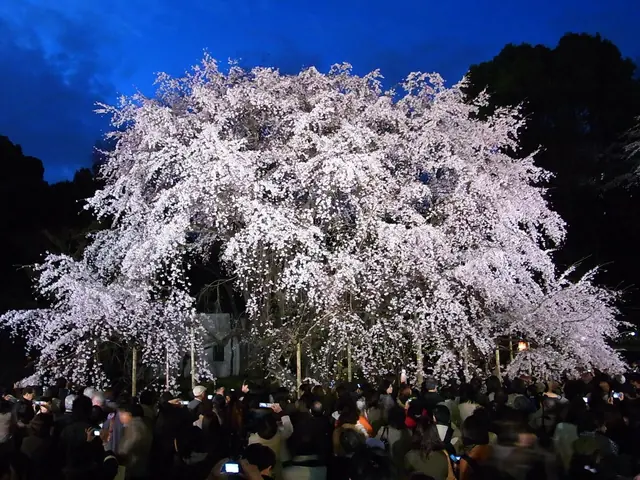
Spring starts with the weeping cherry, which usually peaks in late March, a few days before most Somei-yoshino cherries in town. In most years the garden holds a special night viewing while it is in bloom, with the tree lit up after dark. Azaleas and satsuki follow from mid-April into May, and on busy days of that season the garden often opens the Somei gate near Komagome Station.
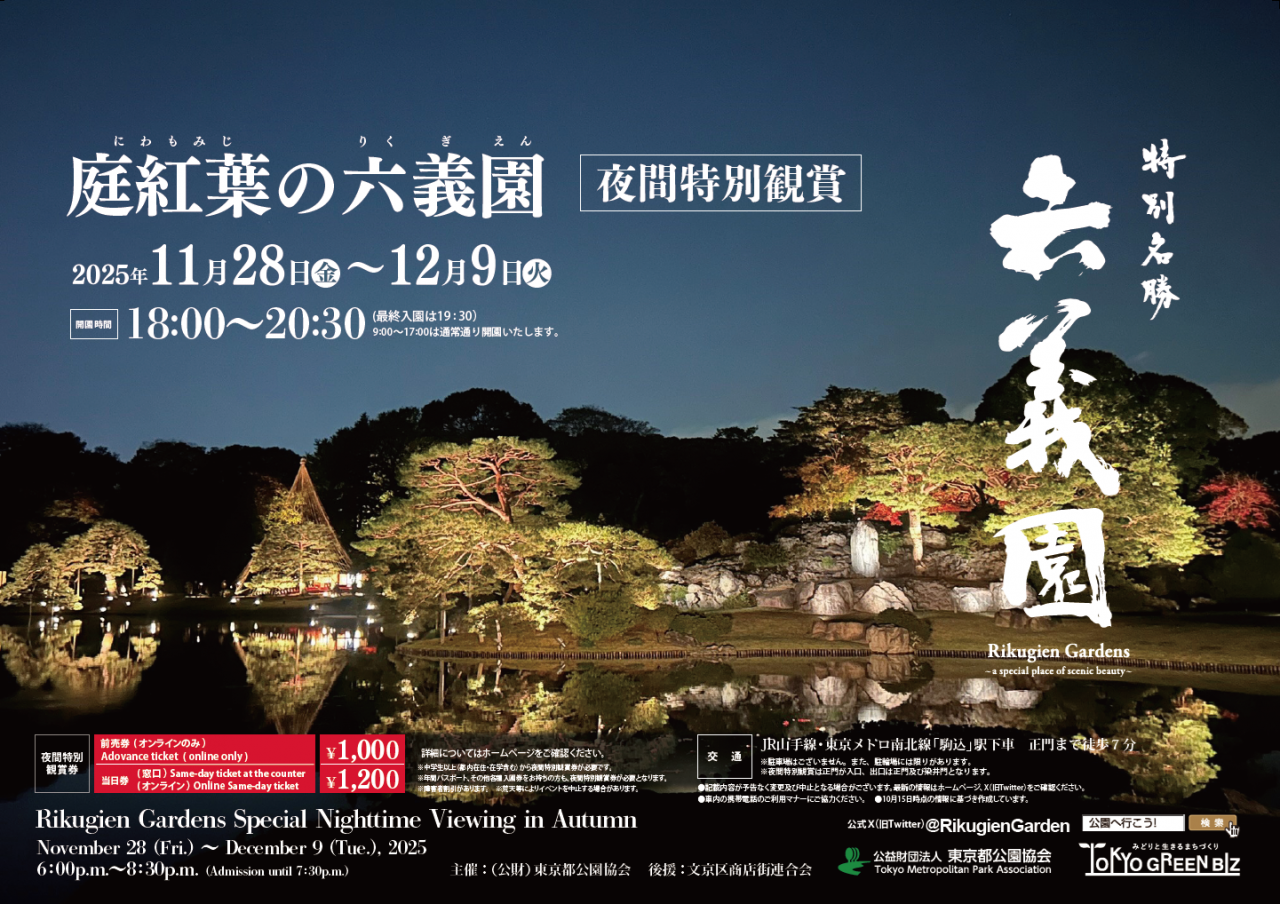
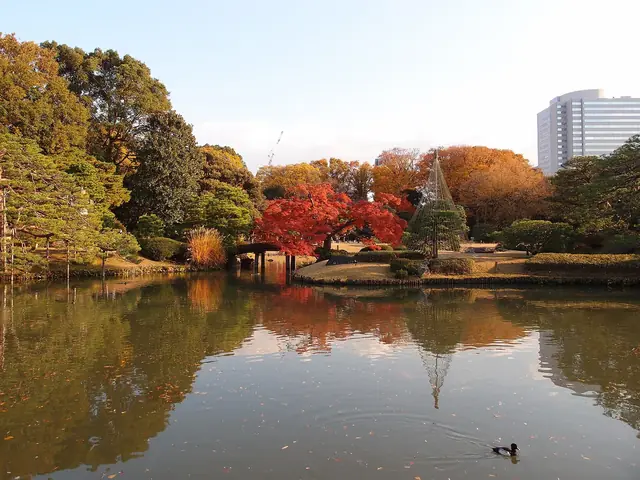
Summer is quiet, with hydrangeas in June. In November gardeners tie snow ropes (yukitsuri) on the pines, sometimes as a public demonstration, and the maples turn from late November into early December. That is the busiest time of the year: in recent seasons the garden has reopened in the evening for a lit-up autumn night viewing with its own ticket. Winter brings plum blossoms, camellias and wintersweet.
Timing, tickets and manners
The garden is usually open from 9 in the morning to 5 in the afternoon, with last entry 30 minutes before closing, and it closes from December 29 to January 1. Daytime tickets are sold at the gate, which takes IC transport cards, credit cards and QR payments, and online tickets are valid only on the day you buy them. Entry is free on Greenery Day (May 4) and Tokyo Citizens' Day (October 1), so expect more people then.
Night viewings need a separate ticket from the daytime one. Advance tickets are sold online in limited numbers per day, and buying online gets you a priority lane at the gate, so book early for weekend evenings in peak weeks. For a calm daytime visit, come on a weekday morning soon after opening; at the cherry and maple peaks, weekend afternoons are crowded.
Rikugien is a protected cultural property, so pets are not allowed and you should stay on the paths. Ordinary visitor photos are fine, but model shoots and pre-wedding photos need permission in advance. Repairs to the pond banks can lower the water level for months at a time (in 2026 from May to about November), so check the official notices before a photo trip.
Getting there and nearby
Komagome Station on the JR Yamanote Line and the Namboku Line is about 7 minutes on foot from the main gate (take the south exit on the JR side). The Somei gate, on the days it opens, is about 2 minutes from the station. Sengoku Station on the Toei Mita Line is about 10 minutes away.
Right next to the garden, the Toyo Bunko Museum shows rare books and maps from a large library of Asian studies. A combined ticket covers Rikugien and Kyu-Furukawa Gardens, a short walk north, where a Western-style mansion looks down over a rose garden and a Japanese garden. Sugamo and its old-style shopping street Jizo-dori are one stop away on the Yamanote Line, and Ikebukuro is a few stops further.