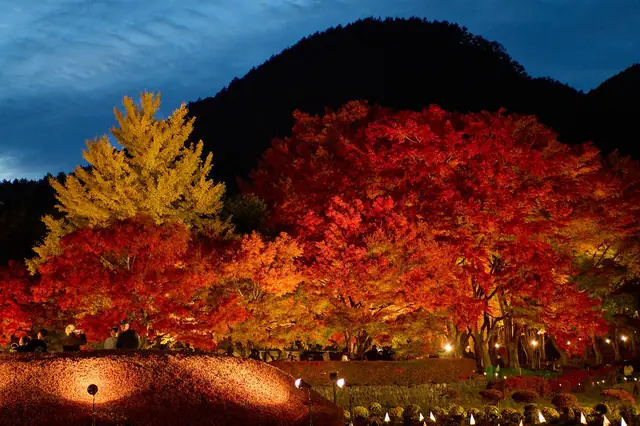
When to go: peak colour and festival dates
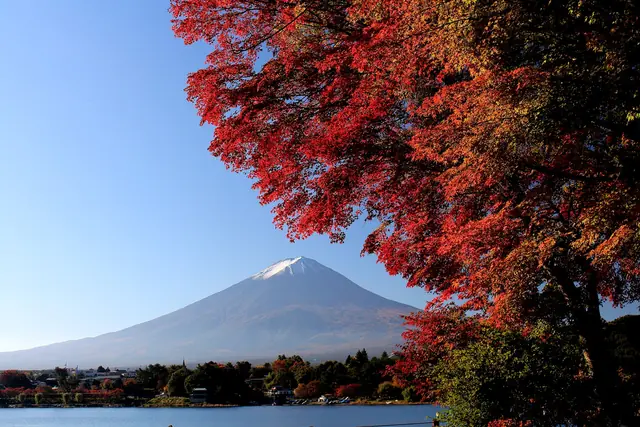
The festival runs for most of November, from the first or second weekend of the month to the last; the 2026 festival is the 28th. The town gives early to mid November as the peak for the lake shore, and the big maples of the corridor usually reach full colour around the middle of the month: in 2025 they were at their best from about November 11 to 19. Higher spots such as Koyodai and the shores of Saiko start to turn in late October, and a warm autumn can push everything back by a week.
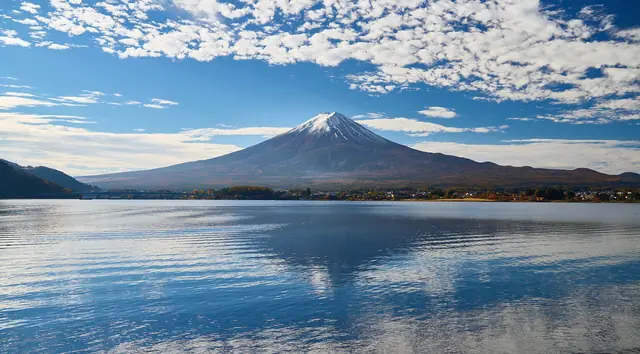
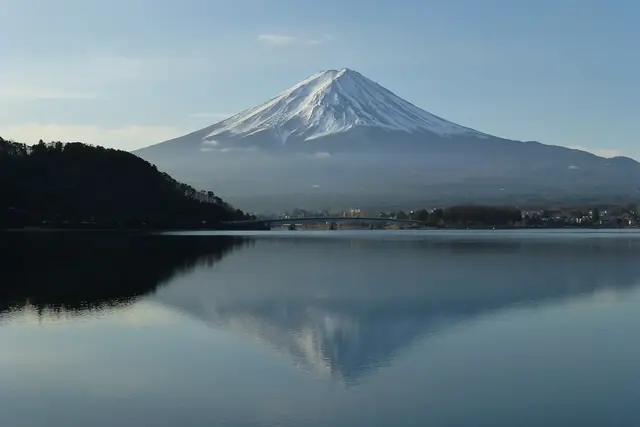
Mid-November also suits Fuji. The snow cap is usually in place by then, and the cold, dry air gives clear views, mostly in the early morning. By midday cloud often gathers around the summit, so if Fuji in the photo matters, be on the north shore early.
- The town's official tourism site and its social accounts post the current state of the leaves during the season. Check them the week before you go.
The Momiji Corridor and the festival
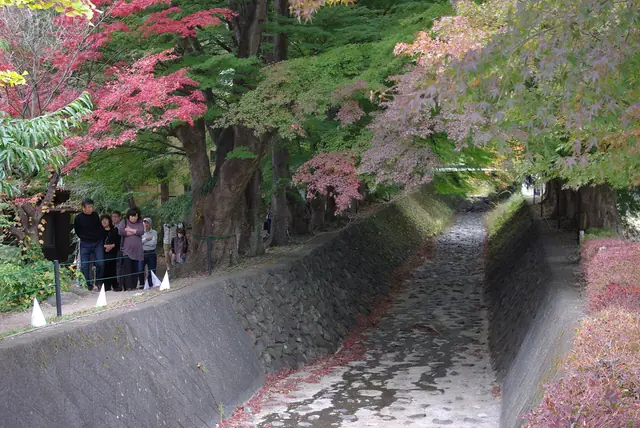
The corridor is a stretch of about 60 large old maples along a small stream on the north shore, near the Kubota Itchiku Art Museum. A path runs on both banks under the branches, and by late November the stone streambed is covered in fallen leaves. It is short: you can walk it in 15 minutes, but most people stay longer. On the lake side of the corridor, Fuji shows over the trees on clear mornings.
During the festival the venue is open from 9am to 7pm and entry is free. Licensed food stalls and a craft market set up around the corridor, and on some days a Seven Lucky Gods walk links seven points along the north shore, with goshuin stamp sheets on sale. From sunset, around 4:30pm in mid-November, to 9pm the maples are lit from below (hours as of 2026).
Close by, the Momiji Kaido, the road past the Kawaguchiko Museum of Art, is lined with maples for about 1.2 km and is also lit at night. It is quieter than the corridor and good for a walk between the two at dusk.
- Arrive in the late afternoon, walk the corridor in daylight, eat at the stalls and stay for the lights. Weekend crowds are thickest at midday and again just after the lights come on.
- The festival also has a walking event in mid-November and other side events; the programme is posted on the official site.
Other autumn spots around the Five Lakes
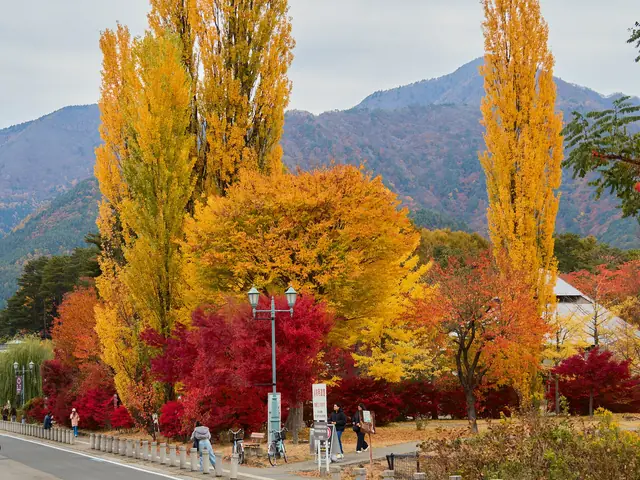
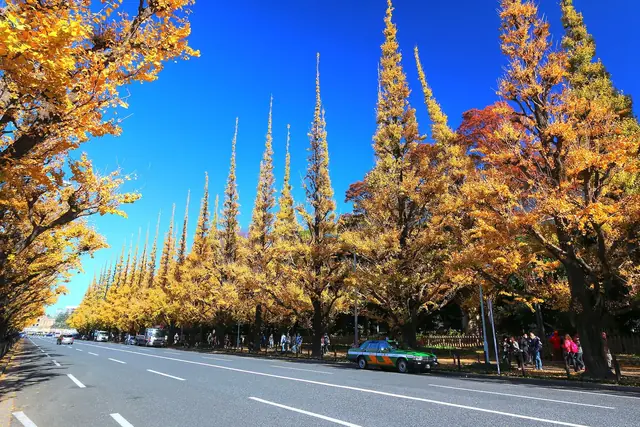
On Kawaguchiko itself, the town counts some 400 to 500 maples along the shore. The north shore promenade gives maples, water and Fuji in one view, best in the morning; Yagisaki Park on the south shore by the bridge has a tall avenue of poplars that turns gold; and Oku-Kawaguchiko Sakura no Sato Park at the quieter western end is another spot listed by the town. From the shore by the station, small boats also take you out on the lake; on festival weekends in 2026 the town is testing small water taxis between 10am and 3pm, with a stop near the festival venue.
West of Kawaguchiko, Saiko Iyashi no Sato Nenba, a village of restored thatched houses with Fuji behind (paid entry), and Saiko Wild Bird Forest Park both colour well, as does the road between the Bat Cave and the Wind Cave at the edge of the Aokigahara forest. Koyodai in Narusawa, a viewpoint whose name means maple terrace, is among the first to turn. At Lake Shojiko the Tatego-hama shore gives the 'Fuji holding a child' view with autumn colour, and the Motosuko shore has the view from the old 1,000 yen note.
Chureito Pagoda in Fujiyoshida, with its maples and Fuji behind, is the other famous autumn picture of the area and one of the most crowded; see our Mt Fuji guide for it.
Crowds and traffic
The weekends around the peak, especially in mid-November, are the busiest days of the year on the north shore. The corridor path moves slowly, the sightseeing bus queue at Kawaguchiko Station can take several departures to clear, and the lakeside road and the roads back to the Chuo Expressway jam in the afternoon.
Parking near the corridor is limited. During the festival there are several car parks around it, some of them free, and from 2026 the main one (No. 1) is paid and accepts cashless payment only. Stopping or parking on the roads around the corridor is not allowed, and you are asked to cross at the crossings, not between parked cars. On weekdays, and on any day before about 10am, it is far calmer.
- If the bus queue at the station is long, a taxi to the corridor takes about 15 to 20 minutes in normal traffic. On foot it takes about an hour.
- Bins are few. Take your rubbish back with you.
Getting there, and getting back after the light-up
From Tokyo, take a highway bus from Busta Shinjuku to Kawaguchiko Station, about two hours and very frequent in the morning; a Fuji Excursion limited express from Shinjuku, also about two hours with reserved seats; or the JR Chuo Line to Otsuki and the Fujikyu line. In November, book weekend bus seats and Fuji Excursion seats in both directions as early as you can.
From Kawaguchiko Station, the Red Line sightseeing bus reaches the Kubota Itchiku Art Museum stop, a short walk from the corridor, in about 21 minutes. For the Momiji Kaido, get off at the Kawaguchiko Museum of Art.
The catch is the evening. During the 2026 festival the last Red Line bus back to the station left the corridor area at about 6:30pm, while the lights stay on until 9pm. After that, the options are a taxi (busy on weekends, so book one or queue early) or a long walk. On a day trip, plan to see the lights from dusk until the last bus, then catch an evening bus or train to Tokyo from the station; check the last departures, since the direct buses stop earlier than the trains via Otsuki.
- Sunday evening traffic on the Chuo Expressway also slows the buses. If you must be back in Tokyo at a set time, the train via Otsuki is more predictable.
Staying the night
A night by the lake makes the light-up easy and gives you the morning, when Fuji is most likely to be clear and the corridor is almost empty. The north shore in the Kawaguchi district puts you closest to the corridor, with Fuji across the water: Shuhokaku Kogetsu and La Vista Fuji Kawaguchiko are both in this area.
The Kawaguchiko Onsen ryokan on the east shore in Funatsu and Asakawa, such as Kozantei Ubuya, have more rooms and are close to the station, about 15 minutes by taxi from the corridor. Business hotels and guesthouses near the station and in Fujiyoshida are the budget choice. Weekend rooms for the peak sell out early, often months ahead; weekdays are easier and cheaper.