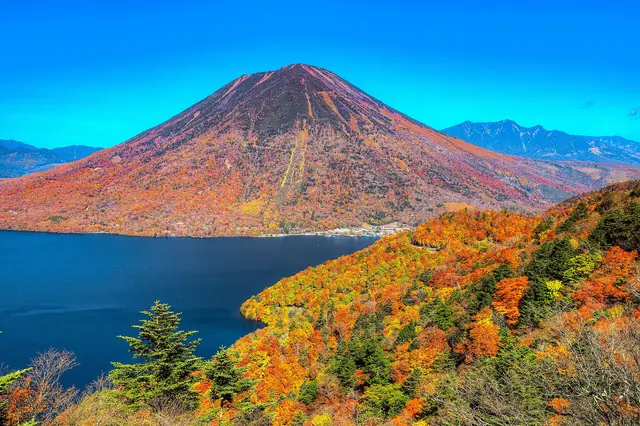
When the leaves turn: high ground first, Yumoto last
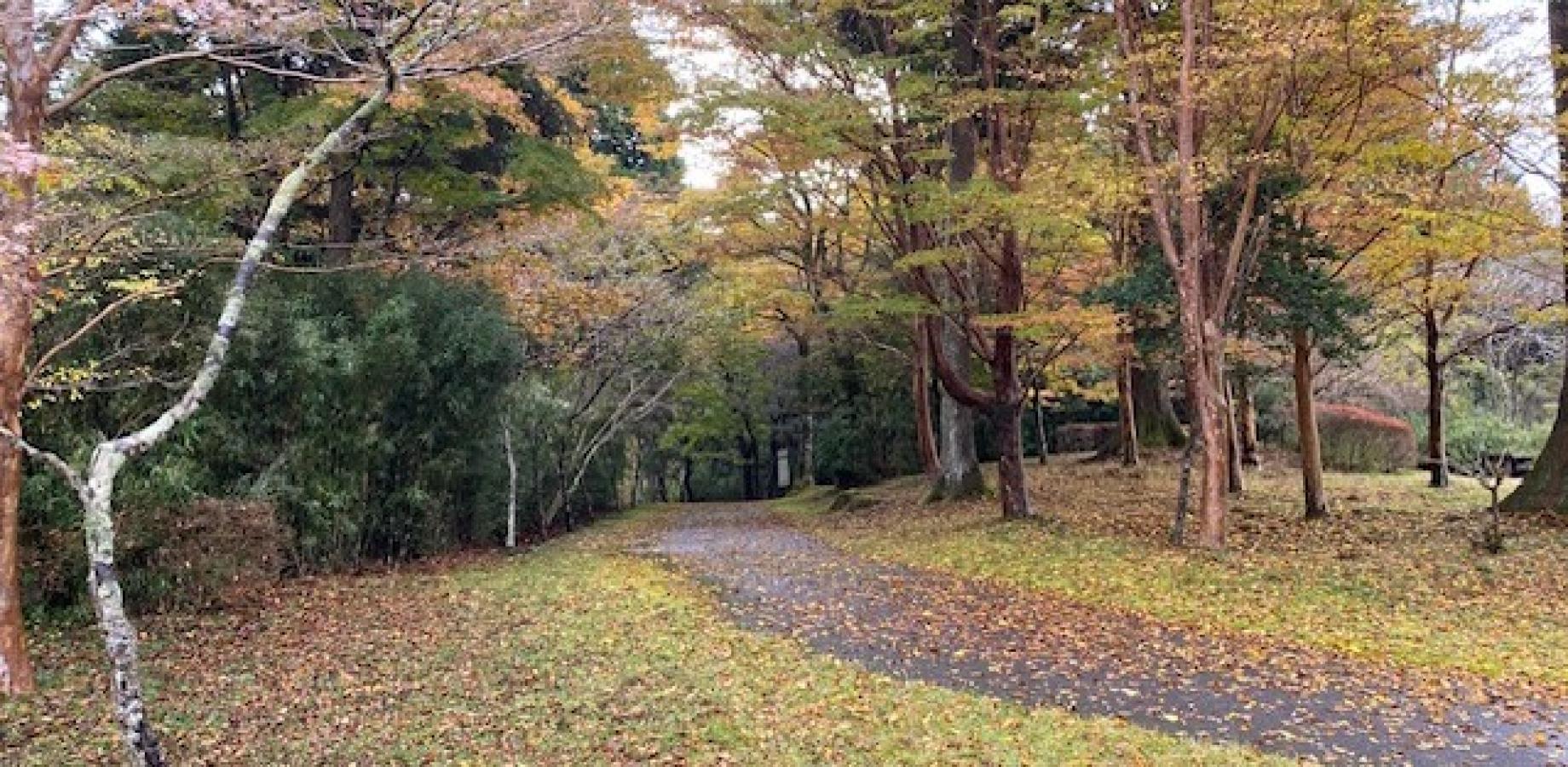
Hakone stretches from about 100 m at Hakone-Yumoto to more than 1,000 m at Owakudani, and the colour follows the altitude. The slopes under the ropeway around Owakudani and the shores of Lake Ashi, at about 720 m, turn first, from late October into mid November. Gora and Sengokuhara follow in November, with most gardens there at their best from the middle to the end of the month. Miyanoshita and the valley of the Tozan railway turn in mid to late November, and Hakone-Yumoto is usually at its best from late November into early December.
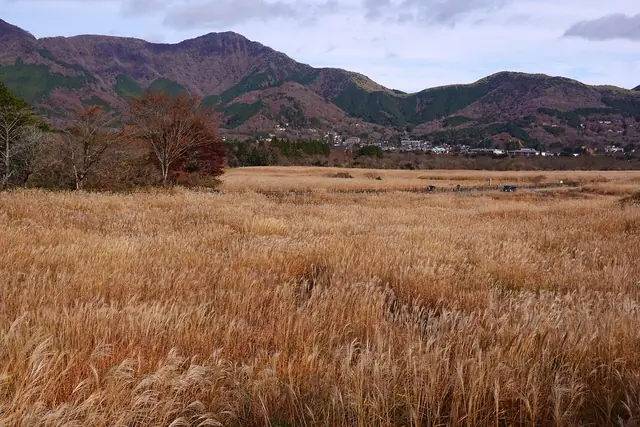
So the whole season runs roughly from late October to early December, and on any weekend in November something is usually in colour. The pampas grass of Sengokuhara is golden at the same time, from October into November, which makes early to mid November the best moment to see both on one trip.
Hakone Navi, the site of the Odakyu group that runs Hakone's railway, ropeway and boats, posts dated photos of the main spots through the season, and it is worth a look a few days ahead. Hakone's maples grow among evergreen forest, so expect red and gold patches on dark green rather than whole red hillsides.
Gardens and temples: Gora, Sengokuhara and Kowakudani
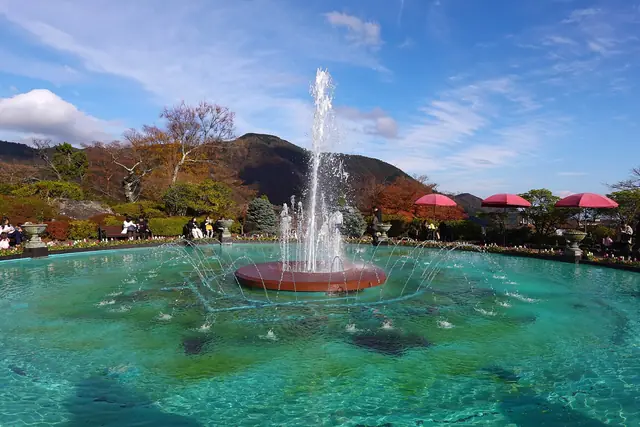
In Gora, the moss garden of the Hakone Museum of Art is the classic autumn picture: maples over a carpet of moss, usually good from early to late November, with a tea house where you can have matcha looking out over it. The museum closed for a full renovation in May 2026, reopened for a pre-opening period from October 30, and plans its grand opening for December 23, 2026; it is closed on Thursdays. Next door, Hakone Gora Park is a hillside French-style garden with a fountain and maples, peaking in mid to late November. Both are a minute from Koen-kami station on the cable car.
In Sengokuhara, Choanji is a small Zen temple whose hillside is scattered with hundreds of stone statues of the Buddha's disciples, the gohyaku rakan, under maples and ginkgo. It is free, opens early in the morning, and usually peaks in mid to late November. Get off the bus at Sengoku; the temple is next to the stop.
At Kowakudani, Horaien, the garden of the Hakone Kowakien resort, is free to walk, known for azaleas in spring and for maples in mid to late November, and has its own bus stop on the H line from Hakone-Yumoto, about 20 minutes up the hill.
- The museum closes at 4:30 pm and Gora Park at 5 pm, with last entry half an hour earlier, and the sun sets at about 4:30 in late November. Plan the gardens for the morning.
Lake Ashi, the ropeway and the old road
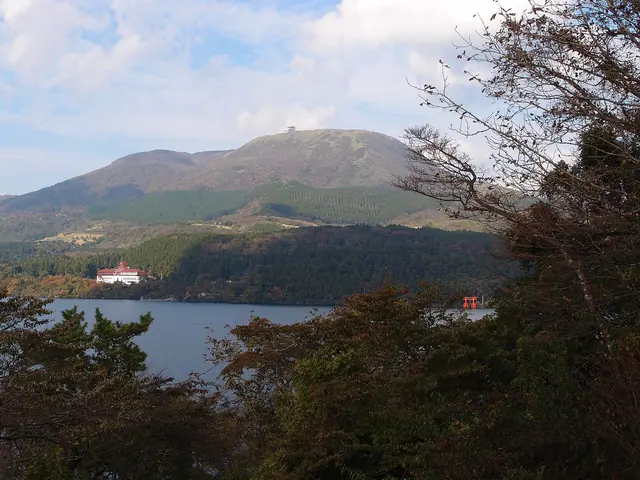
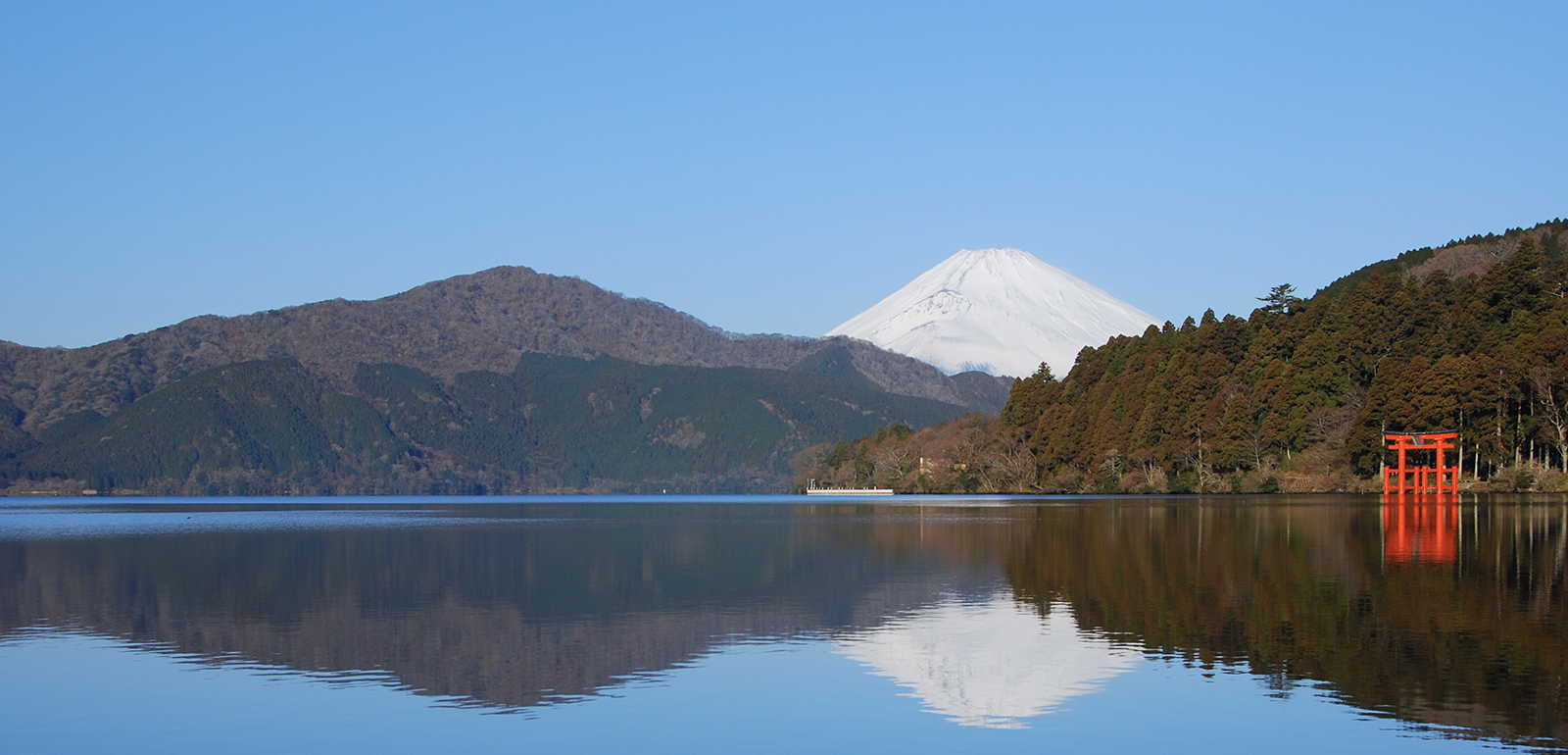
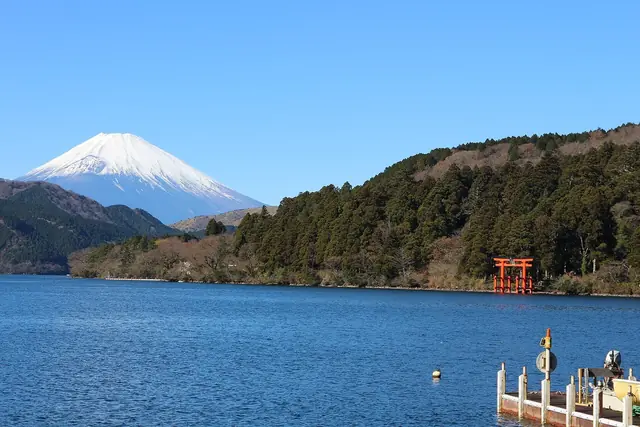
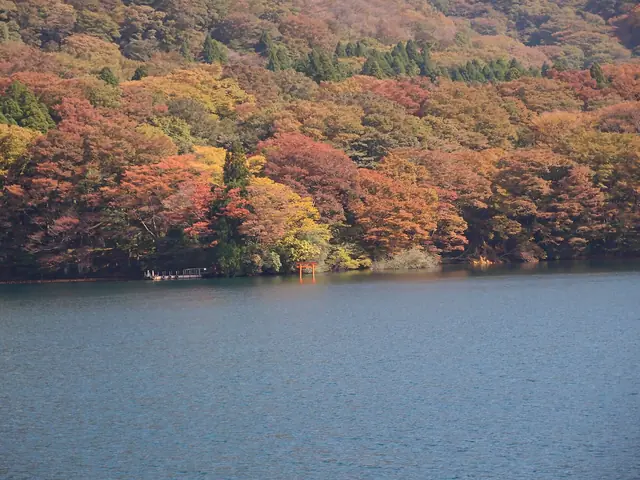
On Lake Ashi, Onshi-Hakone Park sits on a small peninsula that was once an imperial villa. Entry is free, the maples are usually good from early to late November, and from the lakeside viewing hall you look across the water at Mount Fuji on clear mornings. A little north, the garden of the Odakyu Hotel de Yama and the cedar-lined approach to Hakone Shrine make a good walk, and the sightseeing boats show you the coloured shoreline all at once.
The ropeway from Sounzan over Owakudani to Togendai is the best way to see the upper slopes, usually at their best from late October to early November. Down on the old Tokaido road, Amazake Chaya, a thatched teahouse that has served travellers since the Edo period, sits among maples beside the stone-paved path; you can walk part of the old road from there or take the K line bus.
In late November the Hakone Tozan train is a leaf trip in itself. Between Tonosawa and Ohiradai it crosses the Deyama iron bridge high above the Hayakawa valley, and the slopes along the line below Miyanoshita are in colour.
- Owakudani and the ropeway depend on the volcano's gas levels. Check the operating status on the morning you go.
Queues on the train, cable car and ropeway
On sunny November weekends the loop slows down. Expect queues for the Tozan train at Hakone-Yumoto from mid morning, for the cable car at Gora, and above all for the ropeway at Sounzan, where the wait can stretch past an hour. The buses share the main roads with the cars, so on an autumn Sunday the bus timetable is more a hope than a promise.
On selected busy weekends in autumn 2026 Odakyu offers a paid fast lane for the ropeway at Sounzan and Owakudani, and free reserved priority boarding for the cable car at Gora, both booked online in advance. Watch Hakone Navi for notices. Otherwise the best tools are timing and direction.
Be at Hakone-Yumoto by 8 or 9 am, or go on a weekday. The other trick is to do the loop against the flow: take the bus from Hakone-Yumoto straight up to Moto-Hakone or Hakone-machi in the morning, see the lake first, then ride the boat, the ropeway and the cable car downhill in the afternoon while most people are going up.
- Buy the Freepass as a digital ticket before you go, so you skip the ticket windows.
- The ropeway usually stops for a few weeks of maintenance in winter, with replacement buses. In recent years that has started in December, so check if you are going for Yumoto's late leaves.
Getting there from Tokyo
The Odakyu Romancecar from Shinjuku runs straight to Hakone-Yumoto in about 85 minutes, all seats reserved. Morning seats on autumn weekends sell out, so book ahead. Cheaper express trains take about two hours with a change at Odawara. JR goes only as far as Odawara: from Tokyo or Shinagawa the Tokaido Shinkansen takes 35 to 40 minutes on Kodama and some Hikari trains, and you change to the Hakone Tozan line there. Highway buses from Shinjuku run towards Lake Ashi via Gotemba, but in autumn they sit in the same traffic as everyone else.
Odakyu's Hakone Freepass covers two or three days of rides on the Tozan train, the cable car, the ropeway, the pirate ships and the buses in its area, plus the round trip on the Odakyu line from your starting station to Odawara. The Romancecar needs a limited express ticket on top. Prices went up in October 2025 together with ropeway and boat fares, but for the full loop the pass still pays off. You can buy it at Odakyu stations or as a digital pass.
Where to stay
Hakone-Yumoto has the most ryokan and the easiest access, it is where the late leaves are at the end of the season, and from there you can catch the first trains up before the day crowds arrive. Miyanoshita, a few stops up the Tozan line, has the Fujiya Hotel, open since 1878 and one of Japan's oldest Western-style hotels, in a valley that colours in late November.
Gora puts the Hakone Museum of Art and Gora Park on your doorstep, with ryokan of every size around the cable car station, so you can see the gardens at opening time. On Lake Ashi, Moto-Hakone and the lakeshore hotels such as the Odakyu Hotel de Yama give you the lake and Fuji in the early morning, before the first boats. Sengokuhara is quieter, with resort hotels and small inns near Choanji and the pampas grass.
Autumn weekends and the November long weekends fill early in every area. If you only have one night, Gora or Lake Ashi lets you see the high spots in the morning and still come down through the valley in the afternoon.