What time, and will it be clear?
The National Astronomical Observatory of Japan puts sunrise in central Tokyo on 1 January at around 6:50. The sky turns orange well before that, so the best colours often come in the quarter of an hour before the sun itself. At Cape Inubo in Choshi, the eastern tip of the Kanto region, the city expects it at around 6:46.
The odds are on your side: by the Japan Meteorological Agency's climate normals, January is the sunniest month of the year in Tokyo. The usual spoiler is a low band of cloud over the sea, which can hide the horizon under a clear sky, so the sun shows a few minutes late above the cloud. Check the forecast the evening before.
- Be in place at least 30 minutes before sunrise: the colours start early and the good spots fill up.
Observation decks: book in November
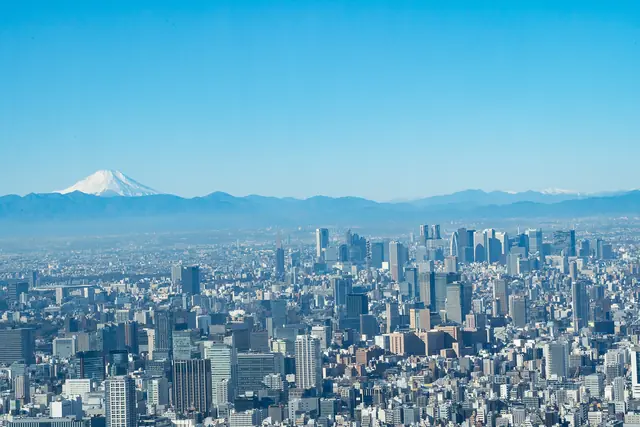
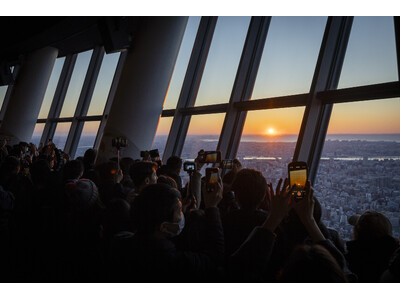
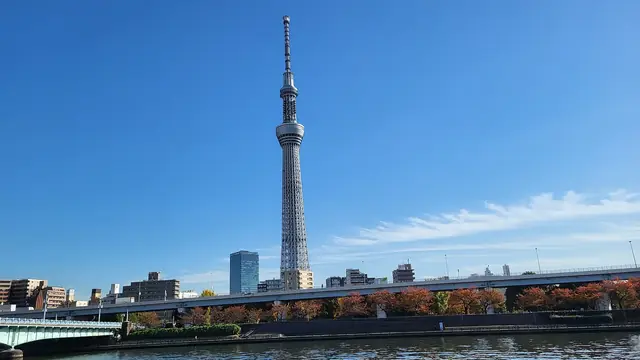
Tokyo Skytree opens both decks, the Tembo Deck at 350 m and the Tembo Galleria at 450 m, before normal hours on 1 January for 800 guests. For the coming New Year tickets are sold mainly by an online lottery on the official sunrise page until late November, with results by email at the start of December, instead of the first-come sale of earlier years. A ticket costs 11,000 yen as of 2026. Entry runs from 5:30 to 6:00 only, there is no re-entry, and chairs and saving spots are not allowed.
The 60th-floor observatory of Sunshine 60 in Ikebukuro, Tenbo Park, 251 m above sea level, opens from 6:00 to 8:00 for about 200 people, with last entry at 7:15. Tickets go on sale through Seven Ticket in mid-November, standing places cost 5,500 yen as of 2026, and nothing is sold on the day. Details are on the Sunshine City page.
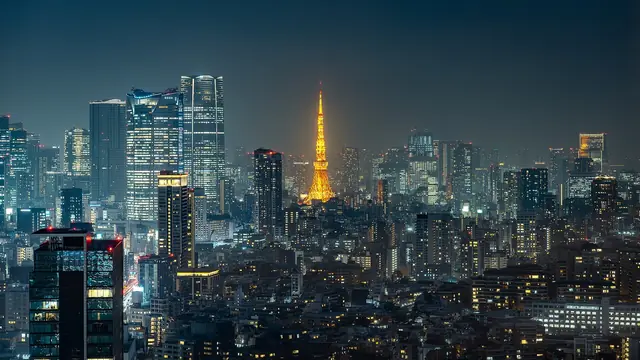
SHIBUYA SKY, the open-air roof of Shibuya Scramble Square at 229 m, opens at 5:30 with a Shinto blessing led by priests of Konno Hachimangu shrine, and sells 330 tickets first come from the start of December on its sunrise page. A ticket costs 8,200 yen as of 2026 and the last entry is at 6:30. Hats, knitted ones included, are not allowed on the roof, so bring a hood and a scarf. None of these refund your ticket if cloud hides the sun.
In recent years the Tokyo Metropolitan Government Building in Shinjuku has also opened its 45th-floor South Observatory early on 1 January for 600 people chosen by a free online lottery, with applications from late November to mid-December. The plan for the coming New Year had not been announced at the time of writing, so watch the Tokyo Metropolitan Government's announcements from late November.
- Put the lottery and sale dates in your calendar in early November. Cheap standing tickets go first.
Free spots by the bay
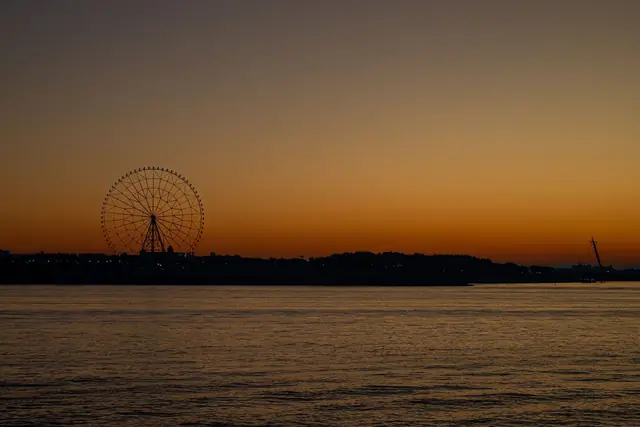
Kasai Rinkai Park is the easiest free choice: it is open around the clock, the JR Keiyo Line station is a minute's walk away, and the lawns and seawall look out over Tokyo Bay, with the Ferris wheel as a silhouette against the dawn. The park's service centre and other facilities close over New Year, so bring your own warm drink.
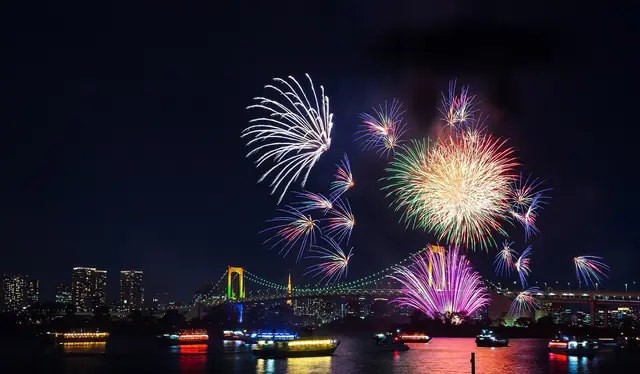
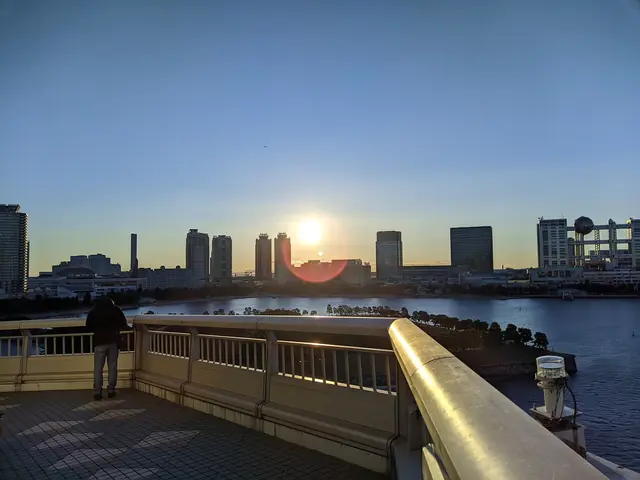
Odaiba Seaside Park and Wakasu Seaside Park have also stayed open over New Year in recent years. Odaiba's beach looks across the water to Rainbow Bridge and central Tokyo, a good place to watch the dawn light reach the bridge and the skyline. Wakasu sits at the tip of a reclaimed island in Koto ward, next to Tokyo Gate Bridge.
- Bring something to sit on: concrete seawalls are very cold before dawn.
- Use the toilets at the station before you walk in, and take your rubbish home.
Mount Takao: sunrise over the Kanto plain
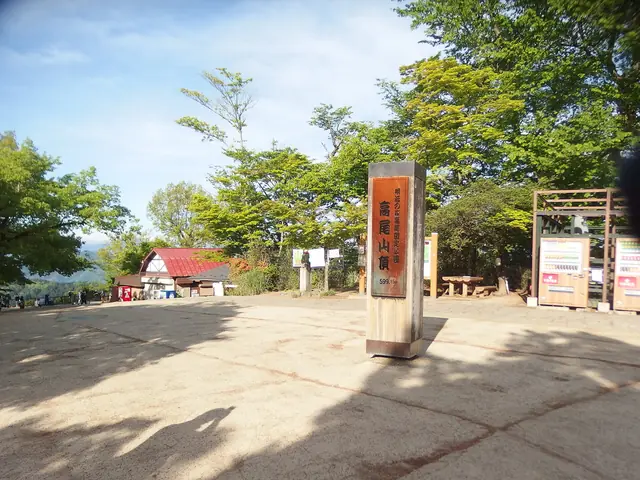
Mount Takao, 599 m high on the western edge of Tokyo, is the classic mountain sunrise from the city, and on New Year's morning it is busy. Last New Year Keio ran all-night local trains between Shinjuku and Takaosanguchi about once an hour, plus four reserved-seat Keio Liner trains from Shinjuku in the small hours. Takao Tozan's cable car ran from 8 pm on 31 December right through to the evening of 1 January, and the chairlift started at 5 am. Keio publishes the plan for each New Year in December.
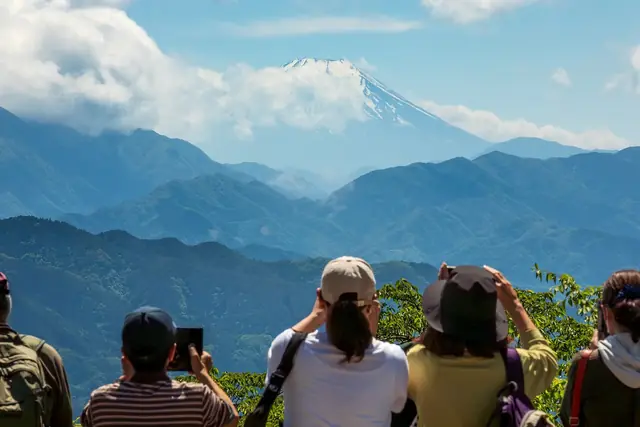
From the top of the cable car a paved path leads past Yakuoin, the temple halfway up, which holds New Year goma fire rituals and, on 1 January, Geikosai, a ceremony to greet the first sunrise, held on the plaza in front of the temple's goma reception office. The summit is a short climb further up and is busy before dawn on New Year's morning, so leave time to find a spot. Once it is light, Mount Fuji often shows to the west on clear winter mornings.
- Bring a headlamp: the forest paths are completely dark before dawn.
Day trips: Cape Inubo and Enoshima
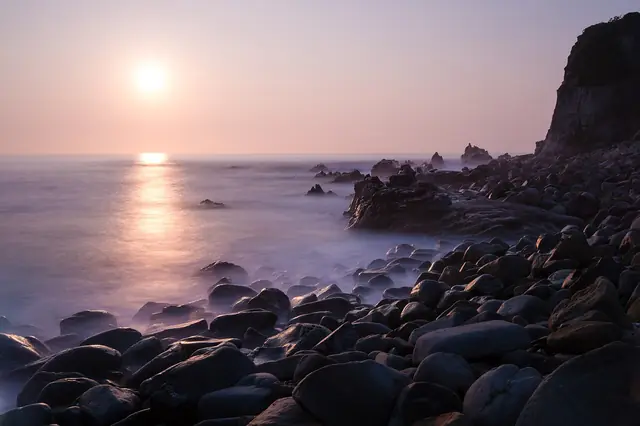
Cape Inubo in Choshi, with its white lighthouse, is where Choshi city says you can see the earliest first sunrise in Japan outside mountain tops and islands. Around 60,000 people come, and the roads around the cape are closed to cars from 2:00 to 9:00. Drivers who cannot get there by about 4:00 are asked to go to Aeon Mall Choshi, whose rooftop and car park open free at 5:30. The city's first sunrise page links to JR East's New Year extra trains, and Choshi Electric Railway runs a special timetable from Choshi Station that morning.
Closer to Tokyo on the same coast, the Kujukuri town tourist association has in recent years held a New Year's Day festival on Katakai Central Beach from 5:00 to 7:00, with local performing arts and food trucks. It is free, cancelled in bad weather, and much easier by car, with a large free car park.
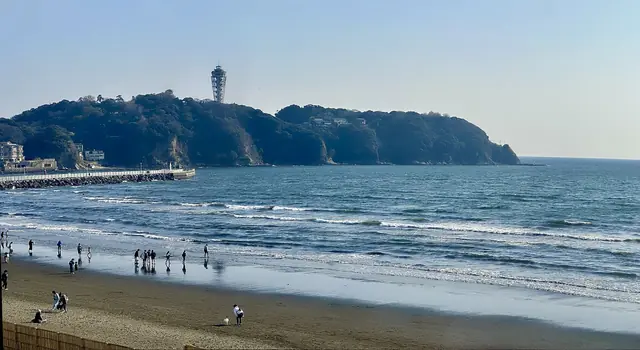
Enoshima is a little over an hour from Shinjuku on the Odakyu line to Katase-Enoshima Station. People wait on Benten Bridge and the beaches on either side, and on clear mornings Mount Fuji appears across the bay to the west. Afterwards you can climb to Enoshima Shrine for your first shrine visit of the year.
- For Choshi without a car, a hotel nearby the night before is the calmest option.
On the water: sunrise cruises
Tokyo Cruise, the water bus company, runs a first sunrise cruise on 1 January out to the water off Haneda. Boats leave the Asakusa pier at 5:30 and return at about 8:40, or Hinode Pier at 6:00 and return at about 8:10. As of 2026 an adult ticket is 5,000 yen from Asakusa and 4,500 yen from Hinode. Booking is online only, there are no tickets on the day once it sells out, and cancelling within three days costs the full fare.
Trains, cold and manners
In recent years most Tokyo lines have not run all night on New Year's Eve, and each railway company announces its New Year's Eve and New Year's Day timetables in December. For decks that open at 5:30 you may need the first train of the morning or a hotel within walking distance.
Dress for standing still for an hour or more. The average January low in central Tokyo is about 1°C, and it feels colder by the sea, on Mount Takao and on an open roof. Wear layers, gloves and warm socks, and pick up disposable hand warmers (kairo) at a convenience store. Do not save places with chairs or bags, keep tripods compact, and take your rubbish home.
With children, a park next to a station such as Kasai Rinkai is the easiest. Skytree lets children aged 5 and under in free, up to two per group, Sunshine 60 lets in children not yet at primary school free (pair seats excepted), and SHIBUYA SKY lets in one child aged 5 or under free with each ticket.