What hatsumode is, and until when it counts
Most people go during sanganichi, January 1 to 3, when offices are closed: at midnight straight after the temple bells, on the morning of New Year's Day, or on the 2nd or 3rd. It does not have to be the first three days. A visit during matsu no uchi, while pine decorations stay up on front doors (in the Tokyo area usually until January 7), still counts, and many people simply go on their first free weekend.
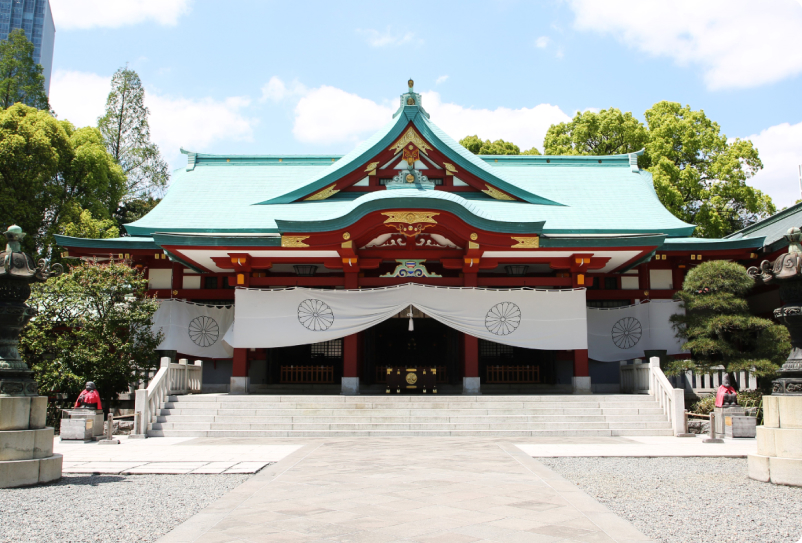
Shrine or temple, most people do not mind which. They pick the one nearby, or the one known for the luck they want this year: business, study, a partner, or protection in a yakudoshi, the ages traditionally seen as unlucky.
- If January 1 does not suit you, January 4 to 7 is still the New Year season, with far smaller crowds.
Which Tokyo shrine for what
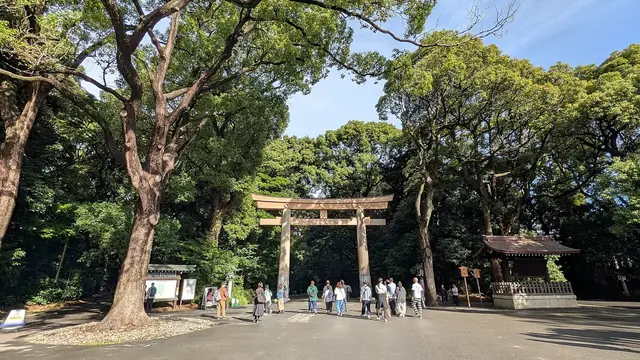
Meiji Jingu next to Harajuku Station is the busiest in Japan, about 3.1 million visitors in a typical New Year. The gates stay open through the night of December 31, a drum sounds at midnight and the first rite of the year follows at 7am. Its omikuji are poems by Emperor Meiji and Empress Shoken rather than good or bad luck, and English versions are available.
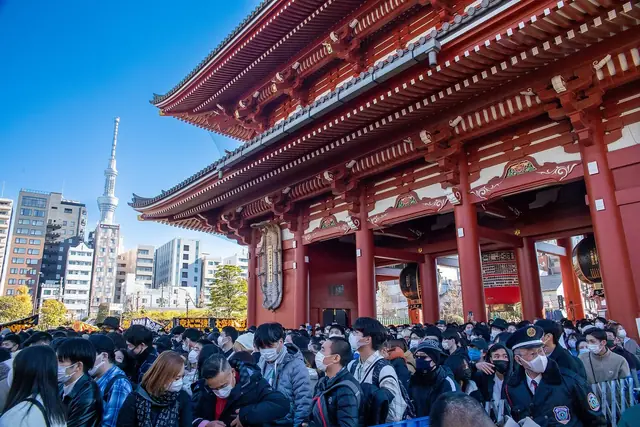
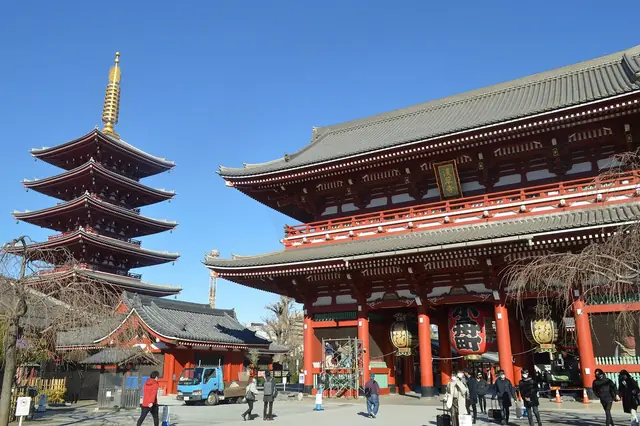
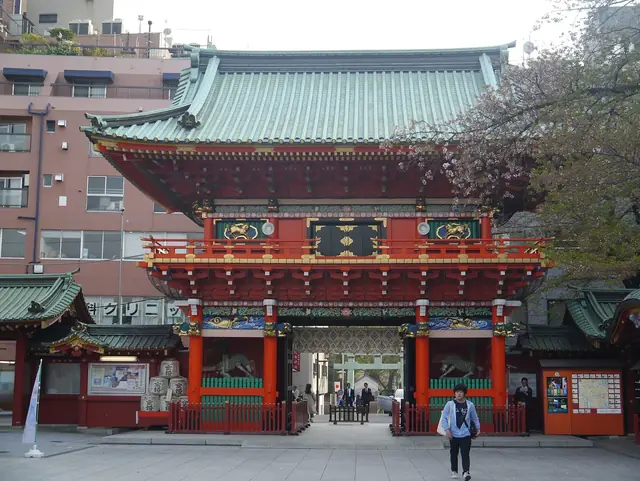
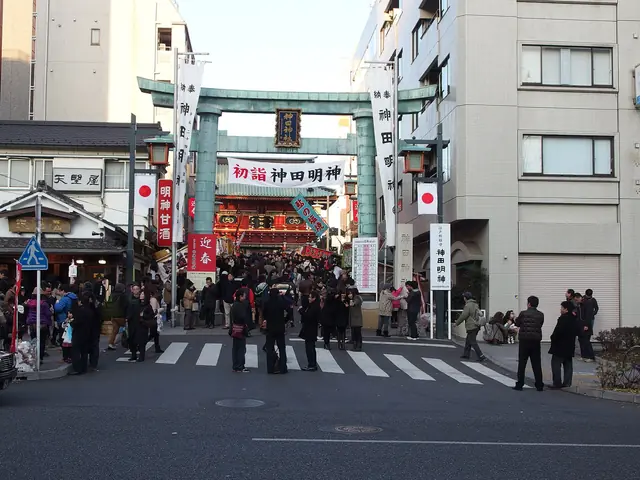
Senso-ji in Asakusa, the city's oldest temple, draws about three million, and the approach through Kaminarimon and Nakamise street is the slowest part. At midnight members of the temple's bell association strike the bell 108 times, about 40 minutes in all, so visitors listen rather than ring. Kanda Myojin near Akihabara is the shrine for business, and companies arrive in groups once offices reopen.
Yushima Tenjin, dedicated to the scholar Sugawara no Michizane, is where students pray for their entrance exams, buying a study charm or writing their target school on a wooden ema plaque. Tokyo Daijingu near Iidabashi, called 'Ise in Tokyo', is the place to pray for a good match, and the modern Shinto wedding ceremony began here.
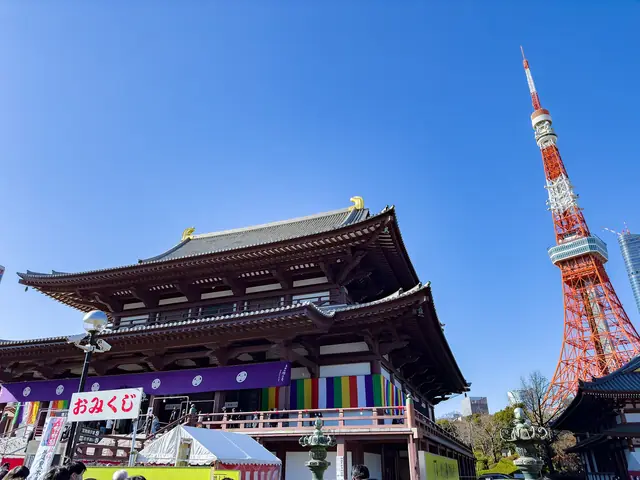
For smaller crowds in the centre, try Hie Jinja in Akasaka, or Zojoji in Shiba Park, with Tokyo Tower standing right behind its main hall.
- Meiji Jingu is at its busiest from midnight to about 3am and from about 11am to 3pm on January 1.
The big four outside Tokyo
Naritasan Shinshoji in Chiba is the second busiest in Japan, about three million. People come for the goma fire ritual: sign up at the reception on the day, no booking needed, and a session takes about 30 minutes. It is 10 minutes on foot from Keisei Narita or JR Narita station, a little over an hour from Ueno by Keisei limited express. The grounds stay open through the New Year nights, and in recent years the first goma of the year has started at midnight on January 1.
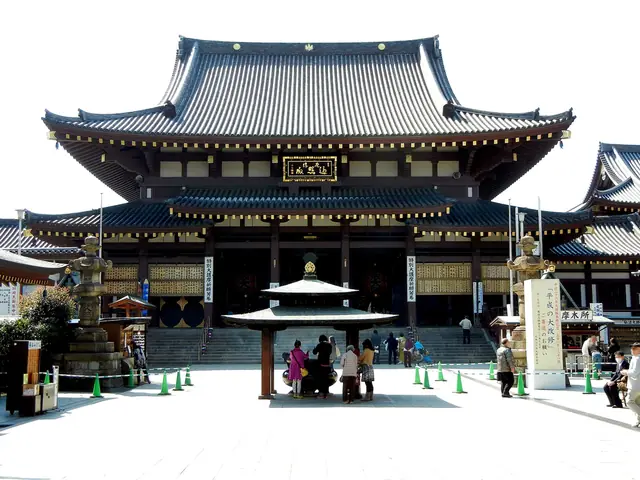
Kawasaki Daishi, properly Heikenji, is the temple for yakuyoke, warding off a bad-luck year. It was founded in 1128 around a statue of Kobo Daishi that, the temple says, Hirama Kanenori pulled from the sea in his own unlucky 42nd year, and its grand New Year goma ritual starts at midnight on January 1, with the main hall open through the night of December 31 in recent years. It is 8 minutes on foot from Kawasaki-Daishi station on the Keikyu Daishi Line.
Musashi Ichinomiya Hikawa Jinja in Omiya, Saitama, draws about 2.1 million. Its approach, about 2 km under zelkova trees, is said to be the longest in Japan, and walking it is half the point. It is about 15 minutes on foot from the east exit of JR Omiya.
Tsurugaoka Hachimangu in Kamakura draws about 2.5 million, 10 minutes on foot from the east exit of JR Kamakura. The first rite of the year starts at 5am on January 1, followed at 7am by the yaotome dance, performed by eight local girls. From January 1 to 7, in the gohan ritual, the shrine's sacred seal is pressed to visitors' foreheads to keep illness away and clear the mind, and students queue for it before their exams.
- Narita-san is about 8 minutes by Keisei from Airport Terminal 2 station, an easy stop before or after a flight.
Crowds, hours and timing
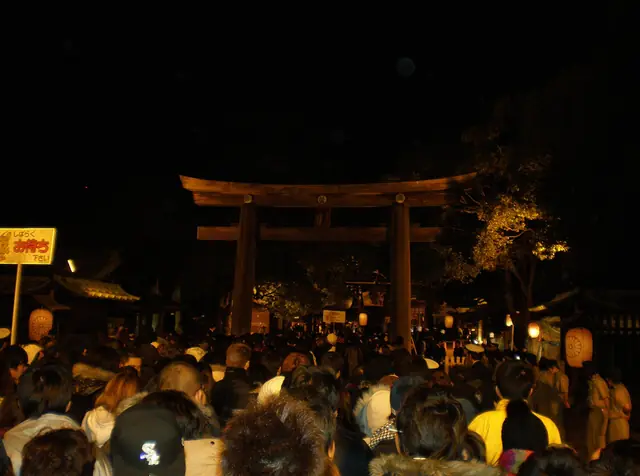
The pattern is similar almost everywhere: the heaviest hours are midnight to about 3am on January 1, then late morning to mid-afternoon on January 1 to 3. At Meiji Jingu and Senso-ji staff and police hold the crowd in blocks and let one block forward at a time, so it is stop and start, and many people throw their coin from several rows back. No shrine publishes waiting times, so leave plenty of slack at peak hours.
The quiet windows are early mornings on January 2 and 3 and any day from January 4. Evenings are calmer too, but many shrines close early in January. In recent years Meiji Jingu stayed open all night until 7pm on January 1, then from 6:40am to 6:30pm on the 2nd and 3rd. Kanda Myojin and Hie Jinja opened at midnight, and Zojoji's main hall was open from 6am on December 31 to 5:30pm on January 1. Each shrine posts its New Year hours in December.
- Travel light. The crowd is dense and big bags slow everyone down.
- Cars cannot enter the Meiji Jingu grounds on January 1 to 3. Come by train.
New Year's Eve night and trains
To see the year in at a shrine, pick one that is open all night, such as Meiji Jingu or Zojoji, or listen to the bell at Senso-ji. Arrive by about 11pm, before the last-hour surge.
For this New Year's Eve JR East has announced overnight trains on six lines in the Tokyo area: the Yamanote Line (roughly 1am to 5am, every 10 to 30 minutes), the Keihin-Tohoku and Negishi Line between Sakuragicho and Omiya, the Chuo-Sobu local line between Mitaka and Chiba, and a few trains on the Chuo rapid line between Mitaka and Takao, the Yokosuka Line between Yokohama and Zushi (for Kamakura) and the Sobu and Narita lines between Chiba and Narita. JR East announces its plan in the autumn and posts the timetable before the night.
Other companies decide in December. Last time Keisei ran all night between Ueno and Narita and Keio between Shinjuku and Takaosanguchi, while Tokyo Metro, Toei, Seibu and Sotetsu did not, and Keikyu only ran later last trains.
- The overnight Keihin-Tohoku trains run as far as Omiya, so Hikawa Jinja is reachable after midnight. Check the shrine's New Year hours first.
- Night trains run far less often than usual. Look up the exact times before you leave the shrine.
How to pray, charms, fortunes and what to wear
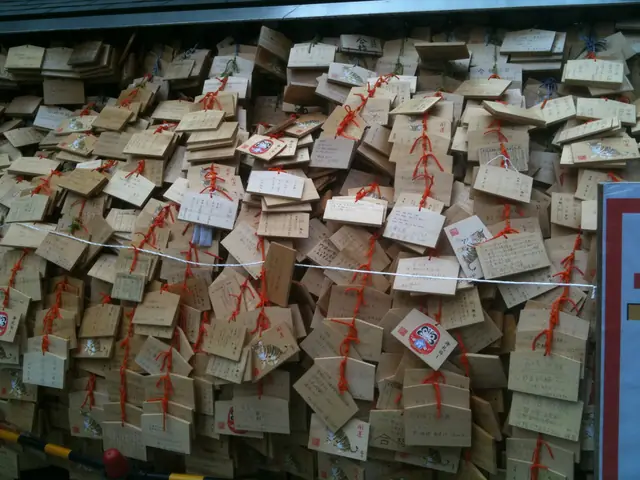
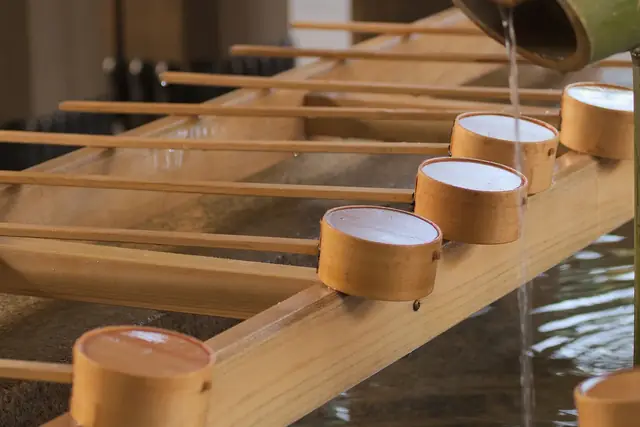
At a shrine, bow at the torii gate, rinse your hands and mouth at the water basin, then drop a coin, bow twice, clap twice, pray and bow once more. At a temple, join your hands quietly without clapping; at Senso-ji people first waft smoke from the big incense burner over themselves. Five yen is a favourite coin because go-en also means a good connection.
Keep a good omikuji and tie a bad one to the rack so the bad luck stays behind. Omamori charms protect you for about a year, so return last year's to the box for old charms: shrine charms to shrines, temple charms to temples, ideally where you got them.
You will stand still outside for a long time, often near freezing around midnight. Wear layers, a hat, gloves and comfortable shoes, and pick up heat packs (kairo) at any convenience store. In dense crowds keep your bag in front of you.
- Bring last year's charms in a small bag so you can hand them in without fumbling.
- Food stalls on the approach usually take cash only.