What Tokyo Tower is
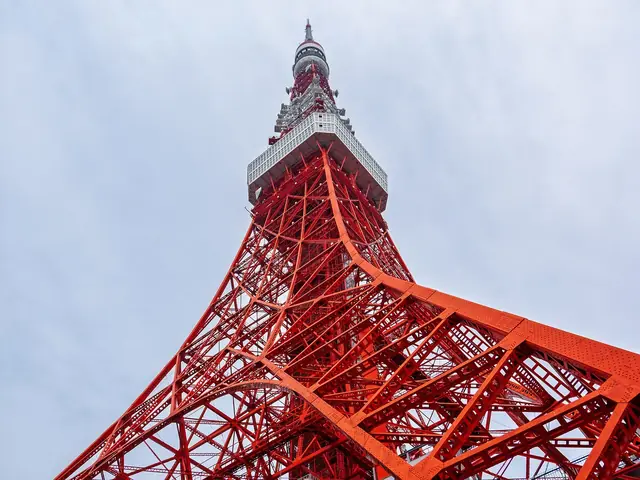
Tokyo Tower opened in December 1958 as the broadcasting tower for the Kanto region, and at 333 metres it was for decades the tallest tower in Japan. Since Tokyo Skytree took over most broadcasting, it serves as a backup transmitter and, above all, as a place to see the city from its middle.
The temple next door is older by more than five centuries. Zojoji was founded in 1393 and moved to Shiba in 1598, when Tokugawa Ieyasu made it his family temple after arriving in Edo. Six Tokugawa shoguns are buried in its grounds. Shiba Park, which wraps around the temple, was laid out in 1873 on former temple land as one of the first public parks in Japan.
What to see, from the temple up to the Top Deck
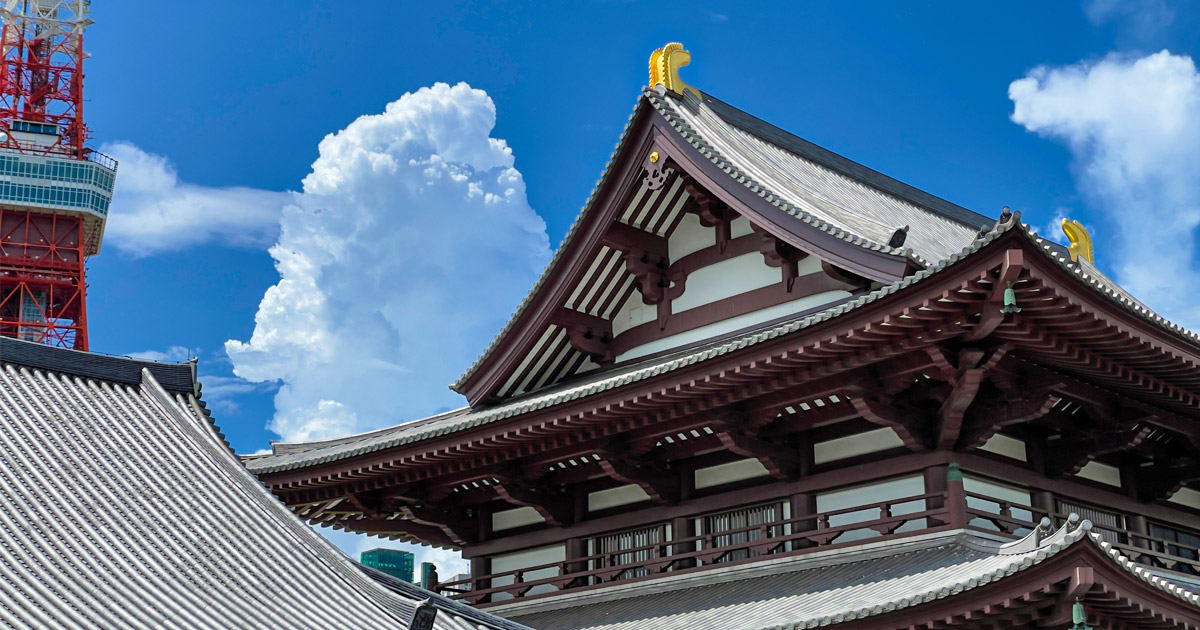
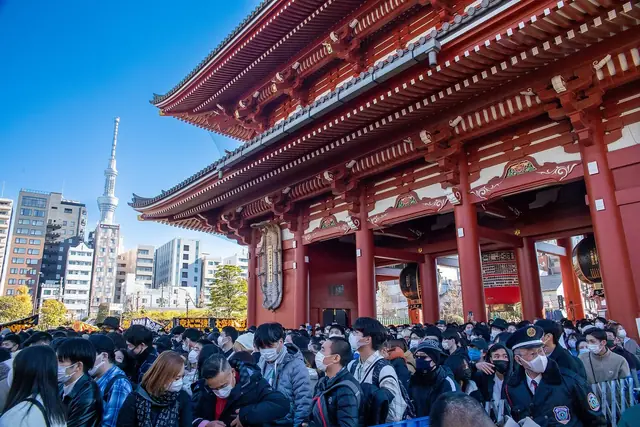
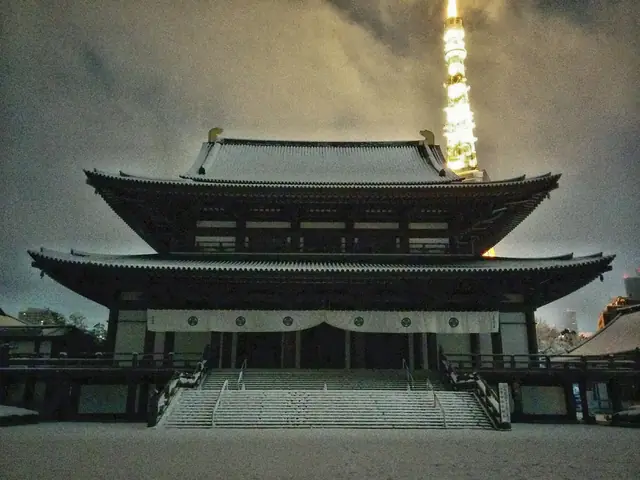
From Daimon or Shibakoen you meet Zojoji's main gate, Sangedatsumon, built in 1622 and the only original building to survive. It is under a ten-year restoration that began in 2025, so expect it to be covered. Beyond it is the main hall with the tower rising right behind its roof, the photo most people come for. To one side stand rows of small stone Jizo statues in knitted caps with pinwheels, and the great bell from 1673. The Tokugawa mausoleum at the back opens at set hours for a fee and is closed on most Tuesdays.
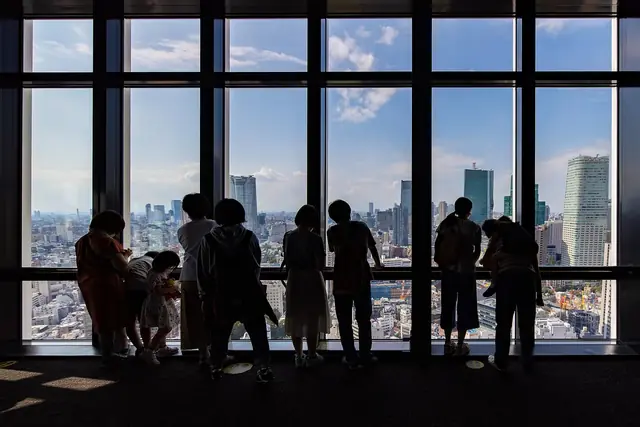
At the base of the tower is Foot Town, with a food court, the official shop and a cafe. The Main Deck sits at 150 metres and has glass Skywalk Window panels in the floor, so you can look straight down. On clear days, most often in winter, Mount Fuji shows to the west. The Top Deck at 250 metres, redesigned in 2018 with geometric mirrors and LED lighting, is reached only on the Top Deck Tour.
- The Skywalk Window panels are on the lower floor of the Main Deck. Kids love them.
- For the shot of the tower over Zojoji's main hall, stand near the hall steps facing it in the late afternoon.
The year at Tokyo Tower and Zojoji
Winter and New Year are the big season. On New Year's Eve Zojoji fills up for the bell and the countdown under the lit tower, and on January 1 the tower usually opens early for a ticketed sunrise event on the Main Deck. In early February Zojoji holds its Setsubun bean throwing, often with well-known guests on the stage. Cherry trees bloom around the temple and Shiba Park in late March and early April.
From early April into May, 333 carp streamers, one per metre, fly at the tower for Children's Day, a tradition since 2009. Around the summer solstice Zojoji hosts a candle night with thousands of candles, and in recent years the tower has gone dark for part of that evening. In October the Minato ward festival fills Shiba Park and Zojoji most years, and seasonal events at the tower and in Foot Town carry on through autumn and winter.
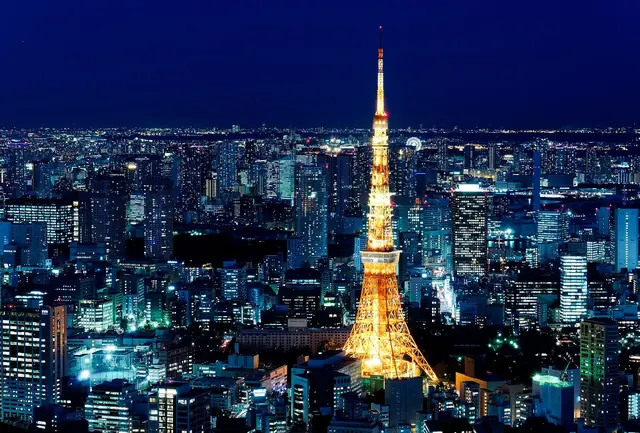
The light-ups follow the calendar too. The classic Landmark Light glows warm orange from early October and switches to white for the summer from July 7. On Monday and Thursday evenings the Infinity Diamond Veil, 268 LEDs in 17 tiers, shows a colour for the month, with special colours for events. The official site posts tonight's lighting.
Tickets, the stairs, timing and etiquette
Main Deck tickets are sold online and at the counter, and the decks stay open until late evening. The Top Deck Tour uses timed entry: book a slot online in advance, or buy at the counter on the day if slots remain. Miss your slot and you lose the Top Deck part, though the ticket still gets you onto the Main Deck.
The open-air stairs are the fun way up: about 600 steps from the roof of Foot Town to the Main Deck, 12 or 13 minutes at a steady pace, on the normal Main Deck ticket. Going up is open in the daytime on weekends and holidays, coming down every day. They close in rain, strong wind or a heatstroke alert, and you cannot switch to the lift halfway.
Sunset is the busiest slot, especially on weekends, so go up an hour earlier and stay as the lights come on. Weekday mornings are calmest. Zojoji is free, and its main hall is open from early morning until early evening. Keep your voice down near the halls and do not photograph people at prayer.
- Check the official site on the day: the stairs and some tours stop in bad weather.
- For views of the tower itself rather than from it, Shiba Park and the streets around Zojoji are better than any deck.
Getting there and nearby
The closest station is Akabanebashi on the Toei Oedo Line, about 5 minutes on foot. Onarimon on the Mita Line is about 6 minutes and Kamiyacho on the Hibiya Line about 7. Shibakoen (Mita Line) and Daimon (Asakusa and Oedo lines) are about 10 minutes and lead past Zojoji, and JR Hamamatsucho is about 15.
From Kamiyacho it is a short walk to Azabudai Hills, home of teamLab Borderless, and on to Roppongi's museums and night views. Shiba Park has the Shiba Maruyama burial mound and a small ravine called Momiji-dani, quiet spots to see the tower through trees. Hama-rikyu garden and the bay are a longer walk east from Daimon.