What Kawagoe is
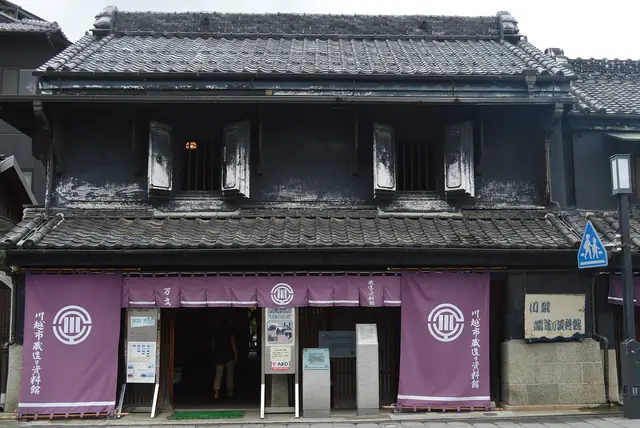
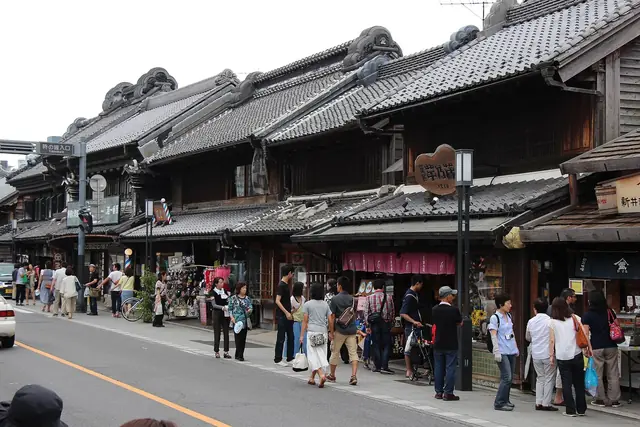
Kawagoe grew around Kawagoe Castle, built in 1457, and prospered in the Edo period through close trade with the capital. After a great fire in 1893 its merchants rebuilt their shops in kurazukuri style, with thick clay walls and heavy tiled roofs meant to stop the next fire. Those buildings still line the main street, Ichibangai, and the lanes around it, now a protected historic district.
The town also has two old religious centres. Kitain, a Tendai temple, traces its founding to 830 and was rebuilt in the 1630s with halls moved from Edo Castle. Kawagoe Hikawa Shrine, by tradition founded in 541, honours a family of five deities that includes two married couples, so people come here to pray for a good match.
What to see on a walking loop
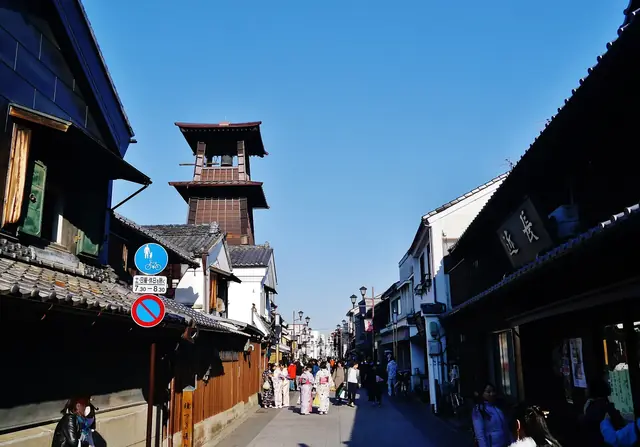
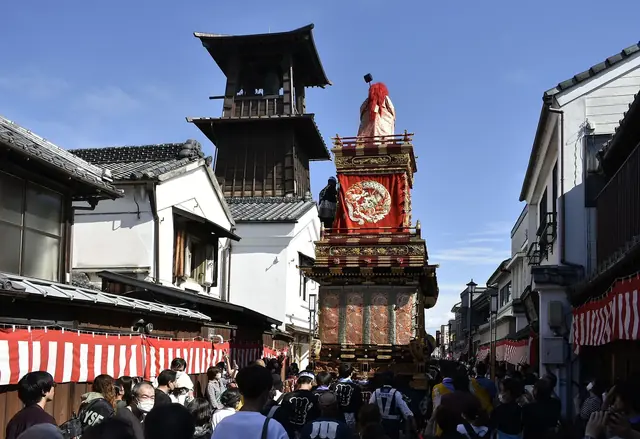
Start on the kurazukuri street, where many clay-walled houses are now shops and cafes, some selling sweet potato snacks, a local speciality. Just off it stands Toki no Kane, a three-storey wooden bell tower about 16 metres high. The first tower went up in the early Edo period, the current one was rebuilt in 1894 after the fire, and its bell still rings four times a day, at 6am, noon, 3pm and 6pm.
A few minutes north is Kashiya Yokocho, a short stone-paved alley of about 20 old-fashioned candy and snack shops. Near the main street, the Kawagoe Festival Museum keeps real festival floats on display all year, so you can see them up close even outside October.
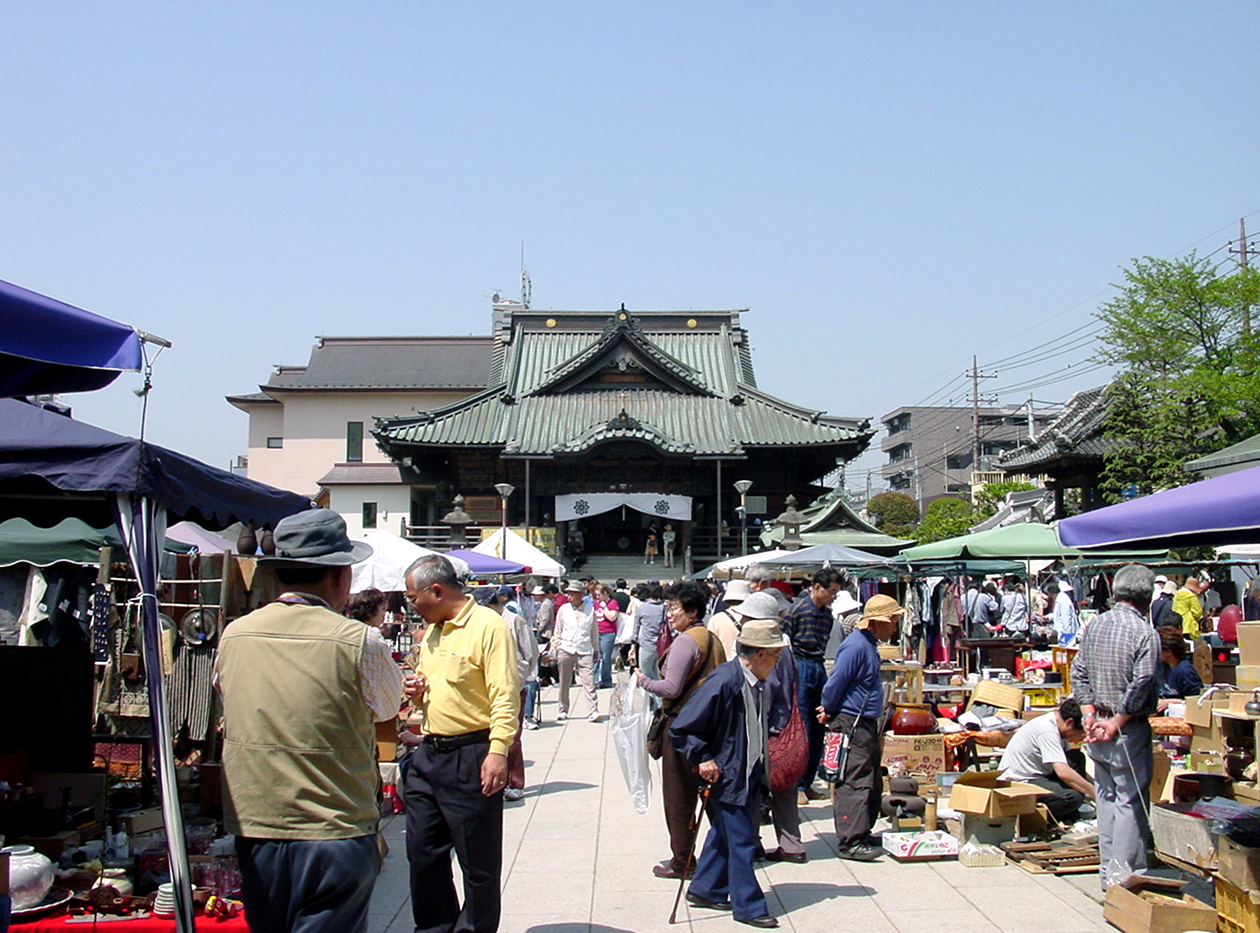
Kitain, about 15 minutes on foot from Hon-Kawagoe Station, holds the room where the third shogun Iemitsu is said to have been born and a room used by his nurse Kasuga no Tsubone, both moved from Edo Castle. Beside it sit the Gohyaku Rakan, 538 stone disciples of the Buddha carved over about 50 years from 1782, each with a different face. Hikawa Shrine, north-east of the old street, has a tunnel of ema prayer boards.
- The Koedo loop bus from the west exit of Kawagoe Station links the old street, Hikawa Shrine and other main sights.
- A small fee covers Kitain's halls, gardens and the 500 rakan; walking the temple grounds is free.
- Kitain's old Sanmon gate is under repair until around autumn 2027, so follow the signs for the entry route.
The year in Kawagoe
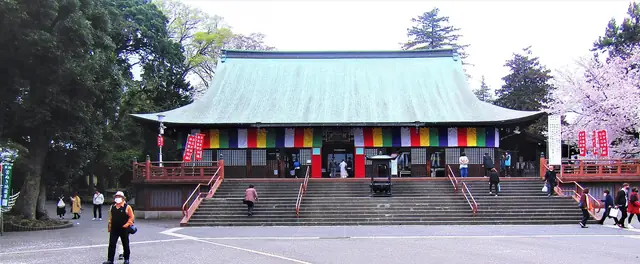
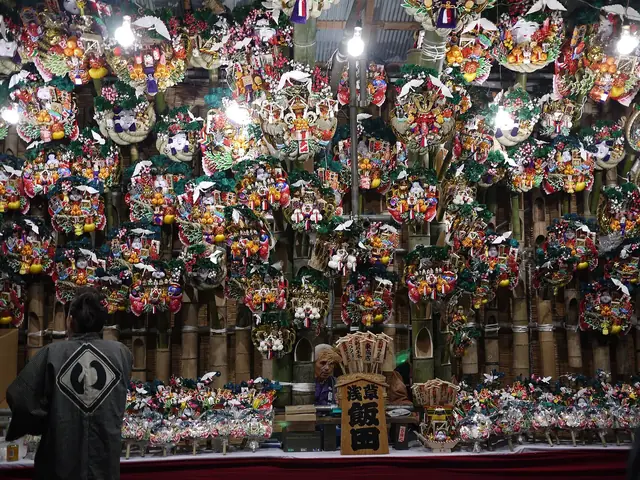
The year opens on January 3 with Kitain's daruma market, when stalls of red daruma dolls fill the temple grounds, and on February 3 the temple holds a Setsubun bean-throwing. From mid-March to early April cherry trees bloom at Kitain and along the Shingashi River behind Hikawa Shrine, where fallen petals cover the water.
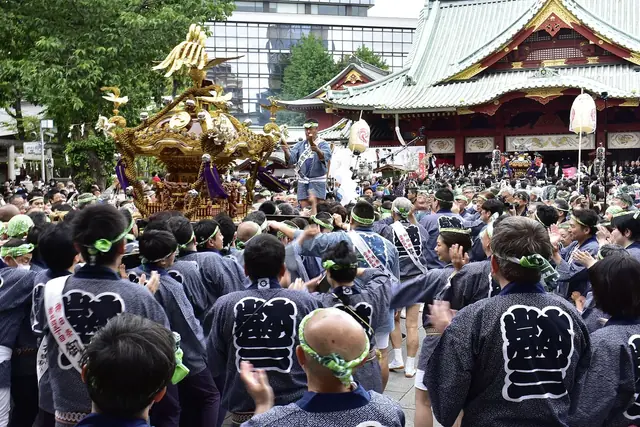
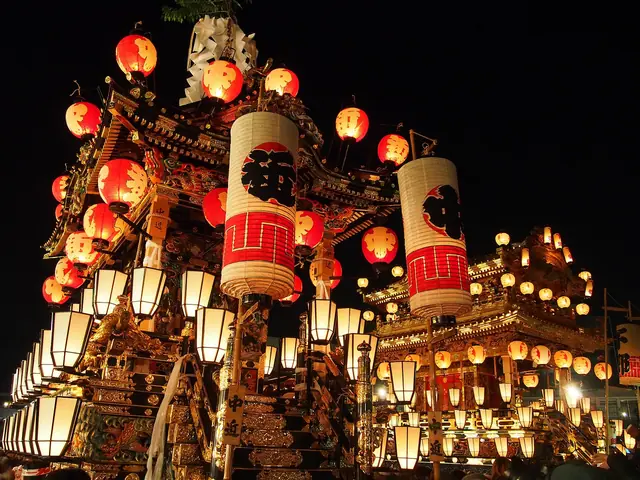
From late June to early September Hikawa Shrine hangs around 2,000 Edo wind chimes for its Enmusubi Furin, each with a wish written on a wooden strip, and lights them in the evening. Autumn is the main season. The Kawagoe Festival fills the town on the third Sunday of October and the Saturday before it, when tall wooden floats topped with dolls are pulled through the streets. Its roots go back to 1648, and it is one of Japan's Yama, Hoko, Yatai float festivals on UNESCO's Intangible Cultural Heritage list.
The best part comes after dark, when floats meet at crossroads and their musicians and dancers face off in a musical duel called hikkawase. In November Kitain hosts a chrysanthemum festival, families come for Shichi-go-san, and the temple maples turn in late November and early December.
Timing, crowds and manners
Kawagoe is quiet on weekday mornings and busy on weekend afternoons, especially on the old street and in the candy alley, where the pavements are narrow. Arrive before 10am and see the old street first. Festival weekend draws several hundred thousand people over two days, central roads close to traffic and trains back to Tokyo are packed in the evening, so plan an early or a late return.
Kitain's halls usually open at 9am and close in the late afternoon, a little earlier in winter, and indoor viewing pauses from December 25 to January 8 and on a few festival days, so check its site before you go. At Hikawa Shrine, bow at the torii, rinse your hands at the basin and keep your voice low near the main hall. Wedding photo shoots are only for couples married at the shrine, and commercial shoots and tripods are not allowed. Carry some cash for small snack stands.
Getting there and combining it
From Ikebukuro, Tobu Tojo Line expresses reach Kawagoe and Kawagoeshi stations in about 30 minutes. From Shinjuku, the Seibu Shinjuku Line runs from Seibu-Shinjuku to Hon-Kawagoe in about 45 minutes on the reserved-seat Koedo limited express or about an hour by express, and some JR Saikyo Line trains run through to Kawagoe Station. Hon-Kawagoe is closest to the old street, about 10 to 15 minutes on foot.
A good plan is to go out on the Tobu line from Ikebukuro, walk from the old street to Hikawa Shrine and Kitain, and ride back from Hon-Kawagoe to Shinjuku on the Seibu line, or the other way round. Ikebukuro is an easy place to spend the evening once you are back.