January: hatsumode at Meiji Jingu
Hatsumode is the first shrine visit of the new year, and Meiji Jingu, the forested shrine between Harajuku and Yoyogi dedicated to Emperor Meiji and Empress Shoken, draws more people than any other shrine in Japan: around three million over the first three days of January. The gates stay open through New Year's Eve night, and police move the crowd forward in blocks along the wide gravel approach. It is less a festival than a whole city doing one ritual together, and shuffling through the dark forest with that slow river of people is a very Tokyo way to start a year.
- Early morning on January 1, or any day from January 4, is far calmer than midnight. Bring coins for the offering box.
February: Setsubun at Sensoji and Zojoji
Setsubun, usually on February 3, is the eve of spring in the old calendar, when people throw roasted soybeans to chase out bad luck. The big temples turn it into a show. At Sensoji in Asakusa nobody shouts for the demons to leave, because demons are said not to exist in front of the Kannon enshrined there, and the bean throwing is followed by a dance of the Seven Lucky Gods. At Zojoji in Shiba Park, with Tokyo Tower rising behind the main hall, people born in that year's zodiac sign, often joined by sumo wrestlers and celebrities, throw beans and small lucky packets into the crowd. It is free, quick and much more fun than it sounds.
- Hold an open tote bag or hat in front of you. It catches far more than bare hands, and the crowd surges forward when the throwing starts.
May: Kanda Matsuri
Kanda Matsuri belongs to Kanda Myojin, the shrine near Akihabara, and is one of the three great festivals of old Edo. It is held in mid-May, and the full version, with a long procession in historical costume through Kanda, Nihonbashi and Akihabara, takes place in odd-numbered years. Over the weekend, neighbourhood mikoshi are carried into the shrine one after another, and the narrow streets around it fill with chanting bearers. Watching an old festival roll past electronics shops and anime billboards is half the charm.
- In even-numbered years the shrine holds a smaller festival. Check which kind of year it is before you plan around it.
May: Sanja Matsuri in Asakusa
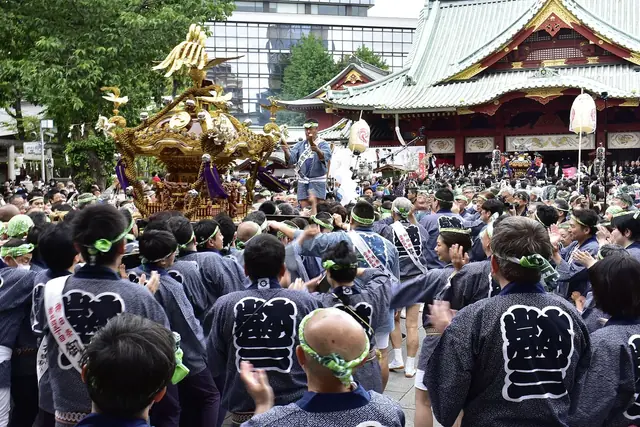
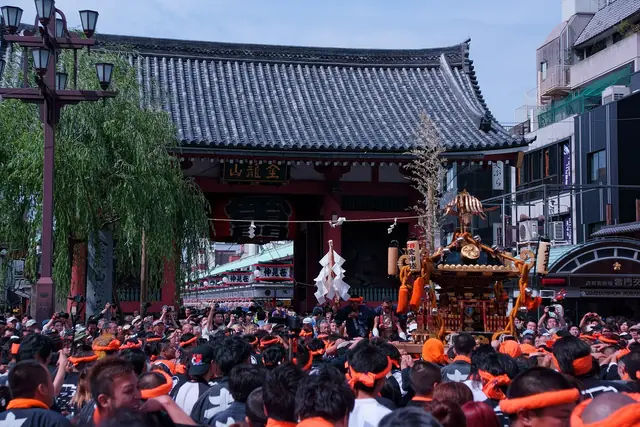
Sanja Matsuri belongs to Asakusa Shrine, right next to Sensoji, and runs for three days on the third weekend of May. On Saturday around a hundred neighbourhood mikoshi parade through Asakusa, and on Sunday the shrine's three main mikoshi leave early in the morning and are carried through the district until after dark. The bearers are neighbourhood teams in matching happi coats, many from families who have carried for generations. For noise, energy and the sheer number of mikoshi, nothing else in Tokyo comes close.
- Stand at the side of the route and step back when a mikoshi swings your way. Never touch it or step in front of it.
June: Sanno Matsuri at Hie Shrine
Sanno Matsuri is the festival of Hie Shrine in Akasaka, another of the three great Edo festivals, and it takes turns with Kanda: the full version is held in even-numbered years, in mid-June. Its centrepiece is a procession of about 500 people in court costume with mikoshi, around 300 metres long, that spends a whole day looping through Nagatacho, the Imperial Palace area, Tokyo Station, Nihonbashi and Ginza. In recent years it has fallen on a weekday, and the sight of it passing between office towers and department stores is like nothing else in the city. It is also far calmer to watch than Sanja.
- The route and rough timings are published ahead. Wait at one point, such as Nihonbashi or Ginza, instead of chasing the procession.
June: Tokyo Pride
Tokyo Pride is organised by the NPO Tokyo Rainbow Pride, which describes it as the largest Pride event in Asia; Japan's first Pride parade was held in Tokyo in 1994. For years it ran in spring, and since 2025 it has been held in June, Pride Month, as a programme of events through the month. The core is a free festival weekend in Yoyogi Park, with booths from community groups, companies and embassies, a stage with music and drag shows, and a parade on the Sunday through Shibuya and Harajuku. The mood is warm, and it is easy to join as a spectator.
- Watching the parade from the pavement is free. To walk in it, you sign up with one of the marching groups listed on the official site.
Late July: Sumida River Fireworks
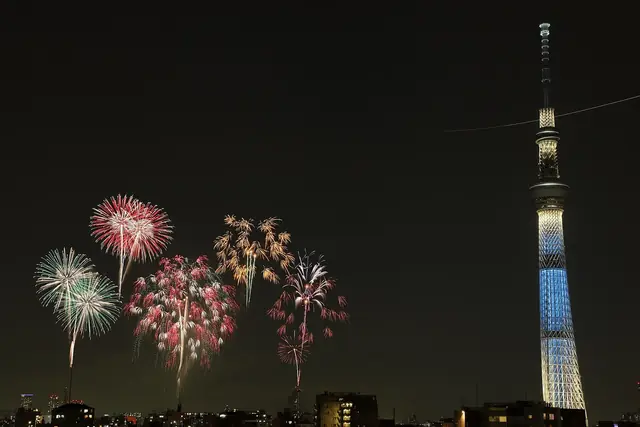
The Sumida River Fireworks are the oldest and best-known fireworks in Tokyo, with roots in the Edo period, and are usually held on the last Saturday of July. Around 20,000 shells go up from two launch sites on the river near Asakusa and Tokyo Skytree, and close to a million people come to watch. The night opens the summer fireworks season, and for many Tokyoites it is the first time that year they put on a yukata.
- Streets next to the launch sites become keep-walking zones. Pick a spot further along the river or book a paid seat, and arrive hours early.
Mid-August: Fukagawa Hachiman Matsuri
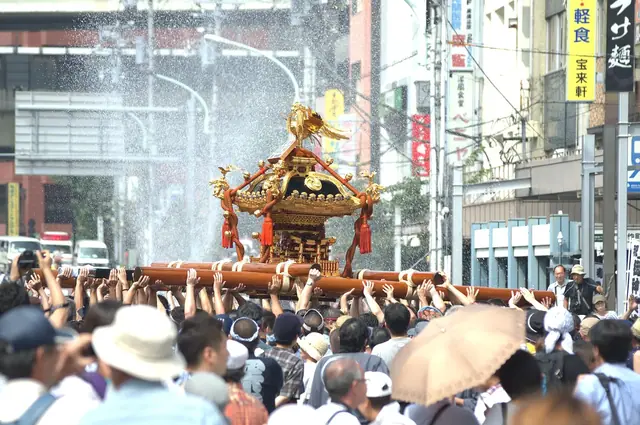
Fukagawa Hachiman Matsuri at Tomioka Hachimangu in Koto ward completes the three great Edo festivals, and its nickname is the water-throwing festival: spectators and locals douse the mikoshi bearers with buckets and hoses as they pass, which in August feels like a kindness. It is held every year in mid-August, but the full version comes every three years, when more than 50 large neighbourhood mikoshi parade one after another through the streets around Monzen-nakacho. In other years the programme is smaller.
- Expect to get wet even as a spectator. Keep your phone in a zip bag and wear clothes that dry fast.
August and December: Comiket
Comiket at Tokyo Big Sight is the largest doujinshi market in the world: thousands of amateur and semi-pro creators sell comics, illustration books, music and goods they made themselves, mostly fan works based on anime, manga and games, with corporate booths for studios and publishers alongside. It is held twice a year, over a weekend around mid-August and at the very end of December, and attendance runs into the hundreds of thousands. The cosplay areas, the scale and the volunteer-run culture make it unlike any other convention.
- Every adult needs a ticket or wristband for that specific day, sold in advance. Read the current edition's notice, not last year's.
Late August: Koenji Awa Odori and the Asakusa Samba Carnival
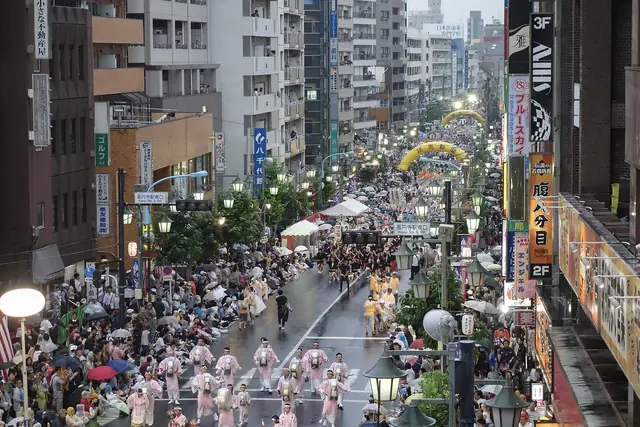
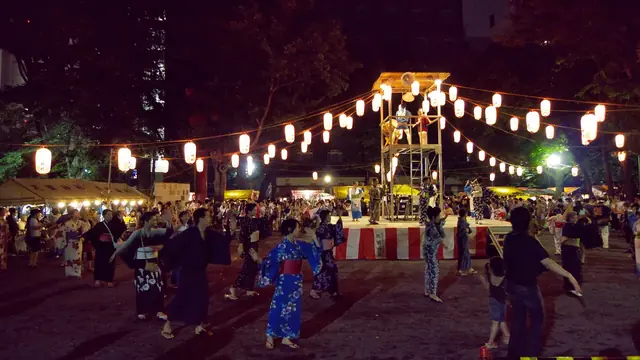
Koenji Awa Odori, on the last weekend of August, fills the streets around JR Koenji Station with around 10,000 dancers and close to a million spectators over two days. It started in 1957 and is the largest awa odori outside the original in Tokushima. Dance groups called ren move through the shopping streets to drums, flutes and shamisen: the women in straw hats with sharp, precise steps, the men low and loose.
Late August is also when the Asakusa Samba Carnival usually sends samba teams down the streets near Kaminarimon in a competition parade, a Tokyo summer tradition since the early 1980s. Both are free to watch.
- Awa Odori is danced on several streets around the station, and moving between them after dark is slow. Arrive early and stay in one place.
Late October: Ikebukuro Halloween Cosplay Festival
The Ikebukuro Halloween Cosplay Festival is the big one for cosplayers: several days around the end of October, run by a committee that includes Toshima ward, Animate and Sunshine City, with Sunshine City and the streets and parks around Ikebukuro Station turned into photo spots. It is one of the largest Halloween events in Japan and the organised, friendly alternative to the Shibuya street crowd, which the ward now asks people to avoid. The costumes are serious: full anime and game characters, with props and makeup to match.
- Cosplayers buy a registration ticket and change in the official rooms. Watching in normal clothes is free, but photographing cosplayers needs a photographer registration ticket, and always ask first.
November: Tori-no-ichi
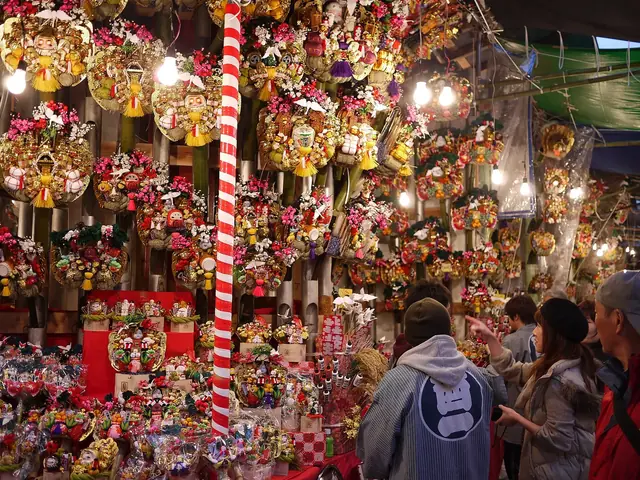
Tori-no-ichi is held at Otori shrines on the days of the rooster in November, which come round every 12 days, so there are two or three each year. The biggest is at Otori Shrine in Asakusa, with around 150 stalls selling kumade, decorated bamboo rakes meant to rake in good business. When a rake is sold, sellers and buyer clap together in a rhythmic tejime, and the stalls stay busy late into the night. Hanazono Shrine in Shinjuku has another well-known one. It is a festival of shopkeepers and small business owners, and it feels like old Tokyo.
- Go after dark, when the lanterns light up the rakes. Bring cash, and a small rake is fine for your first year.