What Tsukiji is
Tsukiji means "built land". The area was reclaimed from Tokyo Bay after the Great Fire of Meireki in 1657. Tokyo's fish market moved here after the 1923 earthquake destroyed the old market in Nihonbashi, and the Tsukiji market opened in 1935. For decades its tuna auctions drew visitors from all over the world.
In 2018 the inner wholesale market, with the auctions, moved to Toyosu across the bay. The Outer Market, the streets of shops that grew up around it to serve chefs and buyers, stayed where it was. Some of its buildings are more than 80 years old, and many owners still run the shop downstairs and live upstairs.
What to see and eat
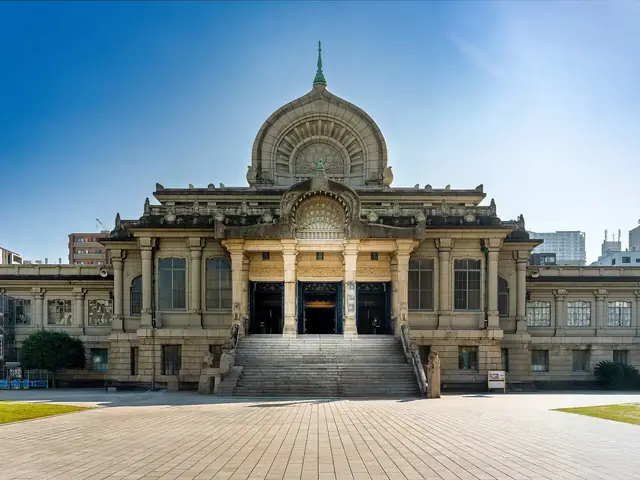
Coming from Tsukiji Station, the first thing you see is Tsukiji Hongwanji, a Buddhist temple whose main hall, finished in 1934 by the architect Ito Chuta, looks like a stone temple from ancient India. Inside it is a traditional Jodo Shinshu hall, with a German pipe organ given in 1970 that plays at a lunchtime concert on the last Friday of each month. The grounds are free, and the hall is lit up after dark.
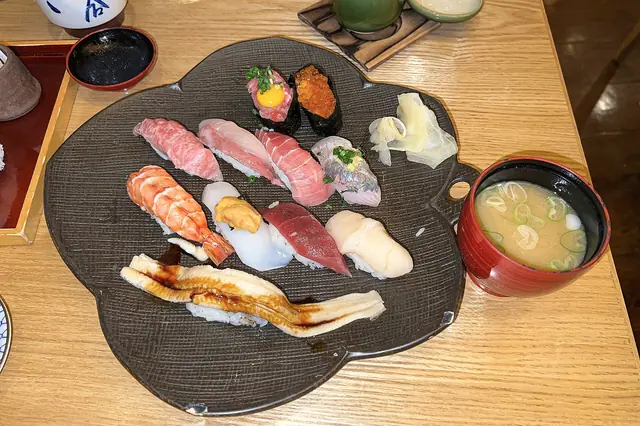
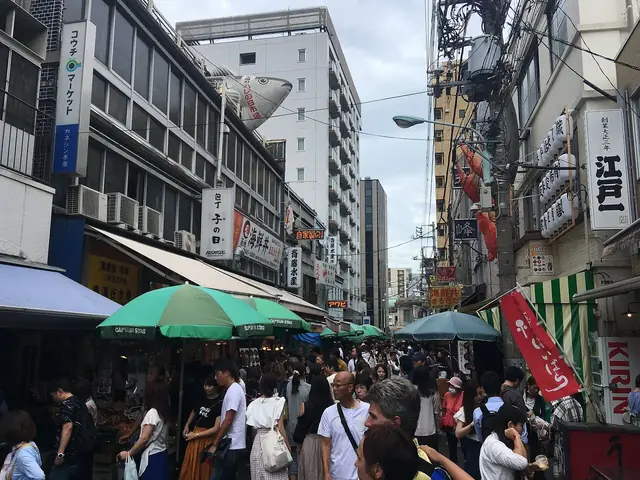
Across the road the Outer Market begins: narrow lanes of fishmongers, tamagoyaki (sweet rolled omelette) stalls, shops for dried bonito, kombu, pickles and green tea, and knife shops, many of which will engrave your name on the blade. Small counters serve sushi and seafood rice bowls from early morning. The Tsukiji Uogashi building has a food court that opens early, a good place to sit down with what you have bought.
At the edge of the market stands Namiyoke Inari Shrine, which is said to have protected the workers reclaiming the land from the waves. Look for its giant carved lion heads, carried through the streets during its June festival.
- Plat Tsukiji, the market's information centre, has maps and can hold a stroller for a small fee.
- Bought too much? The market offers tax-free refunds and delivery through a partner service; ask at Plat Tsukiji.
The year in Tsukiji
In early April Tsukiji Hongwanji marks the Buddha's birthday with its Hana Matsuri. In June Namiyoke Inari holds the Tsukiji Lion Festival, when the huge lion heads and a portable shrine go out into the market streets; the full festival with the largest parade comes every three years, with a smaller one in between.
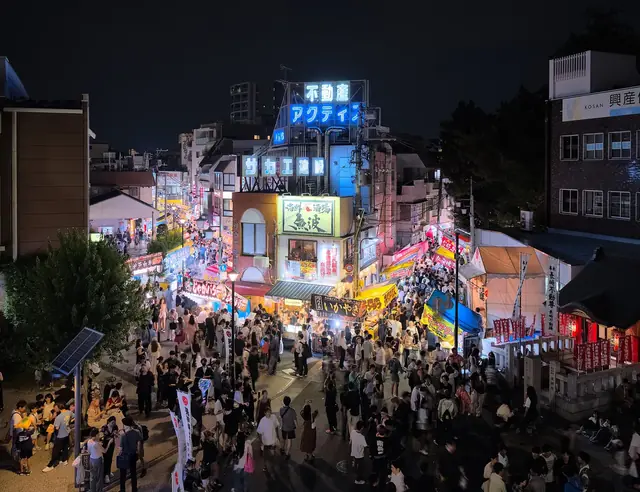
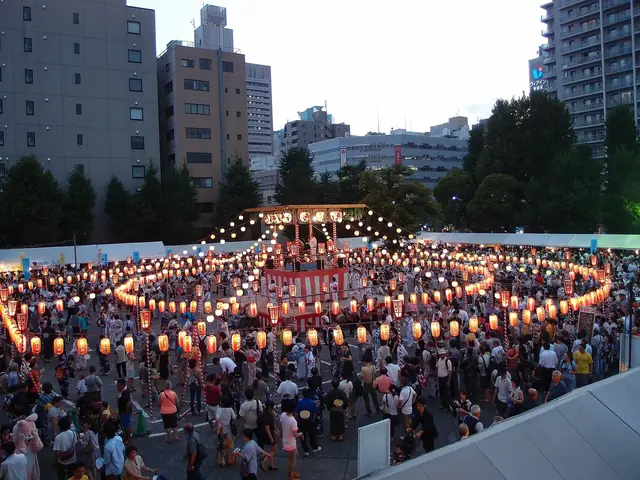
Late July or early August brings the Tsukiji Hongwanji Bon Odori, one of central Tokyo's best-loved summer dances, where locals and visitors dance around a tower in the temple courtyard and stalls run by Outer Market shops sell food. It is free and runs over several evenings. In November the temple holds its main memorial service, Ho-onko.
Late December is the Outer Market's busiest stretch, when Tokyo households come to buy seafood and New Year foods. The streets are packed and the mood is lively, but it is not the time for a slow browse, and the market asks people to come in small groups, not tours.
Timing, closed days and market manners
Go in the morning. The market asks visitors to give professional buyers priority until 9am, and it is busiest from about 9am to 1pm. Many shops close by early afternoon, and by mid-afternoon the lanes are shutting. Many shops are closed on Sundays, public holidays and the Wednesdays when the wholesale market rests; the official site has a calendar, and some shops open on those days anyway.
The market publishes a short set of manners. Eat inside the shop or in a space set aside for eating, not while walking. Ask before photographing a shop, and do not touch the food, especially raw fish. Prices are not for bargaining, smoking is only allowed in marked areas, and large bags should go into coin lockers because the lanes are narrow. Move in small groups and hold children's hands. Some shops take cards, but cash is still handy at small stalls.
At Tsukiji Hongwanji, the main hall is open from early morning until late afternoon. Take off your hat, keep your voice low and sit quietly if a service is on.
- Arrive around 8 or 9am on a weekday for the best mix of open shops and space to move.
- If a stall has a bench or standing counter, eat there and hand the stick or plate back.
Getting there and nearby
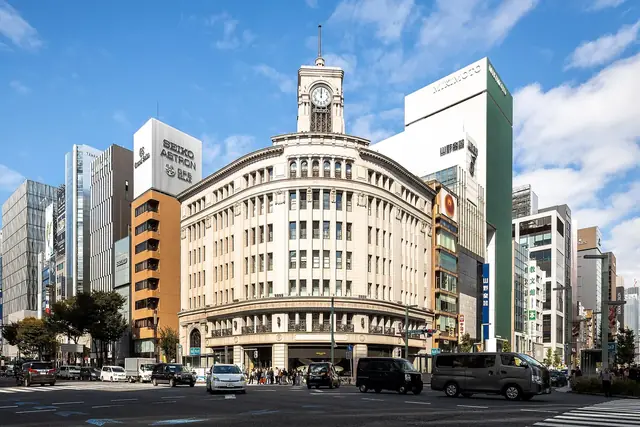
Tsukiji Station on the Hibiya Line and Tsukijishijo Station on the Toei Oedo Line are each about a minute's walk from the market, and Higashi-ginza (Hibiya and Asakusa lines) is about three minutes. Ginza is a short walk west, and the Kabukiza theatre stands at Higashi-ginza.
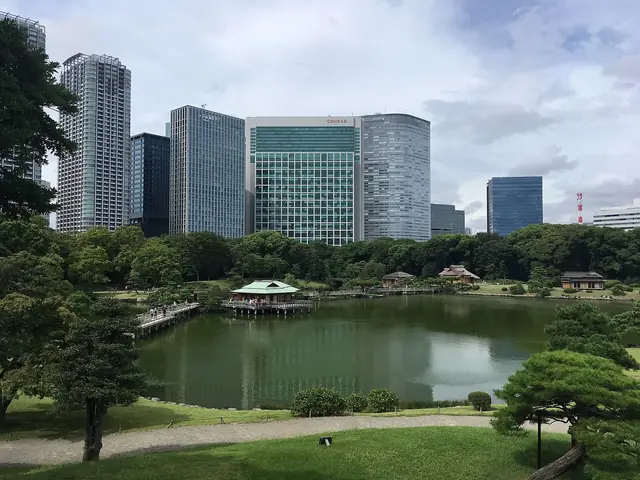
Hama-rikyu, a former shogun's garden on the water with a teahouse on a pond, is a short walk away, and from its pier water buses run up the Sumida River toward Asakusa. The tuna auction is now at Toyosu Market, a separate early trip on the Yurikamome Line. You can watch it from the upper walkway without booking; the closer observation deck takes about 100 people a day by online lottery, applied for in the month before your visit, with photo ID checked on the day. The auction starts around 5:30am and Toyosu is closed on Sundays, holidays and some Wednesdays.