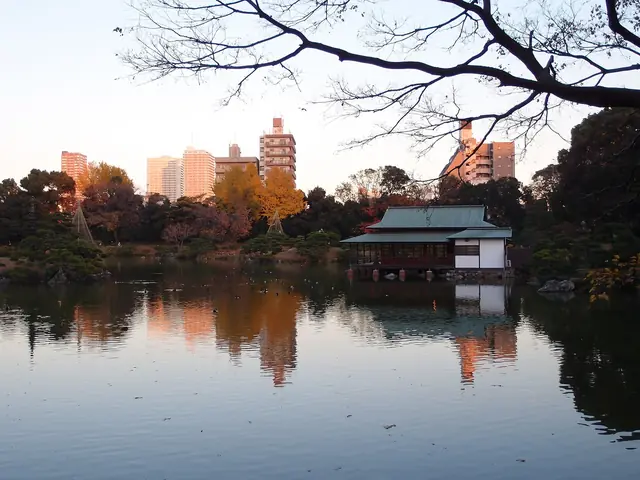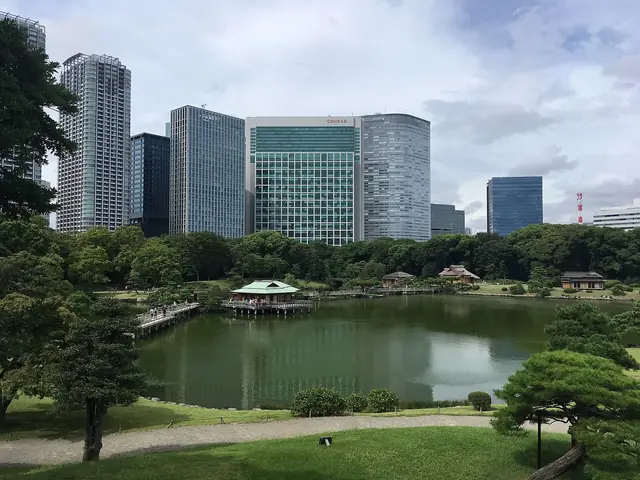
What Hama-rikyu is
Until the early 1600s this was reed marsh used for the shogun's falconry. In 1654 Matsudaira Tsunashige, a younger brother of the fourth shogun, was allowed to reclaim land from the sea here for a villa, and when his son became the sixth shogun the estate turned into a shogunal residence called Hama Goten. Later shoguns kept reworking it, and the garden took roughly its present shape under the eleventh shogun, Ienari.
After the Meiji Restoration it became a detached palace of the imperial family, which is where the name Hama-rikyu comes from. Most of its old buildings were lost in the 20th century, and in 1945 the garden was given to the city of Tokyo, opening to the public the following year. Together with the water around it, it is now both a national Special Place of Scenic Beauty and a Special Historic Site.
What to see
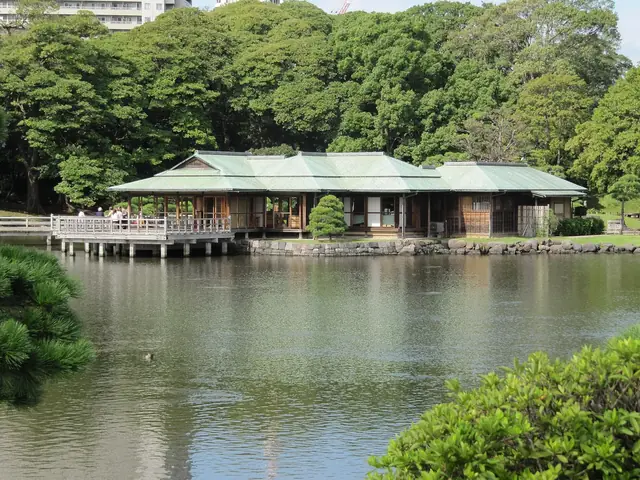
Shioiri no ike, the tidal pond, is the heart of the garden. Sluice gates let seawater in and out of Tokyo Bay, and it is the only Edo-period garden pond in the city where seawater still flows. Grey mullet, gobies and eels live in it, crabs and barnacles cling to the stones, and diving ducks arrive in winter.
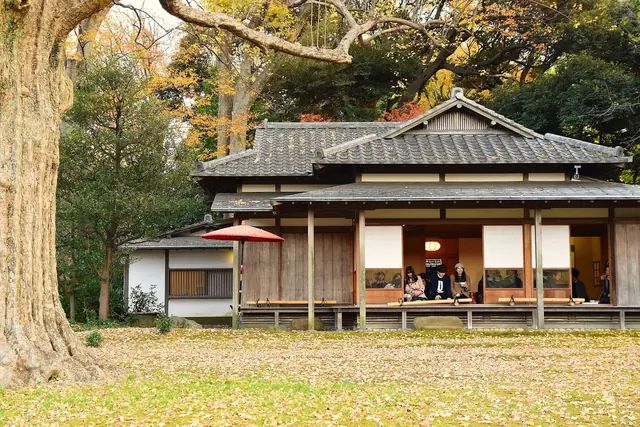
A long wooden bridge, Otsutai-bashi, leads to Nakajima no ochaya, the tea house on the island, rebuilt in 1983, where you can sit with matcha and a Japanese sweet over the water. Around the pond stand Matsu-no-ochaya, Tsubame-no-ochaya and Taka-no-ochaya, shogunal tea houses rebuilt between 2010 and 2018 from old records. The 300-year pine, a black pine said to have been planted when the sixth shogun remade the garden, spreads its low branches wide.
Further in are the flower fields and two duck-hunting ponds built in 1778 and 1791, screened by earth banks, bamboo and evergreens. Hunters once lured ducks into narrow channels with grain and decoy ducks, and the channels are still there to see.
- Free volunteer tours run on weekends and holidays, with English tours on weekends and some Mondays. They pause in high summer.
- On Thursdays volunteers lead short tours inside the shogunal tea houses. Wear socks, since you go indoors.
- Shade is limited and food options are few beyond the tea house and a small shop, so bring water and a hat in summer.
The year at Hama-rikyu
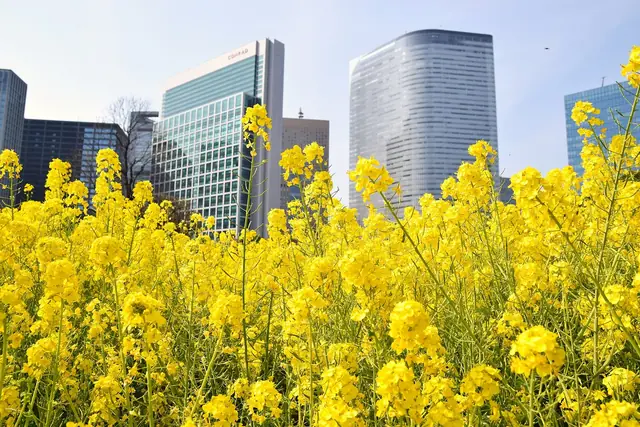
Plum trees bloom in February, and from late February into March the flower field turns yellow with rapeseed, around 300,000 plants in most years, with the Shiodome towers behind. Cherry trees, wisteria and peach blossoms follow through spring.
In summer the field is replanted: yellow cosmos usually open in September and pink and white cosmos in October, and the maples colour in late autumn. After the New Year break the garden reopens on January 2, and in recent years a traditional falconry demonstration has been held on January 3. Some years add evening openings, for example for autumn moon viewing; those appear in the list below when they are announced.
Timing, tickets and manners
The garden is usually open from 9 in the morning to 5 in the afternoon, with last entry 30 minutes before closing, and it closes from December 29 to January 1. Tickets are sold online and at the gates, which accept IC transport cards, credit cards and QR payments. Entry is free on Greenery Day (May 4) and Tokyo Citizens' Day (October 1), and a combined ticket also covers Kyu-Shiba-rikyu Gardens, about 15 minutes away on foot.
The garden covers about 25 hectares and rarely feels crowded except on flower-field weekends. A weekday morning gives soft light on the pond and a quiet tea house. Pets are not allowed, smoking is limited to designated spots, and commercial or model photo shoots need permission in advance, while ordinary visitor photos are fine.
Getting there, the boat and nearby
There are two entrances. The Otemon gate is about 7 minutes on foot from Tsukijishijo or Shiodome stations on the Toei Oedo Line and from Shiodome on the Yurikamome, and about 12 minutes from Shimbashi. The Naka-no-gomon gate is about 5 minutes from Shiodome and about 15 minutes from JR Hamamatsucho.
The nicest way in is by water. Tokyo Cruise boats from Asakusa (Azumabashi) sail down the Sumida River to the garden's own pier in about 35 minutes, a few times a day, and the fare includes garden entry. The pier is for getting off only, so you cannot board here back to Asakusa or on to Odaiba; for Odaiba, walk to Shiodome and take the Yurikamome.
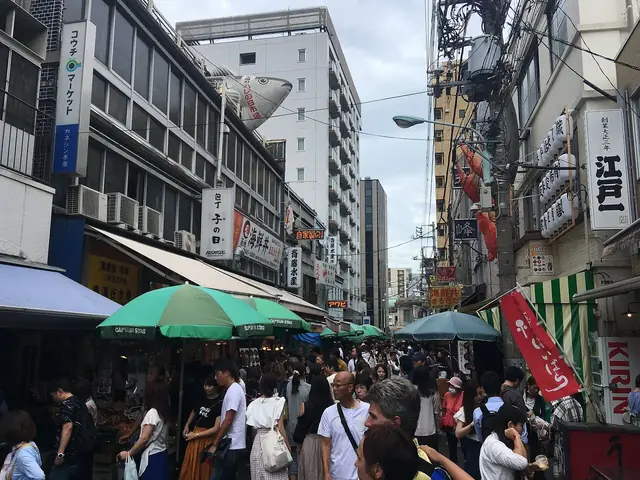
Tsukiji Outer Market is a short walk from the Otemon gate for a seafood breakfast or lunch, Ginza is within walking distance via Shimbashi, and Kyu-Shiba-rikyu, a smaller Edo garden, sits next to Hamamatsucho Station.