Taishakuten and the Tora-san town
Taishakuten, formally Daikyoji, is a Nichiren school temple founded in 1629. It is named after the deity Taishakuten, enshrined on a wooden board said to have been carved by Nichiren himself. According to the temple, the board went missing and was found again in the spring of 1779 during repairs to the main hall, on a koshin day of the old 60-day cycle, and such days have been the temple's fair days ever since.
Then came the films. Otoko wa Tsurai yo (It's Tough Being a Man), directed by Yamada Yoji, began in 1969 and ran to 48 films, with Atsumi Kiyoshi as Tora-san, a wandering peddler who keeps coming home to his family's dango shop on this street; a new film marked the 50th anniversary in 2019. In 2018 Shibamata became the first place in Tokyo chosen as an Important Cultural Landscape of Japan, for the way the temple, the street and the river still fit together.
What to see
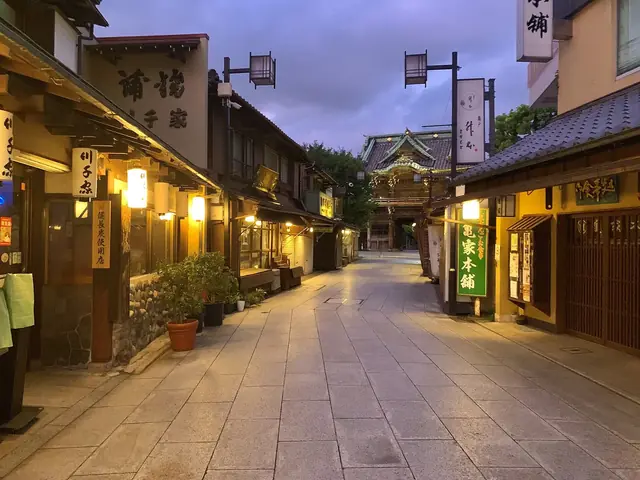
Outside Keisei Shibamata Station stand statues of Tora-san with his trunk and of his sister Sakura seeing him off. From there the Taishakuten sando runs a few minutes to the temple, lined with old shops that survived the war: kusa dango (mugwort rice dumplings with sweet bean paste), candy and tsukudani (small fish simmered in soy), plus eel restaurants. One of the dango shops is known as the model for Tora-san's family shop in the films.
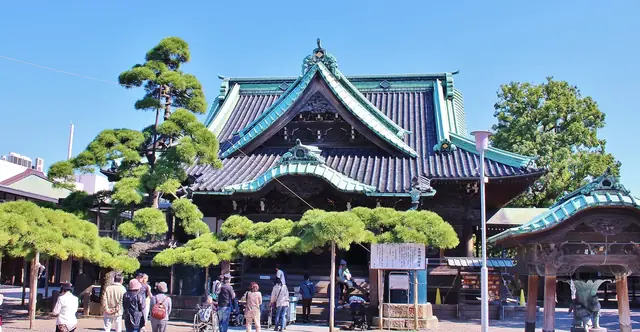
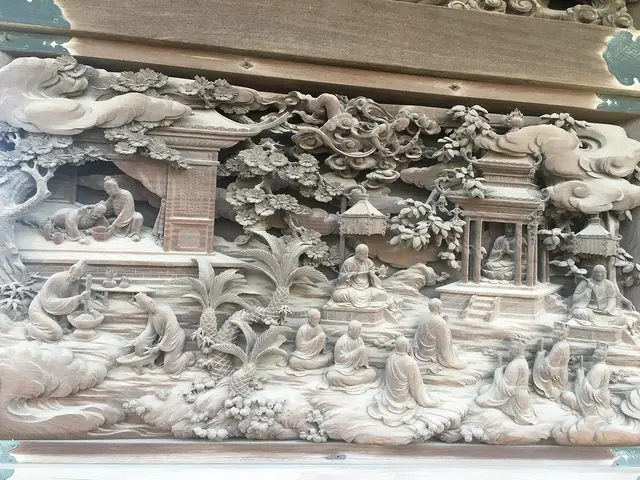
The temple gate, Nitenmon, dates from 1896 and is covered in carving. On the Taishakudo hall, ten large panels around the inner sanctuary show stories from the Lotus Sutra, carved over more than ten years in the 1920s and early 1930s. They are now enclosed as the Carving Gallery, and one ticket covers it and Suikeien, a garden you walk around on a covered corridor. In front of the hall the Zuiryu pine spreads low over the courtyard; it is a Tokyo natural monument.
Past the temple are Yamamoto-tei, a Taisho-era house with a Japanese garden where you can sit with matcha, and the Katsushika Shibamata Tora-san Museum, with the real Kuruma-ya shop set from the films, props and Tora-san's trunk. The Yamada Yoji Museum next door shares its ticket. Kawajin, a river fish restaurant with more than 200 years of history, reopened in 2026 as the Shibamata Kawajin Machinamikan, with a cafe and exhibits.
- The Carving Gallery and garden take last entry around 4pm, well before the temple grounds close. Bring cash for the ticket.
- Kusa dango is best fresh. Eat a few on the street and buy a box to take home on your way back.
The year in Shibamata
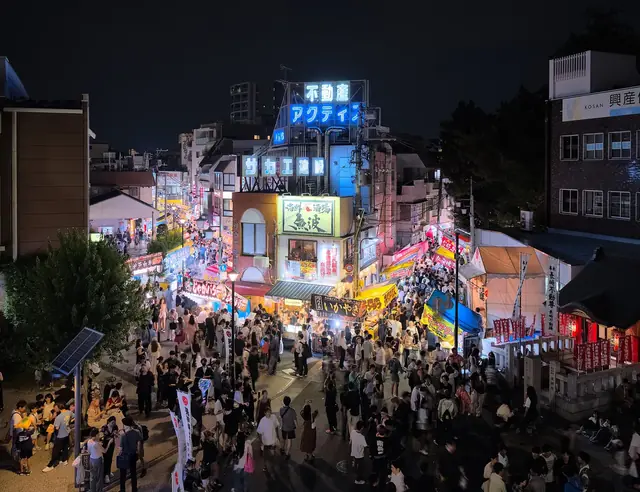
About six times a year, on koshin days every sixty days, Taishakuten holds its fair day: the board image is shown, sutra readings run through the day, a special goshuin is given out and the sando gets busy. The next dates are on the temple's website. New Year brings large hatsumode crowds, the Setsubun service is held on Setsubun day, around February 3, and in early April the flower festival for the Buddha's birthday includes a children's procession.
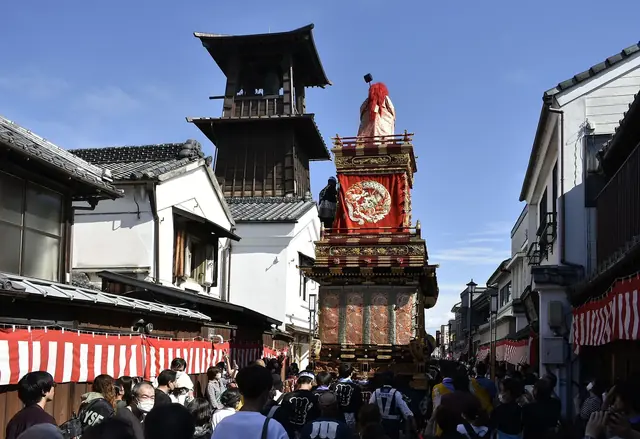
In late July the Katsushika Noryo Fireworks go up from the riverbank by Shibamata, one of the big summer displays of eastern Tokyo; the bank fills early and nearby roads close in the evening. In autumn the town holds the Tora-san Summit, where towns that appeared in the films bring their local food and goods. In mid-November the temple marks oeshiki, the memorial for Nichiren.
- On fireworks night Shibamata Station is very crowded. Many walk to Kanamachi or Shin-Shibamata.
Timing, crowds and etiquette
The temple grounds open early in the morning and stay open into the evening; the hall closes earlier, and the gallery and garden take last entry around 4pm. Weekday mornings are quiet; weekend afternoons and koshin days are busiest, and most sando shops close in the early evening. Half a day covers the temple, the street, a museum and the ferry.
Taishakuten is a working temple: bow at the gate, rinse your hands at the basin and keep your voice down inside the hall. The Tora-san Museum and the Yamada Yoji Museum close on the third Tuesday of each month (the next weekday when that is a holiday) and on the third Tuesday to Thursday of December, and stay open over New Year.
- Carry coins and small notes. Dango shops and the ferry are easiest with cash.
- The ferry runs daily from mid-March through November, and mostly on weekends and holidays in winter.
Getting there, the Yagiri ferry and nearby
Shibamata Station is on the short Keisei Kanamachi Line, one stop from Keisei Takasago (served by trains from Keisei Ueno and through trains from the Toei Asakusa Line) and one stop from Keisei Kanamachi, next to JR Kanamachi Station. Shin-Shibamata on the Hokuso Line is about twelve minutes on foot, and buses between Kanamachi and Koiwa stop at Shibamata Taishakuten.
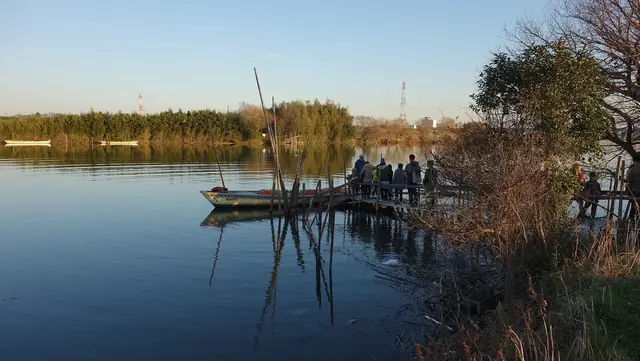
From the temple, walk past Yamamoto-tei to the Edogawa bank, where the Yagiri no Watashi ferry crosses to Matsudo in Chiba. It began in the Edo period, when no bridges were allowed over the river and farmers crossed by boat to their fields, and it is the last ferry left on the Edogawa. The small boat is rowed by hand, leaves once enough passengers gather, and stops in bad weather or high water. The far bank is the setting of Ito Sachio's novel Nogiku no Haka.
Kameari, with its Kochikame manga statues, is one stop from Kanamachi on the JR line. Asakusa is easy to add on the same day by Keisei or Toei Asakusa Line trains.