The rainy season: what June feels like
By the Japan Meteorological Agency's long-term normals, the rainy season (tsuyu) in the Kanto region, Tokyo included, starts around June 7 and ends around July 19, though the real dates move by a week or more either way and are announced by the agency each year. It does not rain all day every day. Expect runs of grey, drizzly days, a few heavy downpours and dry, sometimes sunny breaks in between. June is one of the least sunny months of the year.
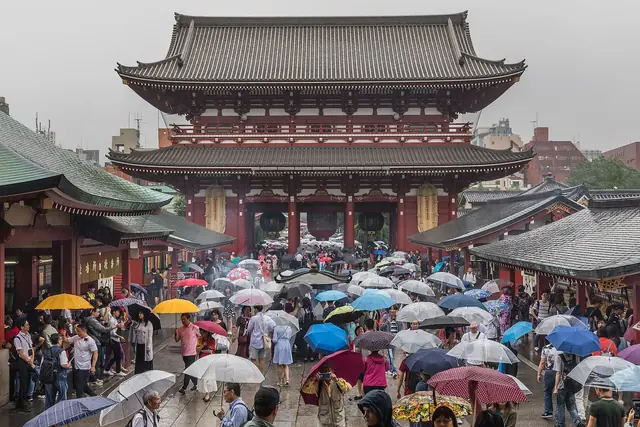
It also gets warmer. Daytime highs sit around 24°C to 28°C and nights around 17°C to 21°C, and with humidity this high, 26°C feels warmer than it sounds. Some rainy days turn cool instead, which Japanese call tsuyu-zamu. Wear light, quick-drying clothes and shoes that do not mind getting wet, keep a thin layer for strong air conditioning on trains and in shops, and carry a folding umbrella every day.
- Convenience stores sell cheap clear vinyl umbrellas if you get caught out.
- Shops and museums have umbrella stands or plastic umbrella sleeves at the door. Use them rather than carrying a dripping umbrella inside.
- Late June can be hot and muggy. Drink water even on cloudy days.
Hydrangeas, irises and fireflies
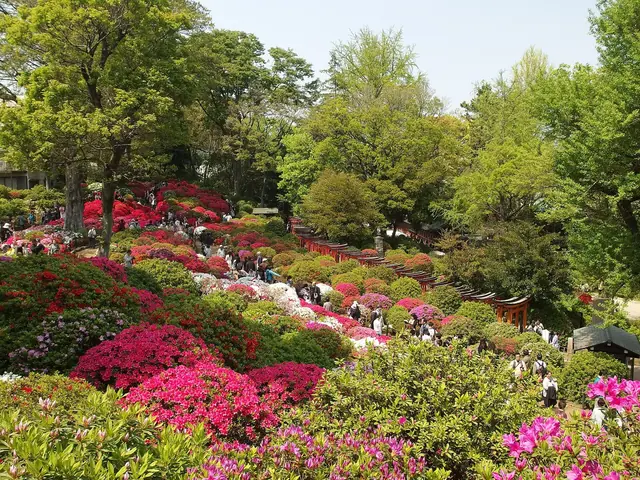
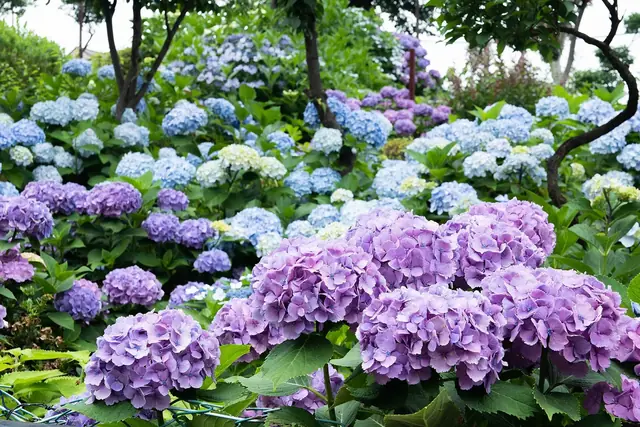
Rain is what the June flowers want. Hakusan Shrine in Bunkyo holds the Bunkyo Hydrangea Festival with around 3,000 plants, and its small Fuji mound covered in hydrangeas usually opens only during the festival. Takahata Fudo, a large temple in Hino next to Takahatafudo Station on the Keio Line, has thousands of hydrangeas on the hill behind its halls. Meigetsuin in Kamakura, known as the hydrangea temple, is the famous day trip, with long queues at weekends.
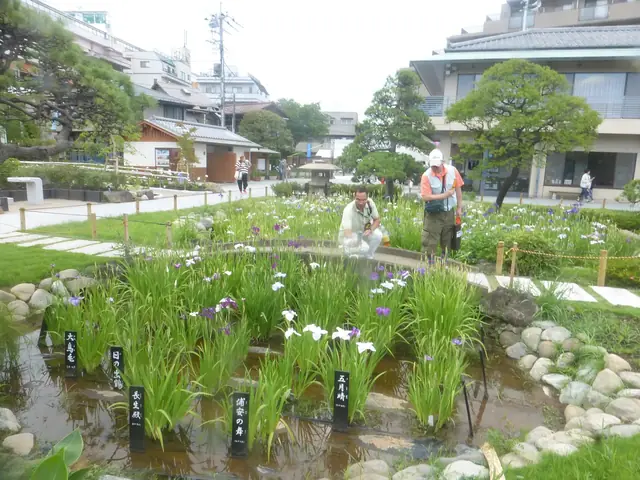
Irises (hanashobu) are usually at their best in early to mid-June. Horikiri Shobuen in Katsushika, about 10 minutes on foot from Horikirishobuen Station on the Keisei Line, is a free Edo-era garden full of old iris varieties. Inside Meiji Jingu, the paid Inner Garden has an iris field with more than 150 varieties, a quiet hour away from the Harajuku crowds. In the evenings from late May through June, Hotel Chinzanso Tokyo in Bunkyo has Genji fireflies in the stream of its garden, usually at their peak in early June.
- Hydrangeas and irises look best in light rain or just after it. A grey day is a good garden day.
- Gardens stay open in rain, but festival stalls and stage events may be cancelled (雨天中止).
Sanno Matsuri, Torigoe and the summer purification
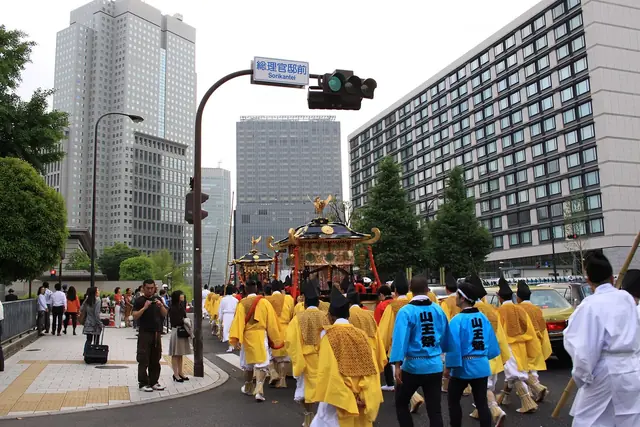
Sanno Matsuri at Hie Shrine, in Nagatacho next to Akasaka, runs for about ten days in June and is one of the three great festivals of Edo. In even-numbered years it is the main festival: the Jinkosai procession, around 500 people in Heian-period court dress with portable shrines, spends a whole day winding through central Tokyo, past the Imperial Palace area, Tokyo Station, Nihonbashi and Ginza. In odd-numbered years the programme is smaller, and Kanda Matsuri takes its big turn in May instead.
Early in the month, Torigoe Shrine near Kuramae Station in Taito ward holds its festival. Its main mikoshi is said to be the heaviest in Tokyo, at around four tonnes, and on the Sunday night it returns to the shrine surrounded by more than a hundred lit paper lanterns, which is why people call it the Torigoe night festival.
Around June 30, many shrines set up a large ring of woven grass (chinowa) for Nagoshi no Harae, a rite to clear away the bad luck of the first half of the year. Anyone can take part: bow, then walk through the ring in a figure of eight, as the sign at most shrines explains.
- Procession routes and times are published in advance. Check the map and wait at a corner rather than following the crowd.
- Mikoshi crowds surge without warning. Keep children and bags close and step back when staff ask.
Tokyo Pride and beer in June
Since 2025, Tokyo Pride, organised by the nonprofit Tokyo Rainbow Pride, has been held in June to line up with Pride Month. The festival fills the event plaza of Yoyogi Park for a weekend, free and without tickets, and the parade loops through Shibuya and Harajuku on the Sunday. Watching from the pavement is the easiest way to take part. Ask before photographing individuals, since not everyone there is out to family or at work, and bring a rain jacket as well as water.
June is a good month for beer, too. BeerFes Tokyo, the Great Japan Beer Festival, has been held in early June at Yebisu Garden Place in recent years, with dozens of Japanese craft breweries pouring tasting glasses. Rooftop beer gardens are open by now, but they usually close in rain or strong wind and often decide on the day, so check before you go.
Rainy-day plans and a quieter month
June is the only month of the year without a national holiday, so there are no long weekends and fewer domestic travellers than in spring or summer. Popular sights are calmer, especially on weekdays, which makes it a good month to see the places that are packed at other times.
Build each day around an indoor anchor and use the dry spells for walking. Tokyo's big museums, department store food halls (depachika), theatres, kabuki at the Kabukiza in Ginza, aquariums and the underground shopping streets around big stations all work in the rain. Event pages say 雨天中止 when something is cancelled in rain, 小雨決行 when it goes ahead in light rain, and 荒天中止 when it is called off only in a storm.
- For outdoor events, check the official page on the morning itself. Rain decisions are often posted on the day.
- Plan July early. The rainy season usually ends in the second half of July and summer festivals start right after.