What Kanda Myojin is
By the shrine's own history it was founded in 730 near today's Otemachi and moved to this hill in 1616. Tokugawa Ieyasu is said to have prayed here before the Battle of Sekigahara in 1600, and the shrine became the guardian of all of Edo, which is why its victory charms are still popular. Today it is the shrine of 108 neighbourhood associations in the heart of the city.
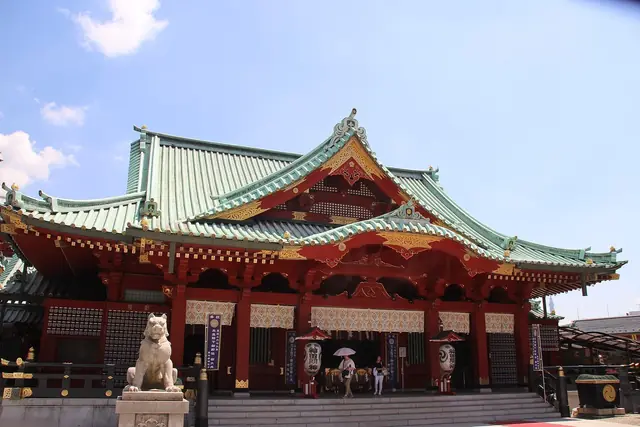
Three deities are enshrined: Daikoku, linked with good relationships; Ebisu, linked with business; and Taira no Masakado, a tenth-century warrior of the Kanto region, linked with warding off misfortune. The main hall was destroyed in the 1923 earthquake and rebuilt in 1934 in steel-reinforced concrete lacquered vermilion, a new fireproof idea at the time; it is now a Registered Tangible Cultural Property. Roof and paint restoration is planned for the shrine's 1,300th anniversary, so parts of the buildings may be under scaffolding.
What to see
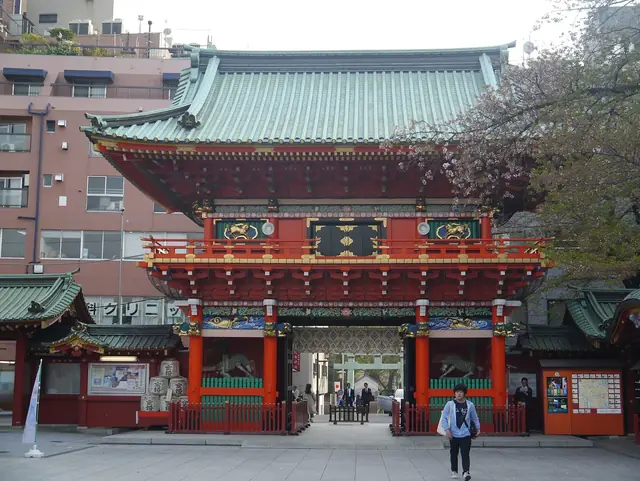
You enter through Zuishinmon, a cypress gate rebuilt in 1975, with guardian figures on the outside and carvings from the myth of the white hare of Inaba on the inner side. Beyond it the vermilion main hall fills the courtyard. In the courtyard stands a stone Daikoku 6.6 metres tall, said to be the largest stone Daikoku in Japan, and nearby a newer Ebisu crossing the sea with dolphins and sea bream.
Look for the coin-shaped monument to Zenigata Heiji, the fictional Edo detective who lived "below Myojin" in Nomura Kodo's stories, the stone lions of Shishiyama, and Otokozaka, the steep stone stairway donated by Kanda's town firefighters in the 1830s. The museum in the Saishiden building shows Kanda Matsuri floats in miniature and shrine treasures, and usually opens only on weekends and holidays.
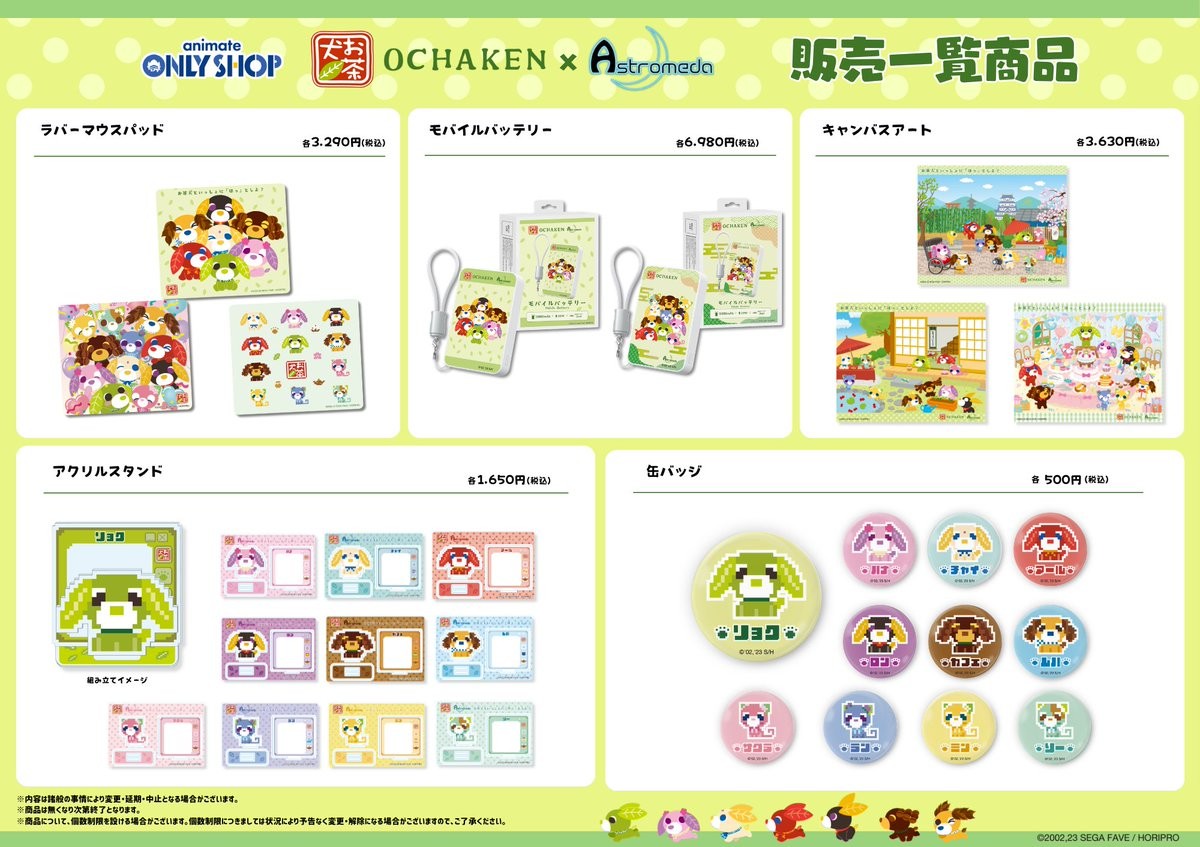
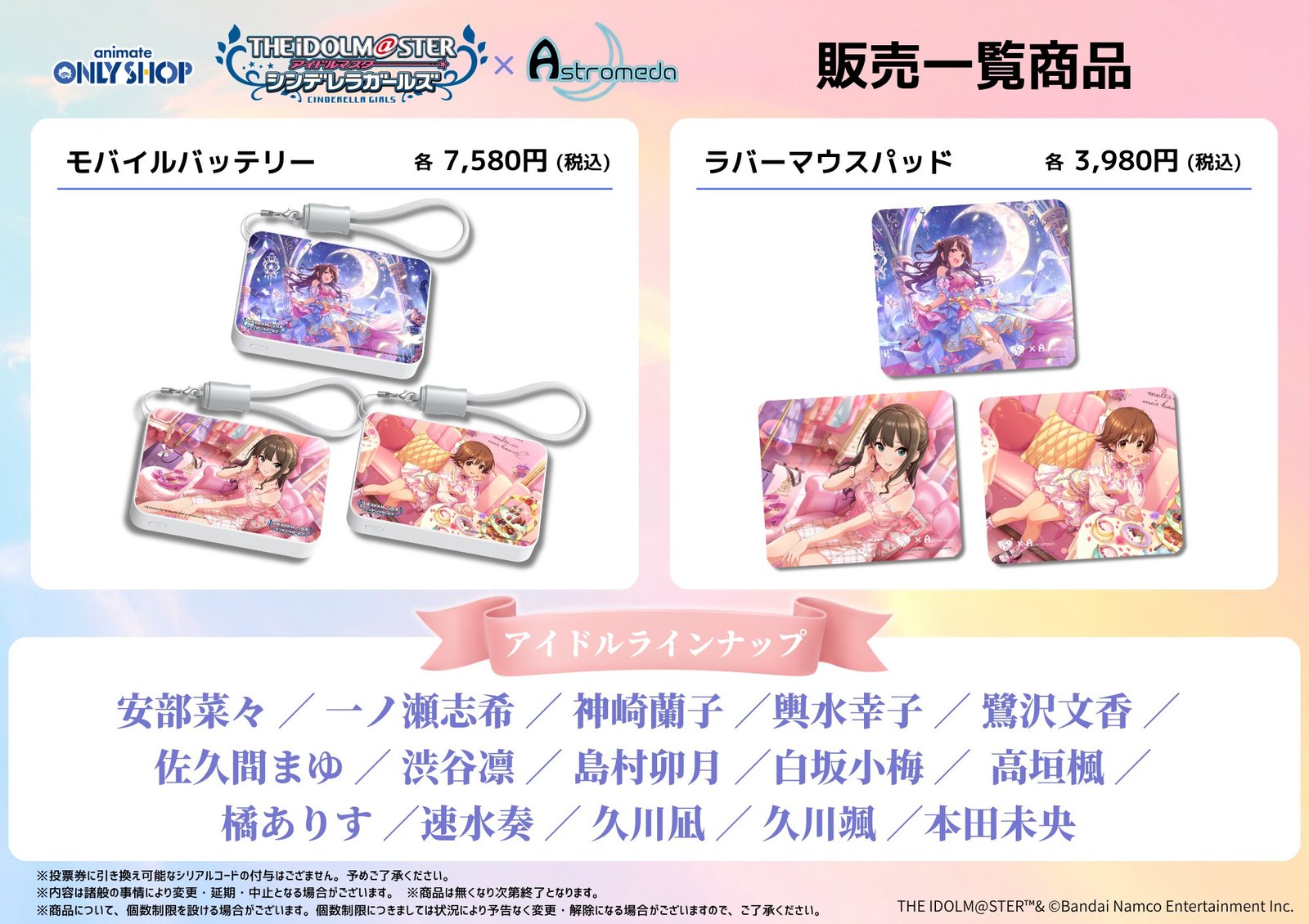
EDOCCO, the culture complex opened in 2018 by the entrance, has a shop with shrine goods (some of them anime collaborations), a cafe and a hall. The shrine is a pilgrimage spot for fans of Love Live, where one of the characters helps at the shrine, and you will see ema with hand-drawn characters on the racks. For Akihabara's tech crowd there is even an IT charm that asks for protection for computers.
- The goshuin and amulet counters keep daytime hours. Come before late afternoon if you want either.
- Illustrated ema are fun to look at, but they are prayers. Photograph the racks, not someone's wish up close.
The year at Kanda Myojin
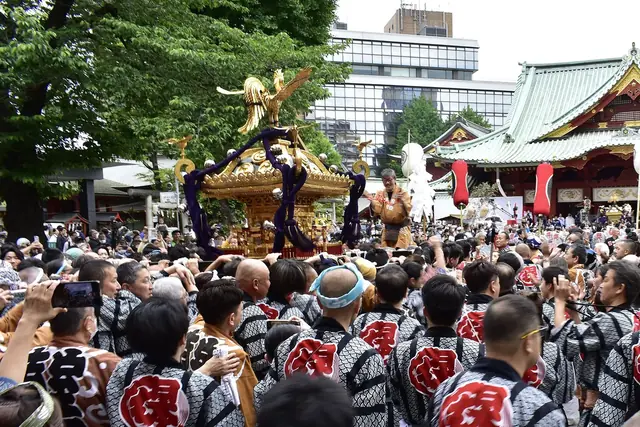
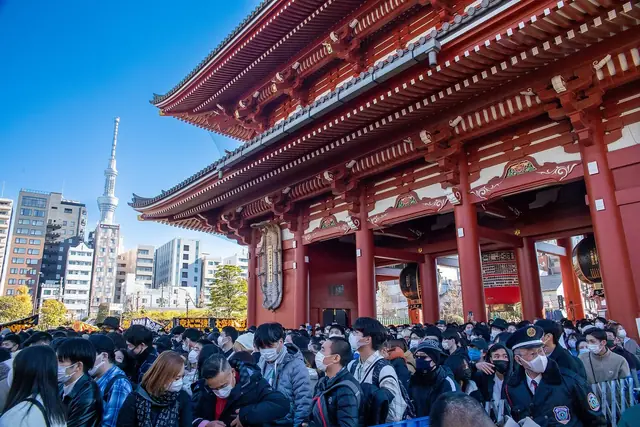
January is the busiest month. After the first prayers of January 1, the first working days bring the shigoto-hajime visits, when companies from the surrounding business districts come in groups, staff in suits, to pray for a good year. In recent years around ten thousand companies and groups have come in January alone. Lucky bamboo rakes (kumade) for business are handed out from New Year's Day. Setsubun bean throwing follows on Setsubun day, around February 3.
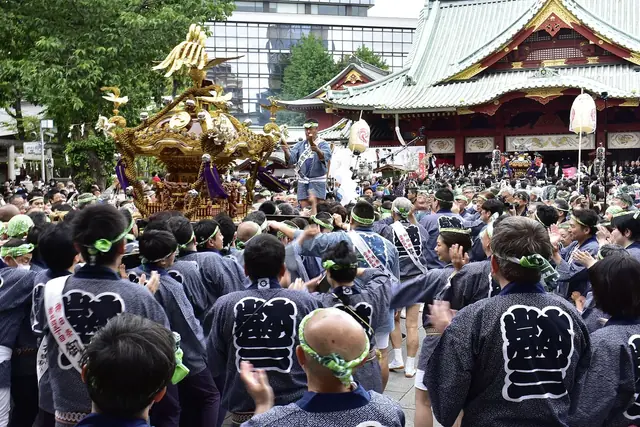
The Kanda Matsuri is held in full in odd-numbered years, in mid-May. On the Saturday the Shinkosai procession of the shrine's portable shrines, priests and costumed groups spends the whole day on a route of about 30 kilometres through Kanda, Nihonbashi, Otemachi, Marunouchi and Akihabara. On the Sunday around 200 neighbourhood mikoshi are carried up to the shrine one after another. In the Edo period the procession was allowed into Edo Castle, and it is counted among the three great festivals of Edo. In even years only the shrine rites are held, without the big processions.
Smaller dates fill the rest of the year: a noh performance at the May festival, the summer purification on June 30, Tanabata on July 7, and Shichi-go-san family visits in November.
Timing, crowds and etiquette
Visiting the grounds is free. The first three days of January and the first working week after them are the most crowded, with queues to the hall even on weekdays; if you just want to see the shrine, avoid early January. On Kanda Matsuri Sunday the streets around the shrine are packed from morning. Weekday mornings and late afternoons are calm, and the hall looks its best in low sun.
Bow at the gate, rinse your hands at the water basin, then bow twice, clap twice and bow once. Photos of the buildings are fine, but do not photograph people praying at close range, and on festival days keep clear of the mikoshi and follow the stewards.
- In festival years, find the Shinkosai route map on the shrine's site and wait at one spot rather than chasing the procession.
- Festival days are long and crowded. Carry water and some cash, and use a station toilet before you head in.
Getting there and nearby
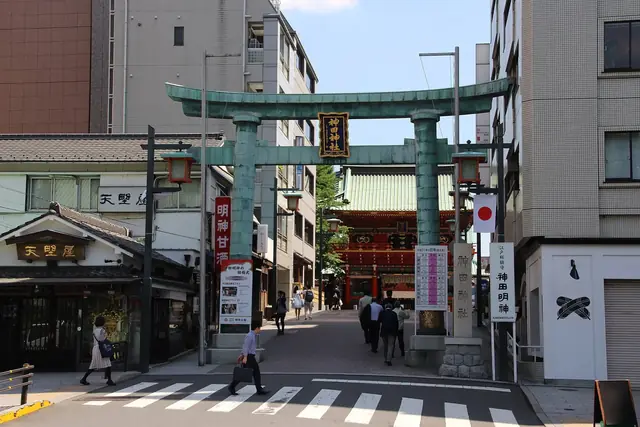
The shrine is about five minutes on foot from Ochanomizu Station (JR Chuo and Sobu lines, Hijiribashi exit, or Exit 1 of the Marunouchi Line), from Shin-Ochanomizu on the Chiyoda Line and from Suehirocho on the Ginza Line. From Akihabara Station (JR, Electric Town exit, or the Hibiya Line) it is about seven minutes uphill.
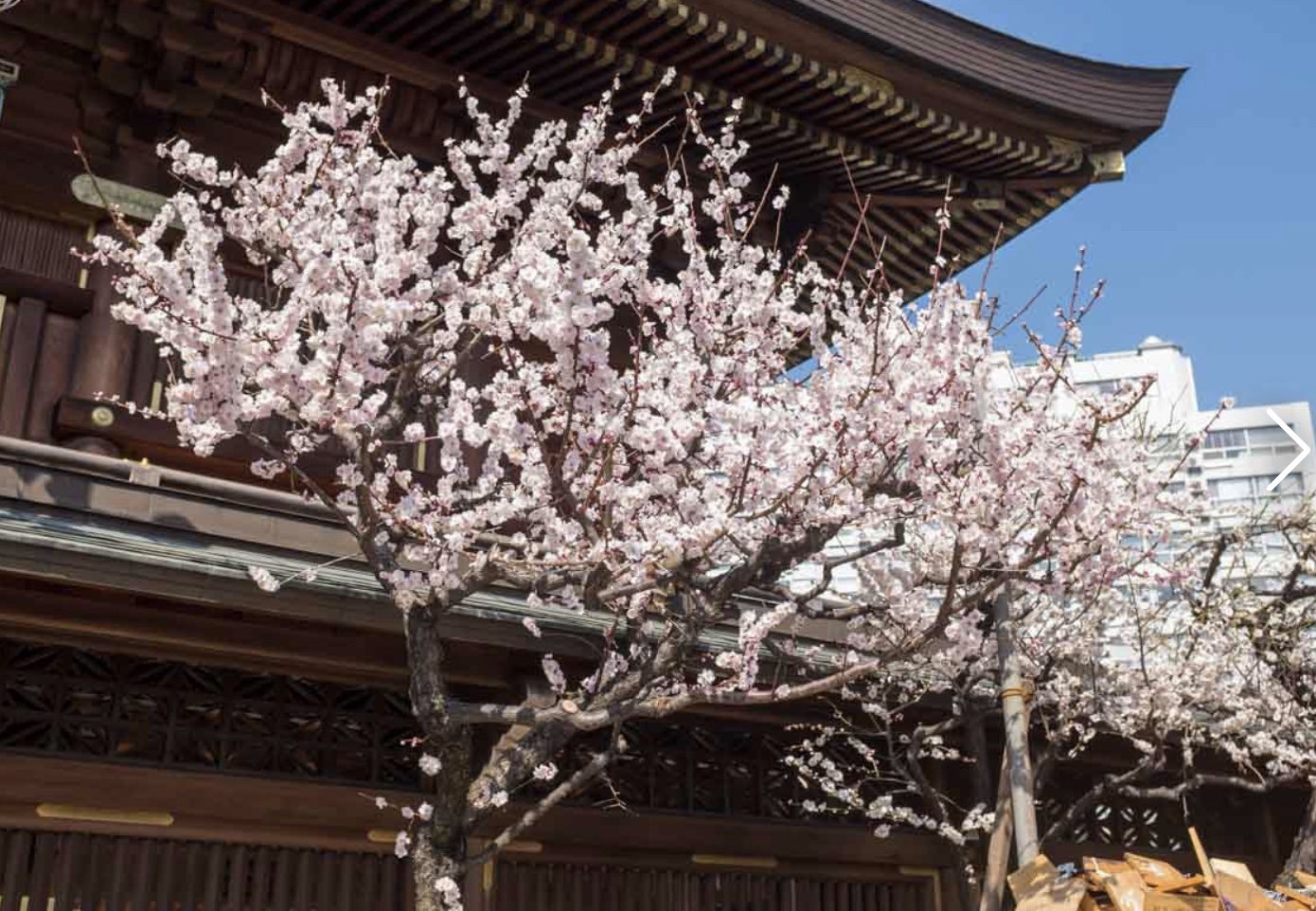
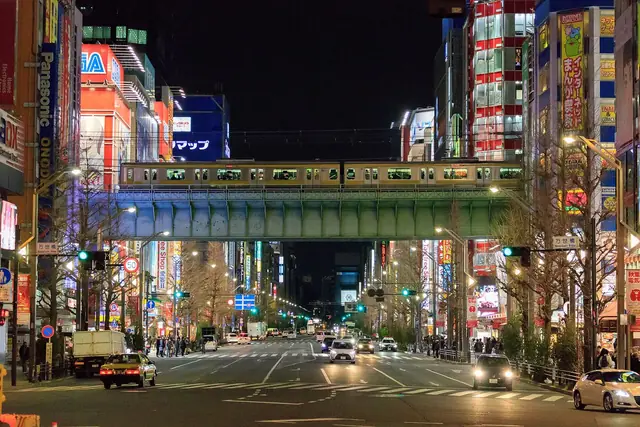
Akihabara's electronics and anime shops are just down the hill. Across the road is Yushima Seido, a Confucian hall with a quiet stone courtyard, and a short walk north is Yushima Tenjin, known for its plum blossoms in February and March and for prayers before exams. Ueno is a few stops away, and the Masakado mound in Otemachi, near the shrine's original site, is on the Kanda Matsuri route.