What Kappabashi is
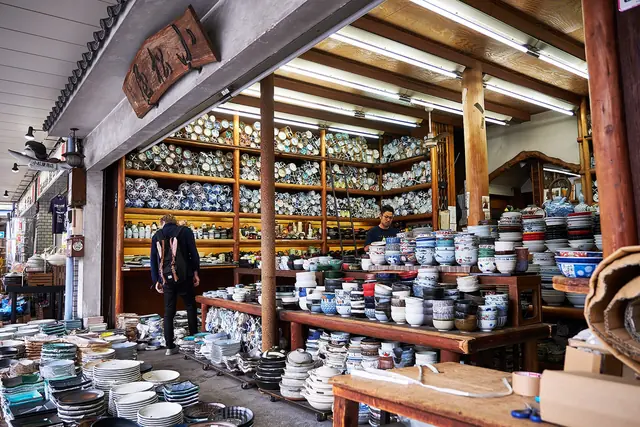
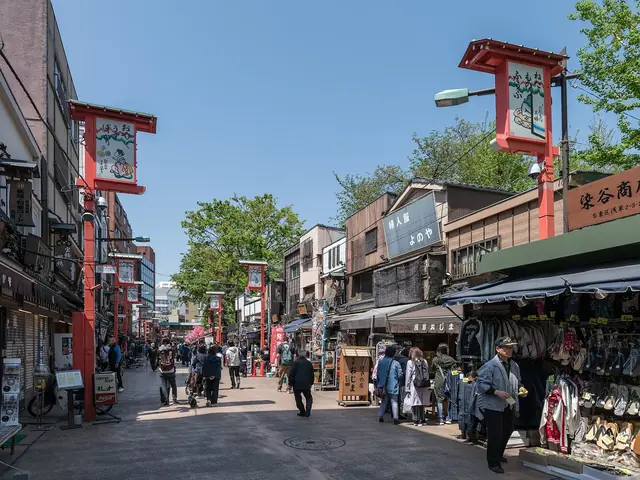
Dealers in secondhand tools began opening here around 1912, close to the restaurants of Asakusa, and after the war the street grew into a wholesale district for the food trade. It runs north from the Kikuyabashi crossing on Asakusa-dori to Kototoi-dori, with shops on both sides selling Japanese, Western and Chinese tableware, lacquerware, bamboo goods, baking tools and ingredients, chef's whites, noren curtains, signs, packaging, kitchen machines and food samples. Most customers are chefs and restaurant owners, but shops are happy to sell you a single bowl.
The street's association tells two stories about the name. In one, low-ranking samurai from a nearby lord's mansion made rain capes (kappa) as a side job and dried them on a bridge here. In the other, a merchant called Kappaya Kihachi paid to dig a drainage canal in the early 1800s and was helped at night by kappa, the water sprites of the Sumida River; his grave is at Sogenji, known as the kappa temple. A golden kappa statue, Kawataro, set up in 2003 for the street's 90th anniversary, stands in a small square near the Kappabashi crossing.
Buying a Japanese knife
Knives are the main reason many visitors come. Kama-asa, founded here in 1908, sells knives and kitchen tools and opens every day except over New Year. Tsubaya, a knife specialist since 1956, keeps more than a thousand items in stock and opens on Sundays. Kamata began as a sharpening business in 1923, engraves a name by hand for free on knives bought there and runs sharpening classes. Knife makers such as Tojiro and Zwilling also have their own shops on the street.
Tell the staff what you cook and how you will sharpen. For most home cooks a double-bevel santoku (all-purpose) or gyuto (chef's knife) is the safe choice. Single-bevel deba and yanagiba knives are made for fish, take practice to sharpen and are made for right-handers unless you ask for a left-handed one. Carbon steel (hagane) takes a very keen edge but rusts if left wet, while stainless steel is easier to look after. Hold a few before you choose, and buy a whetstone in the same shop: staff will show you the angle.
Getting it home: Japanese law bans carrying a blade longer than 6 cm without good reason, and taking home a knife you have just bought is one, so keep it boxed in your bag and don't unwrap it in the street. On a plane, knives go in checked baggage only. If you claim a tax refund at the airport, under the system used from November 2026, do the customs check before you check in the bag that holds the knife.
- Ask for name engraving (na-ire) when you pay. At many shops it is free and done while you wait.
- Bring your passport: many shops on the street offer tax-free shopping for visitors.
- Some countries restrict importing blades. Check your home country's customs rules before you buy.
Plastic food, tableware and the rest
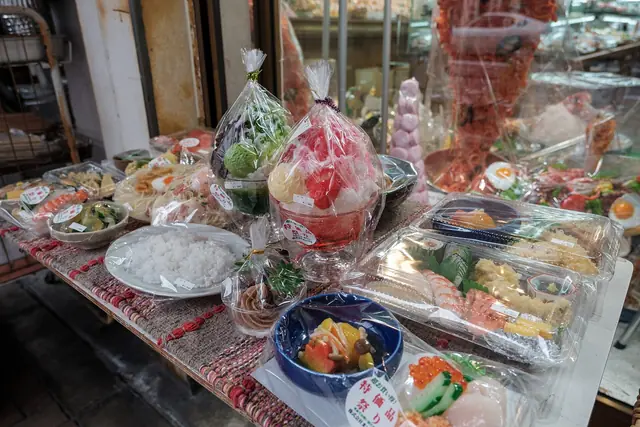
The replica food in restaurant windows (shokuhin sampuru) is a Japanese craft, and Kappabashi is its home street. Ganso Shokuhin Sample-ya, the shop brand of a leading maker, sells replica sushi, ramen and desserts as magnets, keyrings and kits, opens every day, and runs a workshop upstairs where you make wax tempura and lettuce in about 40 minutes. It needs a booking, the explanation is in Japanese, and children can join from the first year of primary school. Tokyo Biken and Sato Sample, in business since 1925, make full-size samples for restaurants and sell small pieces too.
For tableware, Dengama gathers ceramics from Mino, Arita, Kutani, Mashiko and Kyoto along with lacquer and glass, and Niimi, founded in 1907, is the building with a giant chef's head on the roof at the south end of the street. Hashitou sells chopsticks made from wood from all over Japan and wraps gifts. In between are shops for lacquer bowls, bamboo baskets, cake moulds and the noren curtains that hang outside restaurants.
- Prices are marked and fixed. Bargaining is not done.
- Ceramics are heavy and fragile. Ask the shop to wrap them for travel, and ask whether they ship overseas.
- Sato Sample closes on Fridays. Most other sample shops open daily.
The year on Kappabashi
The big week is the Kappabashi Dougu Matsuri, the tool festival held since 1983 around October 9, which the street calls Tool Day because the numbers 10 and 9 can be read as dougu. For about a week member shops put out special offers and run a prize lottery, and on the last day, in recent years the October public holiday, the street is closed to cars. Prices are good but the crowds are thick, so come early.
In early July the Shitamachi Tanabata Matsuri hangs paper decorations along Kappabashi Hondori, the shopping street that crosses Dougu Street, with parades and stalls at the weekend. Around the same days the morning glory fair fills the streets by Iriya Kishimojin, a short walk west, and in November the Tori-no-ichi fair, with its decorated bamboo rakes, takes place on the days of the rooster at Otori Shrine, a walk to the north. Over New Year most shops close for several days.
Opening days, getting there and nearby
Go on a weekday or a Saturday. Most shops open roughly from 10:00 to 17:00, and about 70 percent close on Sundays and public holidays, although the knife and sample shops visitors want most are more often open; the association answers this on its FAQ page, and its Japanese site posts a monthly list of Sunday openers. These are working shops, so leave room for staff moving stock, ask before photographing inside and put large luggage in a coin locker.
The south end is a five-minute walk from Tawaramachi Station on the Ginza Line, and Iriya Station on the Hibiya Line is about six minutes from the street. Asakusa Station on the Tsukuba Express is about five minutes from the middle, while the Toei Asakusa Line and Tobu stations in Asakusa are about 13 minutes away. JR Ueno is about 15 minutes on foot.
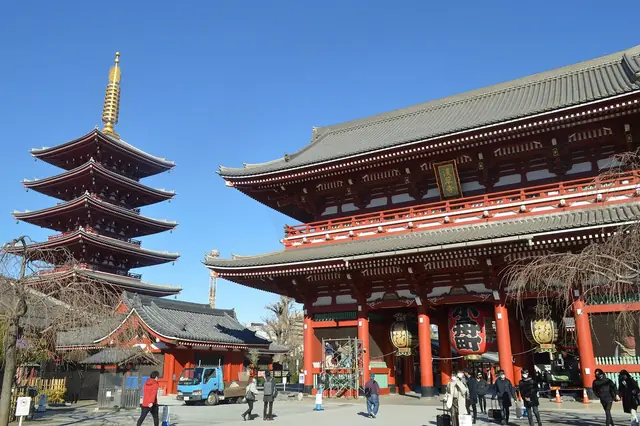
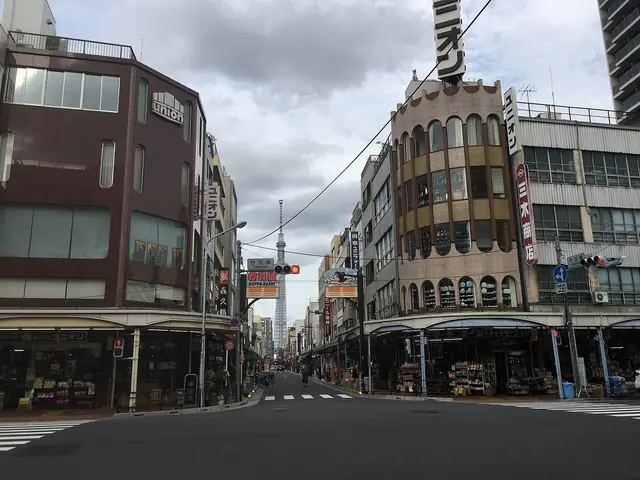
Higashi Honganji, a large temple, stands just off the south end, and from the north end the street frames a view of Tokyo Skytree. Senso-ji is an easy walk east through Asakusa, and Ueno Park and its museums lie to the west, so Kappabashi fits neatly into a day between the two.
- Pick up the free street map at any member shop, or download the PDF from the association's site.
- Start at Tawaramachi, walk north, then head east to Senso-ji for lunch in Asakusa.