What Yoyogi Park is
The land has had several lives. It was an army parade ground, and in 1910 the first powered flight in Japan took off from here; a small monument in the park marks the spot. After the war it became Washington Heights, a housing area for the US forces, then the athletes' village of the 1964 Tokyo Olympics, and the park opened in 1967. One house from the village, used by the Dutch team, survives near the Harajuku gate, and since spring 2026 it has been a café.
A road splits the park in two. Area A, the large northern part, is a forest park of lawns, trees and ponds that runs into the woods of Meiji Jingu. Area B, on the Shibuya side by NHK Hall, holds the Event Plaza, the outdoor stage and an athletics field where the opening ceremony of the 1964 Paralympics was held. It is one of the largest metropolitan parks in central Tokyo, entry is free, and the park itself is open all day, every day.
What to see on a walk through the park
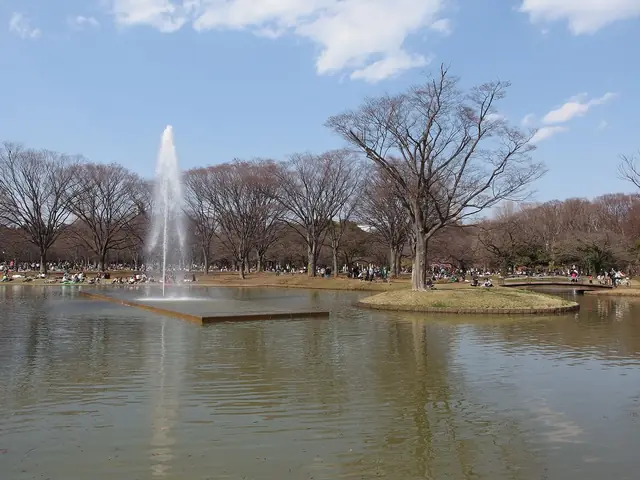
Enter from Harajuku and the paths lead you into the forest side. The Central Lawn in the middle of Area A is the big open space where people picnic, nap and play, and next to it the fountain pond has three fountains that shoot up to around 30 metres. The bird sanctuary, fenced off for wild birds, was the first of its kind in Japan; you can't go in, but you will hear and see plenty from the paths. There is also a dog run, and the ginkgo trees turn gold in late autumn.
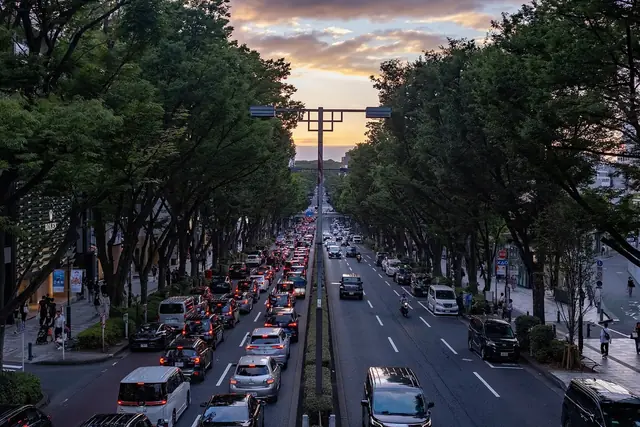
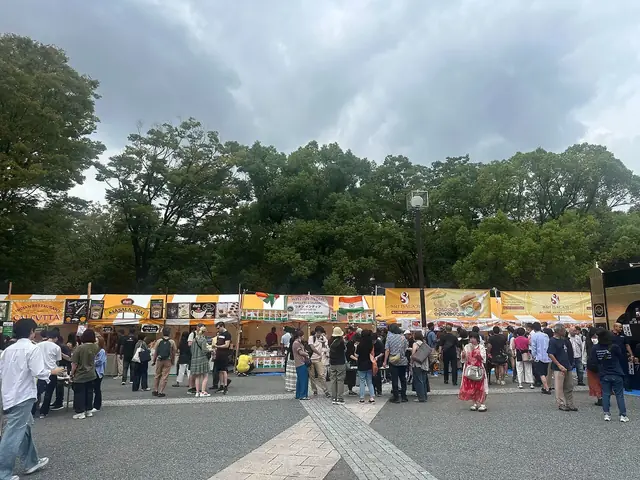
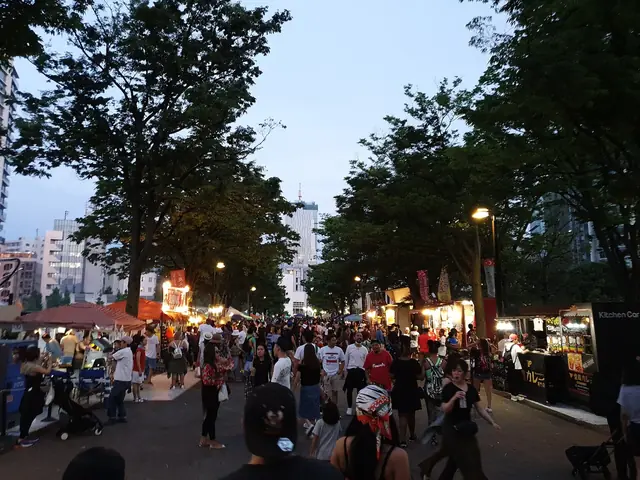
Cross the pedestrian bridge to Area B and the mood changes. The Event Plaza is a paved square lined with stall spaces, the outdoor stage stands at its edge, and Keyaki Namiki, the zelkova-lined road beside it, fills with night markets and stalls when something is on. Behind it are NHK Hall and Yoyogi National Gymnasium, Kenzo Tange's swooping 1964 arena, both busy concert venues.
Yoyogi Park has also long been where Tokyo's hobby groups meet at weekends. The rockabilly dancers in leather jackets near the Harajuku gate are the famous example, along with drummers, dance crews and musicians practising on the paths. None of it is scheduled, so treat it as a bonus if you see it.
- The Event Plaza and Area A are across a road from each other. Use the pedestrian bridge rather than walking round.
- Smoking is only allowed at marked spots. The park's smoking map is on the official site.
The year at Yoyogi Park
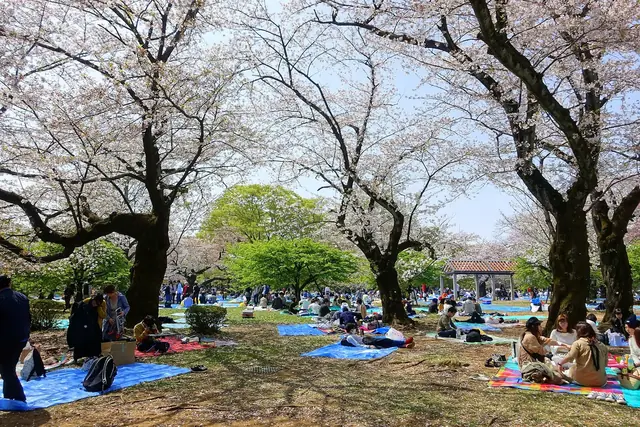
Spring starts with cherry blossoms in late March, when the lawns fill with hanami picnics. From April the Event Plaza runs one festival after another: Earth Day Tokyo has usually been held here in April, and in recent years the Thai Festival has taken over the park for a weekend in mid-May with pad thai, curry and Thai beer. Through summer and autumn come festivals for countries and regions (Brazil, Vietnam, India, Spain, the Caribbean and Latin America have all had their weekends), plus Japanese regional fairs such as the Okinawa and Hokkaido festivals. Most are free to enter, and you pay per dish.
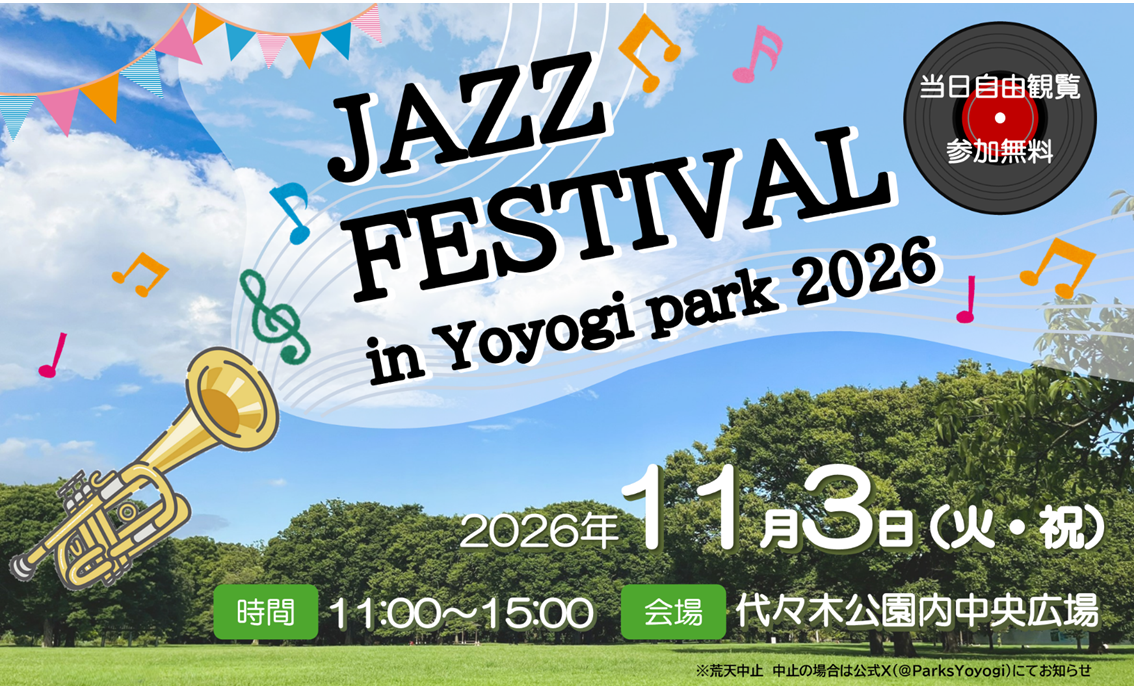
In June the Tokyo Pride festival fills the Event Plaza and outdoor stage, with a parade through Shibuya and Harajuku. On a weekend in late August, Super Yosakoi brings more than a hundred dance teams to stages at the park, Meiji Jingu and Omotesando. Around Culture Day in early November, a free jazz festival plays on the Central Lawn, and the Shibuya ward festival takes over the plaza around the same time. In recent winters the Blue Cave illumination has lit the trees around the Event Plaza in blue in December.
- Check the event page for 雨天決行 (goes ahead in rain) or 雨天中止 (cancelled in rain) before you set out.
- Benches by the stalls fill fast at lunchtime. Carry your food over the bridge to the lawns of Area A for a calmer meal.
Crowds, hanami rules and etiquette
Festival weekends are busiest on Saturday afternoons, when the food queues get long and the plaza is shoulder to shoulder. Arrive before noon or come in the last hours before closing. Stalls are quicker with cash, even when some take cards, so bring coins and 1,000-yen notes. Bins are few, so carry your rubbish until you find a festival rubbish station, or take it home.
Hanami here is relaxed but has rules. Leaving a sheet unattended to hold a spot is not allowed, and tents and large shade tarps are banned during the blossom season. Toilet queues can be long on full-bloom weekends. Dogs must be on a lead, and the roads around the park jam on weekends, so the park asks visitors to come by train.
- In full-bloom week, weekday mornings are the calmest time for a picnic on the Central Lawn.
- Bring a light sheet and a bag for rubbish. Convenience stores near Harajuku Station sell both.
Getting there and nearby
JR Harajuku Station on the Yamanote Line, Yoyogi-koen Station on the Chiyoda Line and Meiji-jingumae (Harajuku) Station on the Chiyoda and Fukutoshin lines are each about three minutes from a park gate, and Yoyogi-Hachiman on the Odakyu Line is about six. For the Event Plaza, walk from Harajuku past Yoyogi National Gymnasium, or uphill from Shibuya along Koen-dori. When a concert ends at the gymnasium or NHK Hall, Harajuku Station gets packed, so walk to Meiji-jingumae or Shibuya.
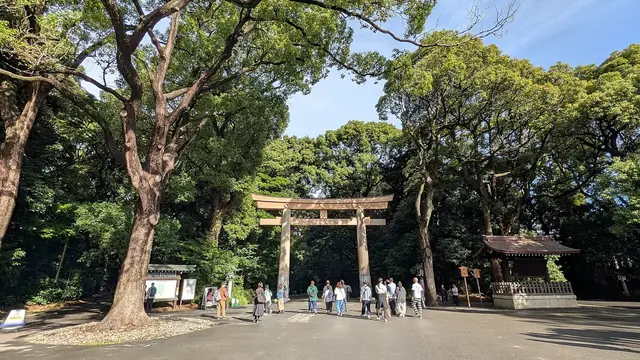
Meiji Jingu is right next door, and its forest approach starts by Harajuku Station. Takeshita Street and Omotesando are across the road, and Shibuya is a short walk down. To the west, Yoyogi-Hachimangu is a quiet neighbourhood shrine near Yoyogi-Hachiman Station.