What Tokyo Pride is
Tokyo Pride is organised by the NPO Tokyo Rainbow Pride (TRP), and the organisers describe it as the largest Pride event in Asia. Japan's first Pride parade was held in Tokyo in 1994. For years the event ran as Tokyo Rainbow Pride in spring, around April; in 2025 it was renamed Tokyo Pride, moved to June, which is Pride Month in much of the world, and grew into a programme of several events through the month.
Some context helps. Japan does not recognise same-sex marriage nationally, and marriage equality has been the central message of the event in recent years. Shibuya and Setagaya were the first local governments to issue partnership certificates to same-sex couples, in 2015, and the Tokyo Metropolitan Government has run its own partnership oath system since November 2022. These certificates are not marriage, but they are accepted for some things such as housing and hospital visits.
The festival and watching the parade
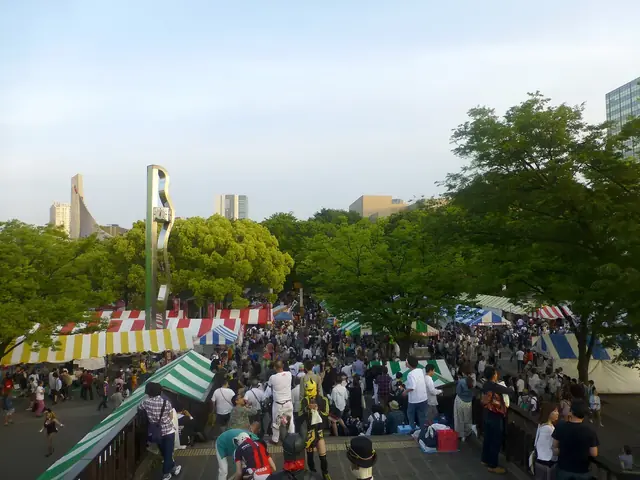
The Pride Festival takes over the Event Plaza and Outdoor Stage of Yoyogi Park, the side near Shibuya, for a weekend. It is free and needs no ticket. Around 200 companies, embassies, community groups and support organisations run booths, there is food, and the stage has music, drag shows and speeches. The community booths are the best part to wander: this is where you meet local support networks, advocacy groups and the people who run them.
The parade is on the Sunday, starting around noon. Groups leave the park in waves through the afternoon and walk a loop of a few kilometres through Shibuya and Harajuku. Watching is free and the most relaxed way to take part: stand on the pavement along the route, wave, cheer and clap for each group. Marchers love it when the pavement shouts back.
- Pick up the venue map at the entrance. In recent years booths have been colour-coded by zone, so the community area is easy to find.
- The festival opens in the late morning. On parade day, come early if you want time at the booths before the groups set off.
How to walk in the parade
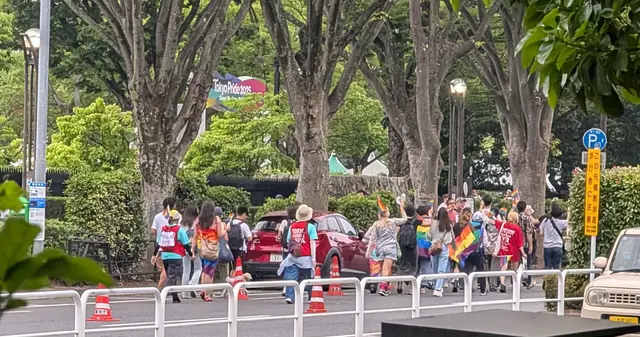
You walk with a group, not on your own. The official site lists the marching groups (companies, embassies, universities, community and advocacy groups) and shows which accept participants. Some take applications in advance through the site. Many others take sign-ups at the parade reception booth in the festival venue, usually on the Saturday and on Sunday morning. You register in person for yourself, not for a group of friends, and each group closes once it is full.
After registering you get a wristband, and only people with wristbands can enter the assembly area and march. Each group has its own gathering time, which you are told at the desk. The parade is legally run as a public demonstration, so stay with your group in the formation staff ask for and keep signs in line with the event's message. There is no fee to walk.
- Groups that welcome individuals fill up fast. Register on the Saturday if you can, or come early on Sunday morning.
- Bring water, sunscreen and a light rain jacket. You may wait an hour or more before your group sets off.
- Check the official site for the current list of groups and how each one takes sign-ups.
Pride Month and Shinjuku Ni-chome
Around the parade weekend, TRP runs other programmes through June. In recent years these have included Pride Night, a party in Shinjuku Ni-chome on the evening of the parade (it may be ticketed); Youth Pride for teens and people in their twenties; an art exhibition at Queer Space Tokyo, TRP's community space in Minami-Aoyama; and a human rights conference. Embassies, bookshops, cinemas and companies add their own events, and those turn up in the list below. Pride House Tokyo Legacy, a permanent LGBTQ+ centre in Shinjuku 1-chome run by a separate NPO, is open through the year and has a free library.
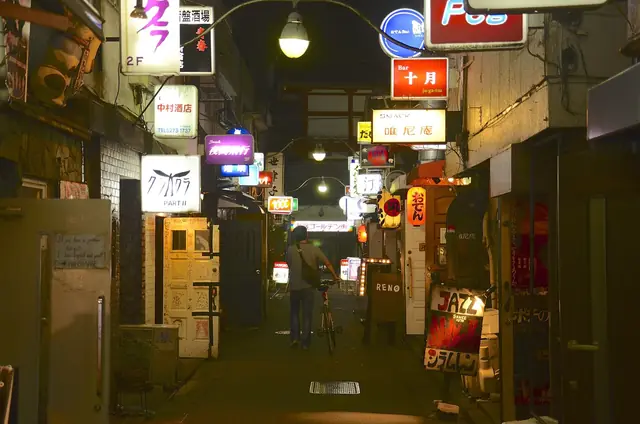
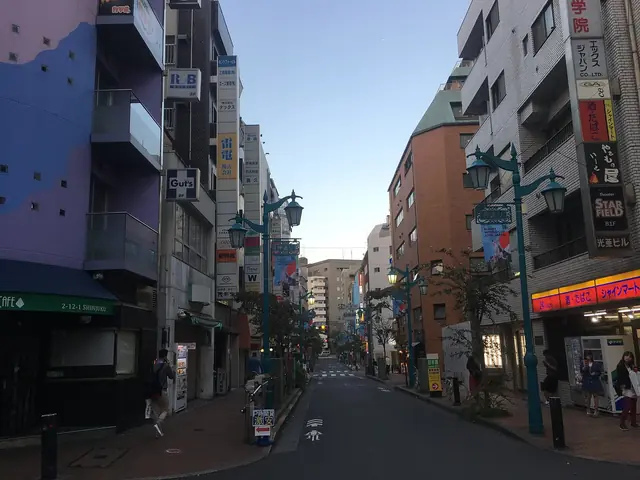
Shinjuku Ni-chome has been Tokyo's LGBTQ+ neighbourhood since the postwar decades. It is only a few blocks east of Shinjuku-sanchome Station, yet holds a couple of hundred bars, most of them tiny, some seating under ten people. Many are for a particular crowd (gay men, women only, regulars), while others are mixed and welcome everyone, allies included. Some bars post who they are for at the door; if you are not sure, ask politely at the entrance. A cover or table charge is normal. Remember that people come here to be themselves somewhere safe, so treat it as a neighbourhood, not a sight.
- Mixed bars that welcome first-timers are the easiest start. Many charge a cover that includes a drink, so check before you sit down.
- Don't photograph people inside bars or on the street. Keep your voice down in the side lanes late at night, because people live there too.
Photos, consent and practical things
Photos are the most important piece of etiquette. Not everyone at Pride is out to their family, school or employer, and a face in a public post can cause real harm. Wide crowd shots are fine; ask before taking a photo of one person or a small group, and don't post identifiable strangers without their OK. The organisers' ground rules ask visitors to respect privacy, especially when taking photographs, and ban professional cameras, tripods and other large equipment in the venue, around the stage and during the parade.
The venue is smoke-free except designated areas, and you can't bring your own alcohol. Early June in Tokyo can be hot and humid and is often the start of the rainy season, so carry water and a rain jacket, and look after yourself in the sun. In recent years the organisers have provided a kids' space with nursing and diaper changing, earplugs at the information booth, a wheelchair priority area at the stage, and staff speaking English and Japanese Sign Language, marked by armbands. If someone harasses you or you feel unwell, go to the nearest staff member or the first aid booth.
- Earplugs at the information booth are limited. If loud music is hard for you, pick them up early.
- Trains to Harajuku and Shibuya are packed after the parade. Meiji-jingumae, Yoyogi-koen and Yoyogi-hachiman stations are alternatives.