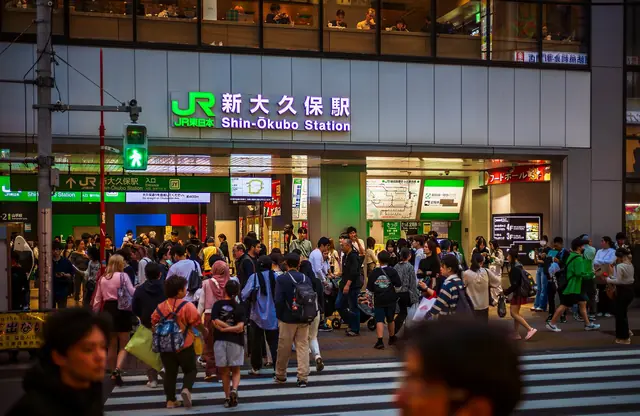
What Shin-Okubo is like
The area takes in two districts of Shinjuku ward, Okubo and Hyakunincho, between Okubo-dori and Shokuan-dori. Hyakunincho is named after the hundred-man corps of musketeers the shogunate stationed here in the Edo period. From the Edo period until the early Showa years the streets around Okubo-dori were also famous for azaleas, popular enough that extra trains ran for viewers, which is why the azalea is still Shinjuku's ward flower.
Korean shops and restaurants spread along these streets from the 1990s, and the Korean wave of the 2000s, first TV dramas and then K-pop, turned the area into a destination. The crowd has changed with it: the drama boom brought many middle-aged fans, while most visitors today are teenagers and people in their twenties who come for food, cosmetics and idol goods. Shin-Okubo is also one of Tokyo's most international neighbourhoods, with Nepali, Vietnamese, Indian and other Asian shops and restaurants next to the Korean ones.
The streets: Okubo-dori, Ikemen-dori and Islam Yokocho
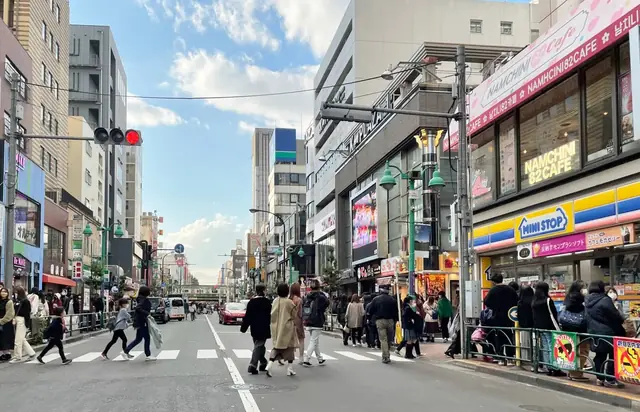
Okubo-dori, the road in front of the station, is the main strip: idol posters, cosmetics shops and cafés on both sides, and pavements so narrow that on weekends people walk in single file. Heading east, side lanes lead south to Shokuan-dori, a wider road with big Korean supermarkets such as Kankoku Hiroba, restaurants and more shops. The best known of those lanes is Ikemen-dori, a narrow street of food stands, cafés and cosmetics shops whose nickname means roughly handsome-guy street.
Right by the station, on the Hyakunincho 2-chome side, is the lane people call Islam Yokocho: halal grocers run by people from Nepal, India, Bangladesh and Pakistan, selling spices, rice, meat and snacks you rarely find in Japanese supermarkets, with small restaurants and a prayer room. It is an everyday shopping street for residents more than a sight, so shop and eat, and keep photos of people to a minimum.
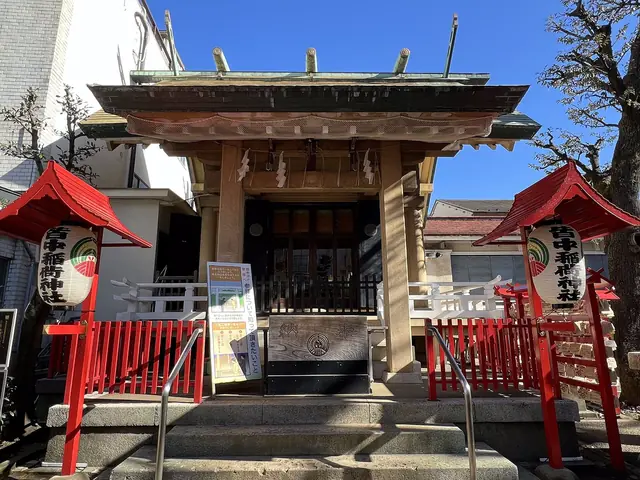
About 100 metres west of the station stands Kaichu Inari Shrine. The story goes that a musketeer of the Edo corps who could not hit his target dreamed of the shrine's god and then hit every shot, so the shrine became known as the place where everything hits (minna ataru). Today its wooden ema plaques are full of wishes to win concert ticket lotteries. Every other year, around the shrine's autumn festival in late September, the Teppogumi Hyakunintai parade walks the streets in armour and test-fires matchlock guns, a tradition registered as Shinjuku's intangible folk culture.
- On busy days keep left on Okubo-dori, and step into a side street to stop, film or check your map.
- The blocks towards Higashi-Shinjuku are calmer than the ones by the station, with the same mix of shops and restaurants.
What to eat
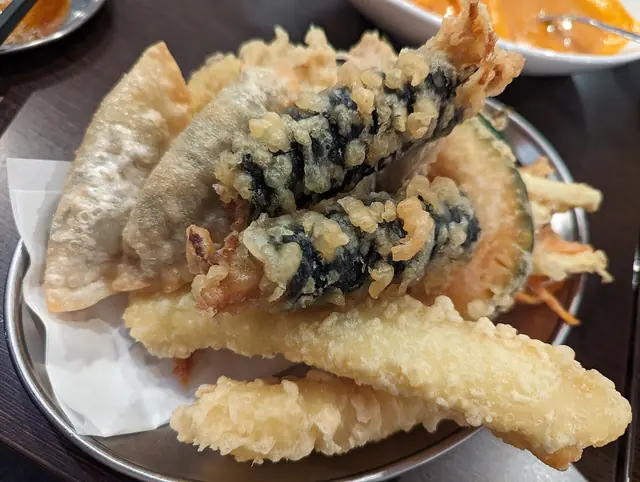
Korean barbecue is the classic meal. At a samgyeopsal restaurant the staff grill thick slices of pork belly at your table and cut them with scissors, and you wrap them in lettuce or perilla leaves with garlic, ssamjang and kimchi, with small side dishes (banchan) on the table. Beyond barbecue, look for dak-galbi (spicy stir-fried chicken), tteokbokki rice cakes, jeon pancakes, sundubu stew, Korean fried chicken and, from street stands, hotteok, sweet filled pancakes cooked on a griddle.
Street food moves in waves. Cheese dak-galbi and cheese hot dogs drew long queues in the late 2010s, and every couple of years a new snack takes over the stalls. Queues of an hour or more form for whatever is trending, while long-running restaurants a block away serve a full meal without the wait. If you came to eat rather than to tick off a trend, pick a place full of people eating, not one full of people taking photos.
For something to take home, the Korean supermarkets sell kimchi, instant ramyeon, gochujang, seaweed snacks and frozen dumplings, and the halal grocers near the station sell spices and South Asian ingredients. The Nepali and Indian restaurants around Islam Yokocho make a good change from Korean food.
- Carry some cash for food stands. Most shops take cards and IC cards, but not every stall does.
- Eat at or next to the stand. Bins are few, so keep your rubbish until you find one.
Cosmetics and K-pop shops
Korean cosmetics are the other big draw: sheet masks, toners, sunscreens, cushion foundations and lip tints, sold in shops of every size along Okubo-dori and Ikemen-dori. Compare two or three shops before you buy a lot, check expiry dates on discount bins, and if a particular brand matters to you, buy it from the brand's own store or an authorised dealer.
Idol shops sell albums, photocards, posters, light sticks and fan goods. Some stock official merchandise and some sell unofficial goods, and the shelves do not always say which is which, so check the packaging and the shop before paying a premium; official pop-up stores and agency shops are the safe choice. Cafés around the station also host fan-run birthday events (senil) for idols, with free cup holders or photocards given out with drinks. Our K-pop guide explains how they work.
If you are visiting from abroad, note that tax-free shopping changes on 1 November 2026: you pay the full price with tax in the shop and get the tax back after a customs check when you leave Japan. Bring your passport itself, not a photo of it, and keep receipts together.
When to go and getting there
Weekends, national holidays and school holidays (late March, late July to August and late December) bring the biggest crowds, and the afternoon is the peak. The station is small, an elevated island platform with one main gate and a separate exit-only gate, so the stairs and the pavement outside jam after each train. Weekday late mornings are the easiest time; many shops open in the late morning, and restaurants stay busy into the evening.
Shin-Okubo is on the JR Yamanote Line, one stop north of Shinjuku. If the station is packed, use Okubo Station on the JR Chuo-Sobu local line, a few minutes' walk west, or Higashi-Shinjuku Station on the Oedo and Fukutoshin subway lines, near the east end of Shokuan-dori. Seibu-Shinjuku Station is a short walk south of Shokuan-dori.
Kabukicho and the rest of Shinjuku begin just south of Shokuan-dori, so it is easy to walk on for the evening. Okubo Park hosts food festivals on many weekends, and Golden Gai and Shinjuku's bars are about 15 minutes away on foot. Walking from Shinjuku Station's east side to Shin-Okubo takes about 20 minutes.
- On a crowded weekend, arrive at Okubo or Higashi-Shinjuku and walk in. You skip the queue on the Shin-Okubo stairs.
- Check your last train if you continue into Shinjuku. The Yamanote Line stops a little after midnight.