Old and new rules: the 1 November 2026 switch
For purchases up to 31 October 2026, tax-free shops take the consumption tax off at the till: you show your passport and pay the price without tax. Consumables such as food, drinks and cosmetics go into sealed bags you must not open in Japan, they are counted separately from general goods such as clothes and electronics, and consumables have an upper limit of 500,000 yen.
For purchases from 1 November 2026, Japan uses a refund method instead. You pay the normal price, tax included. When you leave Japan, customs confirms that the goods are going with you, and only then does the shop, or a refund company working for it, pay the tax back. The aim is to stop goods bought tax-free from being resold inside Japan. In return, several rules are simpler: no sealed bags, no split between general goods and consumables, no 500,000 yen cap on consumables, and up to 90 days from purchase to take the goods out of the country.
- Consumption tax is 10 percent on most goods and 8 percent on food and non-alcoholic drinks, so that is roughly what you get back.
- Goods bought by 31 October 2026 under the old system follow the old rules: keep sealed consumables unopened until you leave.
Who can shop tax-free
The system is for visitors, not residents. Foreign nationals qualify if they entered Japan less than six months ago as a Temporary Visitor, the status most tourists receive on arrival, or with certain landing permits such as those for transit passengers, cruise passengers and crew. Japanese citizens who live abroad can also qualify if they have lived outside Japan for two years or more and can prove it with a document such as a residency certificate, a copy of the family register attachment (koseki no fuhyo) or a My Number Card that shows the move abroad.
Foreign residents of Japan, including people on work or student status, are not eligible, even if they are about to leave. At the shop you need your passport itself, not a photo of it, because the purchase is recorded against your passport and your entry record. You will need the same passport again at the airport.
- Carry your passport on shopping days. Shops need the original, not a photo or a copy.
- If you entered Japan more than six months ago, you are no longer eligible, even on a long trip.
How it works, step by step
The process has three stages: you buy at the shop, you get a customs check when you leave, and then you receive the refund. These are the steps in order.
- 1. Shop where you see a tax-free sign. Spend at least 5,000 yen before tax in one shop on one day; visits on different days do not add up.
- 2. Show your passport at the till or the tax-free counter. You pay the full price, and the purchase is recorded electronically.
- 3. Ask how the refund will reach you: credit card, bank transfer, an app or cash at the airport. Options, and any fee, vary by shop.
- 4. Keep the goods from each receipt together and unused, and keep the receipts. Customs checks per receipt.
- 5. At departure, before you check in bags, scan your passport at a tax-free kiosk. Green means done; red means a customs inspection.
- 6. After customs confirms the export, the shop or its refund company pays you by the method you chose. Timing depends on the shop.
At the airport: do it before you check in
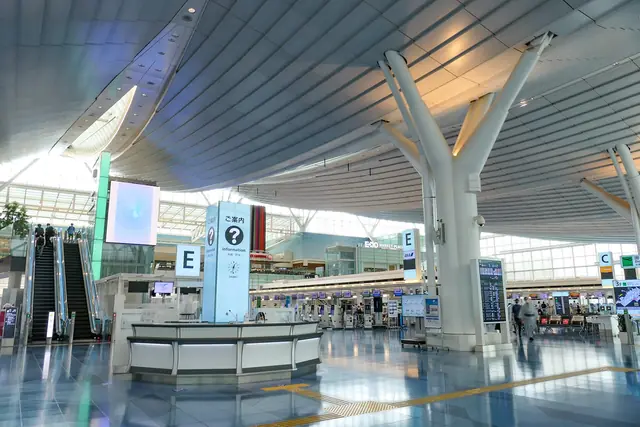
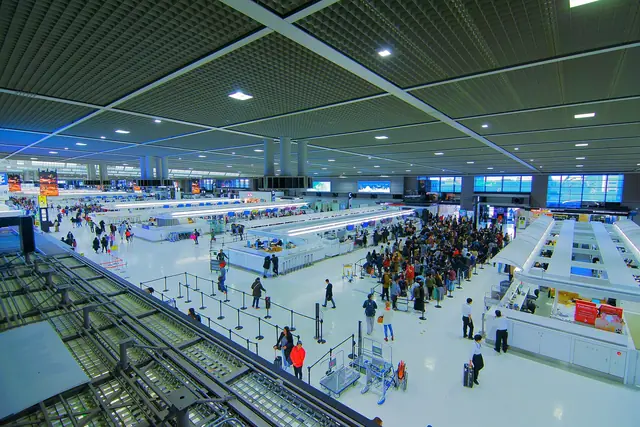
The customs check happens in the international departure lobby, before bag drop. This is the step people get wrong: once your suitcase is checked in, you cannot get it back to show customs, and if the kiosk then gives a red result, you cannot complete the procedure. So pack your tax-free purchases where you can reach them, go to the kiosk first with your passport, and check in your bags only after you have a green result or have passed the inspection.
At Narita, Haneda and other major airports (Kansai, Chubu, Fukuoka, New Chitose and Naha) you can also do the check online through Visit Japan Web, using the dedicated Wi-Fi in the departure lobby before security. The kiosk takes seconds, but a red result means an inspection that can take longer, and neither the airline nor customs will make up for a missed flight. If you fly from Tokyo to another Japanese city and leave the country from there, do the check at the airport you finally depart from.
- Arrive earlier than usual if you are carrying many tax-free receipts.
- Duty-free shops after security and immigration are a separate system: no refund step is needed for what you buy there.
What does not qualify, and common mistakes
Most things a visitor buys qualify: clothes, electronics, cosmetics, medicines, food, sake and crafts. Excluded are gold and platinum bullion and coins, items that carry no consumption tax in the first place, and anything you use up in Japan. Services are not goods, so restaurant meals, hotel stays and tickets are never tax-free. You can buy only as much as you can carry out of Japan yourself; posting tax-free goods home on your own is no longer allowed, so if you want something sent abroad, ask the shop whether it can ship it directly.
If you eat or use something you bought tax-free, it no longer qualifies. Do not scan it at the kiosk; tell a customs officer at the counter instead. Because the check is per receipt, missing even one item from a receipt cancels the refund for everything on that receipt, which matters if you plan to hand out gifts before you leave. And if goods pass the check but then do not leave Japan, the tax is collected again and penalties can apply.
- Buy the snacks you will eat during the trip on a separate receipt from the ones you take home.
- For purchases of 1 million yen or more, carry the certificate of authenticity or warranty. Customs may ask to see it.
- Shopping on your last day? Leave time to repack so the tax-free items are easy to show at the airport.